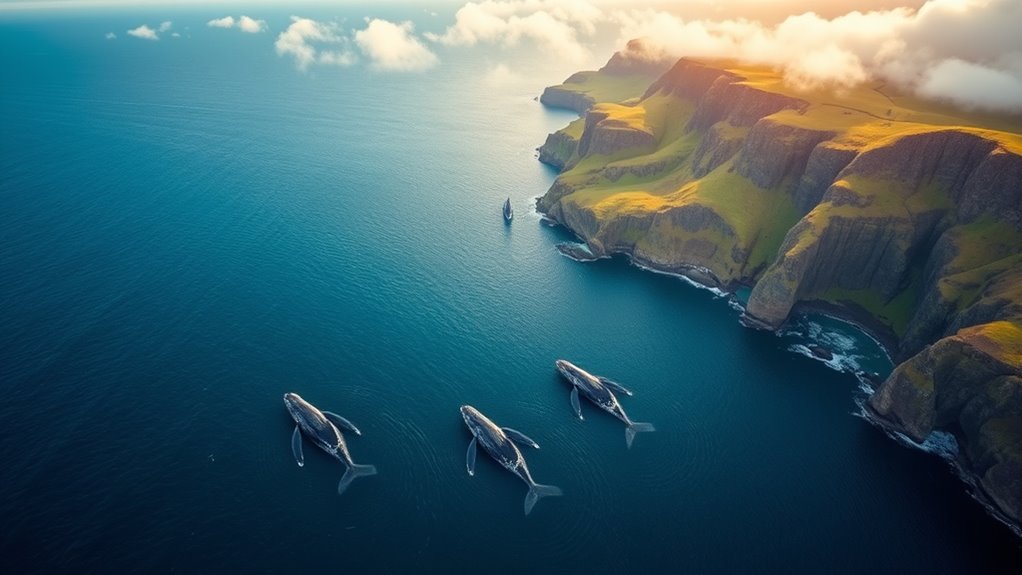
When to Whale Watch in Iceland: Which 3 Months Are Best?
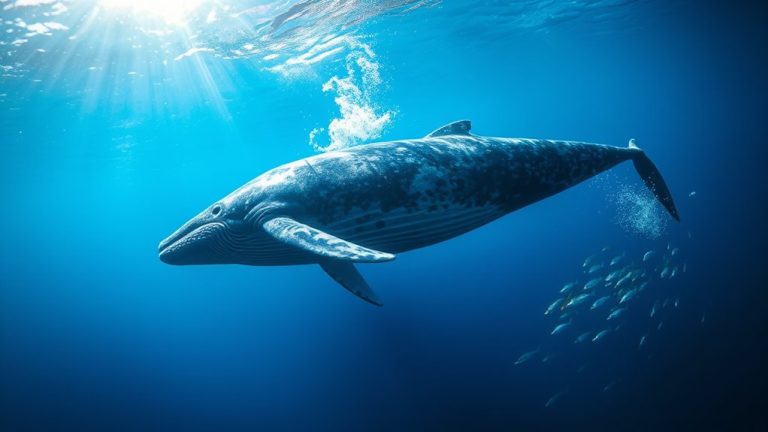
You’ll get the best whale-watching experience in Iceland from June through August. These months are prime for whale watching in Iceland because whales migrate closer to the coast to feed.
Calm seas combined with nearly endless daylight make spotting them easier.
July is especially great for sightings, but June and August also offer fantastic chances with fewer crowds.
If you want to optimize your trip and understand how weather and whale patterns play a role, keep exploring for detailed tips.
Why June to August Is the Best Time to Whale Watch in Iceland

Because June to August marks the peak whale-watching season in Iceland, you’ll have the best chance to see these majestic creatures during this time. The summer months are the peak season for whale sightings, as migration patterns bring whales closer to Iceland’s feeding grounds.
During these months, calmer seas and milder weather create ideal conditions for whale watching tours. The longer daylight hours in summer months give you extended opportunities to spot multiple species in one outing.
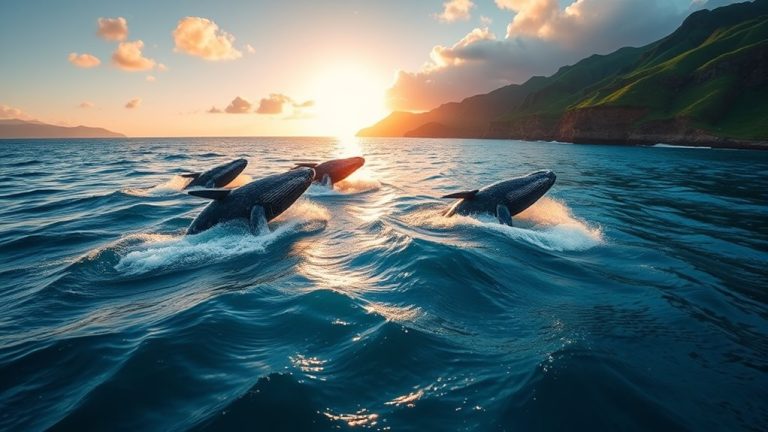
Whales are more active near the surface while feeding, making this period the best time to see them in action. Plus, the combination of whale activity and natural phenomena like the midnight sun makes June to August the ultimate whale watching season in Iceland.
How Whale Migration and Weather Affect Whale Watching in Iceland
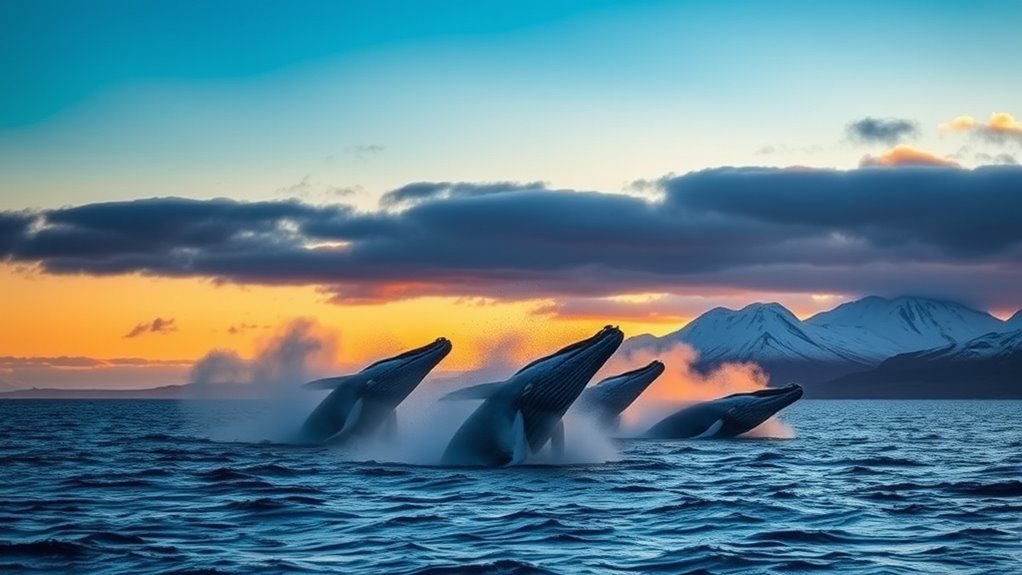
Although whale migration patterns vary throughout the year, they play a crucial role in determining when and where you’ll spot whales in Iceland. Seasonal patterns bring many species during spring and summer months, coinciding with peak whale activity. During these warmer months, calmer seas and favorable weather conditions improve visibility, boosting your chances of memorable whale sightings.
Ocean temperatures and food availability influence migration timing, causing some shifts year to year. While summer offers the best balance of whale migration and calm seas, winter sees fewer whales near the coast, though orcas and belugas remain. Understanding how whale migration and weather conditions interact helps you choose the best time for whale watching, ensuring you don’t miss the spectacular marine life Iceland has to offer.
Choosing the Best Month for Whale Watching in Iceland Tours
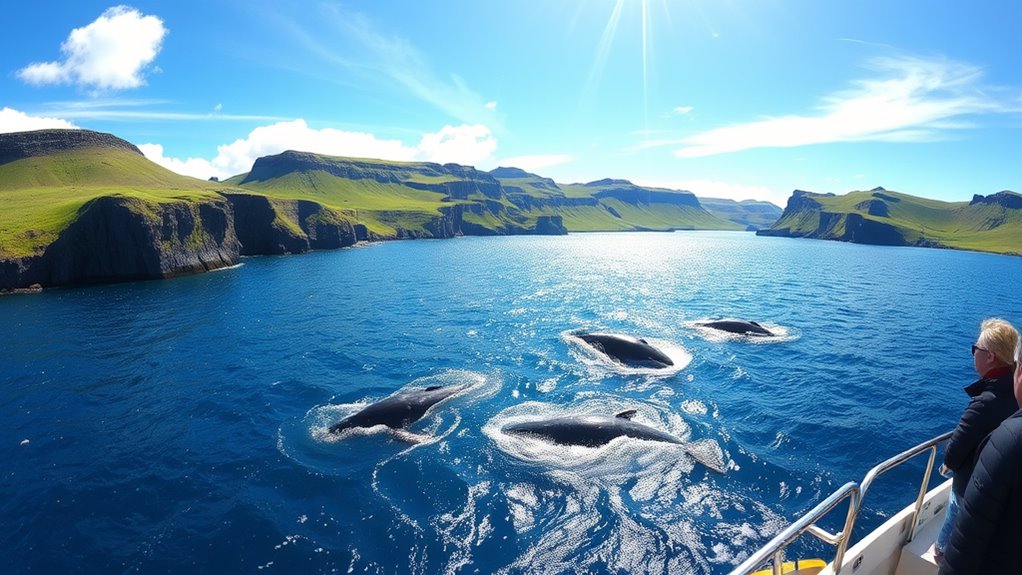
Understanding how whale migration and weather shape sightings sets the stage for picking the best month to go whale watching in Iceland. The best months for whale watching in Iceland tours are June through August, with peak season in July.
Migration patterns bring numerous whales close to shore, increasing whale sightings. Longer daylight hours and calm weather enhance your experience during these months.
May and September also offer good chances with fewer tourists, especially in Húsavík and Akureyri.
| Month | Whale Sightings | Daylight Hours |
|---|---|---|
| June | High | Long |
| July | Peak (Multiple species) | Long |
| August | High | Moderate |
| September | Moderate | Decreasing |
Choose your month based on desired crowd levels and daylight preferences.
Frequently Asked Questions
What Month Is Best for Whale Watching in Iceland?
June is best for whale watching in Iceland. You’ll spot blue and humpback whales easily, especially in Skjálfandi Bay.
The weather’s milder, and whale sightings peak, giving you the best chance for an unforgettable experience.
Where Is the Best Place to See Whales in Iceland?
You’ll find the best whale watching in Húsavík, where tours boast over a 90% success rate spotting humpbacks, minkes, and even blue whales.
Don’t miss Reykjavík’s Old Harbour for year-round dolphin and whale sightings too.
Which Month Is Best for Whale Watching?
July’s your best bet for whale watching in Iceland. You’ll catch peak activity with multiple species like humpbacks and orcas.
The weather’s milder, and you’ll enjoy extra perks like the midnight sun and puffins.
How Likely Is It to See Whales in Reykjavik?
You’ll almost definitely see whales in Reykjavik if you go in summer—June and July boast near-perfect sightings.
In winter, don’t hold your breath; whales might ghost you like that flaky friend.
Conclusion
If you’re planning to whale watch in Iceland, June to August is your best bet, with up to 23 different whale species spotted during these months. You’ll enjoy warmer weather and longer daylight, making your tour even more rewarding.
Keep in mind that whale migration patterns and weather can influence sightings, but choosing these peak months gives you the best chance to see these majestic creatures up close. Don’t miss this unforgettable experience!
For the best whale watching in Iceland, plan your trip during these prime months to maximize your chances of encountering a variety of whales in their natural habitat.