What Do Whale Eyes Mean in Dogs and How Should You Respond?
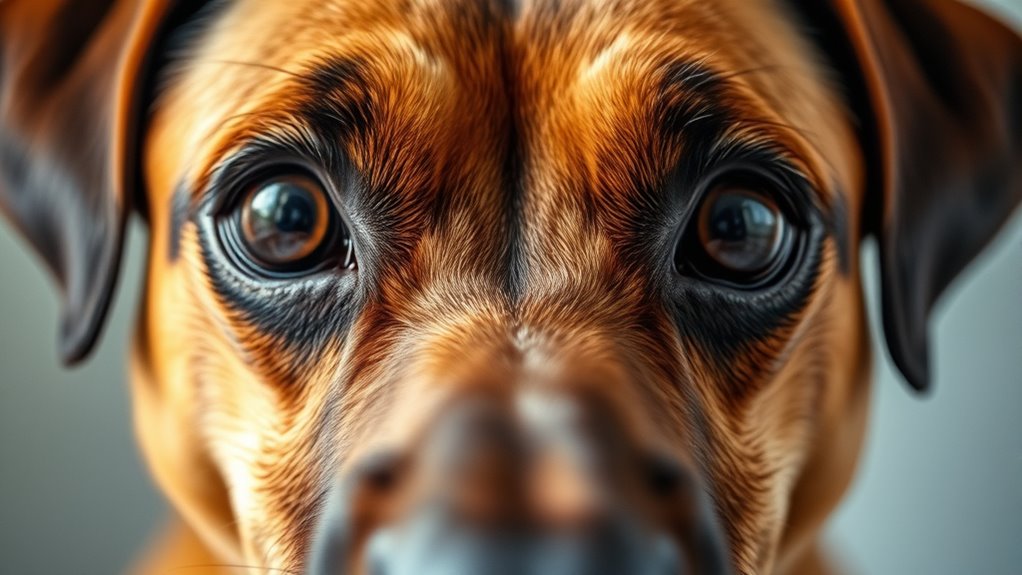
Whale eye in dogs means they’re feeling stressed or anxious, showing the whites of their eyes when worried or uncomfortable. This common canine behavior signals that your dog may be uneasy or fearful in a situation.
Recognizing whale eye is important for understanding your dog’s emotional state and responding appropriately. You should respond calmly, giving your dog space and avoiding punishment to prevent fear from growing.
Watching for other stress signals helps you understand their feelings better. Offering gentle reassurance and a calm environment can ease their anxiety.
If you want to know how to reduce this stress and when to seek help, keep exploring these signs and solutions. Understanding whale eye and other stress cues can improve your dog’s well-being and strengthen your bond.
What Does Whale Eye Look Like? Spotting the White of the Eye
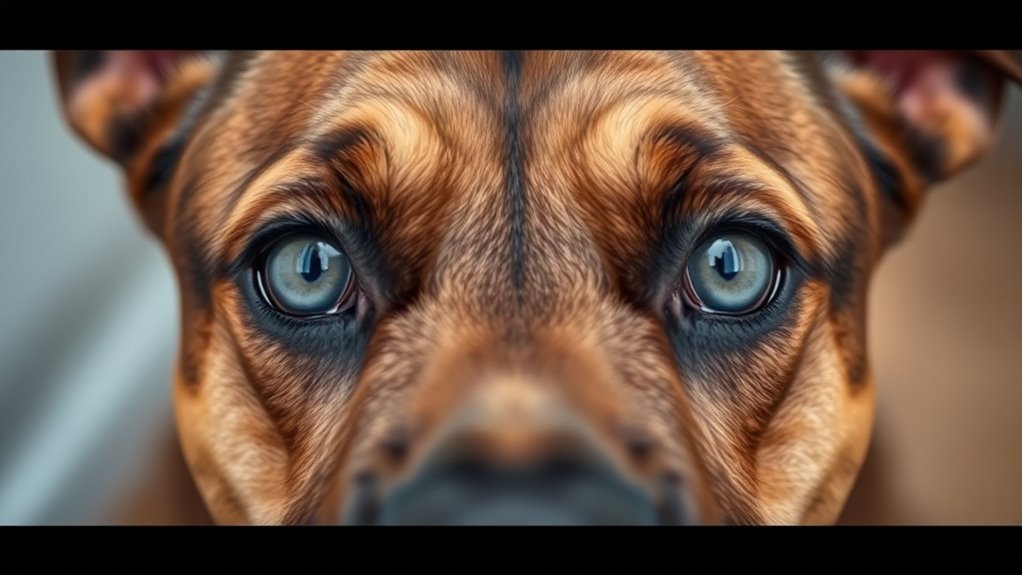
When your dog turns its head slightly but keeps eye contact, you might notice the white of their eye—this is called whale eye. You’ll see the sclera, or white of the eye, more clearly on one or both sides, forming a half-moon shape around the iris. This subtle shift in facial expressions signals something different from relaxed eye contact, where the whites usually stay hidden.
Keep in mind, brachycephalic breeds with short muzzles naturally show more white, so spotting whale eye can be trickier with them. To recognize whale eye, watch for increased exposure of the white of the eye combined with your dog’s steady gaze. Noticing these small changes in eye contact and facial expressions helps you understand what your dog might be communicating.
How Whale Eye Shows Your Dog Is Stressed or Anxious
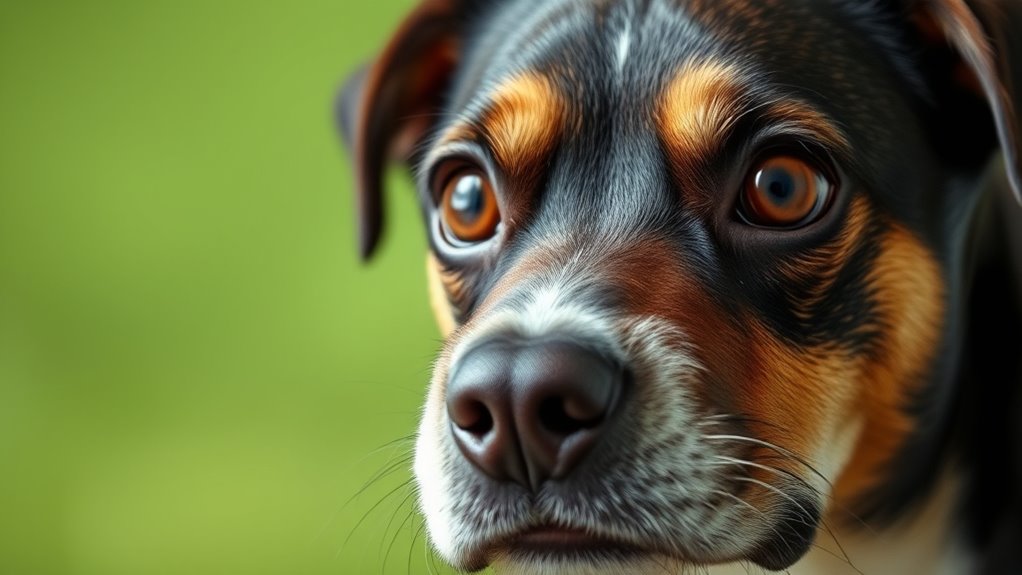
If your dog shows the white of their eyes, it often means they’re feeling stressed or anxious. This whale eye is a clear stress signal in dog body language. When your dog feels threatened or overwhelmed, they might reveal the whites of their eyes while glancing sideways, avoiding direct eye contact.
This subtle sign often comes with other signs of anxiety, like a stiff posture or pinned ears. Recognizing whale eye helps you understand your dog’s emotional state before stress escalates. By paying attention to this stress signal, you can respond calmly and create a safer environment, easing your dog’s anxiety.
Whale eye is your dog’s way of silently communicating discomfort—don’t ignore it.
Recognizing Other Stress Signals Alongside Whale Eye
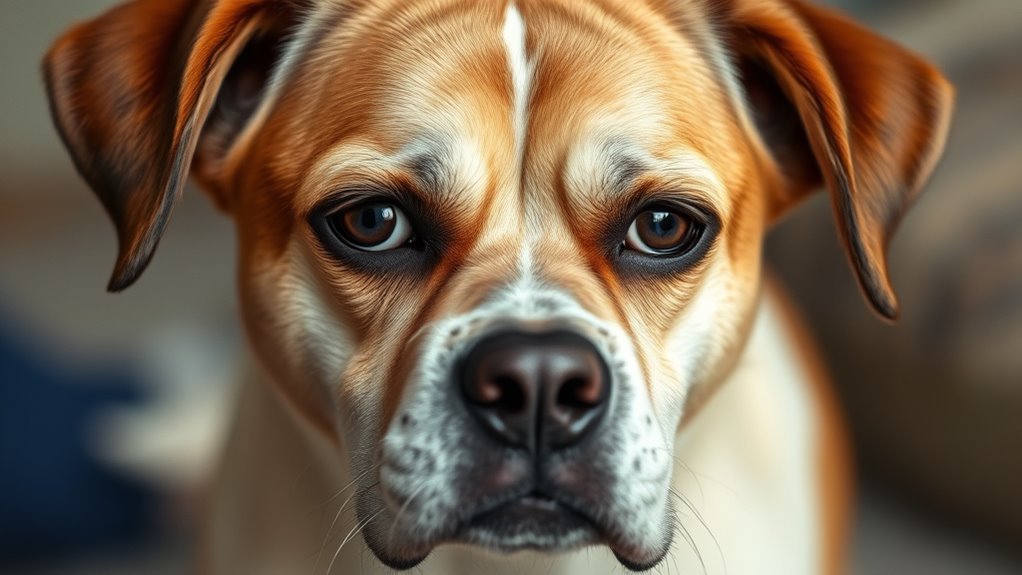
When you spot whale eye in your dog, look for other stress signals like lip licking, yawning, or a stiff body posture. Pay attention to vocal cues such as growling or snapping, which can show increased anxiety or fear.
Recognizing these combined signs helps you understand how your dog is feeling and respond appropriately.
Common Stress Indicators
Although whale eye is a clear sign of stress in dogs, you should also watch for other signals to understand their emotional state better. Common stress indicators include lip licking, yawning, and shaking, which often appear alongside whale eye.
Pay attention to your dog’s body language, like a bristled coat or tense, stiff posture, as these suggest heightened anxiety or fear. Avoidance behaviors, such as turning away or avoiding eye contact, are also important clues in dog behavior signaling discomfort.
Additionally, excessive panting or drooling can be physical signs of stress. By recognizing these stress indicators together with whale eye, you’ll better grasp your dog’s feelings and respond appropriately to ease their stress.
Body Language Cues
Noticing whale eye in your dog is just one piece of the puzzle. To truly understand their emotional state, you need to pay attention to other body language cues. Dogs often show stress signals like lip licking, yawning, or lifting a paw when they’re uncomfortable.
You might also see a stiff posture, tucked tail, or pinned ears, all classic signs of anxiety. Avoidance behaviors such as turning away or avoiding eye contact reinforce that your dog feels stressed. Sometimes, excessive panting or trembling occur alongside whale eye, highlighting heightened emotions.
Vocalization and Behavior
If you observe whale eye in your dog, listen closely for vocalizations like growling or barking, which often signal rising stress or agitation. These sounds are key stress signals that, combined with specific body language, help you understand your dog’s emotional state.
Alongside whale eye, your dog may yawn, lip lick, or shake off—subtle signs of discomfort within their overall canine behavior. Watch for a tense posture, pinned-back ears, dilated pupils, or a low tail carriage, as these reinforce anxiety or threat.
Recognizing these vocalization and body language cues together lets you respond appropriately, preventing escalation toward aggression. By tuning into these stress signals, you can better support your dog’s wellbeing and maintain a calm environment for both of you.
Common Causes of Whale Eye in Dogs
When your dog shows whale eye, it often means they feel threatened, anxious, or uncomfortable. This stress signal is a clear part of their body language and dog behavior, telling you they’re uneasy.
Common causes include unfamiliar people, loud noises, new environments, or fear of being touched or restrained. Conflicts with other animals or overstimulation from rough play can also trigger whale eye.
| Cause | What It Feels Like | How Your Dog Reacts |
|---|---|---|
| Unfamiliar people | Anxiety, fear | Whale eye, avoidance |
| Loud noises | Startling, stress | Whale eye, trembling |
| New environments | Overwhelming, unsure | Whale eye, freezing |
| Rough play | Overstimulation, irritation | Whale eye, pulling away |
| Interaction with dogs | Tension, conflict | Whale eye, growling |
Why It’s Important to Notice Whale Eye Early
Because whale eye signals your dog’s discomfort early, catching it can prevent situations from escalating into aggressive behavior. Early recognition of whale eye is vital since it alerts you to your dog’s unease through subtle canine body language before stress turns into aggression.
By noticing whale eye promptly, you can address dog discomfort immediately, reducing the risk of bites or conflicts. This awareness not only enhances safety for both you and your dog but also gives you the chance to remove stressors and ease anxiety.
Paying close attention to whale eye fosters better communication, aids in training and socialization, and builds trust between you and your dog. Recognizing this early warning is key to maintaining a calm, safe environment for everyone involved.
How to Calm Your Dog When You See Whale Eye
When you notice whale eye, it’s a clear sign your dog is stressed and needs space. Start by giving them room and speaking softly to help ease their anxiety.
Then, gently redirect their focus with a favorite toy or treat to calm them down.
Recognize Stress Signals
If you spot whale eye in your dog, it signals that they’re feeling uneasy or stressed, so you should immediately pause any interaction or activity. Recognizing stress signals like whale eye helps you understand your dog’s behavior better. Dogs often show subtle signs before their stress escalates, and whale eye is a clear indicator.
To recognize stress effectively, watch for other signs like lip licking, yawning, or turning away. When you notice these signals, respond calmly—avoid direct eye contact and speak softly to help ease their discomfort. Providing a safe space where your dog can retreat reduces stress and prevents further escalation.
Use Calm Redirection
Noticing whale eye means your dog feels uneasy, so your next step is to help them calm down. Use calm redirection by speaking in a low, soothing voice and moving slowly to avoid escalating stress signals. Instead of making direct eye contact, which can increase anxiety, turn your body slightly away to create physical space.
Redirect your dog’s attention to a favorite toy or treat, shifting focus from the stressor. This approach aligns with dog training techniques that respect your pet’s body language and emotional state. Be patient and give your dog time to relax, gradually reducing interaction intensity.
Ways to Reduce Fear and Anxiety That Cause Whale Eye
Although whale eye signals a dog’s fear or anxiety, you can take several steps to help reduce these feelings. Start by providing proper socialization from a young age to help your dog feel comfortable with various stimuli, lowering fear that triggers whale eye.
Create a safe, quiet space where your dog can retreat during stressful moments, promoting stress reduction. Regular physical and mental exercise also decreases overall anxiety. Use consistent training with positive reinforcement to build confidence and trust, which improves dog behavior and diminishes fear-based reactions like whale eye.
When to Get Professional Help for Persistent Whale Eye
While many dogs respond well to calming techniques and environmental changes, some continue to show persistent whale eye despite your best efforts. When whale eye remains frequent and unresponsive to training or soothing methods, it’s time to seek professional help.
Persistent whale eye can signal underlying behavioral issues or dog anxiety that need expert diagnosis and treatment. If you notice your dog’s whale eye accompanied by aggression, trembling, or loss of appetite, consult a veterinarian or certified animal behaviorist promptly.
These signs may indicate deeper emotional or health problems that won’t resolve without intervention. Don’t hesitate to get professional help to address your dog’s ongoing discomfort and improve their well-being.
Frequently Asked Questions
What Should I Do if a Dog Shows Whale Eye?
If a dog shows whale eye, stop what you’re doing, give it space, and avoid touching. Speak calmly, move slowly, and let the dog relax.
Once it’s calm, try redirecting attention with a toy or treat.
What Are Signs of a Dog’s Life Ending?
You’ll notice decreased appetite, low energy, labored breathing, weak pulse, unresponsiveness, cold extremities, loss of bladder control, and withdrawal from social interaction.
These signs suggest your dog’s life may be nearing its end.
What Does It Mean When a Dog Looks at You With Whale Eyes?
When your dog shows whale eyes, it’s like a cloudy sky warning of stormy feelings inside.
You’re seeing their unease or fear, so give them space, speak softly, and help them feel safe again.
What Triggers Whale Eyes in Dogs?
You’ll notice whale eyes when your dog feels threatened, stressed, or cornered. Loud noises, unfamiliar people, new places, sensitive touch, or overstimulation during play can trigger this look, signaling they need space or calm reassurance.
Conclusion
Noticing whale eye in your dog is more important than you might think—studies show that nearly 70% of dogs display stress signals like whale eye before aggressive behavior. By recognizing this early, you can help your furry friend feel safe and calm.
Responding quickly with soothing actions or training can prevent bigger problems. Remember, when whale eye shows up often, don’t hesitate to seek professional help to keep your dog happy and healthy. Understanding what whale eyes mean in dogs and how to respond is key to maintaining their well-being.