What Is Whale Eye in Animal Behavior?
Whale eye in animal behavior is a clear indicator when you see the white of a dog’s eye in a half-moon shape as they look away, signaling stress or discomfort. This subtle sign is important for understanding your dog’s emotional state.
It’s their way of staying alert while avoiding direct eye contact, often showing anxiety or feeling trapped. You’ll often notice whale eye accompanied by tense body language or lip licking.
Recognizing these signs helps you respond calmly and keep your dog comfortable. Keep exploring to understand what triggers this behavior and how to help your pet feel safe.
What Does Whale Eye Look Like in Dogs?
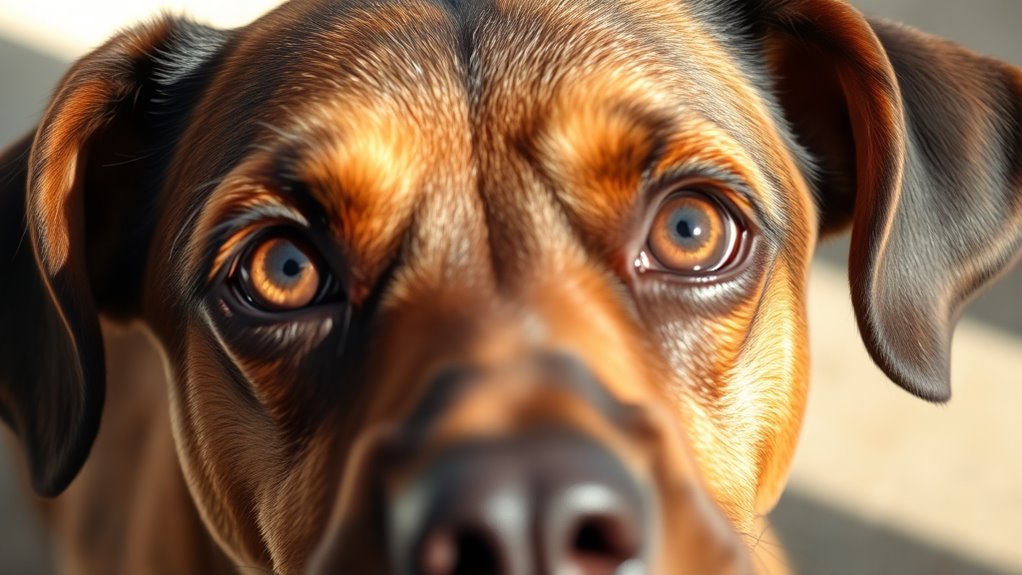
When you notice a visible arc of the white part of your dog’s eye, often alongside a turned head and averted gaze, you’re likely seeing whale eye. This unique canine behavior shows the white of the eye—called the sclera—forming a half-moon shape as your dog looks away while keeping their head slightly turned.
Dog eyes with whale eye appear alert but avoid direct eye contact, signaling subtle stress and anxiety. Along with this, their facial expressions and body language often suggest discomfort. Pupils may dilate, making the white of the eye even more prominent.
Recognizing whale eye helps you understand your dog’s feelings better, as this avoidance of eye contact is a quiet but clear message in their body language and canine behavior repertoire.
Why Do Dogs Show Whale Eye?
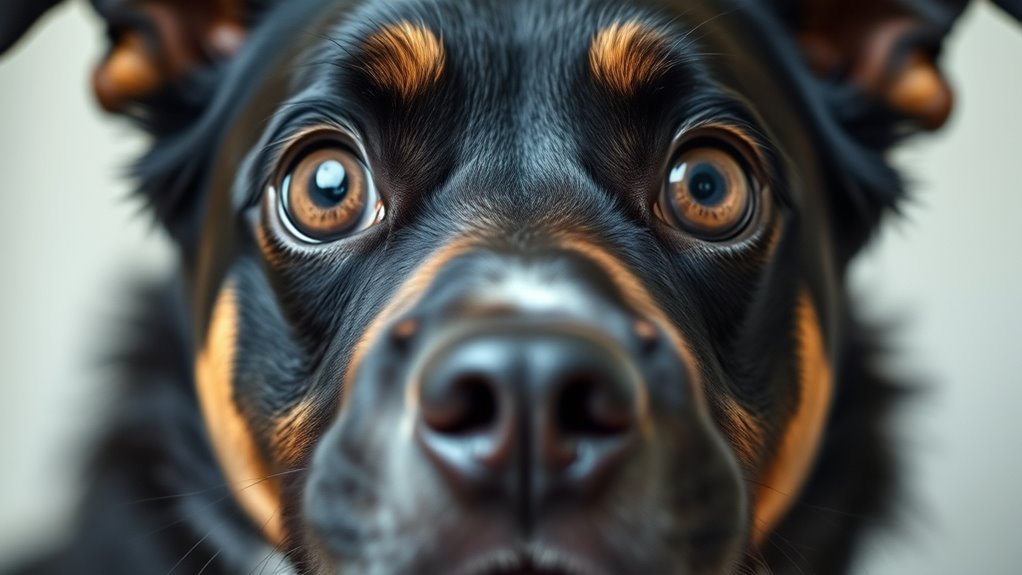
Although it might seem subtle, your dog shows whale eye to express stress, fear, or discomfort without directly confronting a threat. When you notice the whites of the eyes visible, it’s a clear sign of fear in dogs and an important aspect of canine body language. This behavior is a stress signal, often triggered by unfamiliar people, animals, or situations that make your dog feel trapped or anxious.
For dog owners, recognizing whale eye helps you identify signs of anxiety early, allowing for timely intervention. During dog training, understanding these stress signals improves communication and prevents escalation. Whale eye is your dog’s way to monitor a threat while avoiding conflict, so paying attention to this dog behavior keeps your furry friend safe and comfortable.
What Signs Accompany Whale Eye in Dogs?
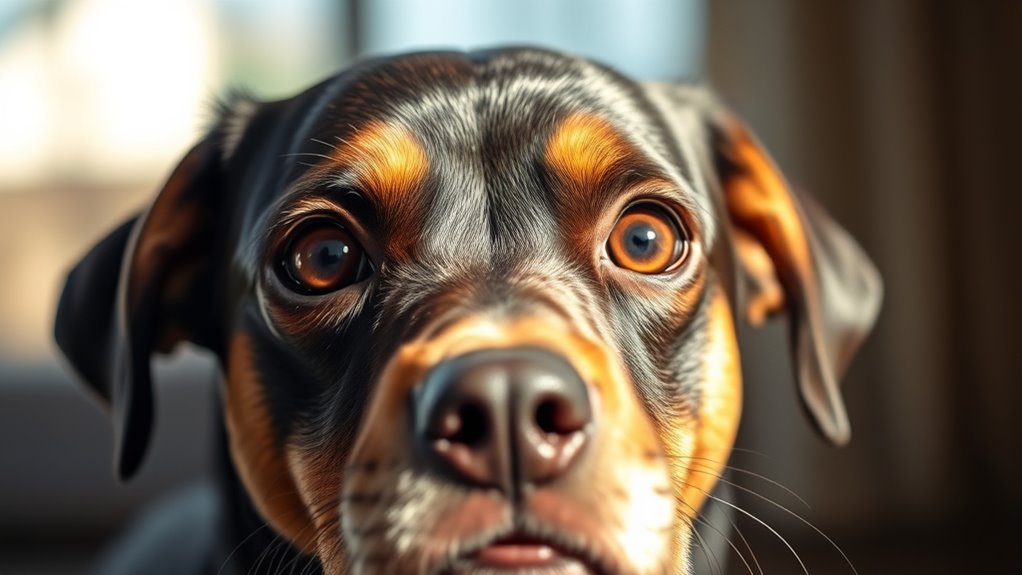
Because whale eye signals stress in dogs, you’ll often notice other signs accompanying it. When your dog shows whale eye, their body language and facial expressions provide additional clues that they’re uncomfortable or fearful.
Look out for these stress signals: Lip licking and yawning, which often indicate anxiety or a sign of fear. A stiff posture or tucked tail position, showing tension in the body. Avoiding direct eye contact with a lowered or averted gaze. Dilated pupils, increased panting, trembling, or retreating behavior.
What Triggers Whale Eye in Dogs?
If your dog suddenly shows the whites of their eyes, it usually means something in their environment is making them uneasy. Whale eye in dogs is often triggered by stress caused by an unfamiliar environment, new people, or other animals. When they feel trapped, cornered, or threatened, this body language signals discomfort.
Even physical triggers like being touched in sensitive spots during grooming or vet visits can provoke whale eye. Loud noises, abrupt movements, or changes in routine also act as common triggers. In social settings, meeting new dogs or visitors may lead to this behavior as a stress response.
Recognizing these triggers helps you understand your dog’s stress signals and respect their boundaries before discomfort escalates.
How Should You Respond When Your Dog Shows Whale Eye?
When your dog shows whale eye, it’s a clear signal that they’re feeling stressed or uncomfortable. You can tell by the whites of their eyes and the position of their ears—key parts of dog body language. Here’s how to respond:
- Stop any interaction immediately to avoid escalating dogs behavior.
- Give your dog space and avoid direct eye contact, so a fearful dog doesn’t feel threatened.
- Calmly and slowly withdraw from the situation, helping your dog feel safer.
- Use a soothing voice or offer a favorite toy to comfort and redirect their attention.
Frequently Asked Questions
What Does Whale Eye Behavior Indicate?
Whale eye behavior indicates you’re stressing or scaring the animal. When you see the white of their eye showing, they’re uncomfortable or anxious.
You should recognize this and try to calm them down before things escalate.
How Can I Correct Whale Eye in My Dog?
You can correct whale eye by giving your dog space, speaking gently, and moving slowly—imagine calming a startled deer. Use favorite toys and remove stressors, building trust through patience to ease their anxiety over time.
What Triggers Whale Eye in Dogs?
You’ll notice whale eye when your dog feels stressed by strangers, loud noises, or unfamiliar animals.
It also happens if they feel trapped, touched in sensitive spots, or uncomfortable during grooming or vet visits.
What Is a Whale Eye?
Imagine a crescent moon shining in your dog’s eyes—that’s whale eye.
You’ll see the white part showing when your dog feels uneasy or alert, silently telling you they’re stressed or uncomfortable in that moment.
Conclusion
When your dog shows whale eye, it’s like a silent alarm flashing in their gaze, warning you that something’s off. Don’t ignore this subtle signal—it’s their way of saying, “I’m uneasy.”
By tuning into these eyes, you can navigate their feelings and avoid storms before they brew.
Remember, understanding whale eye helps you build trust, turning tense moments into opportunities for calm and connection between you and your furry friend. Recognizing whale eye in animal behavior is key to fostering a strong, positive bond.