How Does a Whale Breathe Step by Step
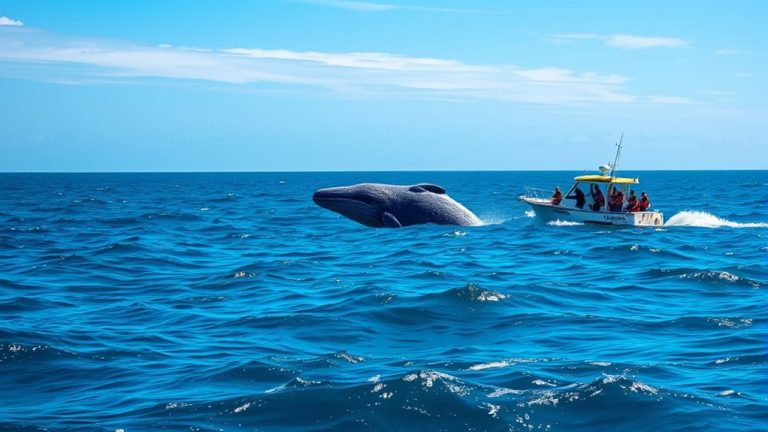
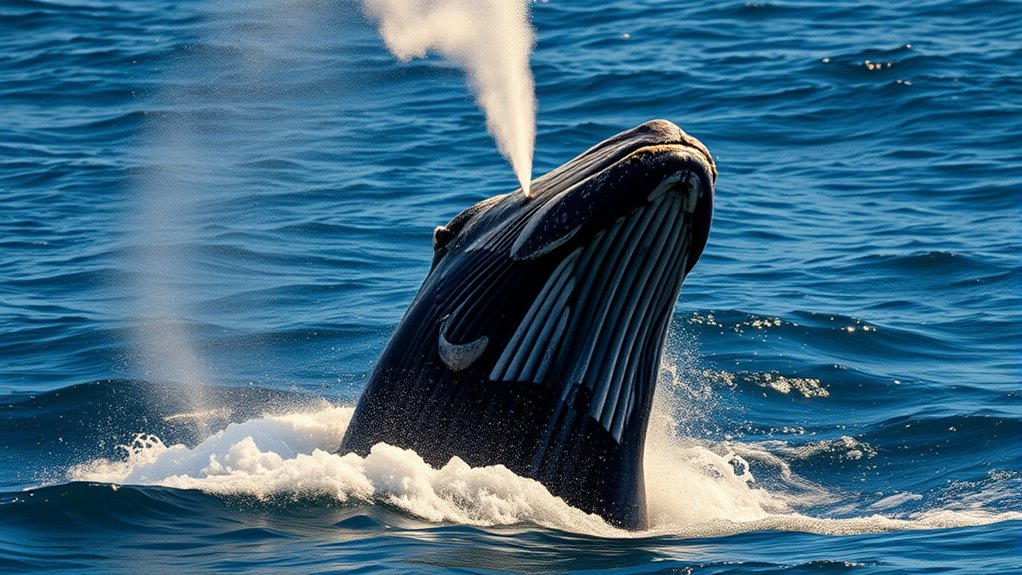
When a whale surfaces, you’ll see it forcefully exhale stale air and water vapor through its blowhole on top of its head. This action clears the blowhole with a visible spout.
Then it quickly inhales fresh air, filling its lungs in under a second.
Muscles seal the blowhole tight underwater, keeping water out.
Whales hold their breath for profound dives using oxygen stored mainly in their blood and muscles.
There’s more fascinating detail on how whales manage this seamless breathing cycle.
How Whales Breathe Through Their Blowholes at the Surface
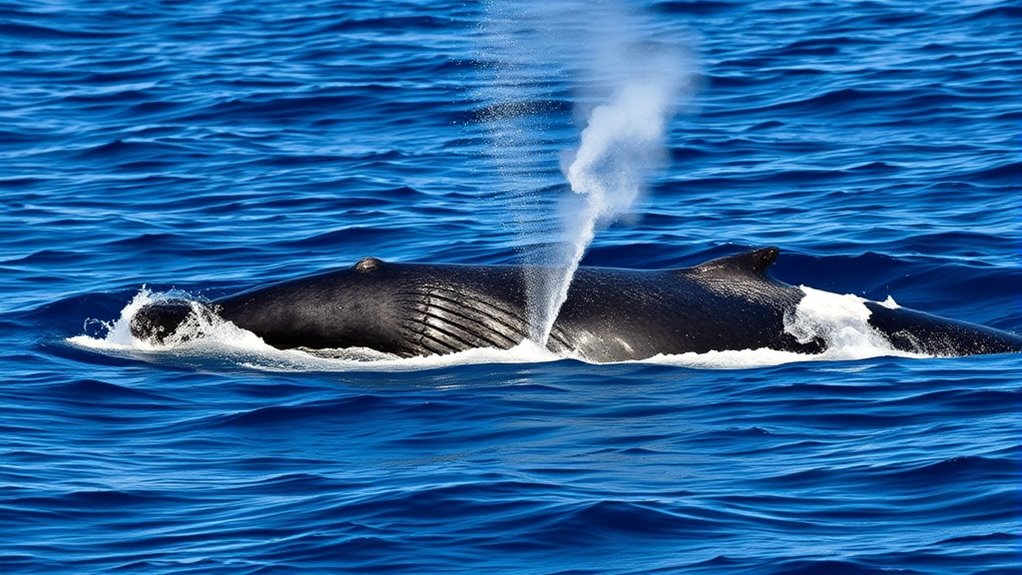
Have you ever wondered how whales manage to breathe while spending most of their time underwater? They use a specialized nostril called a blowhole located on top of their head. When surfacing, whales open this blowhole by contracting muscular valves that lift the nasal plug, allowing air flow.
They first exhale forcefully, pushing out stale air along with a visible spout of water vapor and warm air. Immediately after, they inhale a fresh breath of air, filling their lungs in less than a second. During respiration, these muscular valves keep the blowhole tightly sealed underwater, preventing water from entering the lungs.
This efficient system lets whales breathe quickly and safely at the surface before diving back underwater.
How Whales Perform the Exhale-Inhale Breathing Cycle
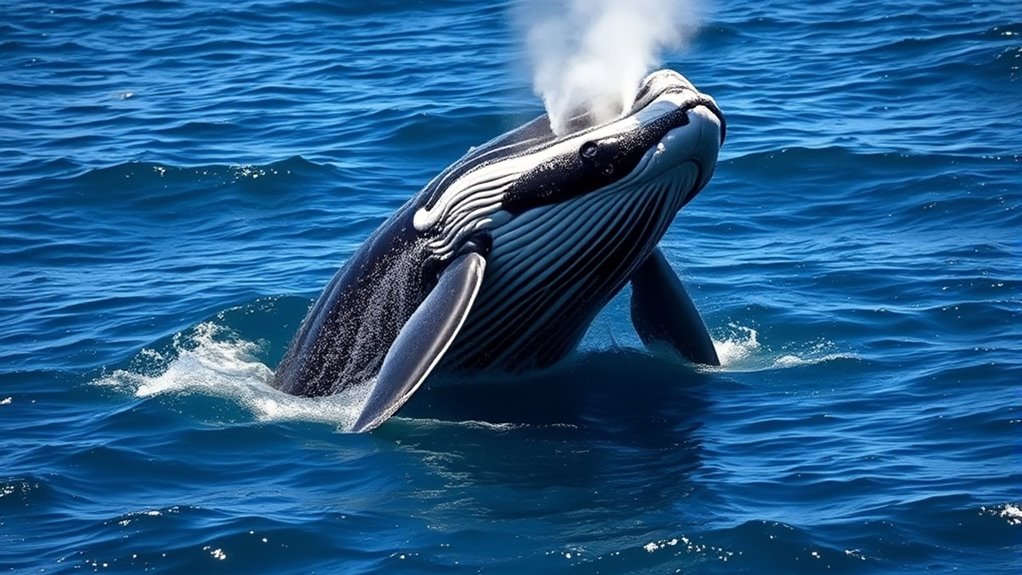
Although whales spend most of their time underwater, they perform a rapid and efficient exhale-inhale breathing cycle at the surface. You’ll notice they first exhale forcefully through their blowhole, expelling stale air and water vapor with a loud sound.
Immediately, they inhale fresh, oxygen-rich air, filling their lungs in less than a second. This voluntary breathing process optimizes lung function and oxygen exchange, preparing them for the next dive.
| Step | Action | Purpose |
|---|---|---|
| 1 | Exhale through blowhole | Clear stale air & vapor |
| 2 | Visible spout | Indication of exhale |
| 3 | Rapid inhalation | Fill lungs with oxygen |
| 4 | Complete breathe cycle | Ready for underwater |
This quick breathe cycle happens at the air surface efficiently every time.
How Whales Keep Water Out While Breathing
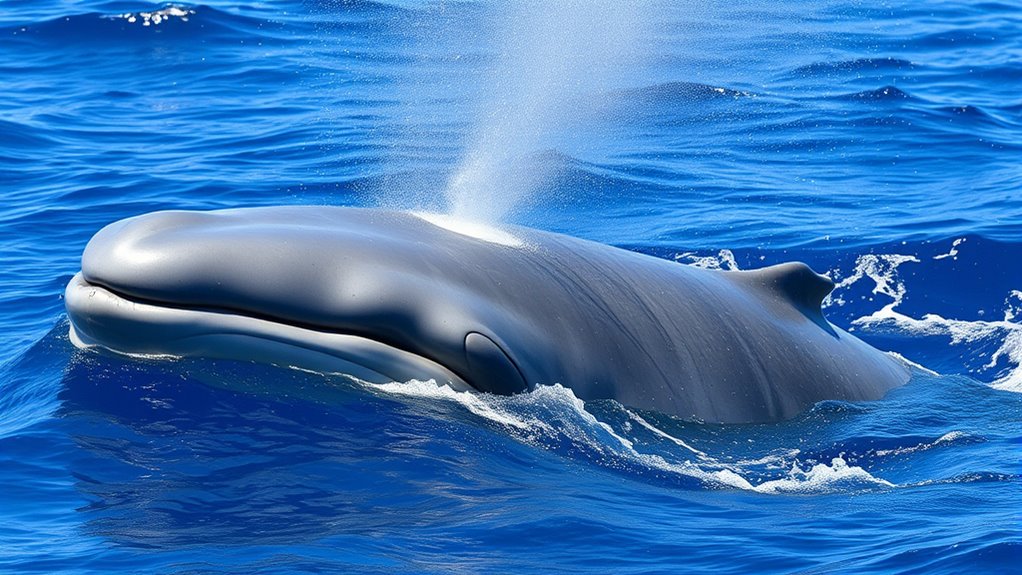
After completing their quick exhale-inhale cycle at the surface, whales immediately secure their respiratory system to keep water out. They tightly close their blowhole using waterproof muscles that act like a strong seal. This muscle contraction prevents any water entry, even as the whale dives beneath the surface.
You’ll notice water spray during exhalation, but that’s just moisture on top of the blowhole, not water from the lungs. A fibrous nasal plug also covers the blowhole when it’s not in use, creating an extra water seal. Positioned on top of the head, the blowhole lets whales breathe without fully surfacing, minimizing exposure.
These adaptations ensure their respiratory system stays dry, allowing whales to swim and dive efficiently without risking water entering their lungs.
How Whales Hold Their Breath and Use Oxygen Underwater
While diving deep underwater, whales hold their breath for impressive lengths of time—sometimes over an hour—by storing most of their oxygen in their blood and muscles rather than their lungs. When you watch whales diving, you might wonder how they manage without breathing for so long. They reduce their heart rate to slow oxygen use and direct blood flow to vital organs, conserving oxygen efficiently.
Whales exchange 80-90% of the air in their lungs with each breath, much more than humans, so they start a dive with nearly full oxygen reserves. As they stay underwater, their bodies use this stored oxygen slowly, allowing them to hold their breath and stay submerged while still supplying their organs with the oxygen they need during long dives in water.
Oxygen Storage Adaptations in Whales’ Lungs and Blood
Because whales rely on stored oxygen during long dives, their bodies have evolved remarkable adaptations in their lungs and blood to maximize oxygen storage. Their blood contains about 60% hemoglobin—double that of humans—boosting oxygen transport efficiency. Whales also have a large blood volume, 10-20% of their body weight, ensuring ample oxygen reserves.
Whales have double the hemoglobin and large blood volumes to maximize oxygen storage during long dives.
Their muscles store oxygen too, thanks to elevated myoglobin levels, which are up to 30% higher than in land mammals. Curiously, their lungs are smaller relative to body size, minimizing air volume and pressure changes during deep dives. These diving adaptations help marine mammals sustain underwater activity for up to two hours by optimizing oxygen use and blood flow.
- High hemoglobin concentration enhances oxygen transport
- Increased myoglobin stores oxygen in muscles
- Smaller lungs reduce pressure risks during dives
How Whales Control Breathing to Coordinate Diving and Surfacing
When whales prepare to surface, they consciously open their blowholes using strong muscles, allowing them to breathe efficiently during brief intervals above water. They exhale forcefully to clear stale air, then rapidly inhale a large volume of fresh air in just seconds.
During diving, whales close their blowholes tightly with a fibrous plug, preventing water from entering and enabling extended breath-holding. Their breath control depends on precise breathing regulation, adjusting muscle contractions to coordinate inhalation and exhalation with diving and surfacing cycles.
Specialized structures like the laryngeal sac help manage airflow and sound production. By regulating breathing frequency—typically 4 to 5 breaths per minute—whales optimize oxygen intake and conserve energy, ensuring effective coordination between diving depths and surface intervals.
Frequently Asked Questions
How Does the Whale Breathe?
You watch a whale surface, open its blowhole, and exhale forcefully, releasing a spout. Then it quickly inhales fresh air, closes the blowhole tightly, and dives again, controlling its breath consciously throughout.
Can a Whale Live for 200 Years?
Yes, you can believe some bowhead whales live over 200 years. Their unique genes protect against aging and disease, letting them maintain health and reproduction remarkably well throughout their long, resilient lives in harsh ocean environments.
How Can We Know From Far Away That a Whale Is Breathing?
You can spot a whale breathing from far away by seeing its blow—a sudden spray of water and air above the surface.
That misty burst and the whale surfacing signal it’s taking a breath.
How Do Whales Sleep if They Can’t Breathe Underwater?
You’ll find whales sleep with half their brain awake, letting them surface for air regularly.
They control their breathing consciously, so they don’t drown, even while resting and drifting slowly near the water’s surface.
Conclusion
Breathing like a whale is like watching a dance between sky and sea—each breath a graceful rise and fall through the blowhole’s gateway. You’ll see how they masterfully seal out water, hold their breath deep underwater, and store oxygen like hidden treasure.
As you imagine their rhythmic cycle, remember: their breath is a silent symbol of survival, a bridge connecting the vast ocean’s depths with the endless sky above, perfectly balanced and beautifully controlled.
Understanding how does a whale breathe step by step reveals the incredible adaptations that make these marine giants true masters of their underwater world.