How Much Does a Killer Whale Eat Each Day?
You’ll find that a killer whale typically eats about 227 kilograms (500 pounds) of food every day to keep up its energy and strength. How much does a killer whale eat each day?
Depending on its size and activity, daily consumption can range from 100 to over 1,200 pounds.
Their diet includes fish, seals, and sometimes even whales. These whales hunt in groups and share their meals, which are essential for their survival.
There’s more to discover about their eating habits and why it matters.
How Much Food Does a Killer Whale Eat Daily?
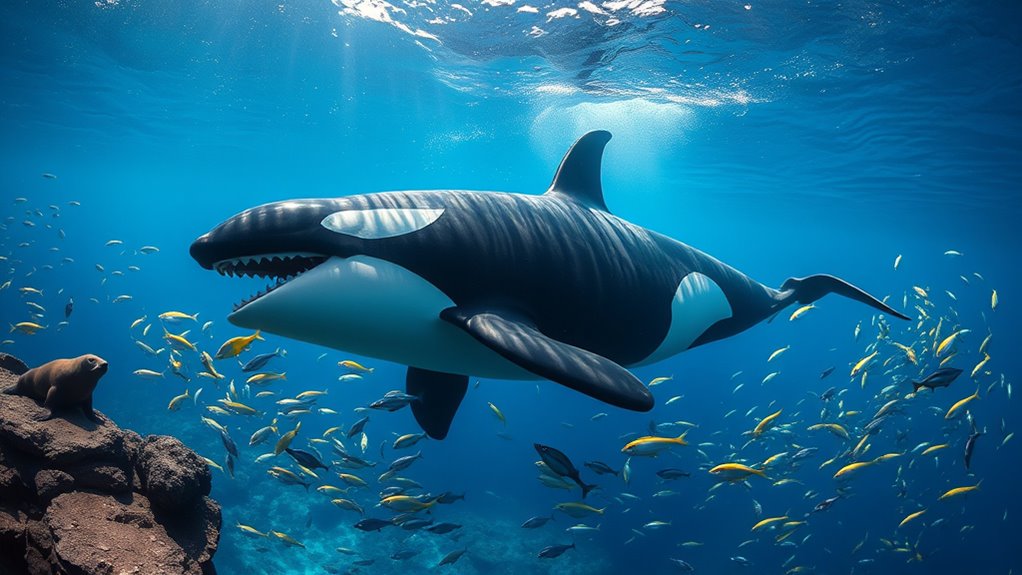
While the amount of food a killer whale eats daily can vary, an average-sized one consumes about 227 kilograms (500 pounds) each day. You’ll find that this amount depends on factors like activity level and prey availability, with consumption ranging from 100 to 300 pounds on different days.
Larger males, for example, may eat up to 9,000 kilograms (20,000 pounds) per week, which averages about 1,286 pounds daily. Killer whales rely on their sophisticated hunting techniques to capture enough food, targeting fish, seals, and other marine mammals.
Their high daily intake supports their energetic lifestyle and complex social hunting strategies. So, when you think about killer whales, remember their impressive food demands fuel their survival in the ocean.
What Types of Prey Make Up a Killer Whale’s Diet?
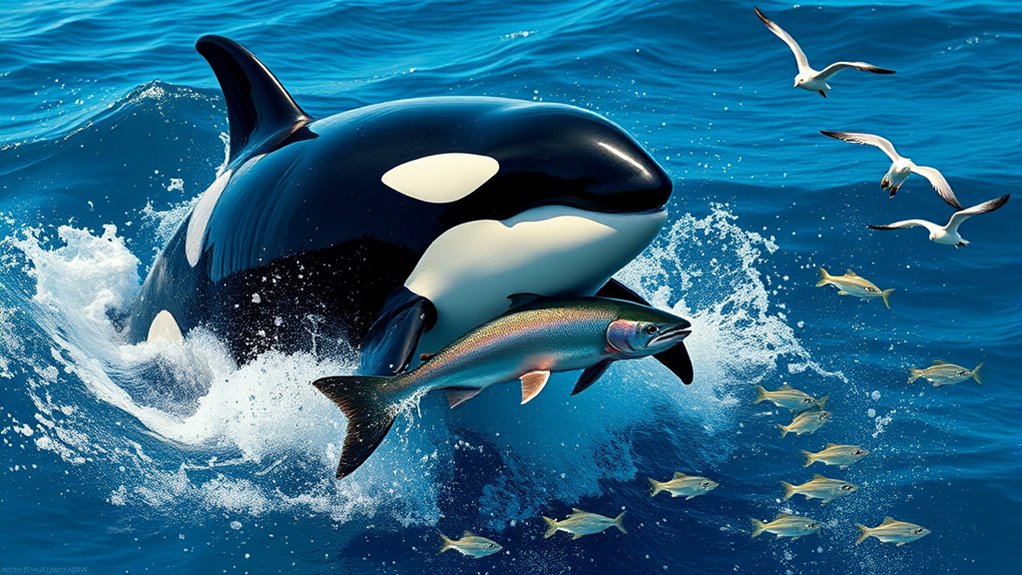
What kinds of prey do killer whales favor in their diet? Killer whales primarily feed on fish like salmon, herring, and mackerel, but their diet also includes various marine mammals and other sea creatures. Depending on where they live, you’ll find their prey ranging from seals to squid.
Here’s a quick look at their common prey types:
| Prey Type | Examples |
|---|---|
| Fish | Salmon, Herring, Mackerel |
| Marine Mammals | Seals, Sea Lions, Small Whales |
| Larger Mammals | Elephant Seals, Minke Whales |
| Others | Sharks, Squid |
| Birds | Seabirds, Penguins |
Understanding this variety helps you appreciate how adaptable killer whales are in meeting their dietary needs.
How Does Killer Whale Diet Vary by Ecotype or Region?
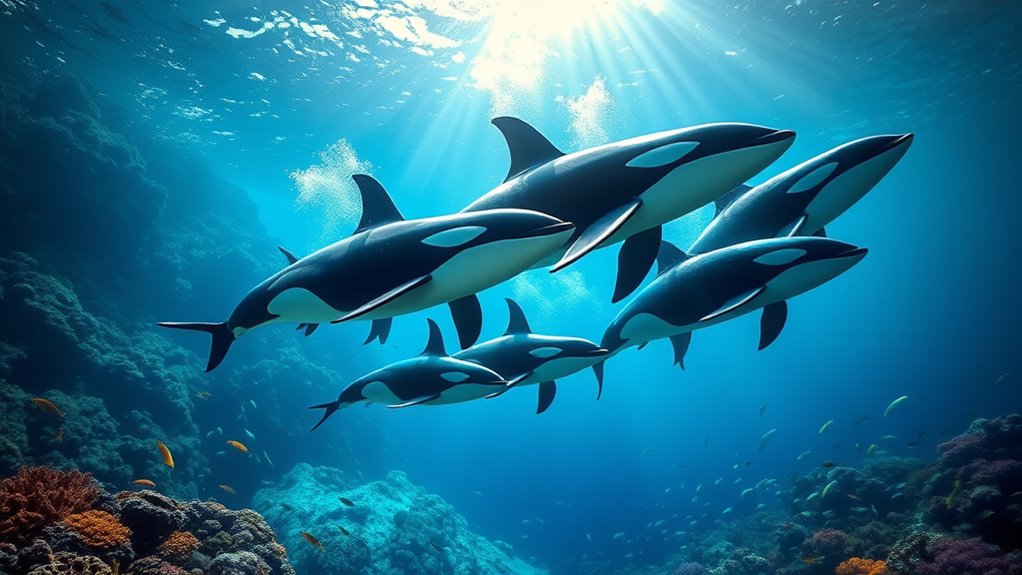
Killer whales don’t eat the same things everywhere—they adapt their diets based on where they live and their ecotype. For example, resident killer whales focus on fish like Chinook salmon, while transient ecotypes hunt marine mammals such as seals and whales. In offshore regions, their diet shifts to include fish like halibut and sculpin.
Meanwhile, North Atlantic orcas prey on seals and schooling fish such as herring and mackerel. In Hawaiian waters, killer whales have a diverse diet, feeding on humpback whales, dolphins, octopuses, and squids. Different ecotypes also specialize in unique prey: Antarctic Type A targets minke whales, whereas Type D feeds on Patagonian toothfish.
Regional prey availability shapes killer whales’ diet, influencing their feeding habits and vocalizations across populations.
How Do Killer Whales Hunt and Share Their Food?
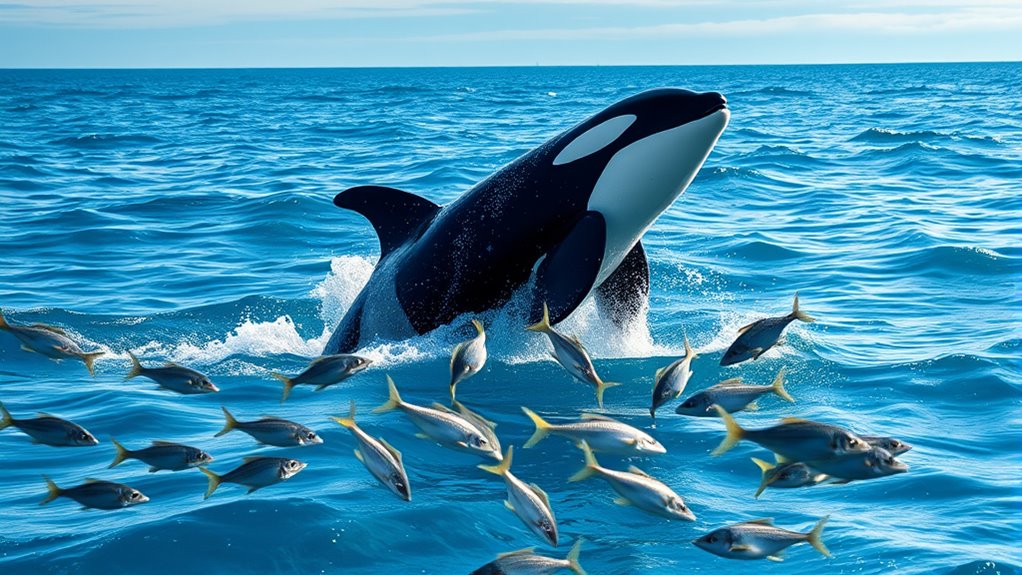
You’ll see killer whales work together in pods, using clever techniques like herding fish or surrounding bigger prey to catch their meals.
After a successful hunt, they quickly share the food with each other, making sure no one goes hungry. Understanding these cooperative behaviors helps explain how they meet their daily energy needs.
Cooperative Hunting Techniques
Although hunting alone can be challenging, orcas increase their chances of success by working together in pods. Through cooperative hunting, they use coordinated techniques like herding fish into tight balls, making prey easier to catch during feeding behavior. When targeting larger animals such as seals or whales, they surround and weaken the prey collaboratively, ensuring no one is left hungry.
You’ll notice that orcas communicate constantly with vocalizations to synchronize their movements and improve efficiency. This teamwork not only boosts their hunting success but also supports prey sharing once the kill is made. By passing chunks of food among pod members, they maintain strong social bonds and guarantee everyone gets fed.
This cooperative hunting method is key to the survival and strength of killer whale pods.
Food Sharing Behavior
When orcas finish a hunt, they don’t just eat alone—they actively share their catch with the entire pod. Thanks to cooperative hunting, pods capture prey efficiently, then distribute it to guarantee everyone gets fed. You’ll notice food sharing involves passing chunks of prey, like fish or seals, especially to younger or less dominant members.
Sometimes, they rip larger prey into manageable pieces before dividing it. This behavior strengthens social bonds within the pod and ensures calves and injured whales receive nourishment. So, food sharing isn’t just about eating; it’s a crucial part of pod life that promotes survival and cooperation among killer whales.
Understanding this helps you appreciate how these marine mammals thrive together in their environment.
Why Do Killer Whales Need So Much Food Every Day?
Because killer whales are large and highly active predators, they need to consume up to 500 pounds of food daily to fuel their muscles and maintain their health. Their large size alone demands a huge amount of energy, but it’s their intense hunting behavior that really drives their need for so much food a day.
You’d notice that killer whales engage in long-distance travel and coordinated hunts that burn a lot of calories. To keep up with this lifestyle, they rely on energy-rich prey like fish, seals, and sea lions. Without this substantial daily intake, their muscle function, body mass, and reproductive health would suffer.
How Does Food Availability Affect Killer Whale Health and Survival?
When prey becomes scarce, you’ll notice killer whales face serious nutritional stress that impacts their health and survival. Without enough food, they can become malnourished and more vulnerable to disease.
This scarcity forces them to change their behavior just to find enough to eat, threatening their long-term stability.
Prey Scarcity Impacts
Although killer whales need around 227 kilograms (500 pounds) of food daily, you can see how prey scarcity puts serious stress on their health and survival. When food intake drops due to limited prey, especially favored species like salmon or seals, killer whales experience declining health and reproductive challenges.
You’ll notice they may travel farther or switch to less nutritious prey, but this shift often weakens their immune systems and reduces body condition. Over time, prey scarcity disrupts pod dynamics and lowers calf survival, threatening the entire population’s stability.
Nutritional Stress Effects
Prey scarcity doesn’t just change where killer whales hunt—it directly affects their health and survival. When food availability drops, orcas face nutritional stress that weakens their immune systems and overall condition. Here’s how prey scarcity impacts them:
- Weight loss and diminished body condition reduce their strength and endurance.
- Impaired immune systems increase vulnerability to diseases.
- Lower reproductive success threatens population stability.
You can see that without enough food, killer whales struggle to perform high-speed chases and cooperative hunting, further limiting their ability to find prey. Persistent nutritional stress from reduced food availability can lead to higher mortality rates and long-term declines, especially in endangered groups like the Southern Residents.
Ensuring ample prey is critical to keeping killer whales healthy and thriving.
Frequently Asked Questions
How Many Fish Does a Killer Whale Eat a Day?
You can expect a killer whale to eat hundreds of fish daily, depending on their size and species.
They either swallow small fish whole or tear larger ones into chunks, making their feeding quite efficient and varied.
What Animal Are Orcas Afraid Of?
You might think orcas fear no one, but they sometimes avoid large, aggressive great white sharks.
Still, they mostly dominate, showing caution instead of fear around unfamiliar or potentially dangerous marine animals.
Can Orcas Live 100 Years?
Yes, orcas can live up to 100 years or more, especially females.
If you protect their environment and reduce threats like pollution, you help guarantee they reach their impressive lifespans in the wild.
What Is the Orca’s Favorite Food?
You’ll find that orcas love Chinook salmon most, which makes up about 80% of their diet. Their preference for this fatty, nutrient-rich fish helps them stay energetic for hunting and socializing.
Conclusion
Now, imagine the vast ocean, where a killer whale glides silently, hunting tirelessly to meet its enormous appetite. You might wonder how it manages day after day, consuming so much to fuel its strength and survival.
But what happens when the prey becomes scarce? The whale’s fate hangs in the balance, reminding you just how fragile this powerful predator’s world truly is—always hunting, always needing, always on the edge.
Understanding how much a killer whale eats each day reveals not only its impressive dietary needs but also the delicate balance of marine ecosystems that support this apex predator.