Do Whale Sharks Eat Plants or Are They Herbivores?
Do Whale Sharks Eat Plants or Are They Herbivores? You might think whale sharks eat only animals, but they actually consume both small marine creatures and algae, making them omnivores—not strict herbivores.
They filter huge amounts of water to catch plankton, tiny fish, and plant matter like brown seaweed. This mixed diet helps them get essential nutrients, especially when animal prey is scarce.
If you want to understand why their diet matters for their survival and conservation, there’s more to explore.
What Do Whale Sharks Normally Eat?
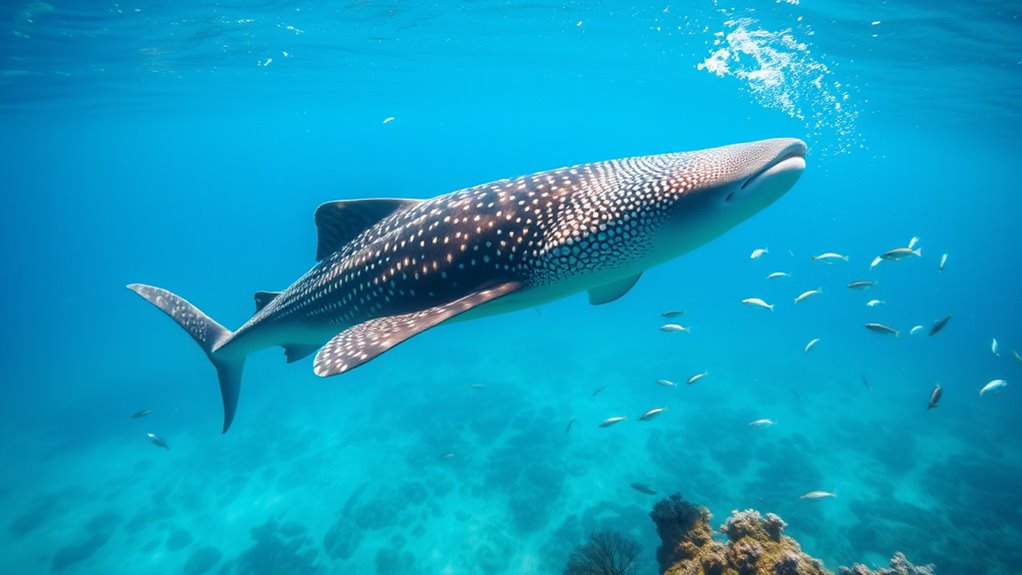
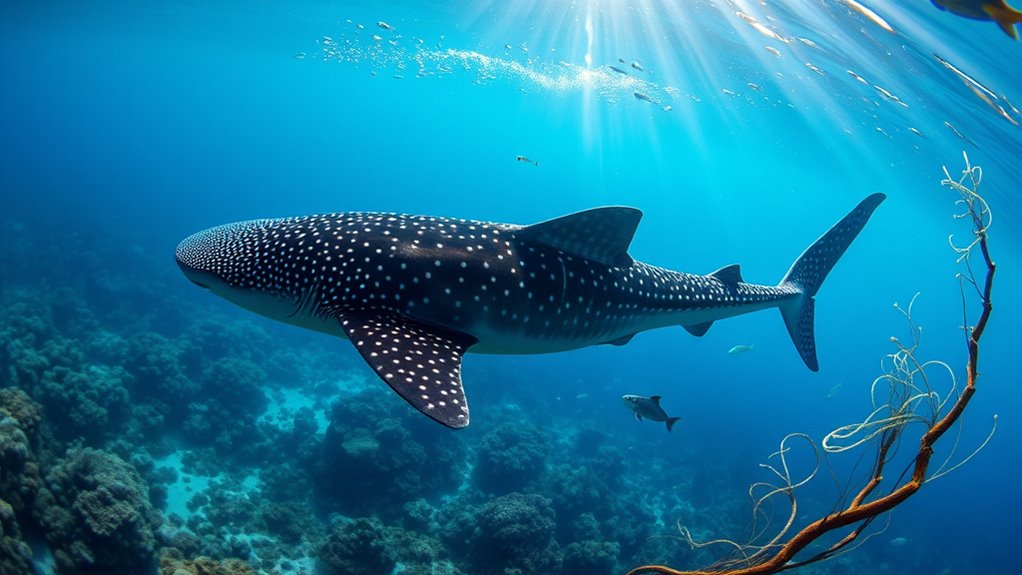
While you might picture a giant predator, whale sharks actually feed mostly on tiny creatures like plankton, krill, and small fish larvae. These gentle giants use filter feeding to process over 6,000 liters of water per hour, capturing their prey with specialized gill filters.
You’ll often find whale sharks in feeding aggregations, where they take advantage of dense concentrations of small fish, jellyfish, and other soft-bodied invertebrates. Although their diet mainly consists of animal matter, recent studies hint they may also consume plant matter, suggesting a more omnivorous diet than we once believed.
This diverse menu lets whale sharks adapt to changing food availability, showing just how versatile these massive creatures are when it comes to feeding in the vast ocean.
How We Learned Whale Sharks Eat Algae
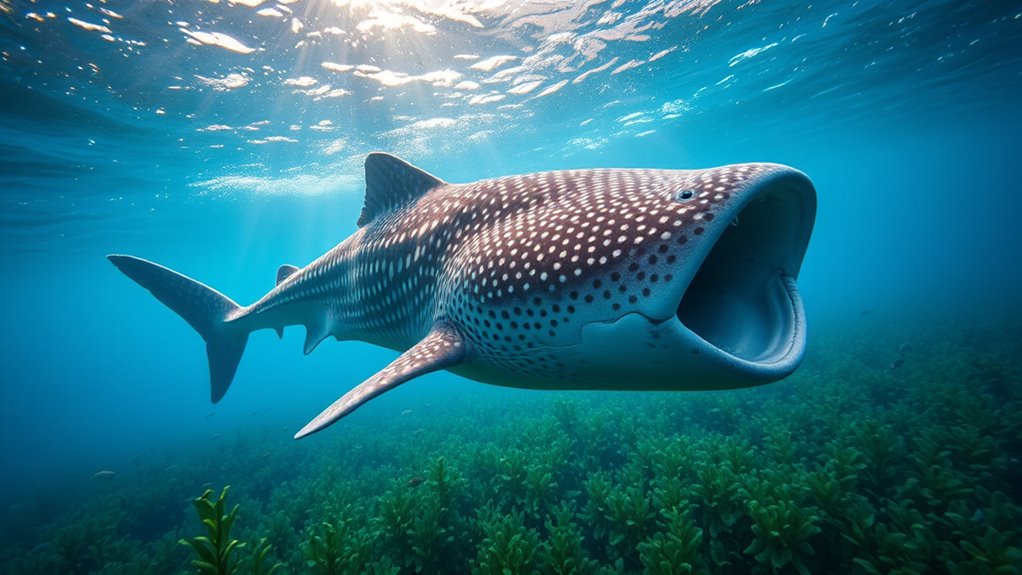
Recent research has revealed surprising details about what whale sharks eat, showing they’re not just filter-feeding on tiny animals. By analyzing stable isotopes of carbon and nitrogen in tissues, scientists discovered whale sharks consume algae and plant matter regularly. Both captive and wild sharks exhibited isotope signatures matching Sargassum, a brown seaweed, proving this isn’t accidental ingestion.
Even during fasting periods, whale sharks’ blood and tissues contained plant-derived compounds, indicating consistent inclusion of algae in their diet. These findings challenged earlier beliefs about their strictly carnivorous feeding behaviors and highlighted that whale sharks, as marine megafauna, maintain an omnivorous diet. This breakthrough reshapes how you understand whale sharks’ feeding ecology and emphasizes the complexity of their nutritional sources beyond just animal prey.
Are Whale Sharks Herbivores or Omnivores?
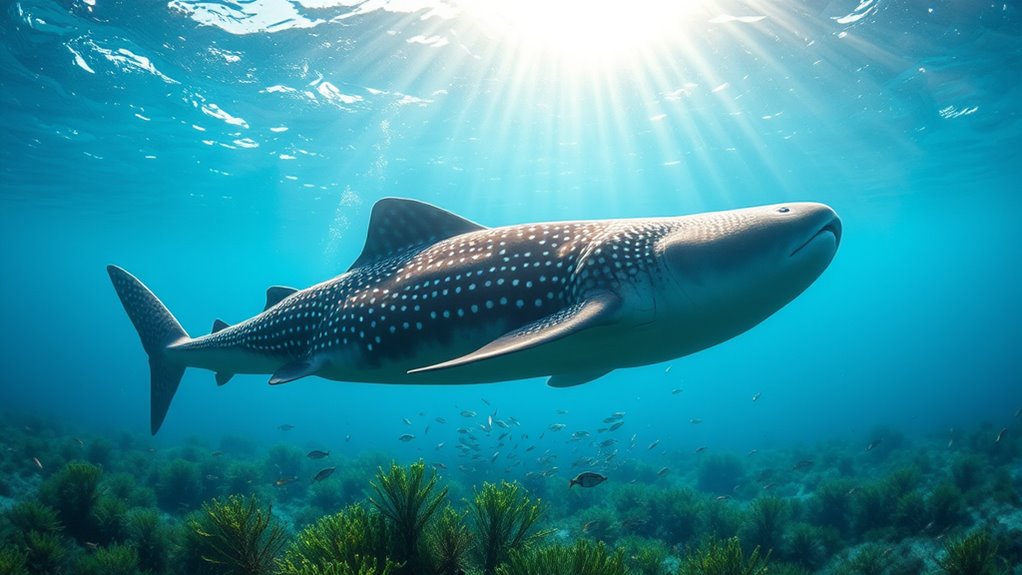
Because whale sharks consume both animal prey and plant material like algae, you can classify them as omnivores rather than strictly herbivores or carnivores. Their feeding behavior as filter feeders allows them to capture a variety of food sources, including zooplankton, small fish, and significant amounts of algae.
Biopsy samples confirm the presence of compounds from brown seaweed (Sargassum), showing whale sharks intentionally consume plant material. Isotope analyses of their tissue and blood further reveal they derive nutrients from both animal and plant origins.
This omnivorous diet highlights their dietary flexibility and adaptation to digest plant matter effectively. So, rather than being herbivores, whale sharks are truly omnivorous, blending plant and animal matter in their unique feeding strategy.
Why Whale Sharks Eat Algae
Why do whale sharks include algae in their diet? You might think these massive creatures only eat animals, but biopsy samples reveal they intentionally consume algae like Sargassum. Their filter-feeding method targets algae-rich areas, especially when animal prey is scarce.
Stable isotope analysis confirms plant material in their tissues, showing they’re not just opportunistic feeders. This feeding behavior lets whale sharks absorb essential nutrients from algae, supplementing their diet and possibly evolving to digest plant matter efficiently.
So, while not true herbivores, they blend plant and animal food sources for survival.
| Aspect | Details |
|---|---|
| Diet Composition | Includes algae and animal prey |
| Feeding Method | Filter-feeding |
| Evidence | Biopsy samples, isotope analysis |
| Nutrient Source | Plant material nutrients |
| Adaptation | Evolved algae digestion ability |
What This Means for Whale Shark Conservation
Understanding that whale sharks eat both animal prey and algae changes how you approach their conservation. Since whale sharks are not strict herbivores but omnivores, you need to protect diverse food sources within their habitat. Their unique feeding behavior means preserving algal-rich coastal zones and plankton populations is vital.
This dietary flexibility allows whale sharks to adapt, but habitat degradation threatens their food supply and survival. Effective conservation requires safeguarding the entire marine ecosystem, including algae beds and animal prey. You must also consider regulations on fishing and pollution to maintain the balance of their diet.
Frequently Asked Questions
Do Whale Sharks Eat Plants?
Yes, whale sharks do eat plants. You’ll find they consume algae and seaweed alongside small fish and krill, showing they’re not strictly carnivores but opportunistic feeders who include plant matter in their diet.
What Is a Whale Shark’s Favorite Food?
You’ll find that a whale shark’s favorite food is plankton and small fish, though they also enjoy algae like Sargassum, especially when other prey is scarce.
This shows their flexible, opportunistic feeding habits.
Are Whale Sharks Herbivores or Carnivores?
You might think whale sharks are just carnivores, but they’re actually omnivores. They don’t only eat small fish and plankton—they also consume algae and plant matter, giving them a flexible, mixed diet.
Do Whale Sharks Eat Grass?
No, whale sharks don’t eat grass. They feed on plankton, small fish, and marine algae, not terrestrial plants like grass.
Their filter-feeding system isn’t built to handle anything besides tiny ocean organisms.
Conclusion
You might think whale sharks drift through the ocean like gentle giants grazing on underwater gardens, but they’re not true herbivores. They feast mostly on tiny plankton and small fish, with a splash of algae here and there—like seasoning on a vast ocean buffet.
Understanding this dance between predator and plant helps you appreciate their place in the sea’s symphony. It reminds you why protecting their world keeps the ocean’s harmony alive. Whale sharks eat plants occasionally but are primarily filter feeders, not herbivores.