7 Factors That Determine How Much a Megalodon Shark Tooth Is Worth
You determine a megalodon shark tooth’s worth by looking at seven key factors that influence its value. Size matters, especially if the tooth is over 6 inches.
Condition counts more than size alone—intact enamel and minimal damage boost value.
Repairs can lower worth, while where it was found may increase rarity.
Unique color patterns and special features make teeth stand out.
Each factor shapes the tooth’s market price, and understanding them can reveal what truly drives their value.
What Makes a Megalodon Tooth Valuable?
When you’re evaluating a Megalodon tooth, size plays a crucial role—teeth over 6 inches long are especially prized because they’re rare and impressive. But size isn’t the only factor influencing the value of a Megalodon tooth. You’ll also want to consider its condition.
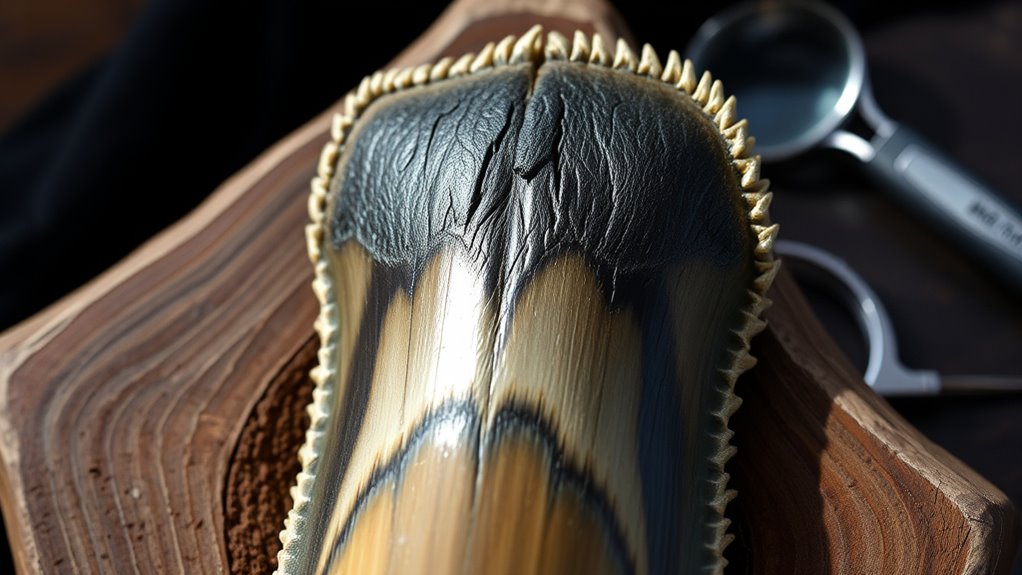
Teeth with sharp serrations and intact enamel naturally fetch higher prices than those damaged or heavily worn. Unique colors like red, blue, or multicolored patterns can make a tooth stand out, adding to its desirability. Additionally, provenance matters; teeth from notable locations such as North Carolina’s Black River often carry greater value due to their scarcity.
Ultimately, authentic, unrestored teeth with proper documentation are worth much more than repaired or fake specimens. Combining these factors helps you gauge a tooth’s true worth.
How Tooth Size Drives Megalodon Tooth Value
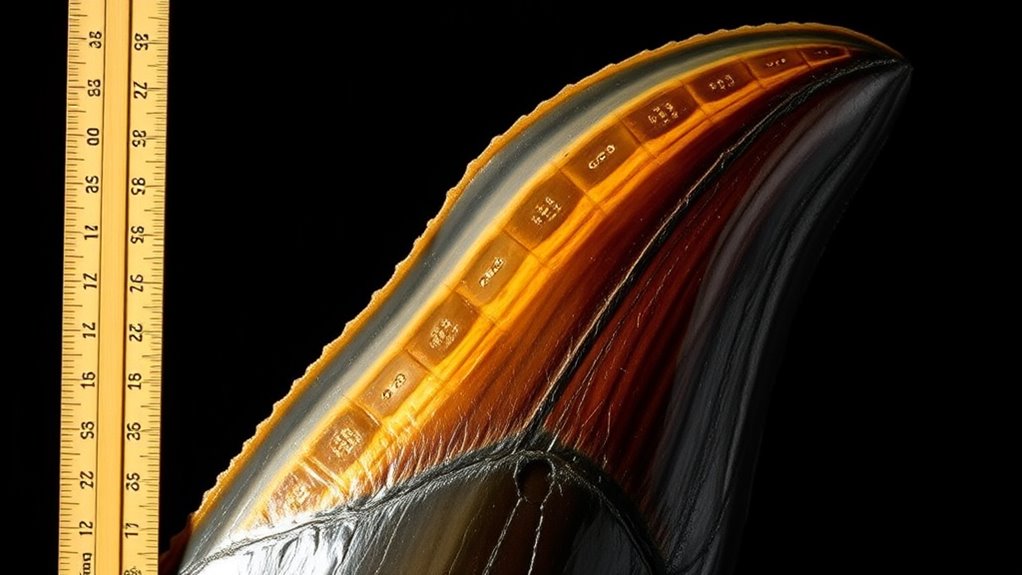
When you measure a Megalodon tooth diagonally from root to tip, you get a key indicator of its value. Larger teeth, especially those over 6 inches, are much rarer and can dramatically increase the price.
Understanding this size and rarity relationship helps you see why tooth size plays such a vital role in determining worth.
Measuring Tooth Size
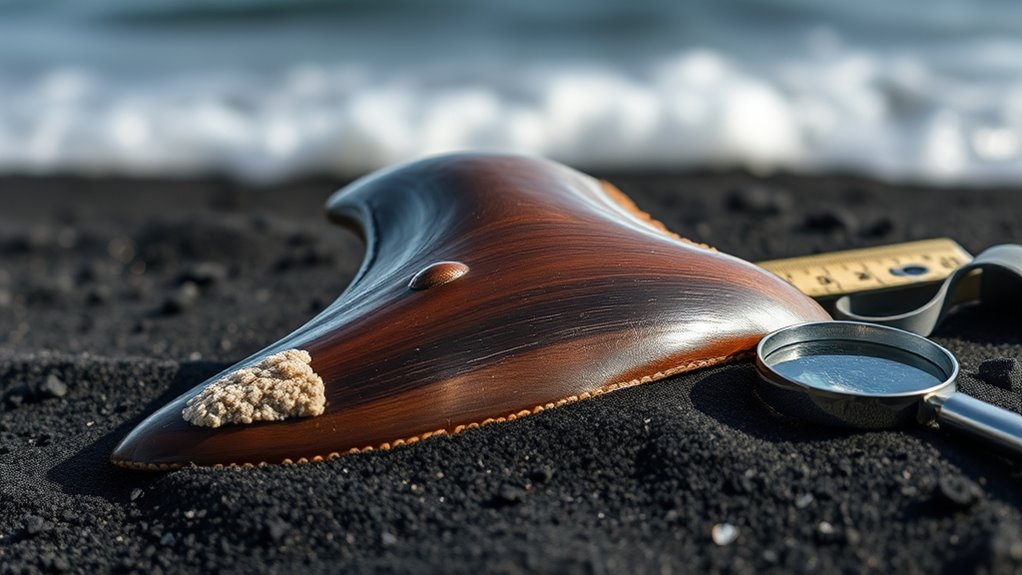
Although many factors influence a Megalodon tooth’s value, size plays a crucial role you can’t overlook. To measure the overall size accurately, you’ll use the diagonal measurement—from one root corner to the tip of the tooth. This method gives a consistent size reference, essential for comparing specimens.
Typically, larger teeth, over six inches, command higher prices because they represent mature sharks. Using digital calipers ensures precise measurement, which collectors rely on when evaluating worth. Remember, size alone isn’t everything, but it directly affects how valuable a tooth can be.
Size and Rarity
Size plays a major role in determining a Megalodon tooth’s value, but its impact grows even more when you consider rarity. The larger these teeth get, the scarcer and more valuable they become. Here’s how size and rarity affect value:
- Teeth between 3 to 4 inches usually sell for $150 to $500, making them common but still desirable.
- Teeth exceeding 6 inches are rare, pushing their value to $6,000 or more because they represent a truly massive shark.
- Exceptionally rare teeth over 7 inches are once-in-a-lifetime finds, often worth tens of thousands due to their extraordinary size and scarcity.
When you hunt for Megalodon teeth, focusing on size alone isn’t enough; rarity within that size category dramatically drives their overall value.
Price Scale Impact
How much you pay for a Megalodon tooth depends heavily on its length. Size directly drives the price scale—teeth under 3 inches usually sell for $30 to $150, while those between 3 and 4 inches fetch $150 to $500.
Once you hit 5 to 6 inches, prices jump to $1,500-$5,000. Teeth over 6 inches can command $6,000 or more, and specimens exceeding 7 inches are exceptionally rare, often valued in the tens of thousands.
However, size isn’t the only factor. Condition and rarity also play vital roles in determining price. Even a large tooth can lose value if it’s damaged, and a smaller tooth might command a higher price if it’s exceptionally rare or in pristine condition.
Understanding this price scale impact helps you evaluate Megalodon teeth more accurately.
Why Megalodon Tooth Condition Matters More Than You Think
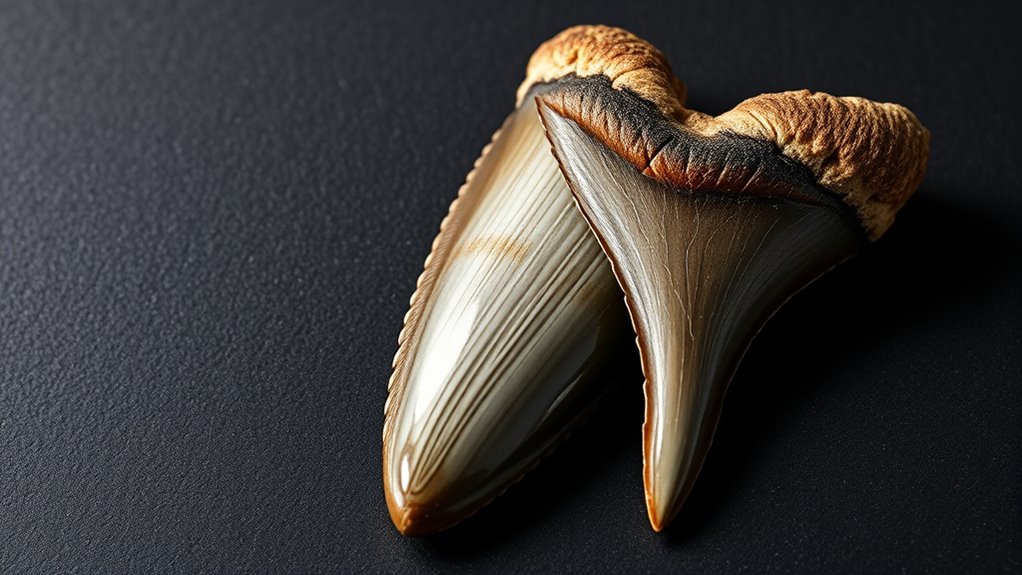
Because the condition of a Megalodon tooth directly affects its value, you need to pay close attention to details like enamel integrity and serration sharpness. Here’s why condition matters more than you might think:
- Enamel Integrity – Teeth with intact enamel resist erosion and maintain a natural look, boosting authenticity and appeal.
- Minimal Damage – Chips, cracks, or visible erosion lower a tooth’s desirability and reduce its market price.
- Natural Authenticity – Collectors prize teeth that show genuine wear without artificial restoration, as these reflect true prehistoric history.
When you assess a Megalodon tooth, focus on these factors. A well-preserved tooth signals rarity and authenticity, making it far more valuable than one in poor condition or heavily altered.
How Restoration and Repairs Affect Megalodon Tooth Value
Although restoring or repairing a Megalodon tooth can make it look more complete, it often lowers its value, especially when repairs are obvious or extensive. When you spot glued cracks or reattached broken pieces, know that even if disclosed, these repairs reduce the tooth’s market worth.
Full restorations, like reconstructing missing parts or enlarging the tooth, harm its authenticity and noticeably drop its resale price. If you want to maximize value, seek minimally restored teeth with certification—they tend to fetch higher prices.
Collectors prize natural, untouched specimens because they retain original authenticity. So, while restoration might improve appearance, it usually compromises the tooth’s true value. Being transparent about repairs helps, but preserving the tooth’s natural state remains the best way to protect its investment potential.
How Collection Location Influences Megalodon Tooth Rarity and Price
Restoration and repairs can affect a Megalodon tooth’s value, but where the tooth was collected plays an equally important role in determining its rarity and price. Your tooth’s collection location directly impacts its rarity and market value. Consider these factors:
- Teeth from famous sites like North Carolina’s Black River have higher provenance and rarity due to superior preservation, boosting their price.
- Fossils from remote or less accessible locations, such as deep-sea dredging in the South Pacific or Morocco, are scarce, often commanding premium prices.
- Common regions like South Carolina’s Cooper River yield more abundant teeth, which lowers their market value despite their scientific interest.
How Megalodon Tooth Color and Pattern Affect Collectibility
When you examine Megalodon teeth, their color and pattern can dramatically influence how collectible they are. The natural mineralization process creates unique hues, with rarer coloration like red, green, or vibrant blue substantially boosting a tooth’s value. You’ll notice that consistent, vivid coloration across both enamel and root enhances visual appeal, making the specimen more desirable.
Bright, multicolored, or layered patterns add distinctiveness that collectors seek, increasing collectibility. Teeth showcasing unusual or distinctive color variations stand out in the market, commanding higher prices due to their rarity. By focusing on these coloration and pattern factors, you can better gauge a Megalodon tooth’s worth and its allure among enthusiasts.
Special Features That Make Megalodon Teeth More Valuable
If you want to maximize a Megalodon tooth’s value, focus on special features that set it apart. These unique traits catch collectors’ eyes and boost worth considerably. Consider these three key aspects:
- Unique coloration — Teeth showcasing rare reds, blues, or greens stand out and fetch higher prices.
- Well-preserved serrations — Sharp, intact edges indicate exceptional quality, making the tooth more desirable.
- Natural enamel and distinctive features — Teeth with unaltered enamel, complete roots, or unusual growths and deformities often command premium value.
Frequently Asked Questions
How to Verify a Megalodon Tooth?
You verify a Megalodon tooth by checking its natural mineralization, examining serrations and enamel with a magnifying glass, looking for repairs, confirming provenance, and consulting a fossil expert for professional appraisal to guarantee authenticity.
What Is the Rarest Megalodon Tooth Color?
You’ll treasure vibrant red as the rarest Megalodon tooth color, symbolizing fierce power and passion.
These fiery hues, born from unique mineral magic, make your tooth stand out like a blazing jewel from the ancient deep.
How Much Does a 7 Inch Megalodon Tooth Cost?
A 7-inch Megalodon tooth can cost you anywhere from $15,000 to over $100,000.
If it’s perfectly preserved with sharp serrations and vibrant color, you’ll pay top dollar for this rare and impressive fossil.
Conclusion
Think of a megalodon tooth like a rare gem unearthed from the depths of time—each factor you consider, from size to color, is a brushstroke painting its unique story.
Just as a treasure hunter values the map as much as the gold, you’ll find that understanding these seven factors reveals the true worth of your tooth.
So, when you hold one, you’re not just holding a fossil—you’re holding a piece of ancient history that’s priceless in its own fierce way.
Knowing the size, condition, color, and provenance will help you determine how much a megalodon shark tooth is worth.