How Long Can a Blue Whale Hold Its Breath?
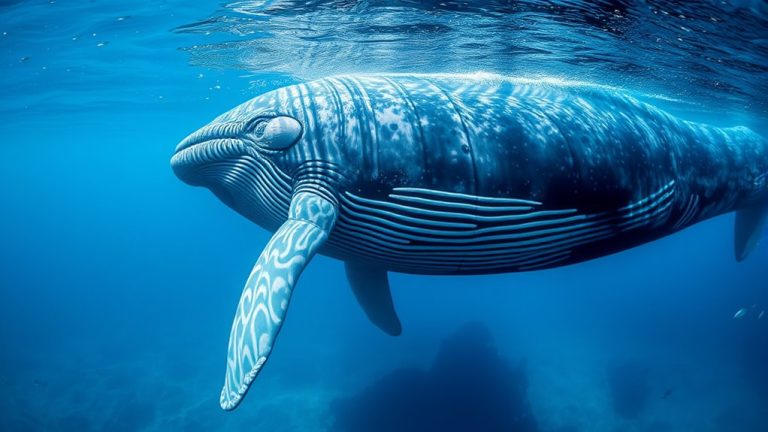
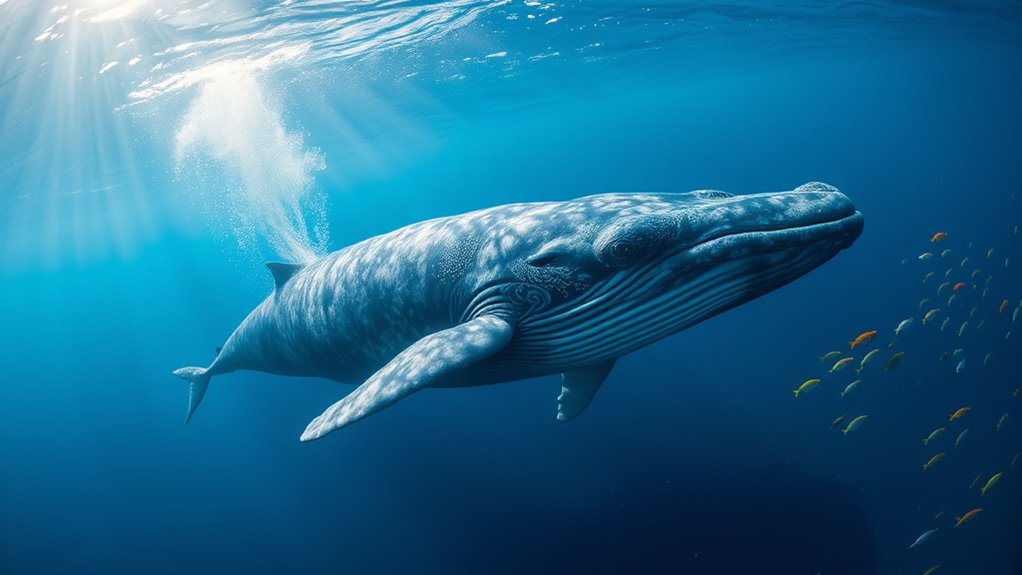
You can expect a blue whale to hold its breath underwater for about 10 to 20 minutes, with some dives reaching close to 30 minutes. These incredible marine mammals have large lungs and high levels of oxygen-storing proteins that help them stay submerged longer.
Their heart rate slows significantly during dives, further extending their breath-holding capacity.
However, active feeding and energy use limit how long they can remain underwater. The balance between oxygen use and conservation is crucial for their survival.
If you want to understand the fascinating ways these giants manage their breath and dive behavior, there’s much more to uncover.
How Long Can a Blue Whale Hold Its Breath During Dives?
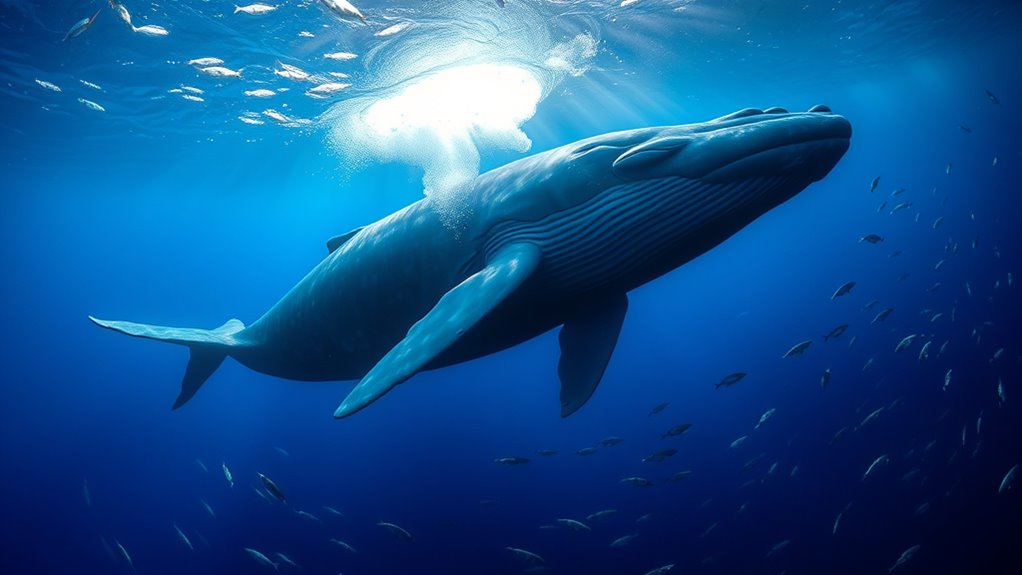
How long can a blue whale hold its breath during dives? Typically, blue whales hold their breath for about 10 to 20 minutes, though their maximum dive can reach around 30 minutes underwater. As marine mammals, they rely on efficient oxygen storage to sustain these impressive dive durations.
Despite their large lung capacity, blue whales rarely exceed 30 minutes because longer breath-holds demand significant energy. Most of their dives last around 10 to 15 minutes, striking a balance between conserving oxygen and meeting their foraging needs.
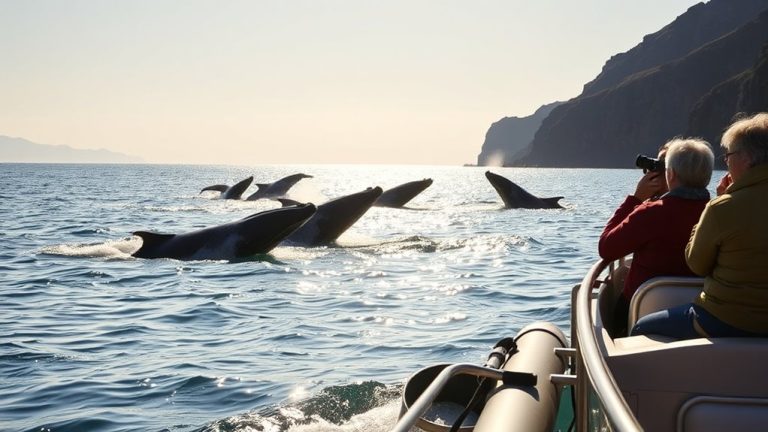
When you watch a blue whale, remember that its ability to hold its breath this long is a remarkable adaptation, allowing it to explore deep waters while managing oxygen use effectively during each dive.
What Special Body Features Help Blue Whales Hold Their Breath?
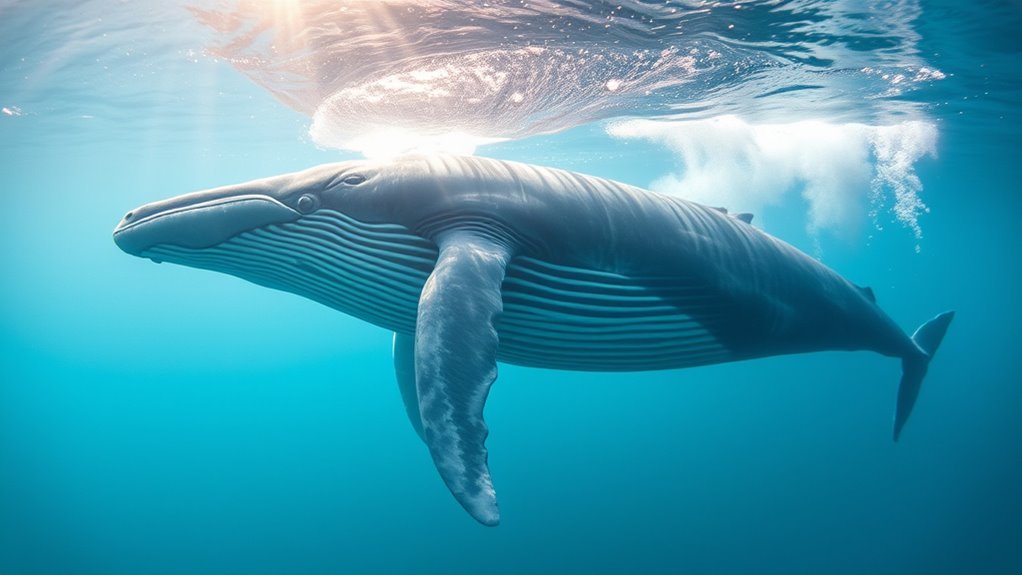
You might wonder how blue whales manage to stay underwater for so long without breathing. Their bodies are specially designed to store oxygen efficiently and slow down their metabolism when submerged.
Let’s explore the unique adaptations that make this possible.
Oxygen Storage Adaptations
Because blue whales dive deep and stay underwater for extended periods, their bodies have evolved remarkable adaptations to store oxygen efficiently. Their lung capacity of about 5,000 liters holds vast oxygen amounts. High myoglobin levels in muscles store oxygen, supporting long dive duration.
Elevated hemoglobin in their blood ensures oxygen is transported effectively. Their respiratory system includes muscular flap valves, allowing rapid, efficient breaths at the surface.
| Adaptation | Function |
|---|---|
| Lung capacity | Stores large oxygen volumes |
| Myoglobin | Oxygen storage in muscles |
| Hemoglobin | Efficient oxygen transport in blood |
| Respiratory system | Quick, efficient breathing |
| Heart rate control | Conserves oxygen during dives |
These features let you appreciate how blue whales manage oxygen to thrive underwater.
Diving Physiological Mechanisms
While blue whales rely on vast oxygen stores, their ability to hold their breath also hinges on specialized physiological mechanisms. Their enormous lungs, holding about 5,000 liters, allow them to take in massive amounts of oxygen with each breath. This oxygen is efficiently stored in their blood and muscles thanks to high levels of hemoglobin and myoglobin.
During diving, their heart rate slows dramatically, sometimes to just 2 beats per minute, conserving precious oxygen. Vasoconstriction kicks in too, reducing blood flow to non-essential organs and prioritizing oxygen delivery to crucial areas like the brain and muscles. Their muscular blowholes seal tightly underwater, keeping water out of their lungs.
These adaptations work together, letting blue whales dive deep and hold their breath for extraordinary lengths of time.
How Does a Blue Whale’s Breathing System Help It Stay Underwater?
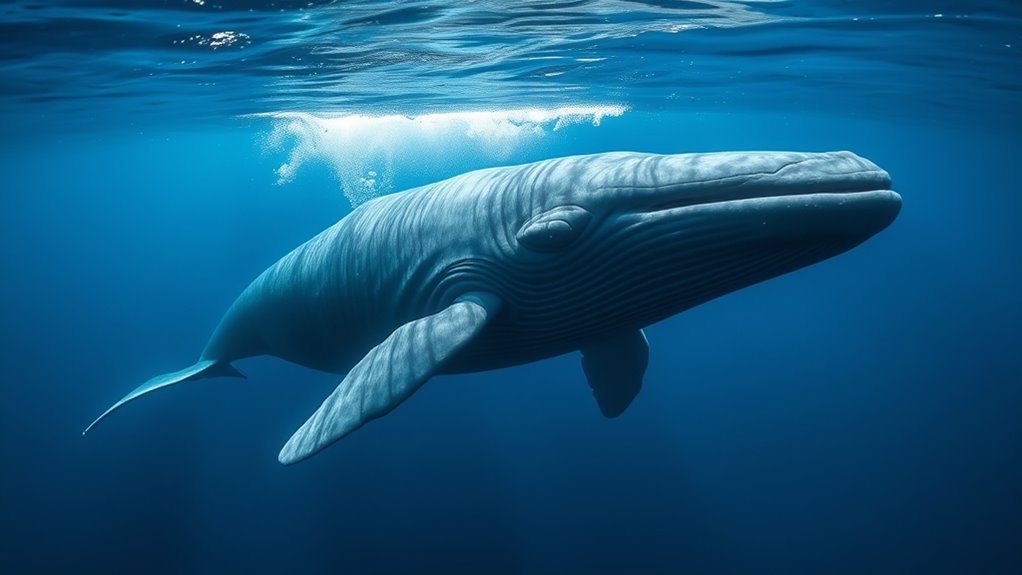
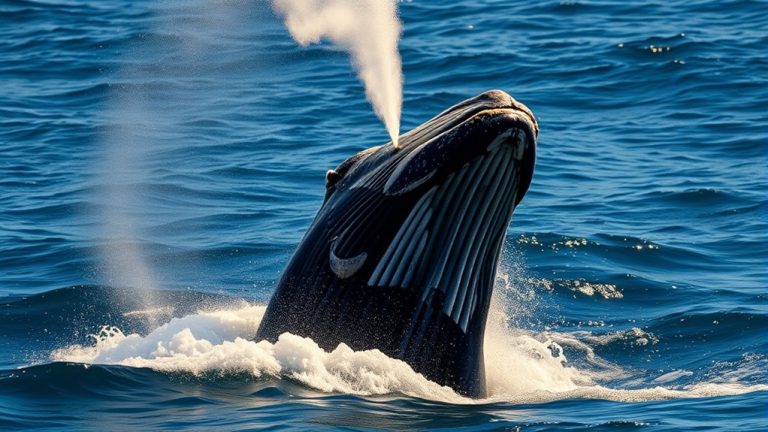
You’ll be amazed at how a blue whale’s breathing system works to keep it underwater longer. Its huge lungs and oxygen-storing proteins maximize every breath, while its blowholes seal tight to keep water out.
Plus, the whale slows its heart rate and redirects blood flow to essential organs, conserving oxygen during long submersions.
Efficient Oxygen Storage
A blue whale’s breathing system lets it store massive amounts of oxygen, enabling long dives underwater. You’ll find that a blue whale’s blood contains high levels of hemoglobin, which efficiently transfers oxygen throughout its body. In its muscles, myoglobin stores oxygen, holding up to 30% more than in land mammals.
This superior oxygen storage supports extended dive duration by supplying oxygen where it’s most needed. During dives, the blue whale slows its heart rate dramatically, conserving oxygen by reducing consumption. This oxygen conservation strategy, combined with its huge lung capacity, maximizes the amount of oxygen available underwater.
Blowhole Functionality
Because blue whales rely on efficient breathing to support their long dives, their blowholes play an essential role in how they stay underwater. You’ll notice they have two blowholes on top of their heads, each controlled by a muscular sphincter that keeps them tightly closed underwater, preventing water from entering their lungs.
When the whale surfaces, it performs a rapid exhalation, expelling up to 90% of the air in its lungs at incredible speeds. This powerful air exchange maximizes the lung capacity—around 5,000 liters—ensuring the whale gets plenty of oxygen for the next dive.
Their respiration is carefully controlled, allowing them to time their breaths perfectly to stay submerged longer without risking oxygen depletion or water inhalation.
Dive Response Mechanisms
Breath control in blue whales goes beyond managing their blowholes; their bodies activate several physiological adjustments to stay underwater longer. This diving response includes slowing the heart rate (bradycardia) to as low as 2 beats per minute, which drastically reduces oxygen consumption. At the same time, vasoconstriction restricts blood flow to non-essential areas, prioritizing oxygen delivery to crucial organs.
Their muscles contain high levels of myoglobin, a protein that stores oxygen, enhancing oxygen conservation during prolonged dives. When you think about their dive response, picture:
- Heart rate dropping dramatically for efficient oxygen use
- Blood vessels narrowing to redirect oxygen-rich blood
- Muscles packed with oxygen-storing myoglobin
These mechanisms work together seamlessly, allowing blue whales to hold their breath and explore the depths for extended periods.
What Role Does the Dive Response Play in Extending Breath-Hold Time?
When blue whales dive, their bodies trigger a powerful dive response that helps them conserve oxygen and stay underwater longer than you’d expect. This response includes bradycardia, where their heart rate drops dramatically—to as low as 2 beats per minute—slowing oxygen use.
At the same time, vasoconstriction reduces blood flow to non-essential organs, directing oxygen-rich blood to essential areas like the brain and heart. Together, these adaptations maximize oxygen conservation during dives.
How Do Blue Whales Store Oxygen in Muscles and Blood?
The dive response sets the stage, but blue whales also rely on how they store oxygen in their muscles and blood to stay submerged for so long. Their muscles contain high levels of myoglobin, a protein that holds oxygen up to 30 times more efficiently than in humans.
Their blood carries a dense concentration of hemoglobin, which transports and stores oxygen during long breath-holds. Together, these adaptations maximize oxygen storage, allowing extended dives.
Imagine this oxygen storage system as:
- Muscles packed with myoglobin acting like oxygen reservoirs
- Blood rich in hemoglobin delivering oxygen where it’s needed
- Large blood volume supporting sustained oxygen supply
This combination lets blue whales hold their breath for over 30 minutes underwater.
What Are Typical Dive Durations and Depths for Blue Whales?
Although blue whales can hold their breath for over 30 minutes, they usually dive for about 10 to 20 minutes when feeding or traveling. During these dives, blue whales typically reach depths around 100 meters (330 feet). This dive duration and depth strike a balance between maximizing oxygen use and minimizing energy spent underwater.
Unlike deep-diving whales such as sperm whales, blue whales keep their dives relatively short, surfacing regularly to replenish oxygen through breathing. When they return to the surface, they take deep, powerful breaths to refill their oxygen stores before diving again.
Understanding these typical dive durations and depths helps you appreciate how blue whales manage their oxygen supply efficiently during their daily activities in the ocean.
How Do Energy Costs Limit Blue Whale Dive Duration?
Blue whales balance their underwater time carefully, especially because their feeding involves intense bursts of energy. Their dive duration is limited by high metabolic costs during foraging dives, which demand significant oxygen levels. Despite having the capacity for longer dives, energy expenditure forces them to stay submerged for about 7.8 minutes on average.
After each dive, they require twice as long at the surface for oxygen replenishment and surface recovery. You can imagine their challenge through:
- The heavy energy toll of lunge-feeding
- The need to quickly restore oxygen levels at the surface
- The constant calculation between oxygen use and metabolic costs
These factors keep blue whales’ dives short but efficient, letting them focus on prey-rich zones without exhausting their energy reserves.
Why Don’t Blue Whales Dive Longer Despite Oxygen Stores?
Even though these giants have impressive oxygen stores, they can’t just stay underwater as long as you might expect. You see, blue whales’ dive time isn’t solely dictated by how much oxygen they carry. Their metabolic demands, especially during active lunge-feeding, push their energy costs higher, limiting how long they can hold their breath.
While physiological adaptations like bradycardia and blood flow regulation help optimize oxygen use, these don’t extend the breath-hold limit indefinitely. If they tried to dive longer, the energy required would increase, and the risk of oxygen depletion would rise, forcing them to surface sooner.
How Does Prey Availability Affect Blue Whale Dive Duration and Behavior?
Since prey availability directly impacts their feeding strategy, blue whales adjust their dive duration and depth based on where krill are concentrated. When krill density is high near the surface, you’ll notice blue whales performing shorter, shallower dives to feed efficiently.
But if prey scarcity hits or krill dive deeper, these giants extend their dive duration and increase dive depth to find enough food. Their foraging behavior shifts with changing prey distribution, influenced by factors like light. Envision this:
- Nighttime krill moving closer to the surface, prompting shallower dives
- Longer, deeper dives when prey is scarce or dispersed
- Increased surface time and shorter dives during prey shortages caused by climate change
You see, prey availability tightly controls how blue whales optimize their dive patterns to survive.
Frequently Asked Questions
What Animal Holds Its Breath the Longest?
You’ll find the Cuvier’s beaked whale holds its breath the longest, plunging for up to 222 minutes.
Unlike blue whales, these profound divers can stay submerged for hours, showcasing incredible endurance beneath the waves.
How Do Whales Sleep if They Have to Come up for Air?
You’d think whales just nap like us, but they don’t. They sleep with one brain half awake, surfacing to breathe while the other half rests—so they never truly “sleep,” yet never drown either.
How Long Can a Blue Whale Go Without Oxygen?
You can expect a blue whale to go without oxygen for up to 30 minutes in ideal conditions. Their bodies slow heart rate and conserve oxygen, letting them dive deep and long before needing to surface for air.
Could a Human Survive in a Blue Whale?
You can’t survive inside a blue whale; their environment is hostile to humans. Without specialized gear and training, you’d quickly face oxygen deprivation and other dangers, making survival impossible in that extreme, aquatic setting.
Conclusion
So, how long can you hold your breath compared to a blue whale diving deep into the ocean? Thanks to their special body features, efficient breathing system, and dive response, blue whales can stay underwater for up to 30 minutes.
Yet, energy limits and prey availability keep their dives shorter. Next time you hold your breath, imagine the incredible adaptations that let these giants glide silently beneath the waves for so long. These remarkable breath-holding abilities make blue whales true masters of the ocean depths.