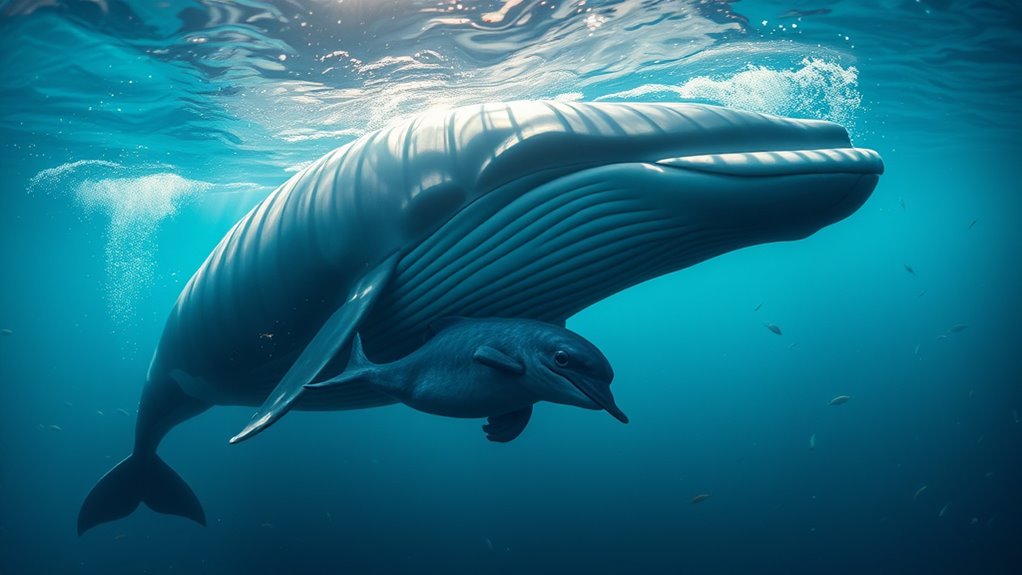
How Big Is a Newborn Whale at Birth?
You might not expect a newborn whale to be so huge—blue whale calves measure about 23 feet long and weigh around 3 tons at birth. Most baleen whale calves range between 8 and 11 feet and weigh hundreds of pounds, while smaller species have calves just a couple of feet long.
Their size helps protect them but also means they need a lot of energy and care early on.
Keep exploring to find out what influences their growth and survival.
How Large Are Newborn Whale Calves at Birth?
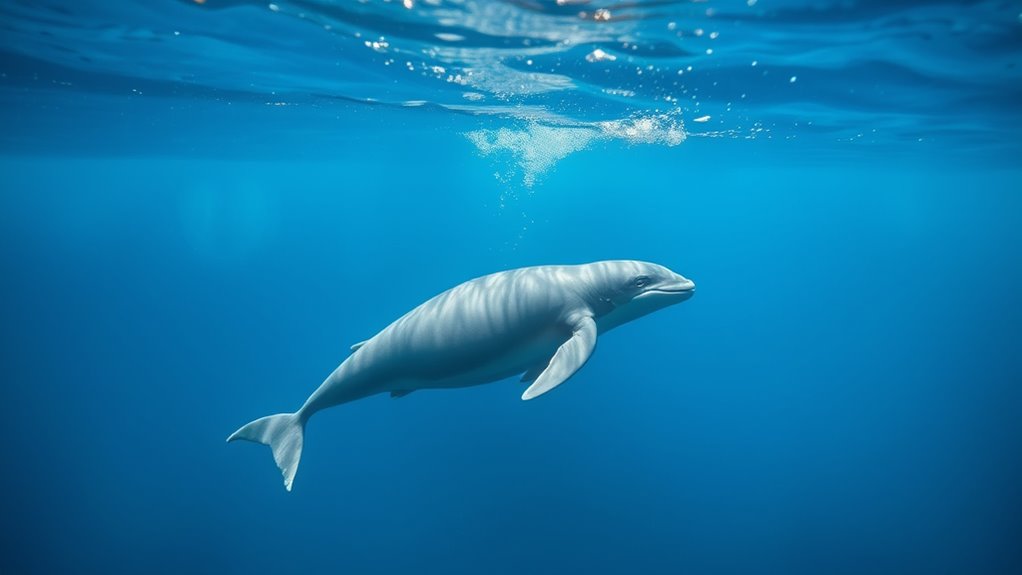
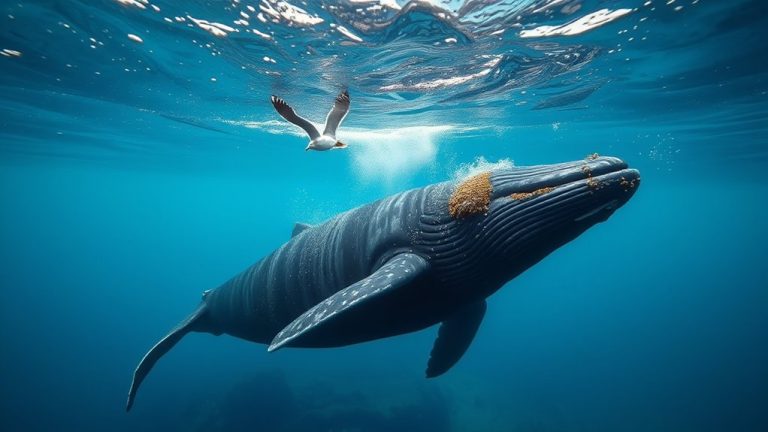
Newborn whale calves come in a wide range of sizes depending on their species. For instance, blue whale calves, born after a long gestation period, measure about 23 feet long and weigh around 3 tons at birth, making them some of the largest newborns you’ll find.
In contrast, baleen whale calves like the minke whale are smaller, typically between 8 to 11.5 feet and weighing 700 to 1,000 pounds. This size difference at birth reflects the diversity among whale species.
When you consider the size at birth, you’ll notice that even the smallest baleen whale calves are quite large compared to many animals. So, depending on the species, the newborn whale you encounter could be anything from several feet to over 20 feet long.
What Are the Biggest and Smallest Whale Calves?
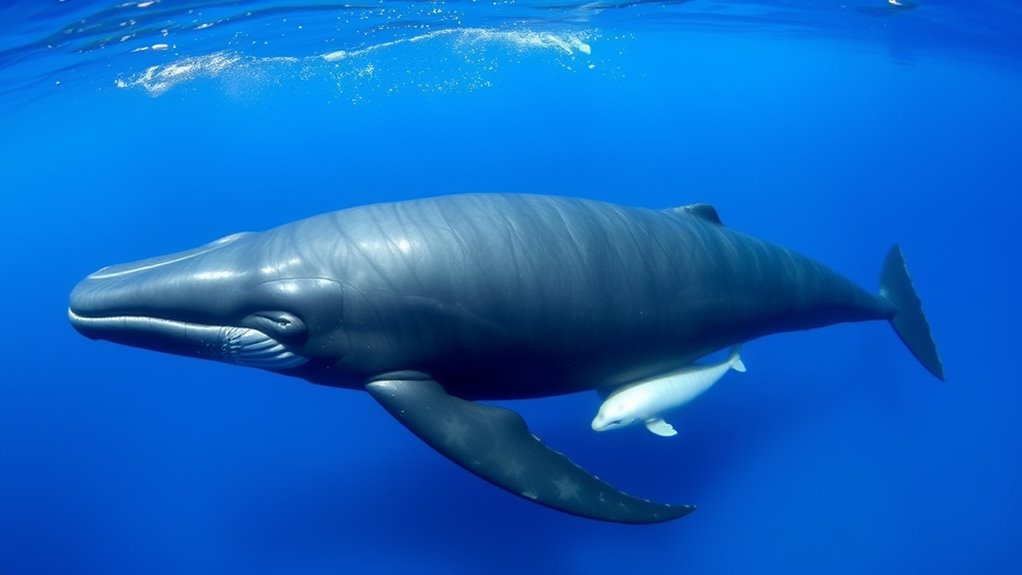
If you’re curious about the extremes in whale calf sizes, you’ll find a striking contrast between the tiniest and largest. The smallest whale calves, like Hector’s and Maui dolphins, are born just 24-30 inches long, making them tiny compared to their relatives. On the other hand, blue whale calves enter the world at about 23 to 25 feet long, weighing around 3 tons.
Since the blue whale is the largest animal on Earth, it’s no surprise its newborns are the biggest whale calves. Baby sperm whales are also impressively large at about 13 feet, similar in size to an adult African elephant. So, from the smallest whale calves barely reaching 3 feet to the massive blue whale calves over 23 feet, whale calves show incredible size variation at birth.
Why Are Some Whale Calves Bigger Than Others?
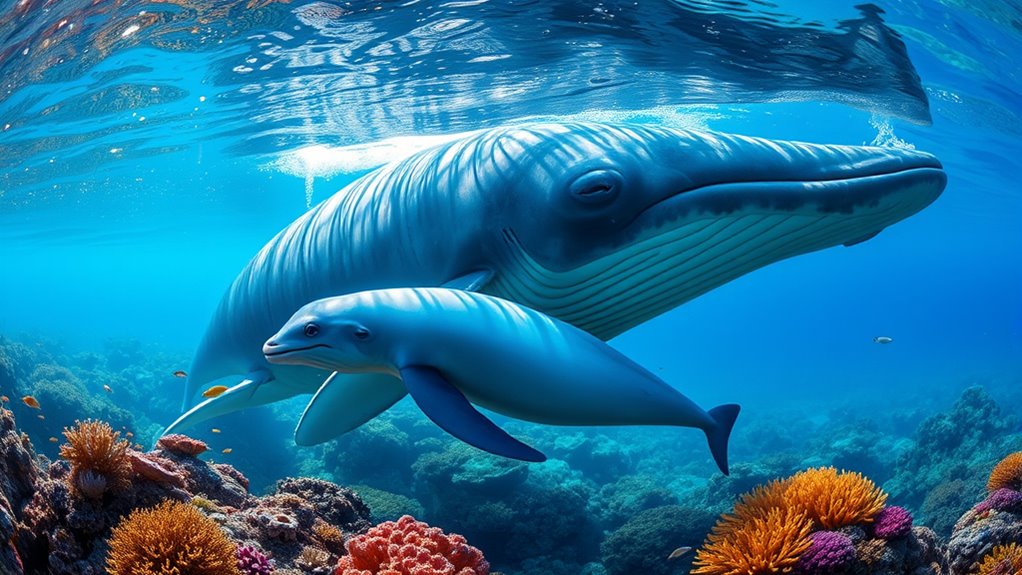
You might wonder why some whale calves come into the world much bigger than others. It all comes down to factors like the species’ adult size, the environment the mother lives in, and the calf’s genetic makeup.
These elements work together to shape how large a newborn whale will be.
Species Size Variations
Why do some whale calves come into the world much larger than others? It mainly comes down to species size variations. For instance, baleen whale calves, like blue whales, are born around 23 feet long and weigh about 3 tons, making them the largest newborns among whales.
In contrast, smaller species such as Hector’s or Maui dolphins enter the world at just 24-30 inches, reflecting their much smaller adult size. Sperm whale calves fall somewhere in between at about 13 feet. The size of whale calves at birth aligns closely with their adult size, reproductive strategies, and ecological roles.
Environmental Influences
Although genetics set the baseline for a whale calf’s size, environmental factors play a crucial role in shaping how big they actually are at birth. You’ll find that water temperature and the availability of food sources strongly influence calf size. In warmer, nutrient-rich breeding grounds, calves tend to develop better and arrive slightly larger than those born in colder, less abundant areas.
When the mother’s nutritional status is strong due to plentiful food, fetal growth improves, resulting in a bigger calf. During migrations, many whales choose specific regions with ideal conditions to give birth, further supporting calf size and survival.
Genetic Factors
Environmental conditions set the stage for a whale calf’s size, but genetics play the leading role in determining how big they actually get at birth. Genetic factors shape the calf size by guiding growth potential and developmental rates unique to each whale species. For example, blue and sperm whales are genetically programmed to produce calves that can exceed 20 feet in neonatal size.
Even within a species, inherited genetic traits cause size variations among regional populations. These traits also influence nutrient absorption efficiency and growth speed during gestation, directly impacting the calf’s final size at birth. When you consider why some whale calves are bigger than others, these genetic factors form the baseline that environmental influences can only modify.
- Species-specific genes dictate growth limits
- Larger species yield bigger calves
- Regional genetic variations affect size
- Nutrient absorption efficiency influences neonatal size
How Does Newborn Whale Size Affect Survival and Predation?
You’ll notice that bigger newborn whales have a better chance of avoiding predators like sharks and orcas. Smaller calves move slower and face higher risks, especially in their first year.
Understanding how size and rapid growth affect survival helps explain why those early months are so critical.
Newborn Size And Vulnerability
When a whale calf is born larger, like a blue whale measuring 23 feet, it stands a better chance of avoiding predators compared to smaller calves such as Hector’s dolphins, which are only 2 to 3 feet long. Newborn size plays a pivotal role in vulnerability and predator avoidance during those first critical months. Larger calves swim faster and evade threats more effectively, while smaller ones remain more at risk.
Rapid calf growth, fueled by nutrient-rich milk, quickly improves their strength and survival odds.
- Larger size means quicker swimming and better escape abilities
- Small calves face higher vulnerability to predators like sharks
- Early months are the most dangerous due to limited mobility
- Fast calf growth reduces vulnerability over time
Predation Risks For Calves
Although newborn whales face many dangers, their size at birth plays a crucial role in their chances of survival against predators. When you consider calf size, larger whales like blue whale calves measuring around 25 feet have lower predation risks from sharks and orcas. Their substantial blubber reserves not only keep them warm but also offer protection during attacks.
On the other hand, smaller calves, such as Hector’s dolphins at 2-3 feet, face greater threats due to limited size and slower swimming speed. You’ll notice that bigger calves can escape or defend themselves more effectively. This early advantage, fueled by high-fat milk, helps them survive critical first months in the wild.
Growth Impact On Survival
Understanding how a newborn whale’s size affects its survival sheds light on why growth rates matter so much. A larger calf, like a blue whale born at 25 feet, has a better chance of survival because its size helps it evade predators early on. Smaller calves face higher risks since they lack the strength and speed needed to escape threats.
Rapid growth fueled by rich, high-fat milk is *vital*—it quickly increases their size, lowering predation risk. Here’s what you should know:
- Bigger calves swim faster, making it harder for predators to catch them.
- Smaller calves are more vulnerable to sharks and orcas.
- Early growth is essential for boosting size and survival chances.
- Size at birth directly impacts a calf’s ability to thrive and reach maturity.
How Fast Do Whale Calves Grow After Birth?
Because whale calves consume high-fat milk, they can grow at astonishing rates soon after birth. You’ll see blue whale calves doubling their weight in just about three months, showcasing an incredible fast growth rate. This rapid growth isn’t unique to blue whales; gray whale calves, for example, double their length within two years.
Calf growth varies among species but generally involves intense spurts fueled by nutrient-rich milk. You might notice these calves gaining up to 200 pounds daily during their most rapid growth phases. However, their growth isn’t perfectly steady—it happens in bursts, with quick expansions followed by slower periods.
Understanding this pattern helps you appreciate just how remarkable and essential this rapid growth is for a calf’s survival and development in the vast ocean.
How Do Mother Whales Support Their Calves’ Early Growth?
When you watch a mother whale nursing her calf, you’ll notice she provides rich, fatty milk that fuels rapid growth and builds essential blubber. This nutrient-packed milk contains 35-50% fat, critical for the calf’s survival in cold waters. Blue whales, like other baleen whales, use an efficient feeding method where the mother’s inverted nipple shoots milk directly into the calf’s mouth underwater.
You’ll see the mother pushing her calf to the surface for breaths and guiding it through early swimming lessons. Calves rely solely on maternal milk for months or years. Feeding underwater prevents milk loss.
Physical contact builds strong bonds. Mothers teach calves indispensable behaviors like breaching. This nurturing supports the calf’s strong start in life.
Why We Must Protect Newborn Whales
The early care mother whales provide sets the stage for their calves’ survival, but these newborns still face many dangers.
You must protect newborn whales because their small size makes them easy targets for predators and vulnerable to human threats like ship strikes and pollution.
Conservation efforts are vital to guarantee calves grow strong and healthy, reducing their risk of harm.
| Threats to Newborn Whales | Importance of Protection |
|---|---|
| Predators (sharks, orcas) | Ensures calves’ survival |
| Human activities | Reduces injury or death |
| Environmental hazards | Supports healthy growth |
What Challenges Do Newborn Whales Face in Their First Year?
Although newborn whales vary greatly in size, they all face intense challenges during their first year. You’ll see that survival isn’t easy for these calves as they grow and learn essential skills. Predation is a major threat, especially from sharks and orcas targeting small, slow-moving calves.
To increase their chances, newborn whales rely on their mothers for protection and nourishment while they quickly develop blubber through rapid growth fueled by high-fat milk.
Here’s what newborn whales must overcome in their first year:
- Avoiding predation from sharks and transient orcas
- Learning to swim and surface for air efficiently
- Staying close to their mothers for safety and feeding
- Growing blubber to insulate against cold and reduce vulnerability
These challenges make survival during this stage critical.
Frequently Asked Questions
How Big Are Newborn Whales?
Newborn whales can be anywhere from about 2 to 23 feet long, depending on the species. You’ll find some tiny dolphins just two feet long, while blue whale calves can measure over 20 feet and weigh tons.
Why Don’t We Eat Whale Meat?
You might wonder why whale meat isn’t on your plate, but you shouldn’t—it’s legally protected, often toxic, and ethically challenging. Eating it threatens these majestic giants and the balance of our oceans, so conservation calls you to choose wisely.
Do Baby Whales Gain 200 Pounds a Day?
Yes, baby whales like blue calves can gain around 200 pounds a day, thanks to their rich, fatty milk.
You’ll see rapid growth because it’s essential for their survival and insulation in early life stages.
Is a Blue Whale Bigger Than a Boeing 747?
You might think a blue whale could swallow a Boeing 747 whole, but it’s actually the plane that’s about ten times longer!
Conclusion
You might think a newborn whale’s size is just a number, but it’s a powerful story of survival and growth. While some calves arrive as giants, others start small, yet both face huge challenges in the vast ocean. Their size at birth shapes their journey, but it’s the care from their mothers and their rapid growth that truly matter.
Protecting these gentle giants means safeguarding a future where even the smallest calf can thrive. Understanding how big a newborn whale is at birth helps us appreciate their early struggles and the importance of conservation efforts. Ensuring their survival is key to preserving the majestic presence of whales in our oceans.