Are Georgia Aquarium’s Whale Sharks Rescued?
Yes, Georgia Aquarium’s whale sharks were rescued from Taiwan’s illegal fish markets. They faced threats like illegal fishing and poor health in those environments.
The sharks were safely transported in specially designed tanks to provide a secure, suitable environment at the aquarium’s Ocean Voyager exhibit. The facility carefully monitors their health and supports their natural behaviors to promote survival.
If you want to discover how the aquarium helps protect these gentle giants and what the rescue means for conservation, keep exploring.
Where Did Georgia Aquarium’s Rescued Whale Sharks Come From?
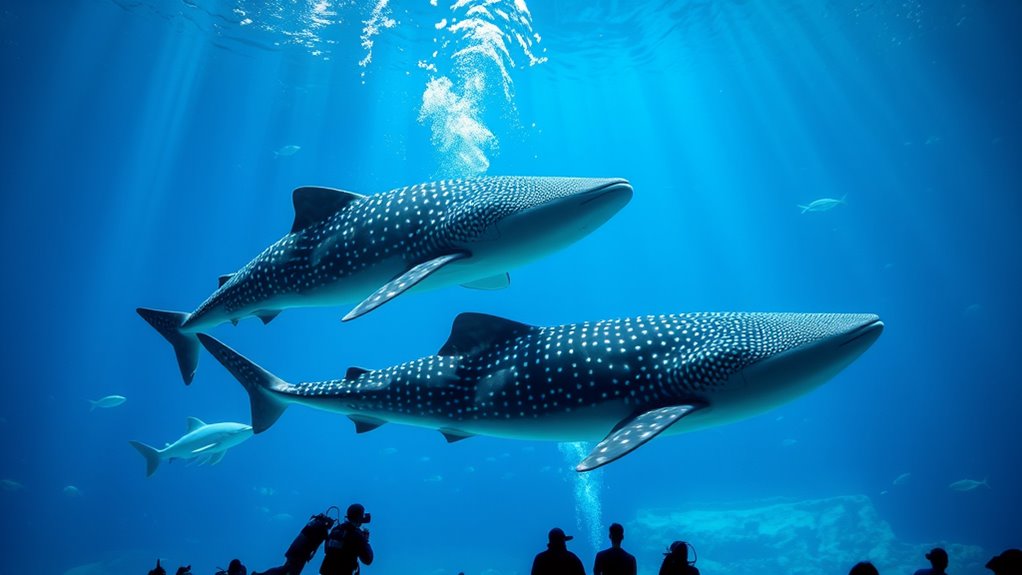
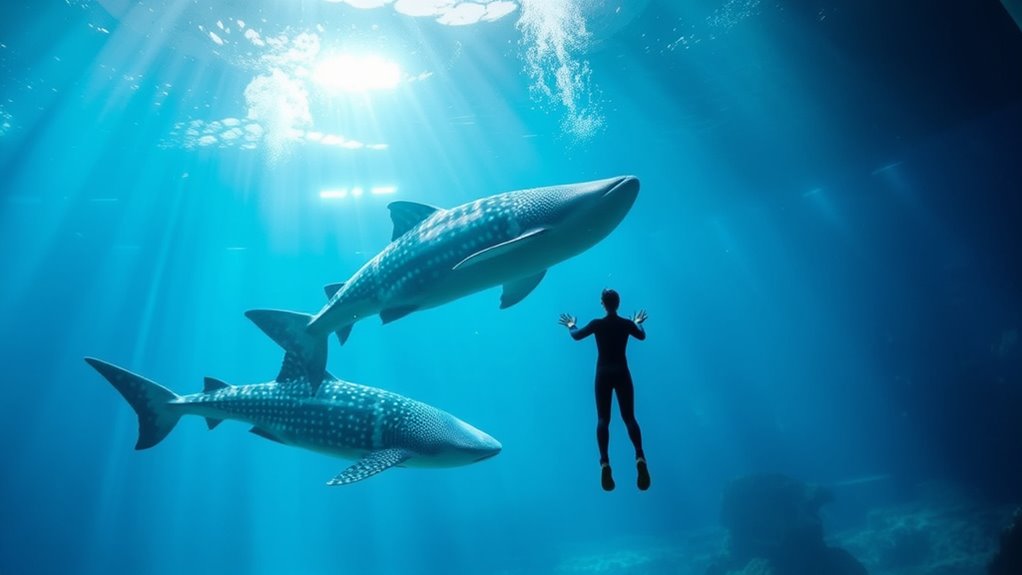
Although whale sharks are rarely seen in captivity, Georgia Aquarium’s rescued whale sharks came from Taiwan, where they were initially caught at fish markets. You might be surprised to learn that the first whale shark, Taroko, was rescued from a seafood market and brought to the aquarium in 2007.
These whale sharks were saved before Taiwan’s hunting ban took effect, preventing their capture for the market. To reach the Georgia Aquarium, these gentle giants endured a long journey, including an 8,000-mile flight, ensuring they arrived safely in Atlanta.
The aquarium’s efforts focused on rescuing these whale sharks from illegal fishing practices, giving them a chance to survive in a protected environment where they can thrive and be appreciated by visitors.
Why Were the Whale Sharks Rescued From Taiwan?
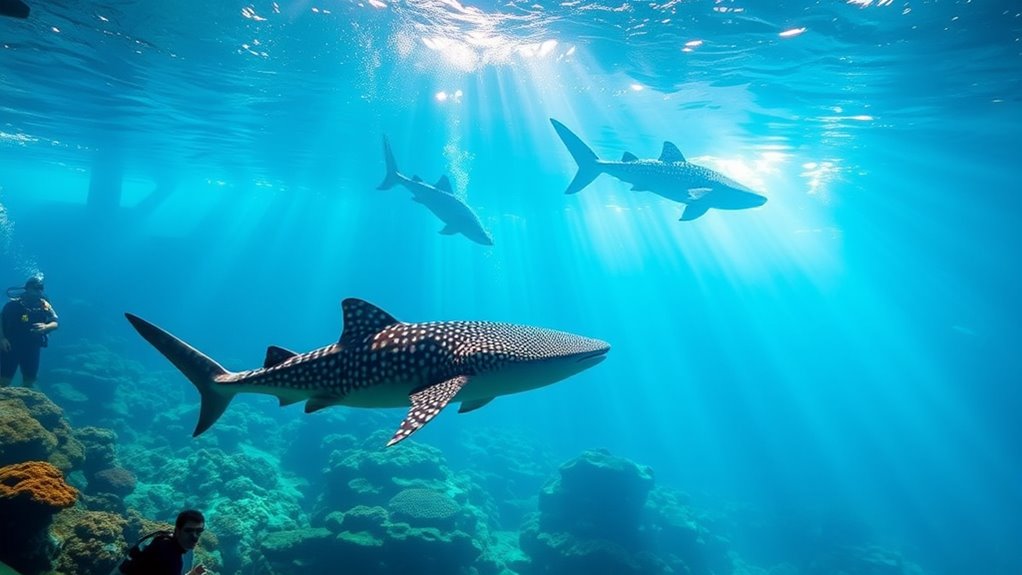
You’d be surprised to learn the whale sharks were rescued from a fish market in Taiwan where they were headed for food. Their poor health made it impossible for them to survive back in the wild.
This rescue also helped stop illegal hunting practices that threatened their species.
Rescue From Fish Market
Because the whale sharks were caught in a Taiwanese fish market destined for human consumption, rescuers stepped in to save them. You should know these gentle giants were in poor health and couldn’t survive in the wild. Taiwan’s history of capturing whale sharks made this rescue urgent.
Thanks to new laws, catching them is banned, but these sharks needed immediate care. The Georgia Aquarium offered a safe home where experts could provide proper care and deepen their knowledge about keeping whale sharks healthy.
Pre-Existing Health Issues
When rescuers found the whale sharks in Taiwan’s fish markets, they discovered the animals faced serious health problems that made survival in the wild impossible. These pre-existing health issues meant the whale sharks couldn’t swim or feed properly on their own, putting their survival at immediate risk if released.
You might wonder why the rescue was necessary—well, these sharks were caught during illegal hunting activities, and their compromised condition made returning them to the ocean unfeasible. Instead, rescuers aimed to provide a safe, controlled environment where the whale sharks could receive care and live without the threats they faced in the wild.
Illegal Hunting Context
Although whale sharks are protected worldwide, illegal hunting remained common in Taiwan until recent bans took effect. You’d find whale sharks in fish markets, targeted for consumption despite protections. That’s why the Georgia Aquarium’s whale sharks were rescued—they were saved from slaughter and brought to safety.
These efforts are part of broader conservation moves that fight illegal fishing and preserve whale shark populations. The sharks’ poor health made releasing them back impossible, emphasizing the rescue’s importance.
| Factor | Before Ban | After Ban |
|---|---|---|
| Hunting Status | Widespread illegal hunting | Strictly prohibited |
| Protection Laws | Weak enforcement | Strong legal backing |
| Whale Shark Safety | At risk in markets | Safer environments |
| Public Awareness | Limited | Increased conservation focus |
| Rescue Efforts | Rare | More frequent and organized |
How Were Whale Sharks Transported Safely to Atlanta?
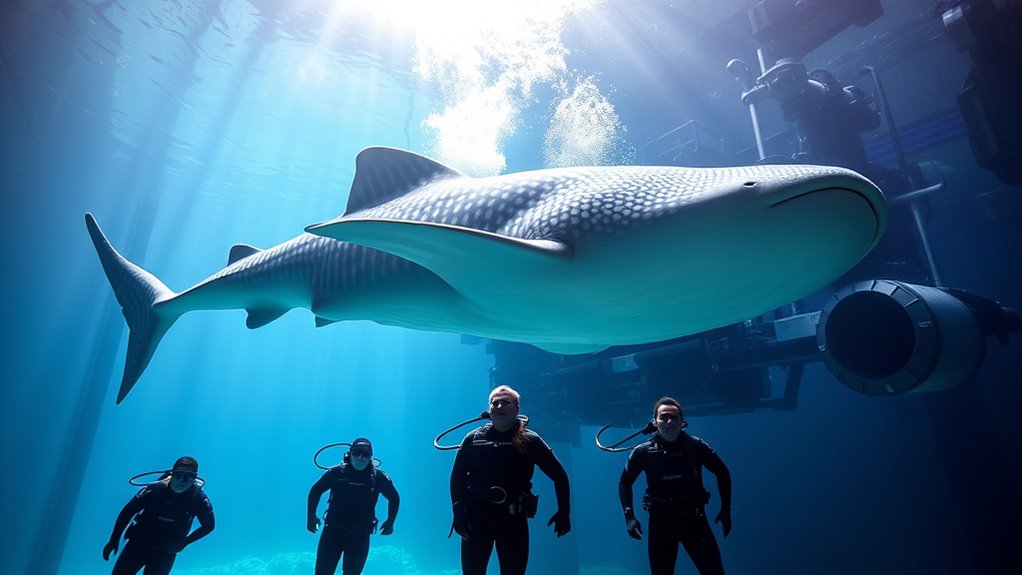
Transporting the whale sharks from Taiwan to Atlanta required a specially designed mobile tank equipped with advanced life support systems to keep them safe. This massive 25,000-pound tank maintained ideal oxygen levels, water temperature, and stress indicators throughout the journey. You’d be amazed at how carefully every detail was managed, including a stop in Anchorage, Alaska, to guarantee safe transit.
Experts monitored cabin pressure and water conditions to mimic their natural environment.
Here’s how they guaranteed the whale sharks’ safety:
- Maintained mid-70s water temperature to reduce stress
- Controlled cabin pressure around 5,000 feet altitude
- Equipped the tank with filtration and veterinary care systems
- Used cameras and heavy machinery for continuous monitoring
This precise operation made the safe transport of whale sharks possible.
What Makes the Ocean Voyager Exhibit Ideal for Whale Sharks?
When you step into the Ocean Voyager exhibit, you’re entering a massive tank designed to mimic the whale sharks’ natural open ocean habitat. Its specialized life support systems maintain the water pristine and perfect for these gentle giants.
This shark-friendly environment ensures they can swim freely, grow, and thrive comfortably.
Massive Tank Capacity
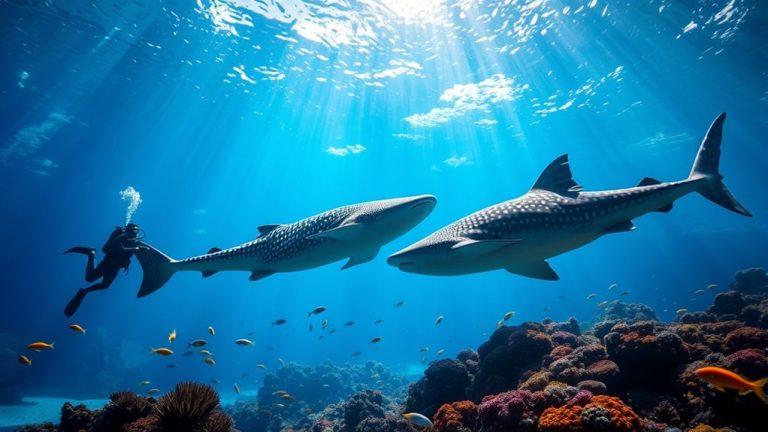
Because the Ocean Voyager exhibit holds over 6.3 million gallons of water, it offers an ideal environment for whale sharks to swim freely and naturally. This massive tank capacity at the Georgia aquarium replicates the vast ocean space these gentle giants need.
Here’s why it matters to you and the whale sharks:
- It allows whale sharks to exhibit natural migratory and swimming behaviors, reducing captivity stress.
- Its size supports multiple whale sharks, encouraging social interactions similar to their wild habitat.
- The sheer volume keeps water quality stable, ensuring a healthy, clean environment.
- It promotes the sharks’ overall well-being by minimizing confinement effects common in smaller tanks.
This impressive scale makes the aquarium a true sanctuary for these ocean marvels.
Specialized Life Support
Though whale sharks need vast space to thrive, the Ocean Voyager exhibit also relies on specialized life support systems to keep them healthy and comfortable. These systems maintain water temperature in the mid-70s Fahrenheit, perfect for whale sharks’ well-being. You’ll notice advanced filtration continuously cleans the 6.3 million gallons, while oxygen levels and water quality get monitored nonstop to prevent any health issues.
Specialized equipment, like large gantry cranes with gentle nets, allows caretakers to perform checkups and treatments without stressing the sharks. The tanks and tools replicate natural ocean conditions closely, supporting the sharks’ needs. This combination of space and specialized life support makes the Ocean Voyager exhibit ideal for housing these gentle giants with care and precision.
Shark-Friendly Environment
If you want to see whale sharks thrive in captivity, the Ocean Voyager exhibit at Georgia Aquarium provides the perfect setting. This shark-friendly environment is carefully crafted to meet the unique needs of these gentle giants. You’ll appreciate how the exhibit supports their health and natural behaviors.
Here’s what makes it ideal:
- Over 6.3 million gallons of water give sharks ample space to swim freely.
- Advanced filtration keeps water pristine, vital for filter-feeding sharks.
- Specialized lighting and controls mimic natural habitats, reducing stress.
- Deep pools and wide areas allow sharks to swim long distances and feed naturally.
Continuous monitoring by experts ensures these sharks stay healthy and comfortable in their home.
How Does the Aquarium Care for Rescued Whale Sharks?
How exactly does the Georgia Aquarium care for its rescued whale sharks? You’ll find them in the Ocean Voyager exhibit, which holds over 6.3 million gallons of water tailored to their immense size. The aquarium uses massive tanks with advanced water filtration and life support systems to keep their environment stable.
They continuously monitor essential signs like oxygen levels, water temperature, and stress indicators to guarantee each shark stays healthy. When it’s time for checkups or treatments, the staff employs large gantry cranes and custom nets to handle the animals gently.
Veterinary care is a cornerstone of their approach, with ongoing research and environmental monitoring helping maintain the sharks’ well-being. This dedicated care lets you witness these giants thriving under expert supervision.
What Health Challenges Do Whale Sharks Face in Captivity?
You’ll notice that captivity puts a lot of stress on whale sharks, affecting their appetite and behavior. Monitoring their health closely is tough because these gentle giants don’t always show clear signs of illness.
Understanding these challenges helps caretakers improve their care and keep them healthier.
Captivity Stress Effects
Although whale sharks are majestic creatures, keeping them in captivity often causes significant stress that leads to serious health challenges. At the Georgia Aquarium, confinement restricts their natural behavior, triggering elevated stress hormones that exhaust their immune function. You might not realize how deeply this impacts animal welfare.
Research focused on captive whale sharks shows:
- Abnormal swimming and reduced appetite signal ongoing stress.
- Limited space causes physical injuries, worsening health issues.
- Chronic stress weakens immune defenses, increasing infection risks.
- Stress-related decline leads to fatal complications.
When you consider these points, it’s clear captivity imposes harmful pressures on whale sharks. Their wellbeing suffers as stress accumulates, making rescue efforts more urgent than ever.
Health Monitoring Challenges
Because whale sharks face infections, fin damage, and inflammation in captivity, keeping track of their health becomes a complex challenge. You rely on veterinary staff to monitor essential signs like oxygen levels, water temperature, and stress indicators using advanced equipment. Their large size and migratory nature complicate assessments, and confined spaces can cause metabolic and behavioral issues.
Frequent health checks, blood tests, and tissue analyses are essential, but some problems remain hidden until severe. Here’s a quick overview of health monitoring challenges:
| Challenge | Impact | Veterinary Response |
|---|---|---|
| Infections | Difficult to detect early | Regular blood and tissue tests |
| Fin damage | Limits mobility | Physical examinations |
| Stress indicators | Affects immune system | Continuous observation |
| Behavioral issues | Causes metabolic problems | Environmental enrichment |
You see, monitoring whale sharks demands constant vigilance from veterinary staff.
How Does the Aquarium Support Whale Shark Conservation?
When the Georgia Aquarium rescues whale sharks from illegal fishing markets, it actively saves these majestic creatures from slaughter while advancing critical conservation research. You can see how this effort goes beyond rescue by supporting whale shark conservation globally.
The aquarium:
- Conducts scientific research, tracking whale sharks’ movements and studying their genetics to better understand and protect them.
- Raises public awareness, educating you and other visitors about the importance of conserving these gentle giants in the wild.
- Collaborates with international organizations to monitor populations and promote sustainable fishing practices.
- Provides essential care to rescued whale sharks, ensuring their survival and contributing valuable data for future conservation.
What Do Visitors Say About Georgia Aquarium’s Whale Sharks?
Visitors to the Georgia Aquarium often find themselves captivated by the whale sharks, drawn in by their massive size and unique patterns. As the world’s largest fish, these gentle giants in the Ocean Voyager exhibit inspire awe and wonder. Many visitors recall the first time the whale sharks arrived, transported carefully from a fish market outside Asia, and how Aquarium staff worked tirelessly, even when exhausted, to improve their care.
You’ll hear guests share emotional stories and admire the fish’s beauty, often capturing photos and videos. The Aquarium said that Georgia Aquarium’s whale sharks foster a deep connection, sparking fascination and appreciation. While some express heartbreak over losses, the overall sentiment reflects respect for these incredible creatures and the dedicated staff who support their well-being.
Why Is Rescuing Whale Sharks Important for Conservation?
Although whale sharks face numerous threats in the wild, rescuing them plays an essential role in conserving their populations. When you support rescue efforts, you help protect these gentle giants from illegal fishing and hunting.
Plus, many rescued whale sharks, like those at Georgia Aquarium, need care because they can’t survive on their own. Here’s why rescuing whale sharks matters:
- It shields them from human threats that endanger their survival.
- It allows researchers to study their biology and behavior, improving conservation strategies.
- It raises public awareness about marine conservation, inspiring more people to act.
- It reinforces ethical wildlife management and promotes habitat protection.
What Are the Ethics of Keeping Whale Sharks in Aquariums?
Since whale sharks are enormous, migratory creatures, keeping them in aquariums raises serious ethical questions that you should consider. Captivity can restrict their natural behaviors, and capturing wild sharks may harm populations.
While the Georgia Aquarium rescues injured individuals, the debate remains whether the benefits outweigh the risks to their health and welfare. You must weigh educational gains against ethical concerns, especially as deaths in captivity fuel doubts about long-term sustainability.
| Ethical Concern | Key Point |
|---|---|
| Animal Welfare | Limited space affects natural behavior |
| Conservation Impact | Wild capture disrupts populations |
| Educational Value | Raises awareness but may justify captivity |
| Health Risks | Captivity linked to stress and mortality |
Frequently Asked Questions
Are the Whale Sharks at Georgia Aquarium Rescued?
Yes, you’ll find that Georgia Aquarium’s whale sharks were rescued from a Taiwanese fish market. They can’t be released due to health issues, so the aquarium provides specialized care instead of wild capture.
What Happened to the Whale Shark at Georgia Aquarium?
Like a candle flickering in the wind, the Georgia Aquarium’s whale sharks faced health struggles.
Sadly, Taroko was euthanized in 2025, and the remaining sharks now live as permanent residents under careful care.
Why Wasn’t Taroko Released?
Taroko wasn’t released because his health had declined, and he couldn’t survive in the wild after years in captivity.
Releasing him would’ve risked his life since he couldn’t adapt to natural conditions anymore.
Will the Georgia Aquarium Replace the Whale Shark?
You won’t see the Georgia Aquarium replace its whale sharks; they’ve cared for only a handful since 2005.
The aquarium focuses on conservation and research, not replenishing these unique, irreplaceable giants once they’re gone.
Conclusion
You might be surprised to learn that Georgia Aquarium’s whale sharks are part of a rare group—only about 15 are kept in aquariums worldwide. By rescuing and caring for these gentle giants, the aquarium not only gives them a second chance but also raises awareness about their vulnerable status in the wild.
When you visit, you’re witnessing a powerful story of hope and conservation that helps protect these incredible creatures for future generations. The efforts of Georgia Aquarium’s whale sharks rescue highlight the importance of marine conservation and inspire visitors to support ocean wildlife protection.