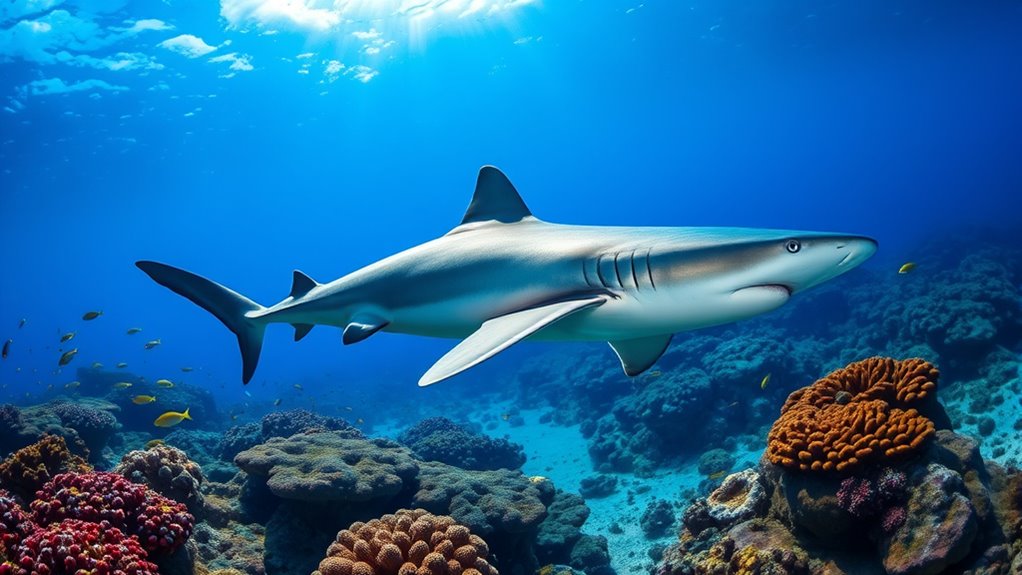
What Sharks Are There in the Mediterranean Sea?
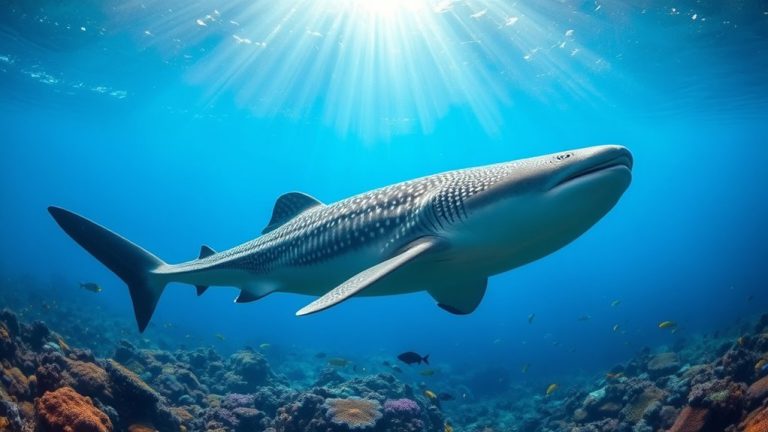
You’ll find over 40 shark species in the Mediterranean Sea, including blue sharks, hammerheads, and deep-sea species like the sixgill shark. These Mediterranean sharks vary widely in size and habitat, ranging from coastal areas to the deep ocean.
Most sharks you spot will be smaller or bottom dwellers hunting near reefs and sandy seabeds. Dangerous sharks like great whites are rare but do exist in the region.
These sharks have unique adaptations that help them thrive despite environmental challenges.
Threats from overfishing and habitat loss affect many Mediterranean shark populations. Exploring further reveals more about their behavior, ecological roles, and ongoing conservation efforts to protect them.
Common Sharks of the Mediterranean Sea
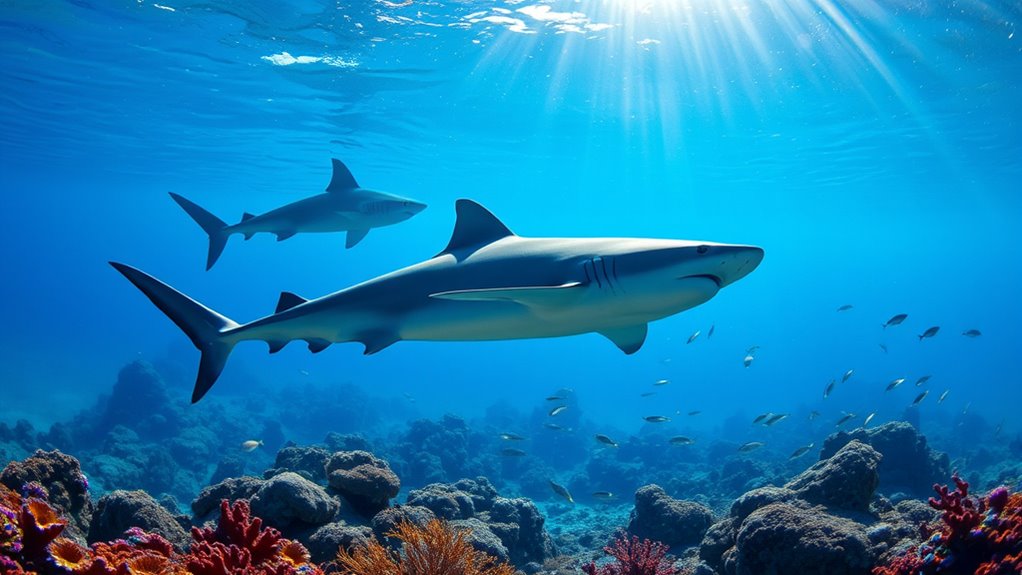
Although the Mediterranean Sea is smaller than other oceans, it hosts over 47 shark species you might find fascinating. When exploring sharks in the Mediterranean, you’ll notice some common sharks like the blue shark, hammerhead shark, and shortfin mako frequently appear.
These species are often spotted in various parts of the sea, with blue sharks and shortfin makos preferring open waters, while hammerhead sharks tend to swim closer to coastal areas. Many sharks in the Mediterranean also inhabit deep waters, making them less visible to casual observers.
Understanding these common sharks helps you appreciate the diverse marine life in this unique sea, highlighting how it supports a rich ecosystem despite its relatively small size compared to other oceanic regions.
Key Mediterranean Shark Species You’re Likely to Encounter
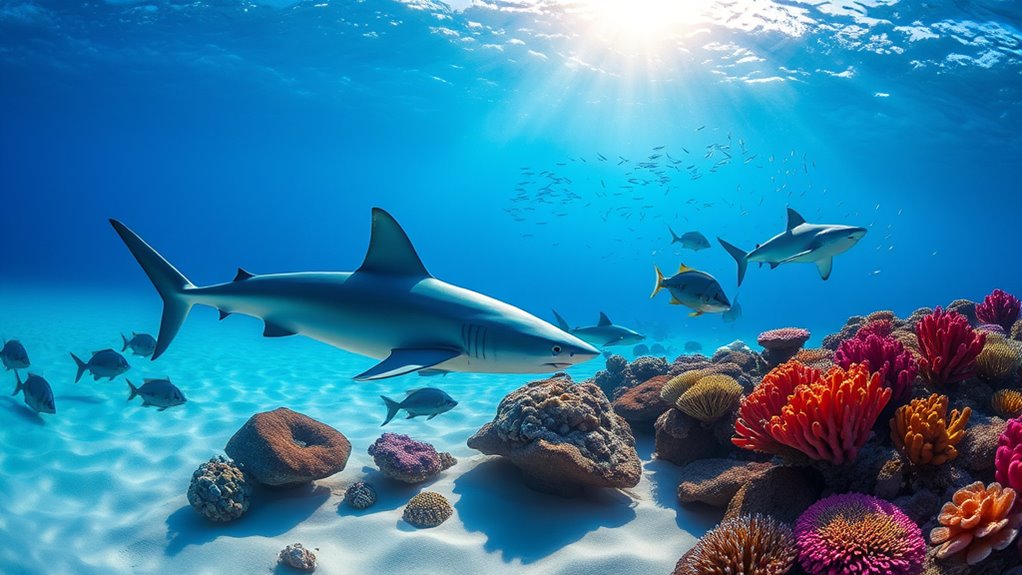
You’ll most often spot the Blue Shark, Shortfin Mako, or Blacktip Shark in the Mediterranean, each with distinct features to help you identify them. Keep an eye out for the unique hammerhead shape when scanning shallow waters, and remember that smaller species usually stay deeper.
Knowing these key traits will make recognizing Mediterranean sharks easier and more exciting.
Common Shark Species
Where can you spot sharks in the Mediterranean Sea? You’ll often find common sharks like the blacktip and hammerhead near shallow reefs, sandy banks, and coastal areas. The blue shark, one of the most frequently seen shark species, cruises open waters with its long, slender body and vibrant blue back.
While rarer, the shortfin mako’s speed and agility make it a fascinating predator in the region. Many sharks here are small, bottom-dwellers like the thickskin sandbar shark or scalloped hammerhead, often lurking near sandbars, bays, and rocky seabeds.
Here’s a quick look at key Mediterranean shark species you’re likely to encounter:
- Blue shark
- Hammerhead shark
- Blacktip shark
- Shortfin mako
- Thickskin sandbar shark
Shark Identification Tips
When identifying Mediterranean sharks, focus on their distinctive shapes and markings to spot them easily. Shark identification relies heavily on fin shape, snout type, and body size, all of which vary among species in this body of water.
For example, the Blue Shark has a long snout and sleek body, often found in open waters. The Shortfin Mako stands out with its muscular build and pointed snout, while the Great White Shark’s robust, conical snout and large body size make it unmistakable.
Hammerhead Sharks, recognizable by their unique T-shaped heads and wide fins, prefer shallow coastal habitats. Blacktip Sharks, smaller and slender, display black-tipped fins in shallow areas. Knowing these features helps you quickly identify sharks in the Mediterranean Sea.
Small and Bottom-Dwelling Sharks of the Mediterranean
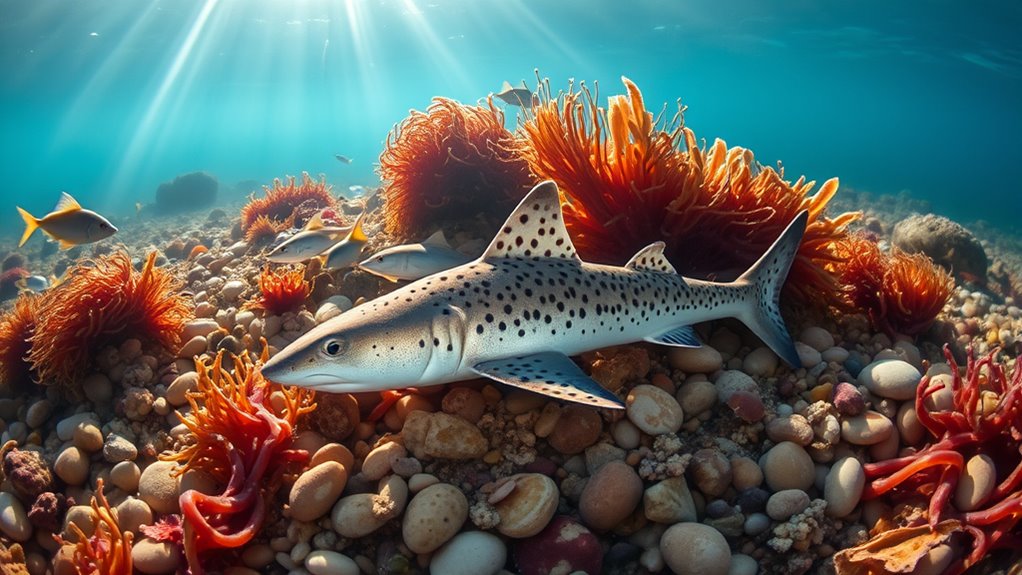
You’ll find several small, bottom-dwelling sharks in the Mediterranean, like the Blacktip and Sand Tiger sharks, each adapted to life near the seabed. These species often inhabit shallow coastal waters, sandy seabeds, and even deeper areas, showing unique hunting behaviors.
Understanding where they live and how they behave helps you appreciate their role in the marine ecosystem.
Common Bottom-Dwelling Species
Although often overlooked, the Mediterranean Sea shelters several small, bottom-dwelling sharks that thrive in shallow coastal waters and sandy or muddy seabeds. You’ll often find species like the Sandbar Shark, Scalloped Hammerhead, and Blacktip Shark traversing these coastal habitats. Each plays a crucial role in the ecosystem, hunting near the seabed and avoiding larger predators.
Here’s a quick look at common bottom-dwelling sharks:
- Sandbar Shark: prefers shallow waters, feeds on stingrays and crabs, grows up to 8 feet
- Scalloped Hammerhead: reaches 13 feet, favors sandbars, often seen in groups
- Blacktip Shark: slender with distinct black fin tips, found near estuaries and reefs
All occupy bottom-dwelling niches in coastal habitats. Many face threats from overfishing and habitat loss in the Mediterranean Sea.
Habitats And Behaviors
Because small, bottom-dwelling sharks like the Blacktip and Scalloped Hammerhead prefer shallow coastal waters with sandy or rocky seabeds, you’ll often find them close to the Mediterranean’s seafloor. These shark species favor habitats such as reefs and sandy bottoms, where they exhibit nocturnal behaviors—hiding by day and feeding by night on small fish and crustaceans.
Some, like the Velvet-Bellied Lanternshark, use bioluminescence to camouflage themselves. Shallow waters also serve as nursery grounds, offering protection for juveniles.
| Shark Species | Preferred Habitat | Notable Behavior |
|---|---|---|
| Blacktip | Sandy/Rocky Seabeds | Bottom-dwelling feeding |
| Scalloped Hammerhead | Shallow Coastal Waters | Active nocturnal hunter |
| Velvet-Bellied Lanternshark | Deep sandy seabeds | Bioluminescent camouflage |
| Sand Tiger | Reef Environments | Hides daytime, feeds night |
Deep-Sea Sharks of the Mediterranean You Might Not Know About
When you explore the depths of the Mediterranean Sea, you’ll discover deep-sea sharks that few people know about, such as the Bluntnose Sixgill Shark, which can grow up to 16 feet long and sports six gills. These deep-sea Mediterranean sharks have fascinating adaptations for survival in dark, high-pressure environments.
- The Velvet-Bellied Lanternshark glows with bioluminescence to communicate in pitch-black waters.
- School Sharks form large groups even in deep habitats.
- Bottom-dwelling species like Arran and Lewis sharks rest on tunnel floors.
- Many have reduced eye size to suit low light.
- Their diets include squid and other large fish found in the depths.
These unique traits highlight the diversity and mystery of deep-sea sharks beneath the Mediterranean surface.
Dangerous Sharks in the Mediterranean
You should know that the Mediterranean hosts a few rare but potentially dangerous sharks like the great white, tiger, and bull sharks.
While these species are infrequent, understanding their behavior around humans helps you stay safe.
Let’s look at how to identify these threats and what to expect if you encounter them.
Identifying Mediterranean Threats
Although shark encounters in the Mediterranean are rare, knowing which species pose the greatest risk can help you stay informed and cautious. Shark attacks here are few—only about 36 unprovoked cases in 150 years, mostly non-fatal. Mediterranean sharks like great white, tiger, and bull sharks are considered the most dangerous, but sightings are scarce.
Other shark species, such as oceanic whitetip and mako, rarely approach humans. Human activities, including overfishing and pollution, threaten shark populations and may increase risky interactions. Here’s what you should know about identifying these threats:
- Great white, tiger, and bull sharks are the primary dangerous species.
- Confirmed encounters with bull sharks are uncommon.
- Oceanic whitetip and mako sharks are less likely to approach you.
- Threatened sharks face habitat loss from human activities.
- Low shark attack numbers don’t eliminate the need for caution.
Shark Behavior Around Humans
Understanding the behavior of dangerous sharks like great whites, tiger, and bull sharks around humans can help you stay safer in the Mediterranean. Shark attacks here are extremely rare, with only 36 recorded in 150 years.
Most species of shark found in these waters, such as blacktip and hammerhead sharks, prefer to avoid humans rather than engage aggressively. When sharks in the Mediterranean do bite, it’s usually accidental—they mistake you for prey while exploring.
Large predatory sharks like the great white are seldom seen, with very few confirmed sightings. By knowing typical shark behavior around humans, you can reduce risk and enjoy the sea confidently.
Rare But Present Species
While dangerous sharks like the Great White, Bull, and Tiger are rarely seen in the Mediterranean, they do occasionally appear in these waters. You should know that sightings of these dangerous species are extremely rare, but not impossible. The Mediterranean Sea has recorded only about ten Great White shark encounters in the past 30 years.
Bull sharks sometimes enter near the Italian coast, though sightings often lack confirmation. Tiger sharks are even more elusive, with very few verified reports. These rare appearances remind you to stay cautious when swimming or diving in certain areas.
- Around 10 Great White sightings in 30 years
- Bull sharks near Italy, sightings unconfirmed
- Tiger sharks suspected but rarely confirmed
- Dangerous species presence is infrequent
- Mediterranean Sea remains mostly safe but unpredictable
Rare and Endangered Sharks in Mediterranean Ecosystems
Because the Mediterranean Sea hosts several rare and endangered shark species, you’ll find some fascinating yet vulnerable creatures beneath its waves. Species like the critically endangered Angel Shark and Guitarfish are rare shark species that rely on this unique habitat. You might also encounter the Bluntnose Sixgill Shark, a deep-sea dweller seldom seen by humans.
Unfortunately, habitat loss and overfishing have caused significant declines in populations of endangered sharks such as the Dusky Shark and Great White Shark. These sharks often live near the sea bottom or in deep waters, making sightings uncommon. Conservation efforts are essential to protect these species, as they play critical roles in maintaining the Mediterranean Sea’s marine ecosystem balance.
How Mediterranean Sharks Adapt to Their Environment
The rare and endangered sharks you’ve learned about have developed remarkable adaptations to thrive in the Mediterranean’s varied environments. These sharks exploit diverse ecological niches, from shallow coasts to deep trenches, using specialized morphology and sensory organs. Their behavior also plays a key role in survival and hunting strategies.
Streamlined bodies and acute senses help sharks like the blue shark hunt in murky waters. Deep-sea species such as the bluntnose sixgill use bioluminescence and multiple gill slits for dark, high-pressure habitats. Schooling and rapid speed bursts aid blacktip and spinner sharks in evading predators.
Reinforced fins and flexible cartilage enhance navigation and agility. Ampullae of Lorenzini sensory organs enable precise detection of prey and communication.
These adaptations let Mediterranean sharks thrive in complex environments.
The Impact of Overfishing on Mediterranean Shark Populations
If you’ve ever wondered why Mediterranean shark sightings have become so rare, overfishing is a major culprit. Over the past two centuries, shark populations have plummeted by 97%, pushing many species like the dusky and scalloped hammerhead sharks into endangered status.
You should know that shark finning for commercial trade and bycatch from fishing nets cause high accidental deaths, drastically reducing their numbers. This overfishing disrupts the ecological balance, affecting prey species and overall marine health.
Sharks’ migration patterns also get disturbed, further harming their ability to reproduce and recover. When these apex predators decline, the entire marine ecosystem suffers. Understanding the impact of overfishing helps you appreciate the urgency of protecting Mediterranean shark populations before it’s too late.
Conservation Efforts Protecting Mediterranean Sharks
How can we turn the tide for Mediterranean sharks facing severe threats? You can support shark conservation through marine protected areas that shield critical habitats from overfishing and habitat loss. Reducing bycatch with stricter fishing regulations and enforcing protective policies also plays a key role.
Support Mediterranean shark conservation by protecting habitats and enforcing stricter fishing regulations to reduce bycatch.
Several organizations work hard to monitor shark populations and promote sustainable practices. Here’s how efforts come together:
- Establishing marine protected areas to safeguard shark habitats
- Implementing fishing rules to minimize bycatch and illegal hunting
- Promoting community engagement and awareness campaigns
- Supporting research projects like the Mediterranean Shark Conservation Project
- Enforcing international protective policies with help from NOAA and Smithsonian Ocean
Tips for Safely Observing Sharks in the Mediterranean
When you want to observe sharks in the Mediterranean, prioritizing safety guarantees a rewarding experience for both you and the animals. Always maintain a safe observation distance, using a protected boat or underwater cage, especially around larger sharks like great whites. Avoid sudden movements or splashing, as these can attract sharks’ attention and disrupt their natural behavior.
Joining guided tours is smart—they offer expert knowledge on shark behavior and ensure you follow local regulations. Use polarized sunglasses or dive masks to see sharks clearly without disturbing shark habitats. Respect these habitats by never touching or chasing sharks, and always listen to trained guides.
Frequently Asked Questions
Are There Any Dangerous Sharks in the Mediterranean Sea?
Yes, there are dangerous sharks like great whites in the Mediterranean, but they’re extremely rare. You’re more likely to encounter small, harmless species, so don’t worry much about shark attacks while swimming there.
What Is the Apex Predator of the Mediterranean Sea?
Imagine a massive shadow gliding silently beneath turquoise waves—that’s the Great White Shark, the apex predator of the Mediterranean Sea.
You won’t often see it, but it rules the underwater domain with unmatched power and stealth.
What Is the Most Common Shark in the Mediterranean Sea?
The most common shark you’ll find in the Mediterranean Sea is the Blue Shark. You’ll spot them by their vibrant blue color and pointed snouts, often swimming in large schools across various depths, even during migrations.
Is the Mediterranean Safe to Swim In?
Yes, the Mediterranean is safe to swim in since shark attacks are extremely rare. Most sharks there are small and non-aggressive, and dangerous species rarely appear near popular beaches where you usually swim.
Conclusion
If you ever immerse yourself in the Mediterranean, know you’re sharing the waters with over 50 shark species, from tiny catsharks to impressive great whites. Despite their diversity, many are vulnerable due to overfishing, with some populations dropping by up to 90%.
By respecting their space and supporting conservation efforts, you help protect these fascinating creatures.
So next time you swim or snorkel, remember: the Mediterranean’s sharks are an incredible part of its underwater world, deserving your care. Protecting Mediterranean shark species is essential for maintaining the health and balance of this unique marine ecosystem.