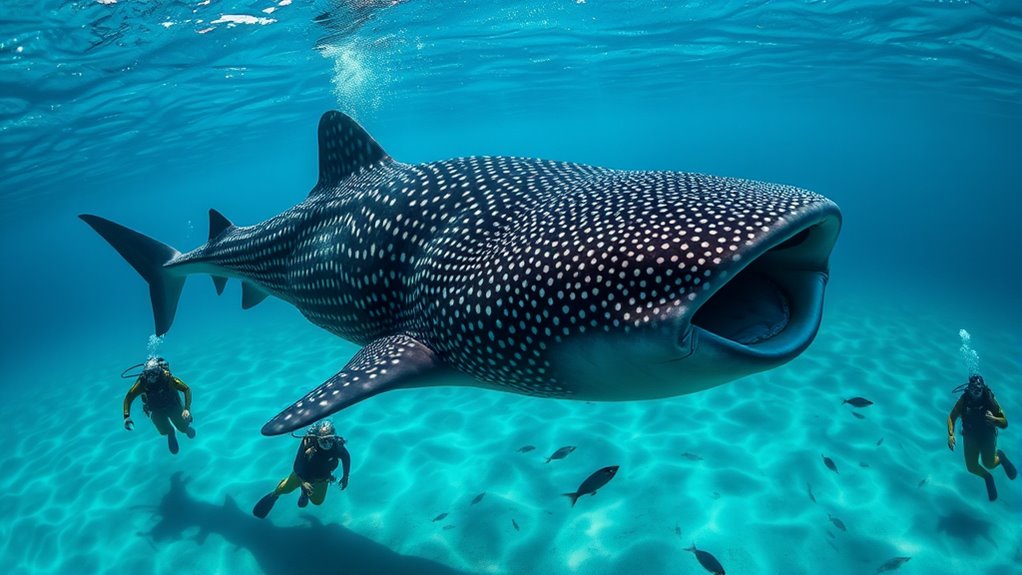
What Happens If Whale Sharks Eat People?
You won’t get swallowed by a whale shark because their mouths and throats are designed to filter tiny plankton, not people. Whale sharks are filter feeders with throats only about the size of a fist, making it impossible for them to swallow humans.
If you accidentally enter their mouth, they’ll quickly close it and spit you out.
Whale sharks aren’t aggressive and don’t see humans as food. They usually react calmly and reject anything too large.
Keep going to understand why these gentle giants are safe to swim around.
Whale Shark Feeding Anatomy and Why They Can’t Swallow Humans
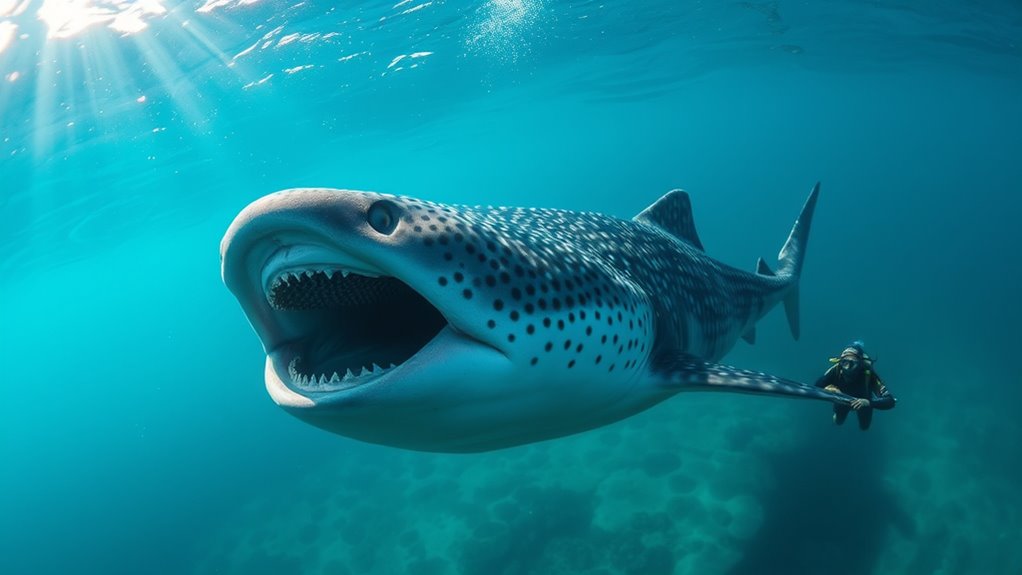
Although whale sharks have mouths that can open up to five feet wide, you shouldn’t worry about them swallowing you—they simply can’t. Their feeding anatomy is specially designed for filtering tiny plankton and small fish, not large objects. Even though their mouth is massive, the throat is only about the size of a human fist, and their esophagus measures just a few inches across.
This means whale sharks physically can’t swallow anything much bigger than small fish. Their gill rakers act like filters, trapping tiny prey while letting water flow through. When feeding, whale sharks close their mouths around prey, but they never try to swallow large objects like humans.
What Happens If a Person Accidentally Enters a Whale Shark’s Mouth?
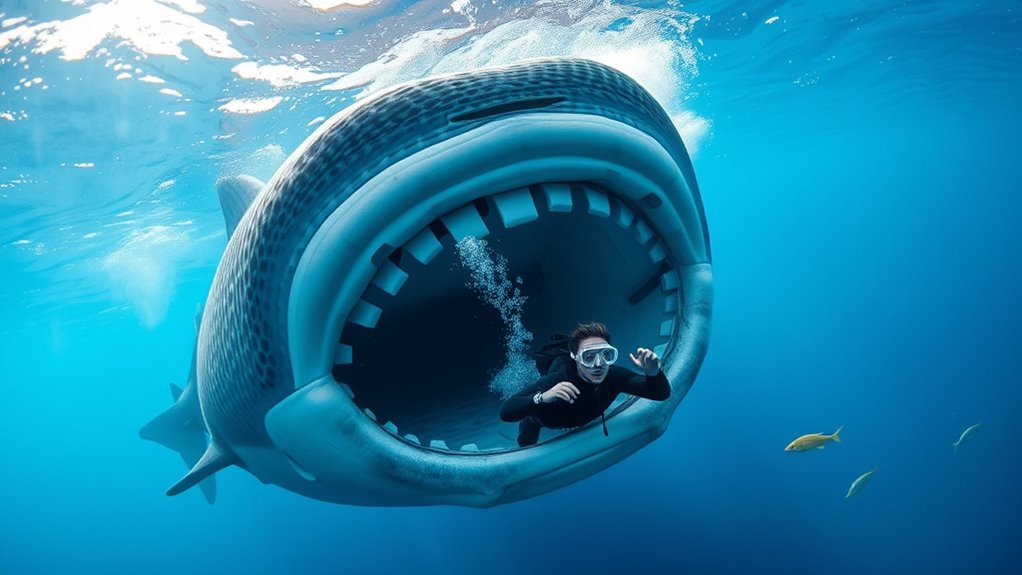
If you ever find yourself accidentally inside a whale shark’s mouth, don’t panic—the shark will almost always close its mouth quickly and spit you out. Whale sharks have massive mouths, up to five feet wide, but their gill rakers are designed to filter tiny prey, making accidental ingestion of a human extremely unlikely. Their throats are too small and specialized for swallowing large objects like people.
When a person inadvertently enters a whale shark’s mouth, the shark’s natural response is to reject and release them immediately, as it dislikes consuming foreign objects. No documented cases exist of whale sharks swallowing humans, so if contact occurs, you’ll most likely be spit out unharmed rather than swallowed.
How Whale Sharks React When Humans Are Nearby or Inside Their Mouths
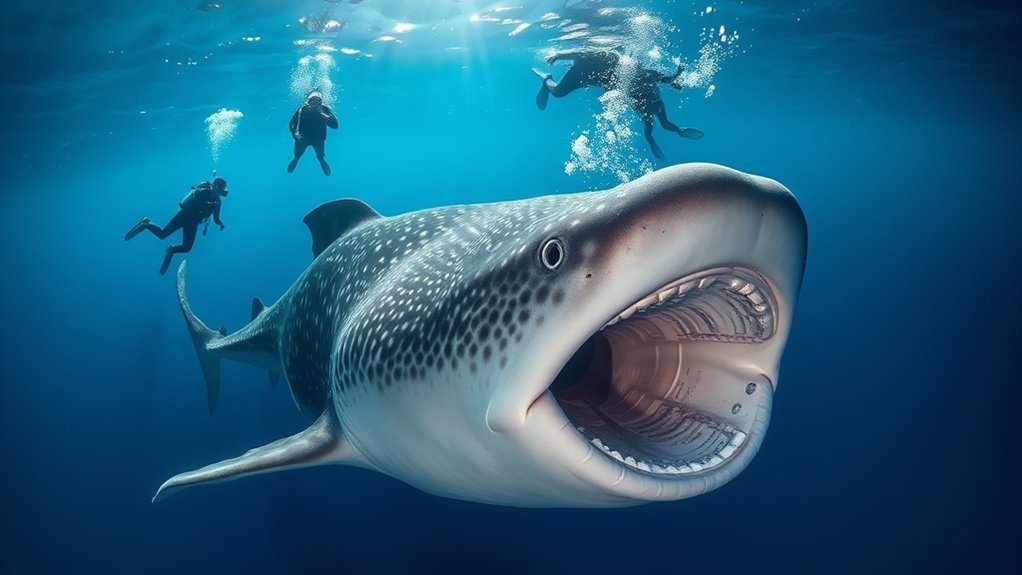
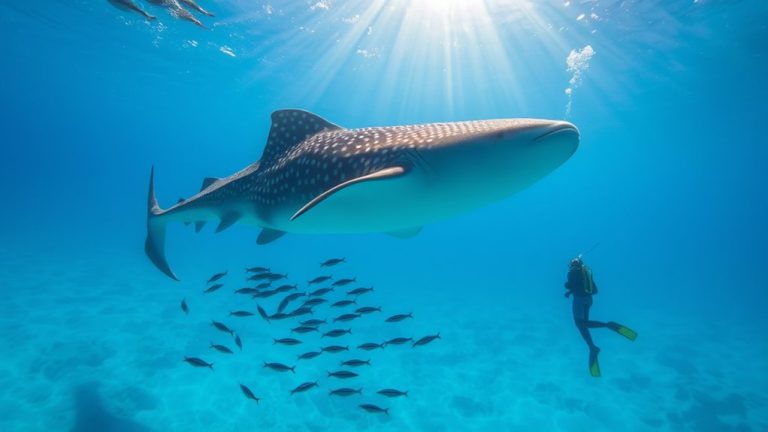
When you approach a whale shark, you’ll notice it remains calm and unthreatened by your presence. These gentle giants don’t eat humans; their massive mouths are built to filter tiny plankton, not large creatures like you. If you accidentally find yourself inside a whale shark’s mouth, it will immediately close and spit you out.
Their narrow esophagus and specialized gill rakers prevent swallowing anything big or foreign. Whale sharks instinctively reject and expel anything unfamiliar, including humans.
- You feel awe, not fear, near these peaceful giants
- Their slow, deliberate movements inspire calm
- Knowing they can’t eat humans brings relief
- Seeing one gently filter water connects you to nature
- Their protective behavior makes you feel safe, not threatened
True Stories and Myths About People Swallowed by Whales
You might have heard old tales claiming people were swallowed whole by whale sharks, but those stories don’t hold up to scientific scrutiny. Even modern incidents where humans end up inside a whale shark’s mouth show they’re quickly released, not swallowed.
Let’s separate fact from fiction and see what really happens in these rare encounters.
Historical Whale Swallowing Claims
Although tales of people swallowed by whales have fascinated many, you should know that most of these stories blend myth with reality. Whales, despite their massive size, don’t swallow humans as fish prey. Take the famous James Bartley story—allegedly swallowed by a sperm whale in 1891—but no photos or proof back it up.
Sailor myths often exaggerate or misinterpret events, and scientists confirm whales can’t physically swallow people due to their throat size and feeding methods. Here’s what you should keep in mind:
- Sperm whales eat large squid but avoid humans.
- Many swallowing stories lack scientific evidence.
- Whale sharks’ throats are too small for people.
- Surviving inside a whale is highly unlikely.
- Myths mix fear and fascination with the sea.
Modern Whale Ingestion Incidents
While some modern stories claim people have been swallowed by whale sharks, these accounts don’t hold up under scientific scrutiny. Whale sharks primarily filter feed on plankton and small fish, making it impossible for them to ingest humans.
Most incidents involve accidental contact, where people are quickly spat out.
| Incident Type | Outcome | Explanation |
|---|---|---|
| Accidental Contact | Spat Out | Whale sharks reject foreign objects |
| Feeding Attempt | Myth | Mouth size and behavior prevent ingestion |
| Verified Cases | None | Scientific evidence disproves swallowing |
You won’t find credible reports of whale sharks eating people. Instead, these gentle giants avoid large prey, ensuring your safety around them.
Risks to Humans Inside Whale Sharks’ Mouths
If you find yourself inside a whale shark’s mouth, you’ll quickly notice its throat is far too small to swallow you. The shark’s filtering system isn’t designed for anything larger than plankton, so it’ll almost immediately spit you out.
This built-in expulsion mechanism keeps you from being ingested, despite the mouth’s impressive size.
Physical Limitations Of Mouth
Because whale sharks have mouths up to five feet wide but esophagi only a few inches across, you don’t need to worry about being swallowed if you accidentally end up inside one. Their mouths are built to filter tiny prey, not to accommodate large objects like humans. Even if you enter a whale shark’s mouth, the narrow esophagus makes swallowing impossible.
The shark’s anatomy simply can’t handle anything bigger than small fish or plankton.
If you find yourself inside a whale shark’s mouth, remember:
- The esophagus won’t allow you to pass through
- The mouth closes gently, not to swallow
- There’s no digestive capacity for large prey like humans
- The filter-feeding system excludes big objects
- Being trapped inside is virtually impossible
This anatomy protects you from any real danger inside their mouth.
Immediate Expulsion Mechanism
Though whale sharks may occasionally close their mouths around larger objects, they don’t swallow humans. As filter feeders, their mouths are designed to trap tiny prey like plankton, not large creatures.
If you ever find yourself inside a whale shark’s mouth, you’d experience what’s called an immediate expulsion mechanism. Because their throat opening is about the size of a human fist, swallowing you is impossible. Instead, the whale shark will quickly spit you out.
Their internal environment lacks the digestive enzymes needed to break down anything as big as a person, so holding you inside serves no purpose. This quick rejection minimizes risks to humans inside their mouths, making accidental ingestion incredibly unlikely and short-lived.
Whale Sharks vs. Sperm Whales: Swallowing Humans Explained
While whale sharks boast mouths up to five feet wide, their narrow esophagus prevents them from swallowing anything as large as a human; instead, they filter tiny prey like plankton. In contrast, sperm whales can swallow large prey like squid whole, but even they don’t swallow humans. Their anatomy and stomach environment make it virtually impossible.
So, whether it’s whale sharks or sperm whales, swallowing a human is more myth than reality.
- Imagine the relief knowing these giants won’t harm you.
- Picture the awe of swimming near a gentle giant.
- Feel the thrill without fear of being swallowed.
- Understand the myths versus the facts about these creatures.
- Appreciate the ocean’s balance and your safety within it.
Why Whale Sharks Filter Feed and Avoid Humans
If you watch a whale shark feeding, you’ll notice it opens its massive mouth wide to filter tiny plankton from the water, carefully avoiding anything too large—like a human. Whale sharks use specialized gill rakers that act as a fine sieve, allowing them to filter out small fish and microscopic organisms while keeping bigger objects out.
Their esophagus is only a few inches wide, so swallowing a human is physically impossible. When feeding, they swim steadily with their mouths open, filtering water but rejecting anything unfamiliar or too large.
This precise feeding method and anatomical design ensure they focus solely on tiny, filterable prey, which explains why they avoid humans and don’t see them as food.
Safety Tips for Swimming or Diving Near Whale Sharks
Understanding how whale sharks feed helps you stay safe when you swim or dive near them. These gentle giants filter feed, and their narrow esophagus prevents swallowing humans or large objects like sperm whales.
To guarantee your safety and theirs, follow these tips:
- Keep a respectful distance—don’t touch or chase whale sharks.
- Avoid sudden movements; they may close their mouths if startled.
- Stay clear of their mouths to prevent accidental contact.
- Use eco-friendly sunscreen to protect marine life.
- Always follow local guidelines and listen to your dive guides.
Why Whale Sharks Pose No Real Threat to Humans Despite Their Size
Even though whale sharks are the largest fish in the sea, they don’t pose a real threat to you. Their feeding behavior revolves around filter-feeding tiny plankton and small fish, not swallowing large objects like humans. Despite having a mouth up to five feet wide, their esophagus is only a few inches across, making it impossible to ingest anything bigger than their natural prey.
Studies show whale sharks dislike foreign objects and will usually reject or spit out anything unfamiliar. Additionally, their internal environment, filled with digestive enzymes and gases, would make survival inside them impossible. No verified cases exist of whale sharks swallowing humans, proving their gentle nature.
Frequently Asked Questions
What Happens if a Whale Shark Eats You?
If a whale shark tries to eat you, it won’t actually swallow you because their mouths filter tiny prey. You’d likely be quickly expelled unharmed, as they can’t or don’t consume anything as big as a person.
Can a Whale Shark Harm a Human?
You won’t face a Jaws-like attack from a whale shark; they can’t harm you intentionally. Their gentle filter-feeding and small throats keep you safe, making any danger from them virtually nonexistent during encounters.
Why Can’t a Whale Shark Eat a Human?
You can’t be eaten by a whale shark because its mouth and throat are too small to swallow you.
It filters tiny prey, not big objects, and it usually closes its mouth around anything too large instead.
What Happens if a Whale Eats a Human?
If a whale actually swallows a human, it’s usually accidental. You’d likely survive the initial gulp, but the whale’s stomach environment isn’t safe for humans, and rescue would be urgent to prevent serious harm or death.
Conclusion
It’s funny how something as enormous as a whale shark can’t actually swallow you, even if you accidentally slip into its mouth. You might think size alone makes them dangerous, but their feeding anatomy works perfectly to avoid swallowing big things like humans.
So, while it’s a wild coincidence that such a giant creature poses no real threat, you can relax knowing they’re gentle giants, designed to filter tiny plankton—not people.
In conclusion, whale sharks eating people is virtually impossible due to their filter-feeding system. These gentle giants pose no danger, making encounters safe and fascinating rather than frightening.