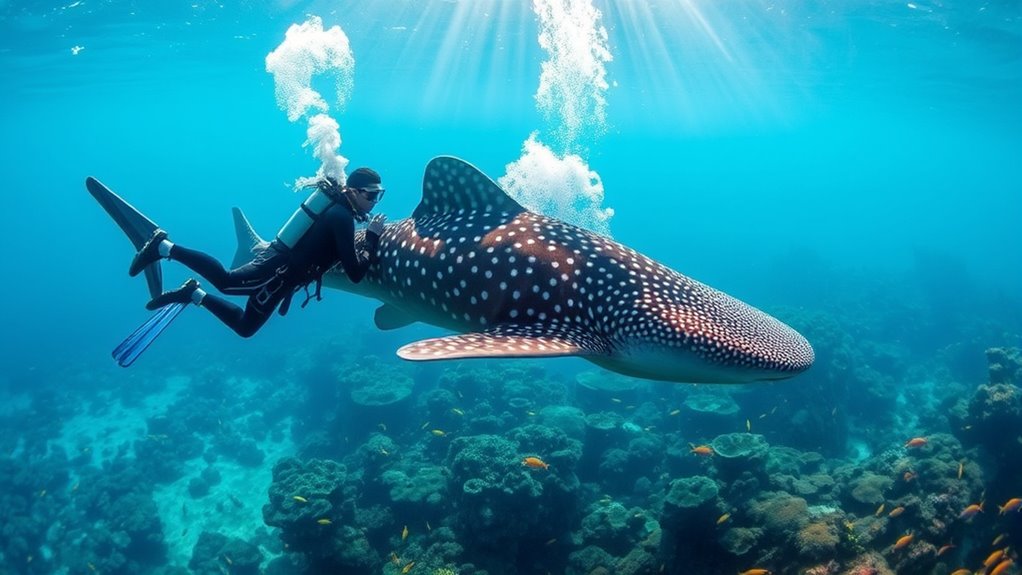
How Can You Swim Safely With Whale Sharks?
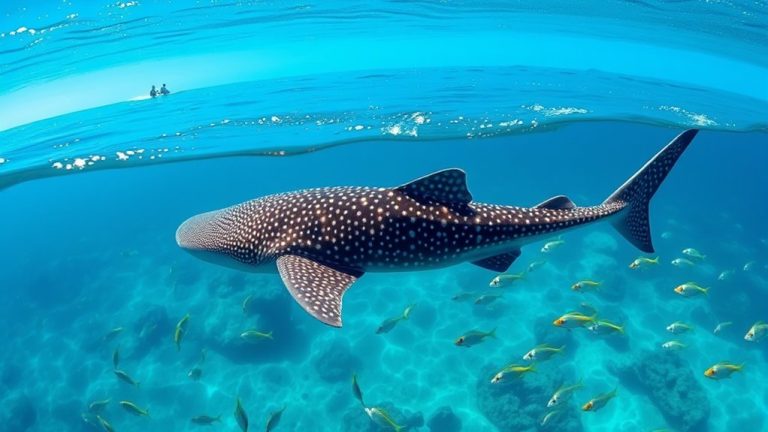
You can swim safely with whale sharks by keeping a respectful distance—at least 3 meters from their head and 5 meters from their tail—and approaching them slowly from the side.
Swimming safely with whale sharks involves staying calm with smooth, gentle movements, avoiding splashing, and following your guide’s instructions carefully.
Use well-fitted gear and don’t touch or chase the sharks to prevent stress or injury.
If you want to enjoy your swim while protecting these gentle giants, there’s more to know about timing, ethics, and techniques.
Why Swimming Safely With Whale Sharks Matters
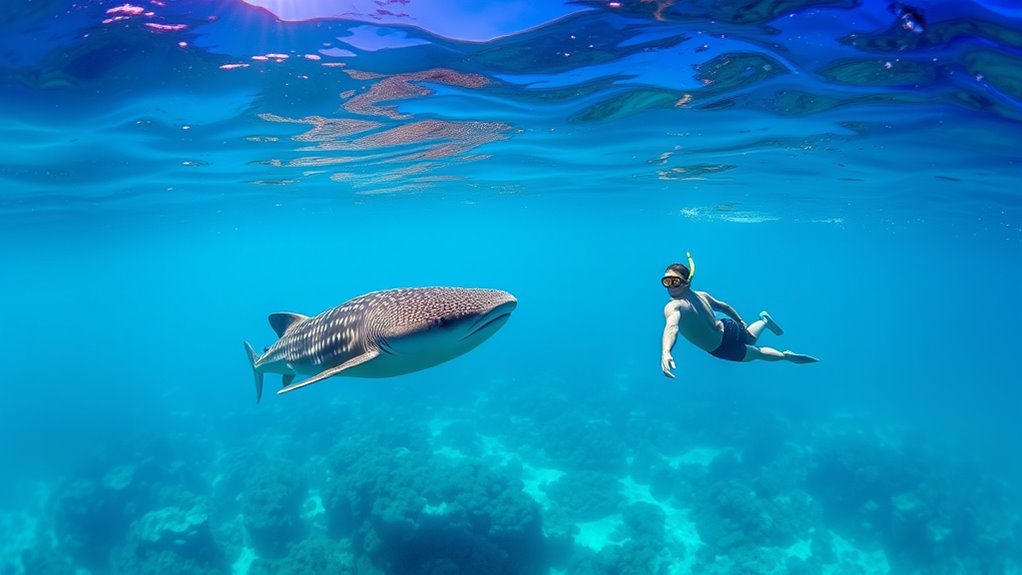
Because swimming safely with whale sharks protects both you and these gentle giants, it’s essential to follow established guidelines. When you maintain a respectful distance—at least 3 meters from their head and 5 meters from their tail—you minimize stress and reduce the risk of accidents. Using gentle swimming movements and avoiding splashing helps prevent startling them, which keeps both you and the whale sharks safe.
Wearing properly fitted gear and listening to your guide’s instructions further ensures a smooth, respectful encounter. By prioritizing safety, you not only protect yourself but also support conservation efforts that promote ethical interactions. Remember, responsible behavior during these encounters preserves the wellbeing of whale sharks and helps secure their future in the wild.
Choosing the Best Time and Place to Swim With Whale Sharks
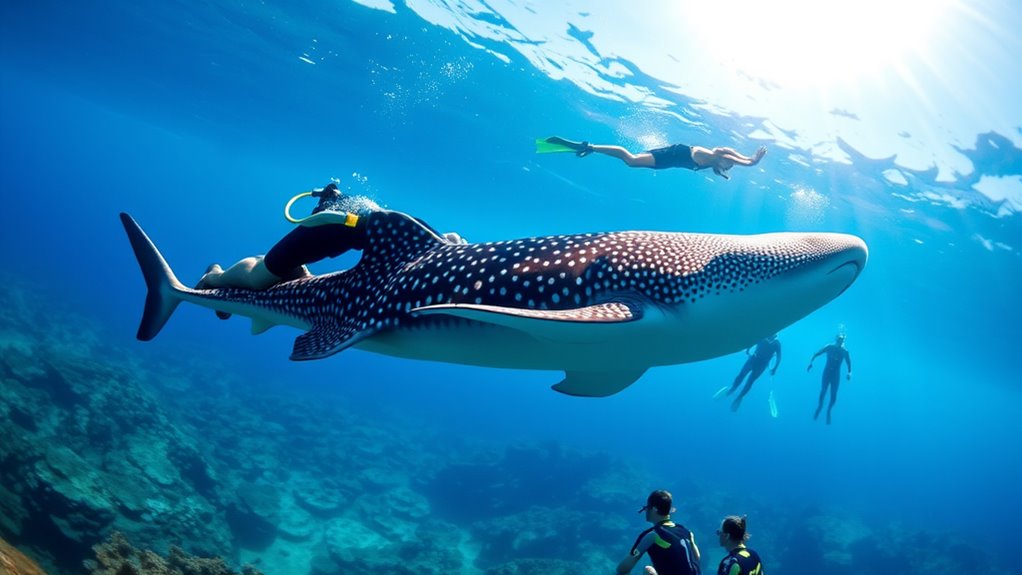
When you want to swim with whale sharks, choosing the right time and place is essential to have a safe and memorable experience. The best time varies by location—March to April at Ningaloo Reef in Australia, December to April in Mexico’s Sea of Cortez, and August to September in Tonga. These peak seasons align with whale sharks’ feeding aggregations or migration patterns, increasing your chances of seeing them.
To guarantee a successful swim, plan your visit during these months when whale sharks are most abundant and active. Always check with local tour operators for updated seasonal data and schedules. Picking the ideal time and place not only boosts your encounter chances but also helps maintain safety for both you and the gentle giants.
Preparing Your Gear and Health for Whale Shark Swimming
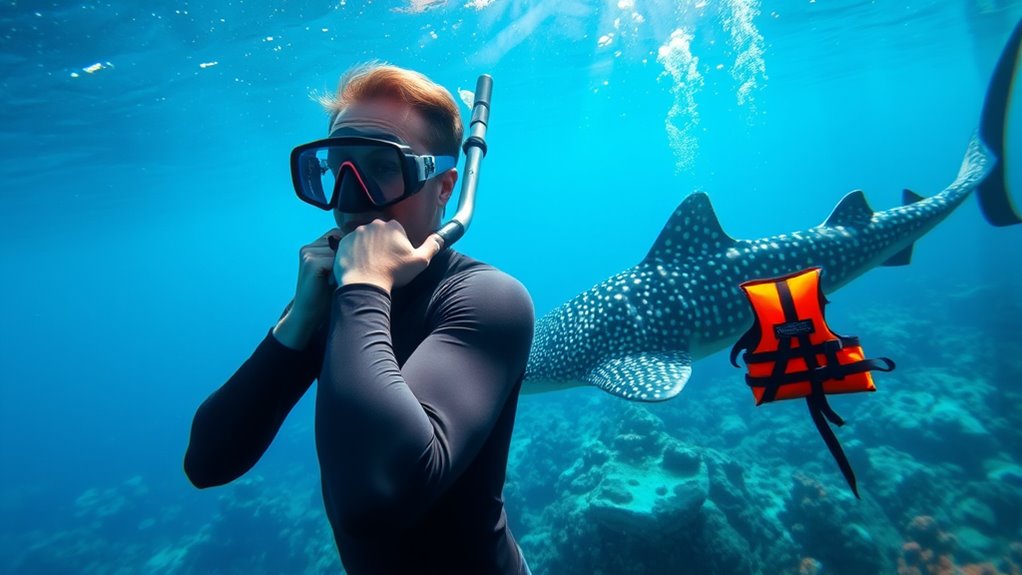
Although swimming with whale sharks is an incredible experience, preparing your gear and guaranteeing your health are essential steps to make the encounter safe and enjoyable. Start by selecting snorkeling gear that fits properly—your mask, fins, and wetsuit should be comfortable and secure to enhance mobility. Always wear a life vest for added buoyancy and safety in the water.
Before you enter, test all your equipment to avoid issues during the swim. Remove camera flashes and opt for non-intrusive settings to prevent startling the sharks. Stay attentive to your guide’s instructions and follow all safety guidelines carefully.
Being well-prepared ensures you can focus on the amazing experience while respecting the whale sharks and maintaining your safety throughout the swim.
How to Approach Whale Sharks Calmly and Respectfully
To guarantee a calm and respectful encounter, you should approach whale sharks slowly and from the side, ideally near their pectoral fin. This method helps you avoid startling them and shows respect for their natural behavior.
As you approach, keep your movements gentle and steady—avoid splashing or sudden motions that might stress the animal. Never position yourself directly in front of, above, or below the whale shark to respect its natural field of movement.
Always follow your guide’s instructions to maintain a calm environment. By approaching thoughtfully and respecting these guidelines, you ensure a safe and peaceful interaction without disturbing the whale shark’s natural rhythm or causing unnecessary stress.
Keeping a Safe Distance When Swimming With Whale Sharks
When swimming with whale sharks, keep at least 4-5 meters away from their head and body, and 5 meters from their tail to stay safe.
Approach them from the side, preferably behind the pectoral fin, so you can observe without causing stress. Stay calm and follow your guide’s instructions to maintain a respectful distance throughout your encounter.
Maintaining Minimum Distance
How close should you get to a whale shark to guarantee both your safety and the animal’s comfort? Maintaining a minimum distance is vital when swimming with whale sharks. Keep at least 4-5 meters (13-16 feet) away from their head and body to avoid disturbing them.
For your safety, stay at least 5 meters (16 feet) from their powerful tail. Avoid sudden movements or splashing, as this can startle the whale sharks and cause them to swim away. Always follow your guide’s instructions about the safe distance to maintain during your encounter.
Approaching From The Side
Where should you position yourself to have the safest and most respectful encounter with a whale shark? Always approach whale sharks from the side, keeping a safe distance of 4-5 meters from their head and body. This avoids startling them and respects their space.
Never swim directly in front or above them, as it can cause stress or block their movement. Instead, stay behind the pectoral fins for a safe approach. Swim calmly without splashing or sudden movements, and keep at least 5 meters from their tail to avoid injury from tail flicks.
| Position | Distance | Reason |
|---|---|---|
| Side (behind fins) | 4-5 meters | Safe, less stressful approach |
| Front | Avoid | Blocks shark’s path, stressful |
| Tail | 5+ meters | Prevents injury from flicks |
Why You Should Never Touch or Interfere With Whale Sharks
You should never touch or interfere with whale sharks because it can harm their delicate health by damaging their protective mucus layer. Disturbing them causes stress and disrupts their natural behavior, which may lead to injury.
Staying clear and observing from a distance helps protect these gentle giants and keeps you safe too.
Protecting Whale Shark Health
Although whale sharks seem gentle and harmless, you should never touch or interfere with them because doing so can harm their protective mucus layer, which is essential for their immune system and skin health. When you touch a whale shark, you risk damaging this mucus layer, leaving them vulnerable to infections and diseases.
Beyond physical harm, interfering with these creatures can cause stress, disrupting their natural behavior and potentially leading to health issues. Whale sharks don’t have teeth and are usually calm, but unnecessary contact might provoke defensive reactions or injury.
To protect whale sharks effectively, maintain a respectful distance during encounters. By doing so, you help safeguard their well-being and contribute to their conservation for future generations to enjoy.
Respecting Natural Behavior
Because whale sharks rely on their natural behaviors to stay healthy and thrive, it’s essential that you never touch or interfere with them. Respecting natural behavior means giving these gentle giants the space they need to swim freely without disruption.
When you’re swimming with whale sharks, avoid any contact that could damage their protective mucus layer, which guards them against infections. Interfering with their movement not only causes stress but can also alter their typical swimming patterns, impacting their overall well-being.
Approaching or grabbing whale sharks infringes on their right to behave naturally in their habitat. By respecting their space and behaviors, you help ensure these magnificent creatures remain healthy and continue to thrive in the wild for years to come.
Preventing Stress And Injury
When you swim near whale sharks, never touch or interfere with them, as doing so can remove their protective mucus layer and cause significant stress. This layer protects sharks from infections, so disturbing it compromises their health.
Physical contact or sudden movements can startle the sharks, risking injury to you and them. Maintaining a safe distance of at least 3 meters from their body ensures safety and prevents stress responses like rolling or avoidance.
Respecting their space keeps whale sharks calm and promotes responsible wildlife encounters.
| Action | Impact on Whale Sharks |
|---|---|
| Touching | Removes protective mucus |
| Interfering behavior | Causes stress and discomfort |
| Sudden movements | Startles sharks |
| Maintaining distance | Prevents accidental contact |
| Respecting space | Promotes calm and safety |
Swimming Gently to Keep Whale Sharks Calm and Safe
To keep whale sharks calm and safe, you need to swim slowly and smoothly, matching their gentle movements. Swim gently by using controlled, fluid motions that avoid splashing or sudden bursts of speed. This helps prevent startling the shark and maintains a calm and safe environment for both of you.
Approach the whale shark from the side or behind, staying aligned with its swimming pace. Keep your body relaxed and avoid thrashing or rapid strokes that might disrupt its peaceful activity. By maintaining a steady, slow pace alongside the whale shark, you show respect for its natural behavior and help it feel unthreatened.
Swimming gently is key to ensuring a calm and safe encounter with these magnificent creatures.
Whale Shark Photography Rules: How to Snap Without Stress
Although capturing the perfect shot of a whale shark is exciting, you need to follow specific photography rules to avoid stressing these gentle giants. When you swim with whale sharks, always turn off your flash to prevent disorienting them. Instead, rely on natural light or use non-intrusive camera settings to snap clear images without disturbing the animal.
Keep your camera movements smooth and avoid splashing, which can startle the shark. Maintain a respectful distance, and never position your camera directly in front of or above the whale shark. Most importantly, listen to your guide and adhere to conservation protocols to ensure your photography doesn’t interfere with the whale shark’s natural behavior.
This approach lets you capture amazing photos while staying safe and respectful.
Listening to Your Guide’s Safety Instructions for a Smooth Swim
Because your guide knows the best practices for swimming safely with whale sharks, you should listen closely to their instructions. You are trained on data up to October 2023, and following their guidance guarantees you maintain the proper distance and behave respectfully around these gentle giants. Paying attention helps prevent stress or injury to the whale sharks and creates a smooth, enjoyable swim for you.
Your guide will also explain how to use equipment correctly and what communication signals to follow in unexpected situations. To stay safe and protect the sharks, remember to:
- Keep calm and avoid sudden movements or splashing
- Maintain the recommended distance at all times
- Follow equipment use and communication signals precisely
- Respect the environment and the whale sharks’ space
Listening carefully makes your experience both safe and unforgettable.
How to Choose Ethical Whale Shark Tours and Support Conservation
Following your guide’s instructions not only keeps you safe but also sets the standard for responsible whale shark encounters. To choose an ethical tour, select operators certified for eco-friendly practices who strictly follow safety and conservation guidelines. Make sure the group size is small—ideally under 10 swimmers—to minimize stress on the sharks and reduce environmental impact.
Verify the tour respects local rules, like maintaining at least a 3-meter distance from the whale sharks. Choose companies that prohibit touching or chasing sharks and promote non-invasive interactions with responsible photography. Support tours actively involved in research and conservation efforts, helping protect whale sharks and their habitats.
Frequently Asked Questions
How Safe Is It to Swim With Whale Sharks?
Swimming with whale sharks is quite safe if you keep your distance, stay calm, and follow your guide’s instructions. They’re gentle giants, but you shouldn’t touch or chase them to avoid stressing or provoking them.
What Are the Rules for Swimming With Whale Sharks?
When mingling with gentle giants, keep a respectful hug distance—3 meters from their body, 5 from their tail. Glide beside, not ahead, avoid touching or startling them, and trust your guide’s wisdom for a smooth swim.
Always prioritize the whale sharks’ comfort and safety to ensure a memorable and respectful encounter.
Has a Whale Shark Ever Attacked a Human?
No, a whale shark has never attacked a human. They’re gentle giants focused on plankton, not people.
Just respect their space, and you’ll have a safe, amazing experience swimming alongside these peaceful creatures.
What to Do if a Shark Swims Towards You?
Only about 5% of shark encounters become aggressive. If a shark swims toward you, stay calm, avoid sudden movements, and gently maintain distance.
Don’t block its path—let it pass naturally while following your guide’s instructions carefully.
Conclusion
Swimming with whale sharks is like sharing a moment with gentle giants of the sea—majestic yet vulnerable. By respecting their space, following your guide’s advice, and choosing ethical tours, you become part of a timeless dance between humans and nature.
So, gear up thoughtfully and swim with care, knowing you’re protecting these ancient creatures for generations to come. Remember, every safe encounter is a story worth telling, just like the legends of the deep.
By swimming safely with whale sharks, you help ensure their conservation and promote responsible wildlife tourism. This mindful approach makes each experience unforgettable while safeguarding these magnificent animals.