How Did Georgia Aquarium Get Whale Sharks Step by Step
You’ll see how Georgia Aquarium rescued whale sharks from a Taiwan fish market, immediately gave them health checks, and stabilized them in holding tanks.
Then they designed custom 25,000-pound transport tanks with life support systems to maintain water quality and oxygen.
The sharks flew 8,000 miles on a specially equipped plane with real-time monitoring.
After arrival, expert vets carefully transferred and acclimated them to the Ocean Voyager exhibit.
Keep exploring to uncover the full journey and care involved.
Rescuing Whale Sharks From a Taiwan Fish Market
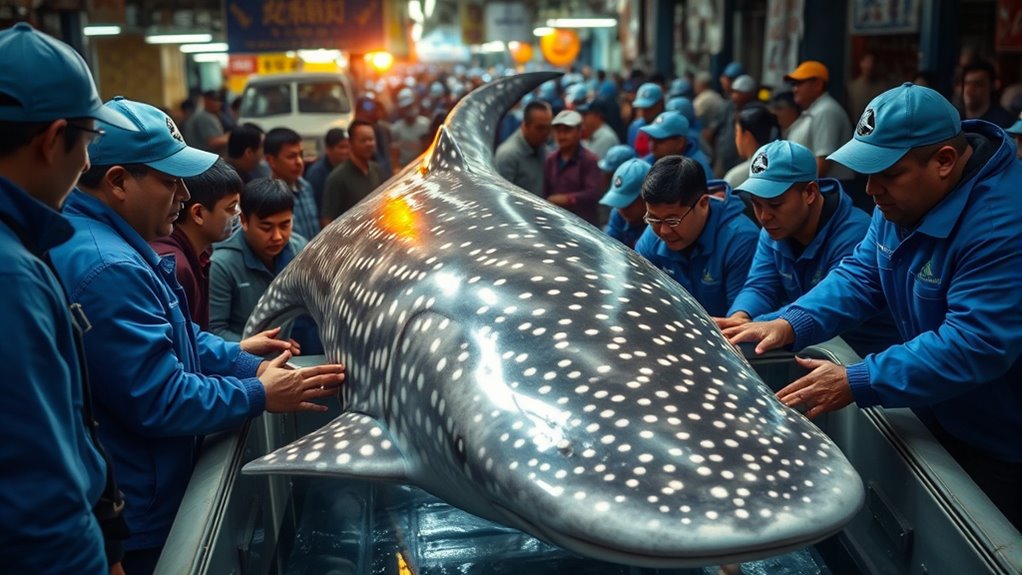
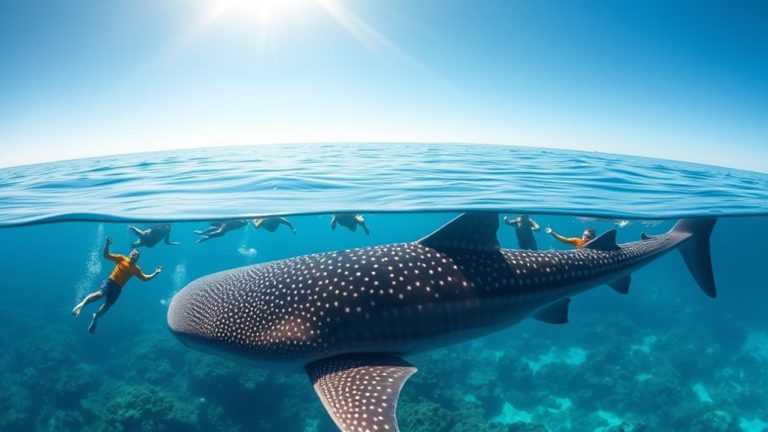
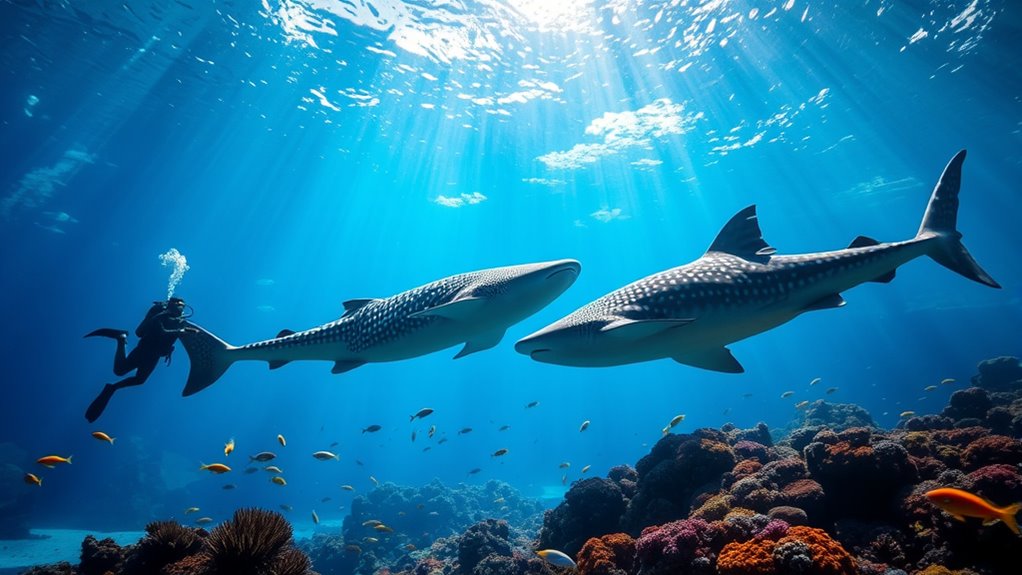
Although whale sharks are gentle giants of the ocean, they once faced the threat of being sold at a fish market in Taiwan. You can imagine the urgency of the rescue when these massive creatures were discovered in such a precarious situation.
Thanks to swift conservation efforts, the whale sharks were carefully removed from the fish market and given a second chance. The rescue required meticulous planning to guarantee their safety and well-being throughout.
Once rescued, they were transported to the United States for specialized care, highlighting the crucial role of international cooperation in marine conservation. This successful rescue from a fish market not only saved the whale sharks but also set a precedent for protecting these majestic animals worldwide.
Designing Custom Tanks for Safe Whale Shark Transport
When you’re moving a whale shark, you need custom tanks built to handle their size and sensitivity. These tanks come with advanced life support systems to keep water conditions just right. You’ll also find features designed to reduce stress, like cameras and reinforced materials, ensuring the sharks stay safe throughout the journey.
Custom Tank Engineering
How do engineers create a tank that safely transports a whale shark? They start by designing custom tanks with precise dimensions and reinforced materials to fit the whale sharks’ massive size and protect them from injury. This engineering feat guarantees the tank can handle the stresses of transportation while keeping the sharks secure.
The tanks include secure strapping and cushioning systems to safely hoist and move the animals during loading and unloading. Engineers also integrate monitoring devices like cameras and sensors to track water quality and stress indicators throughout the journey.
Before transport, the entire setup undergoes rigorous testing and rehearsals to guarantee stability, safety, and minimal stress for the whale sharks, making their long-distance journey as smooth as possible.
Life Support Systems
Because whale sharks require stable, carefully controlled environments during transport, engineers equip custom tanks with advanced life support systems that continuously regulate oxygen levels, water temperature, and filtration. These tanks, made from reinforced acrylic, ensure durability while allowing you to monitor the sharks safely.
The life support systems constantly track water quality, adjusting oxygen regulation and filtration to maintain ideal conditions. Connected to external aeration and circulation systems, the tanks keep water fresh and well-oxygenated throughout the journey.
Cameras and sensors help you observe stress indicators and environmental factors in real time, so you can respond immediately if needed. Designed to withstand air travel pressures and provide enough space for natural movement, these tanks protect whale sharks from injury and ensure their well-being during transport.
Stress Minimization Techniques
Although transporting whale sharks presents unique challenges, Georgia Aquarium’s custom mobile tanks play a crucial role in minimizing stress throughout the journey. These tanks are designed to maintain ideal water quality, keeping temperatures steady in the mid-70s and oxygen levels stabilized for effective stress reduction. Continuous monitoring of water quality and stress indicators allows the team to quickly address any issues during transport.
The process involves minimal handling; sharks are carefully placed on stretchers and hoisted gently into the exhibit to avoid physical strain. Additionally, route planning includes rehearsals and safety measures like police escorts to avoid traffic delays, further reducing transit time and stress. By combining these techniques, Georgia Aquarium ensures whale sharks experience the safest, least stressful transport possible.
Preparing Whale Sharks for Their Long Journey
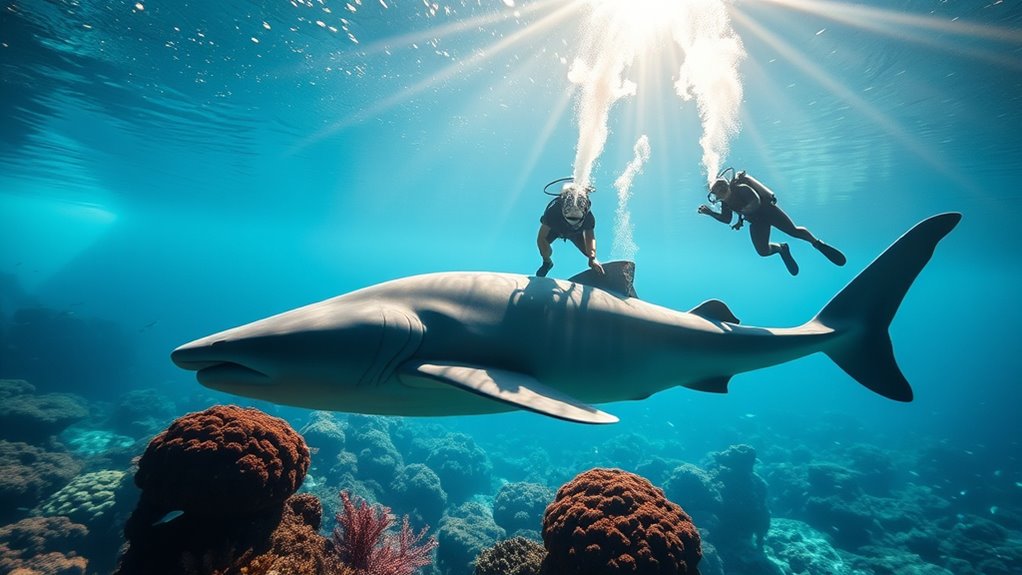
When you prepare whale sharks for their long journey, you start with careful rescue and initial care to guarantee they’re healthy and stable.
Then, you focus on custom transport preparation, making sure the tanks are equipped to meet their unique needs. Every step is designed to keep the sharks safe and comfortable throughout the trip.
Rescue And Initial Care
How do you prepare massive whale sharks for a long journey across the ocean? It starts with a careful rescue from a fish market in Taiwan, where the whale sharks receive immediate attention. Their initial care is critical to guarantee they’re healthy and ready for transport.
You’ll see specialized veterinary checkups and acclimation to a temporary holding environment before shipment. Throughout this process, the whale sharks get closely monitored to reduce stress and maintain health.
Key steps in rescue and initial care include:
- Conducting thorough health assessments
- Providing acclimation to holding tanks
- Using custom-built transport tanks with controlled oxygen, temperature, and water flow
- Monitoring stress and health indicators continuously
This preparation sets the foundation for a safe, successful transport to the Georgia Aquarium.
Custom Transport Preparation
Before the whale sharks set out on their long journey, the team prepared custom transport tanks designed specifically for their size and needs. These custom-built tanks weighed 25,000 pounds and featured advanced life support systems to maintain oxygen levels, water temperature, and reduce stress. The tanks included filtration systems, cameras, and veterinary equipment, creating a controlled environment that prioritized marine life safety.
Transport planning involved detailed rehearsals and coordination with specialists to minimize any risks during transit. Continuous monitoring ensured the whale sharks remained stable and comfortable as the team fine-tuned every aspect of the journey. By focusing on these precise preparations, the Georgia Aquarium team guaranteed the whale sharks’ safe arrival, setting a new standard in marine animal transport.
Flying Whale Sharks 8,000 Miles Across the Pacific
Transporting three massive whale sharks 8,000 miles from Taiwan to Georgia Aquarium required meticulous planning and cutting-edge technology. You’ll appreciate how the transportation involved a specially equipped airplane fitted with custom tanks designed to support the sharks’ needs during the Pacific crossing.
This complex journey included a 25,000-pound mobile tank maintaining controlled cabin pressure equivalent to 5,000 feet. Advanced life support systems monitored oxygen, temperature, and stress. There was also a refueling and monitoring stop in Anchorage, Alaska.
Finally, police-escorted transport took the sharks from Hartsfield-Jackson Airport to the Ocean Voyager exhibit. This careful orchestration guaranteed the whale sharks traveled safely across the vast Pacific. The combination of custom tanks and precise monitoring highlights the unprecedented effort behind moving these gentle giants thousands of miles for their new home.
How We Kept Whale Sharks Healthy During the Flight
You’ll see how our advanced life support systems kept oxygen and water quality just right for the whale sharks throughout the flight.
We continuously monitored stress indicators and environmental conditions to make sure they stayed calm and comfortable.
This careful attention helped the sharks thrive during the long journey.
Life Support Systems
How did we keep the whale sharks healthy during their long flight from Taiwan to Atlanta? We relied on a state-of-the-art life support system built into a 25,000-pound mobile tank. This system handled water filtration, oxygenation, and temperature control to mimic the sharks’ natural habitat.
Here’s what made it effective:
- Advanced water filtration kept the tank clean and safe.
- Oxygenation systems, including specialized aerators and pumps, ensured steady oxygen flow.
- Temperature control maintained water in the mid-70s Fahrenheit.
- Cabin pressure was regulated around 5,000 feet to reduce stress.
All components had fail-safe backups, supporting the sharks’ health throughout the journey. This meticulous setup was vital for transporting these gentle giants safely across continents.
Stress Monitoring Methods
Although moving whale sharks across continents is complex, we kept their stress levels low by continuously monitoring key health indicators throughout the flight. You’d see us carefully tracking stress indicators like oxygen levels and water temperature to guarantee ideal water quality inside the custom mobile tanks.
Our specialized life support systems filtered and aerated the water to mimic their natural habitat. Veterinary observation played a vital role, with staff watching the sharks via cameras and sensors to catch any signs of distress immediately. We also regulated cabin pressure to around 5,000 feet to prevent pressure-related issues.
Handling was minimized, and gentle hoisting techniques were used during transfers to reduce stress further. This vigilant monitoring helped us keep the whale sharks healthy and comfortable during their long journey.
Navigating Atlanta Traffic With Police Escort and Mobile Tanks
Transporting the whale sharks through Atlanta’s busy streets required careful coordination and a police motorcycle escort to clear the way. You’d see the specially designed mobile tanks securely strapped onto flatbed trucks, each equipped with advanced life support systems to maintain ideal conditions. The police escort managed Atlanta traffic, ensuring a swift, safe passage from Hartsfield-Jackson Airport to the aquarium.
Here’s how the journey was managed:
- The route was meticulously planned to avoid congested areas.
- Continuous monitoring of oxygen, water temperature, and stress levels occurred during transit.
- Police motorcycles cleared intersections and maintained traffic flow.
- Mobile tanks provided a stable, controlled environment for the whale sharks.
This precision made sure the whale sharks arrived healthy and calm, ready for their new home.
Introducing Whale Sharks to the Ocean Voyager Exhibit
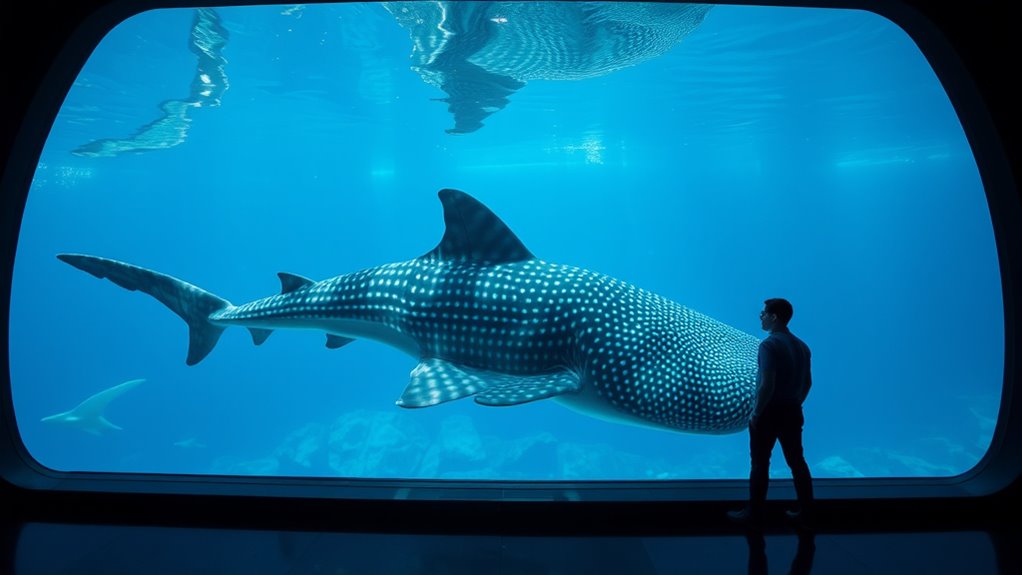
Once the whale sharks safely arrived at the Georgia Aquarium, the team carefully prepared to introduce them to the Ocean Voyager exhibit. This massive tank, holding over 6.3 million gallons of water, was specially designed to house whale sharks and provide a comfortable environment.
During transport from Taiwan, the sharks were kept in mobile tanks with advanced life support systems, guaranteeing optimal water temperature and oxygen levels. Upon arrival, the team hoisted the whale sharks from these tanks using stretchers that minimized stress.
Every step was meticulously planned to make the transition smooth and safe. By carefully managing the transfer, Georgia Aquarium guaranteed the whale sharks adapted well to their new home in the Ocean Voyager exhibit, marking a major milestone in their incredible journey.
Veterinary Care and Acclimation After Arrival
How do the Georgia Aquarium team guarantee whale sharks stay healthy after their long journey? They start with a thorough health assessment by veterinary staff to spot injuries, stress, or illness. Then, the sharks undergo careful acclimation to the exhibit’s water quality, temperature, and salinity, minimizing stress.
The Georgia Aquarium team ensures whale sharks’ health with thorough assessments and careful acclimation after their journey.
Veterinary care continues with routine blood tests and biopsies to track health and gather important data. To ensure their well-being, the team follows strict protocols limiting human contact during this sensitive period.
Key steps include:
- Conducting detailed health assessments immediately upon arrival
- Gradually adjusting water quality and environmental conditions
- Performing routine veterinary tests like blood work and biopsies
- Monitoring behavior and water parameters continuously
This careful approach helps the whale sharks settle safely and thrive in their new home.
Tackling the Biggest Challenges of Whale Shark Transport
Although moving whale sharks poses immense difficulties, the Georgia Aquarium team tackles these challenges with precision and care. You’ll see that transportation involves custom mobile tanks weighing up to 25,000 pounds, equipped with advanced life support systems to continuously monitor oxygen, temperature, and stress levels. Maintaining cabin pressure equivalent to about 5,000 feet and water temperatures in the mid-70s Fahrenheit helps keep whale sharks comfortable.
You’ll also notice the importance of stress management through careful route planning and a police escort to minimize transit time and traffic disruptions. The team meticulously coordinates veterinary experts, engineers, and logistics professionals to ensure smooth handling. Using rehearsed procedures and heavy machinery, they carefully transfer the sharks onto stretchers and into the exhibit, reducing stress and safeguarding these gentle giants throughout the journey.
How This Journey Advances Whale Shark Conservation
Because the Georgia Aquarium successfully transported and cared for whale sharks, you get a rare chance to see these gentle giants up close while supporting essential conservation efforts. Their journey from Taiwan to Atlanta wasn’t just about transportation—it was a pivotal step in advancing whale shark conservation and scientific research.
The aquarium’s work highlights how careful rescue and handling can promote global protection of this vulnerable species. You benefit from:
- Unique educational opportunities that raise awareness about whale sharks
- Cutting-edge scientific research on health and migration patterns
- Conservation initiatives that inspire worldwide action
- An unparalleled exhibit that sets a standard for marine animal care
Frequently Asked Questions
How Did Georgia Aquarium Transport Whale Sharks?
You transport whale sharks using a custom 25,000-pound mobile tank with advanced life support.
Oxygen and temperature are monitored constantly, and cabin pressure is maintained.
They are escorted securely, ensuring careful handling and veterinary care throughout the journey.
How Does the Georgia Aquarium Have a Whale Shark?
You have whale sharks at Georgia Aquarium because they rescued them from a fish market in Taiwan, transported them carefully with specialized tanks and equipment, and placed them in a custom-built exhibit designed to keep them safe and comfortable.
The aquarium’s team ensured the sharks had optimal water conditions and ample space to thrive. Their care and expertise have made it possible for these gentle giants to live in captivity while educating the public about marine life conservation.
Where Did the Whale Shark in Atlanta Come From?
Imagine a giant ocean traveler arriving at your doorstep. The whale sharks in Atlanta came from a Taiwanese fish market, rescued and flown thousands of miles to find a new home.
Now, you can marvel at them every day.
How Do They Transport Whales to Aquariums?
You transport whales to aquariums using custom oxygenated tanks, mobile transport with water quality monitoring, and police escorts.
You carefully hoist them into exhibits with specialized equipment while continuously checking their health and stress levels.
Conclusion
Bringing whale sharks to the Georgia Aquarium wasn’t just about impressive logistics—it was a groundbreaking conservation effort. You can see how, like when a rescued whale shark named “Naya” thrived after careful transport and acclimation, every step mattered.
By overcoming huge challenges, the team set new standards for marine animal care, proving that with dedication and innovation, we can protect these gentle giants. This achievement continues to inspire global efforts to preserve their ocean habitats for generations to come.
The Georgia Aquarium’s success in transporting whale sharks highlights the importance of conservation, marine biology, and innovative animal care techniques in safeguarding these magnificent creatures.