How Do Whale Sharks Defend Themselves?
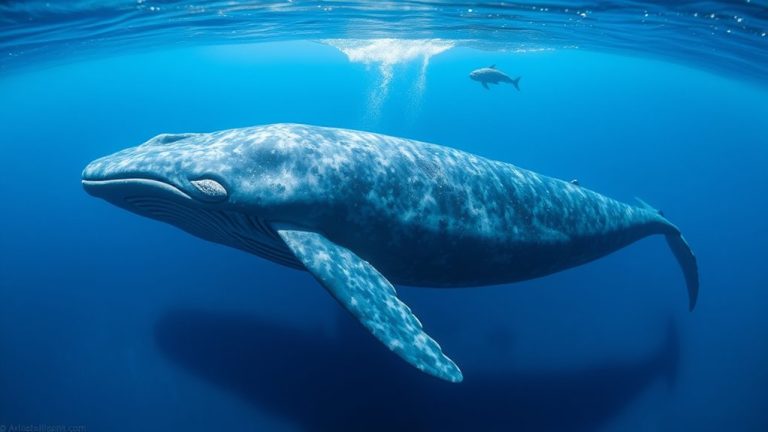
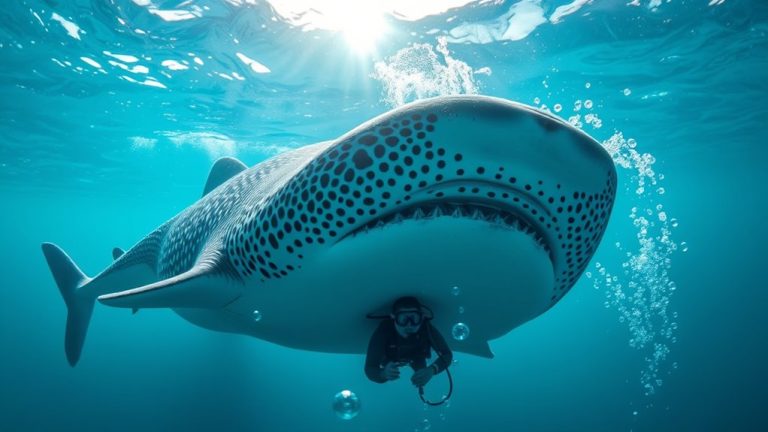
You defend yourself by using size, strength, and clever tricks—whale sharks do the same in the ocean. Whale sharks use their massive size, thick skin, and unique camouflage to protect themselves from predators.
They rely on their enormous size to scare off most threats and their tough skin to block attacks.
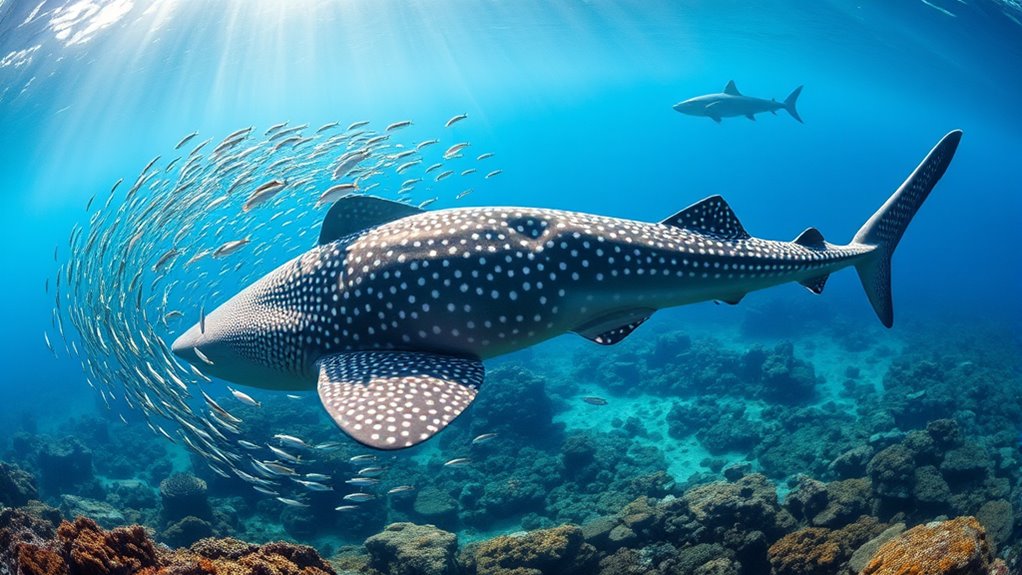
Their distinctive spots act as camouflage, blending them into the ocean’s light patterns. When threatened, whale sharks dive deep or lash their powerful tails to fend off danger.
These gentle giants have fascinating ways to stay safe in their underwater world.
Size As Whale Sharks’ Primary Defense
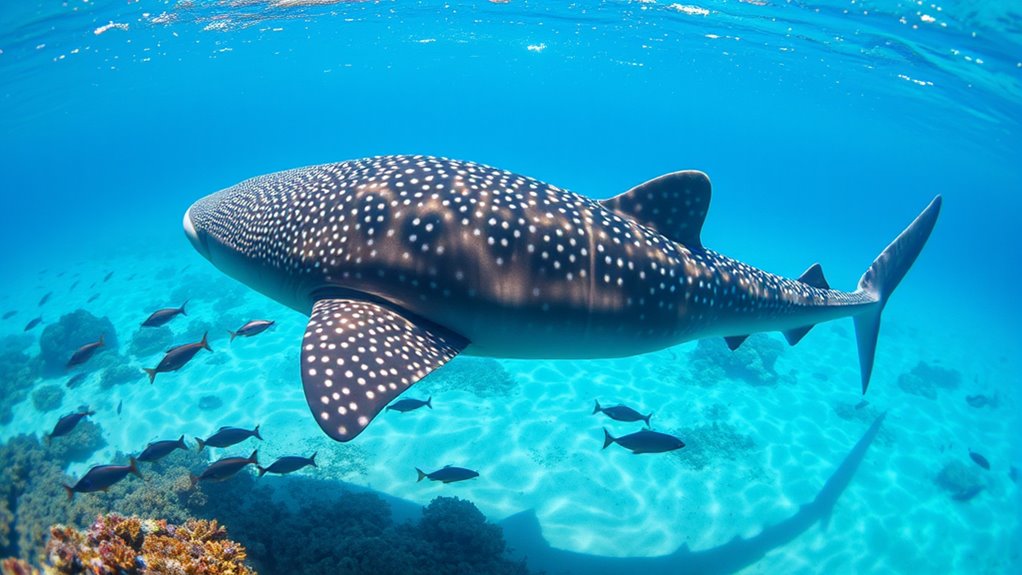
Although whale sharks can grow up to an astounding 19 meters long, their sheer size serves as their primary defense against predators. When you consider their massive size, it’s clear why most predators steer clear.
As an adult, a whale shark’s enormous bulk and weight—around 14 metric tonnes—make it nearly impossible for predators to pose a threat. You’ll find that predation mainly targets juvenile whale sharks since they’re smaller and more vulnerable.
But once whale sharks reach full maturity, their natural defense lies in their impressive size, which deters attacks effectively. In the vast ocean, this size advantage is essential for whale sharks, allowing them to avoid most conflicts and remain safe from predation throughout their adult lives.
Thick Skin Protects Whale Sharks From Attacks
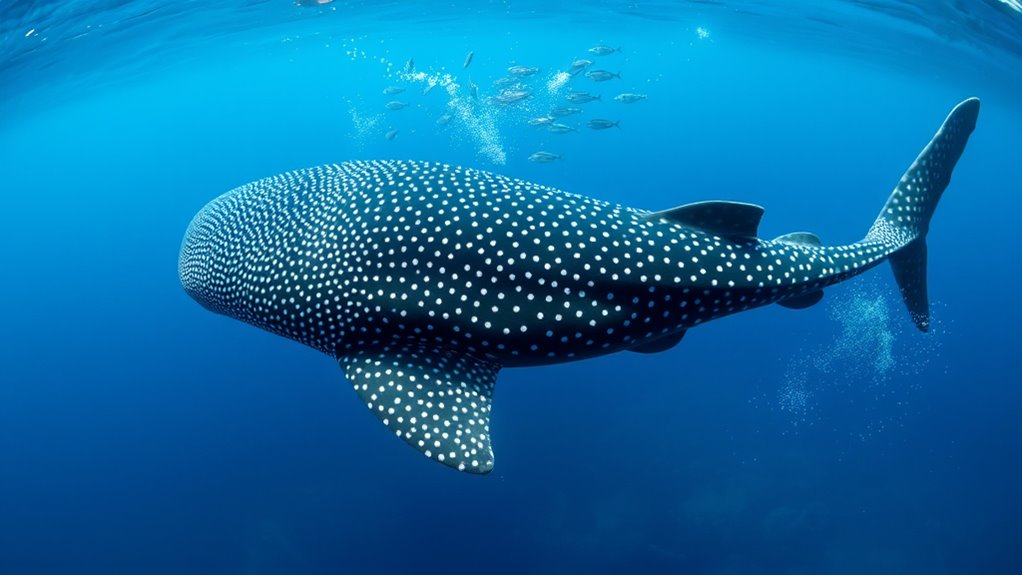
While their massive size deters many predators, whale sharks also rely on their incredibly thick skin as a crucial defense. This thick skin, which can be up to 4 inches deep, acts as a strong physical barrier that protects them from attacks. Composed of a rough, coarse dermis, it resists bites and abrasions from predators like sharks and orcas.
You can think of this dermal layer as a natural armor, making it tough for attackers to cause injury. This defense mechanism considerably reduces the chances of successful predation, especially for healthy adult whale sharks. So, besides their size, their thick skin provides essential protection, enhancing their survival in the open ocean by making them less vulnerable to physical harm.
How Camouflage Helps Whale Sharks Avoid Predators
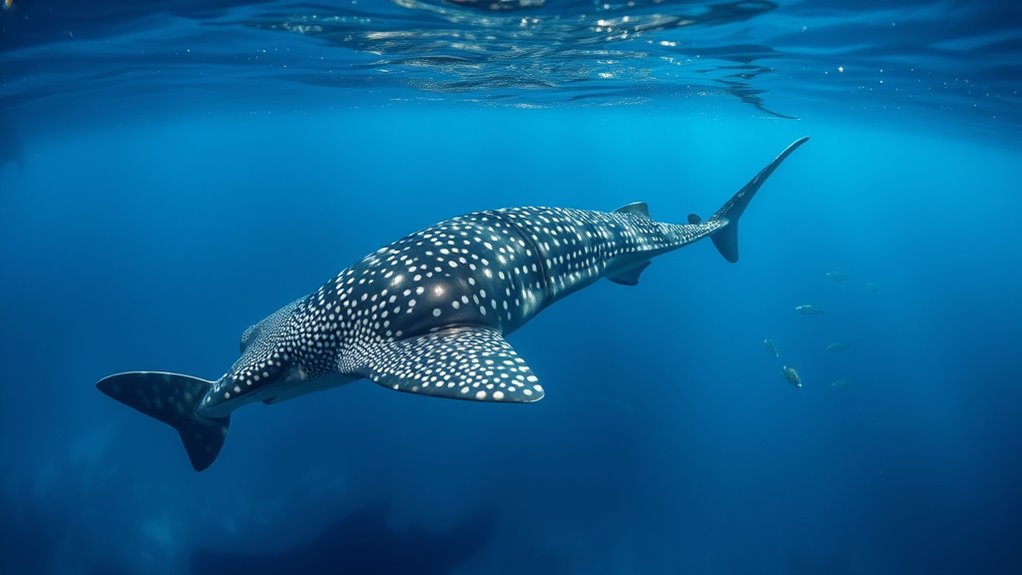
Besides relying on their thick skin for protection, whale sharks use their unique spotted patterns to stay hidden from predators. This natural camouflage helps you see them blend seamlessly into the dappled sunlight filtering through the ocean. Their light-colored spots and stripes break up their outline, making it tough for predators to spot them from afar.
When whale sharks are feeding near the surface or drifting in open water, this concealment keeps them safe. Each whale shark’s pattern is unique, which not only aids in individual identification but also enhances their ability to avoid predators by confusing them.
Deep Dives As an Escape Mechanism
When threatened near the surface, whale sharks dive rapidly to depths reaching 1,000 meters to escape predators like orcas and large sharks. These profound dives serve as an effective escape mechanism, allowing you to avoid surface predators that hunt in shallower waters. By diving swiftly and deeply, you reduce your chances of detection, increasing your survival odds.
During these profound dives, you enter a state of bradycardia, slowing your heart rate to conserve oxygen and extend your underwater behavior. This physiological adaptation supports extended time at depth, making profound dives a vital part of your predator avoidance strategy. Ultimately, your ability to perform rapid, profound dives is essential for evading large sharks and other threats, showcasing a remarkable defense tactic in your marine environment.
Tail Movements for Whale Shark Self-Defense
Because your tail, or caudal fin, is incredibly strong, you can use swift, forceful movements to defend yourself against predators. Whale sharks rely on rapid tail thrash to intimidate or deter smaller attackers like sharks and marine mammals. These impactful movements create turbulence, confusing predators and making it harder for them to target you.
When threatened, your strong downward or sideward tail strikes can injure potential predators, discouraging further attacks. Tail movements serve as a powerful last line of defense, leveraging the size and strength of your caudal fin.
Frequently Asked Questions
How Do Whales Defend Themselves Against Sharks?
You defend whales from sharks by relying on their massive size, powerful tail slaps, and thick skin. They also use speed, agility, thorough exploration, and sometimes coordinated pod behaviors to avoid or deter shark attacks effectively.
Does Whale Shark Have Any Predators?
Yes, you’ll find orcas, large sharks, and tiger sharks preying on juvenile whale sharks, while great whites target weaker ones.
You’ll see blue sharks scavenging carcasses, proving predation’s rare and selective.
Has a Whale Shark Ever Attacked a Human?
No, whale sharks haven’t attacked humans. They’re gentle giants that pose no threat.
If you encounter one, you’re safe, as any contact is accidental, not aggressive behavior, so you don’t need to worry.
Why Can’t Whale Sharks Stop Moving?
You can’t let a whale shark hit pause because it needs constant water flow over its gills to breathe.
Stopping would suffocate it, so it keeps moving like a river that never runs dry, ensuring survival.
Conclusion
You might think a gentle giant like the whale shark has no need to defend itself, but there’s more beneath the surface. Its massive size alone keeps many threats at bay, yet that’s just the beginning. Thick skin, clever camouflage, deep, sudden dives, and powerful tail movements all play a role in keeping it safe.
Next time you see a whale shark, remember—there’s a surprising arsenal of defenses working quietly to protect this ocean marvel. These defense mechanisms ensure that the whale shark remains one of the ocean’s most fascinating and resilient creatures. Understanding how whale sharks defend themselves helps us appreciate their role in marine ecosystems even more.