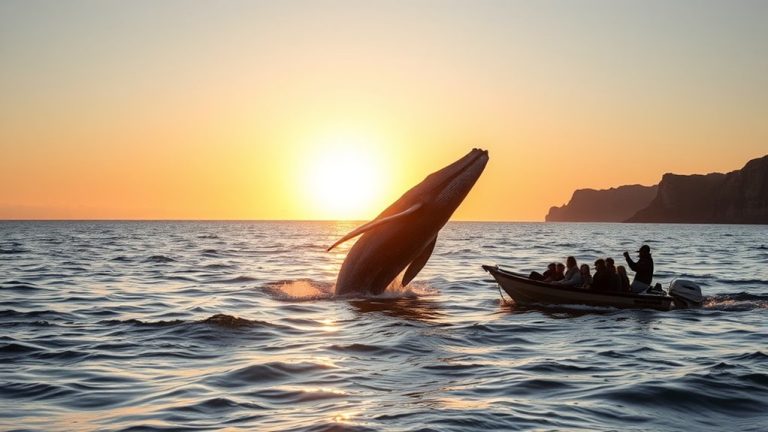
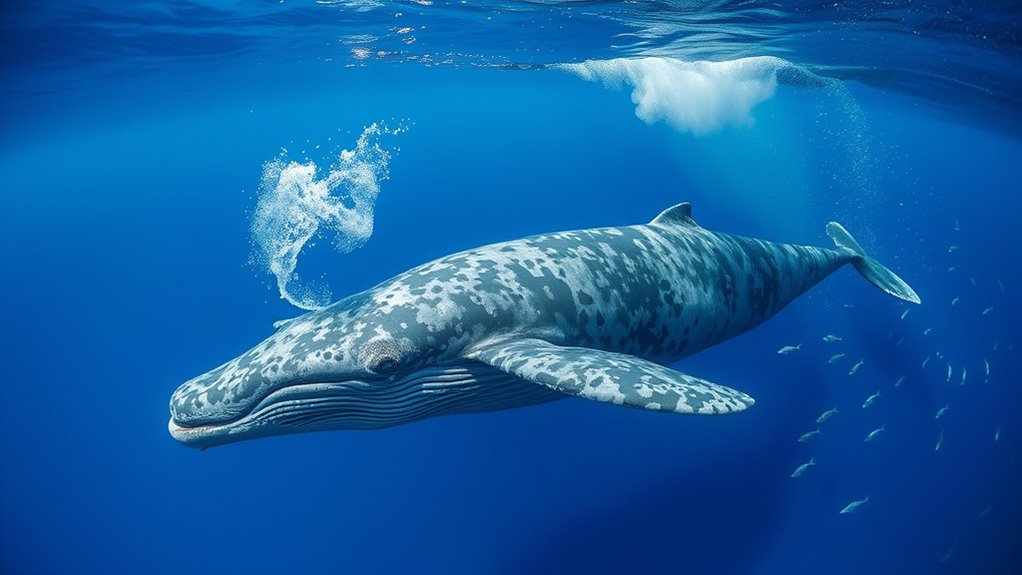
How Long Can a Gray Whale Hold Its Breath?
You can expect a gray whale to hold its breath for about 15 to 20 minutes during immersion.
Gray whales are equipped with high myoglobin and hemoglobin levels, which store and transport oxygen efficiently.
Their heart rate slows to conserve oxygen during dives.
This ability helps them dive deep to feed on ocean floor sediments and migrate long distances.
Want to uncover how this breath-holding compares to other whales and what it reveals about their survival?
How Long Can a Gray Whale Hold Its Breath During Dives?
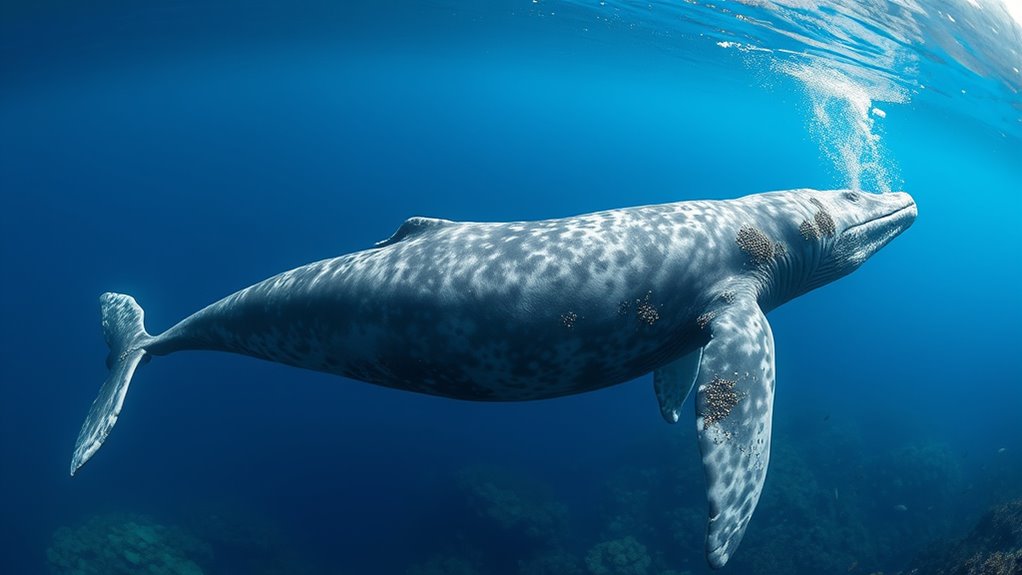
When you watch a gray whale dive, you might wonder how long it can hold its breath underwater. Gray whales, impressive mammals, typically hold their breath for about 15 to 20 minutes during profound dives. The longest recorded breath-hold for a gray whale is around 20 minutes, highlighting their remarkable capacity.
This ability is essential for their migration and sediment feeding habits, allowing them to dive deep to forage along the ocean floor. During migration, gray whales perform multiple dives, surfacing between each to breathe. Their skill in oxygen conservation lets them maximize time underwater, making these prolonged breath-holds possible.
What Physiological Traits Enable Gray Whale Breath-Holding
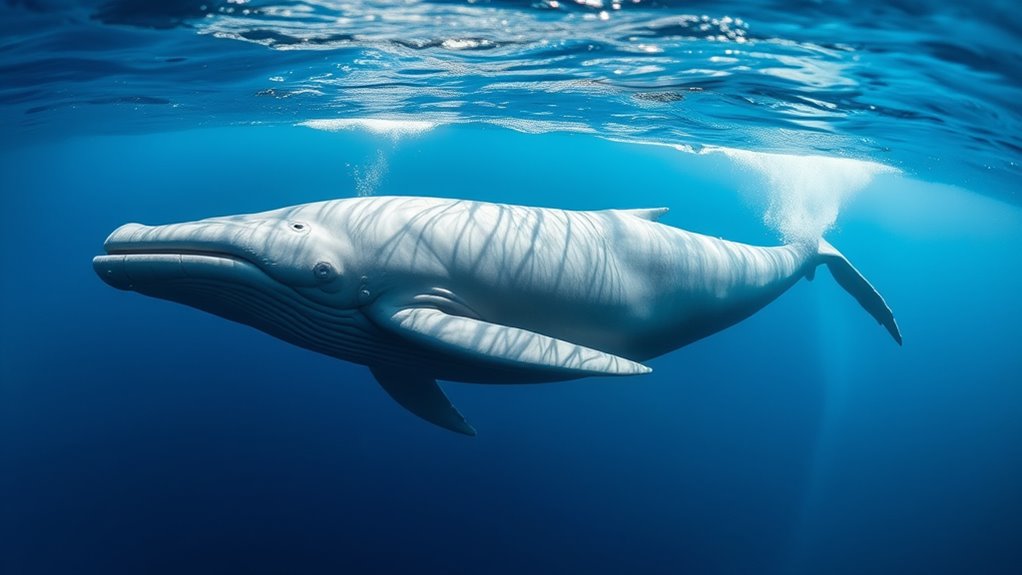
Although gray whales can hold their breath for up to 20 minutes, this ability depends on several specialized physiological traits. As diving mammals, gray whales have high myoglobin levels in their muscles for oxygen storage and elevated hemoglobin in their blood to transport oxygen efficiently. They reduce their heart rate during deep dives, lowering metabolic rate to conserve oxygen.
Before diving, they exhale most air, minimizing buoyancy and oxygen loss, enhancing breath-hold capacity. Their baleen plates don’t impact breath-holding but assist feeding.
| Trait | Function |
|---|---|
| Myoglobin | Stores oxygen in muscles |
| Hemoglobin | Transports oxygen in blood |
| Heart rate | Slows to conserve oxygen |
| Metabolic rate | Drops during dives |
| Oxygen conservation | Enables long breath-holds |
How Gray Whale Breath-Holding Helps in Feeding and Migration
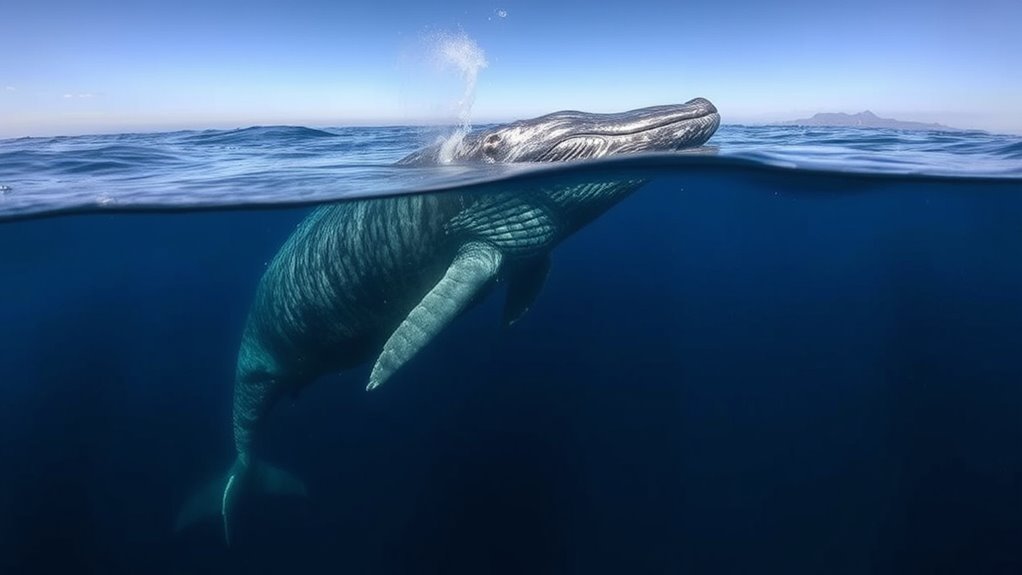
Because gray whales can hold their breath for up to 20 minutes, they dive deep and stay submerged long enough to feed efficiently and travel great distances. Their exceptional breath-holding ability, supported by oxygen storage and physiological adaptations, allows these baleen whales to execute a long dive underwater.
Here’s how this helps in feeding and migration:
- During feeding, gray whales scoop sediment from the ocean floor, filtering amphipods without surfacing prematurely.
- Breath-holding enables extended underwater foraging, maximizing energy intake in each dive.
- During migration, staying submerged over 10 minutes helps conserve energy while covering vast distances efficiently.
Understanding these traits shows how breath-holding is essential for gray whales’ survival during feeding and their impressive migration journeys.
How Gray Whale Breath-Holding Compares to Other Whale Species
While gray whales can hold their breath for about 15 to 20 minutes during profound descents, you’ll find other whale species with very different breath-holding capacities. For example, Cuviers beaked whales hold the record for breath-holding among marine mammals, diving for an astonishing 222 minutes. In comparison, sperm whales can reach up to 90 minutes, and humpback whales dive for 10 to 15 minutes, sometimes up to 45 minutes.
Killer whales generally submerge between 5 to 15 minutes, depending on their hunting needs. Gray whales’ breath-hold during deep dives positions them in the mid-range among whale species. Understanding these dive durations highlights how various marine mammals have adapted their breath-hold abilities to suit their environments and survival strategies.
What Gray Whale Breath-Holding Reveals About Their Behavior and Survival
Gray whales’ ability to hold their breath for 15 to 20 minutes reveals much about their unique behavior and survival tactics. Their breath-holding is supported by adaptations like increased myoglobin, allowing efficient oxygen storage for profound dives. This endurance is essential during their long migration of up to 12,000 miles annually.
When you observe their behavior, you’ll see how breath-holding enables them to forage in sediment-rich abyssal environments, targeting amphipods on the ocean floor.
Here’s what breath-holding reveals about gray whales:
- Their oxygen storage supports extended profound dives for feeding.
- Breath-holding endurance is key to surviving long migrations.
- Foraging behavior depends on accessing deep-sea sediment prey.
Understanding these traits helps you appreciate how gray whales thrive in challenging marine habitats.
Frequently Asked Questions
How Long Can Grey Whales Stay Underwater?
You’ll find gray whales can stay underwater for about 15 to 20 minutes during thorough immersions. They’ve adapted to hold their breath this long, helping them feed and migrate efficiently beneath the ocean’s surface.
What Whale Can Hold Its Breath the Longest?
When it comes to holding your breath underwater, Cuviers Beaked Whales take the cake—they can stay down for an incredible 222 minutes!
That’s over three and a half hours, way beyond any other whale species.
How Do Whales Sleep if They Have to Come up for Air?
Whales sleep by resting one half of their brain at a time, so you’ll see them surfacing regularly for air even while asleep.
This lets them breathe without fully waking, keeping them safe and rested.
Is the Whale Swallowing Video Real?
You bet the whale swallowing video is real; it’s the whole nine yards of natural gray whale feeding behavior.
You’ll see them scoop sediment, filtering tiny prey with baleen—no tricks, just nature at work.
Conclusion
So, next time you hold your breath underwater, remember gray whales can do it for up to 15 minutes—longer than you probably thought! It’s not just luck; their amazing physiology lets them dive deep and feed or migrate without gasping for air.
Coincidentally, their breath-holding skills reveal a lot about how they survive and thrive in the ocean—something you might not notice while swimming but definitely respect when you learn about it.
Understanding how long a gray whale can hold its breath highlights the incredible adaptations that help these marine giants navigate their underwater world with ease.