How Many Years Does a Whale Live: 10 Facts
You’ll find most whales live between 30 and 90 years, but bowhead whales can live over 200 years—the longest of any whale.
Baleen whales, like blue and bowhead, generally outlive toothed whales such as sperm whales.
Genetics, environment, and human threats like pollution and ship strikes all affect their lifespan.
Scientists estimate their age through earplugs, photo IDs, and new tech like drones.
Keep exploring to uncover how these factors shape whale longevity.
How Long Do Different Whale Species Live?
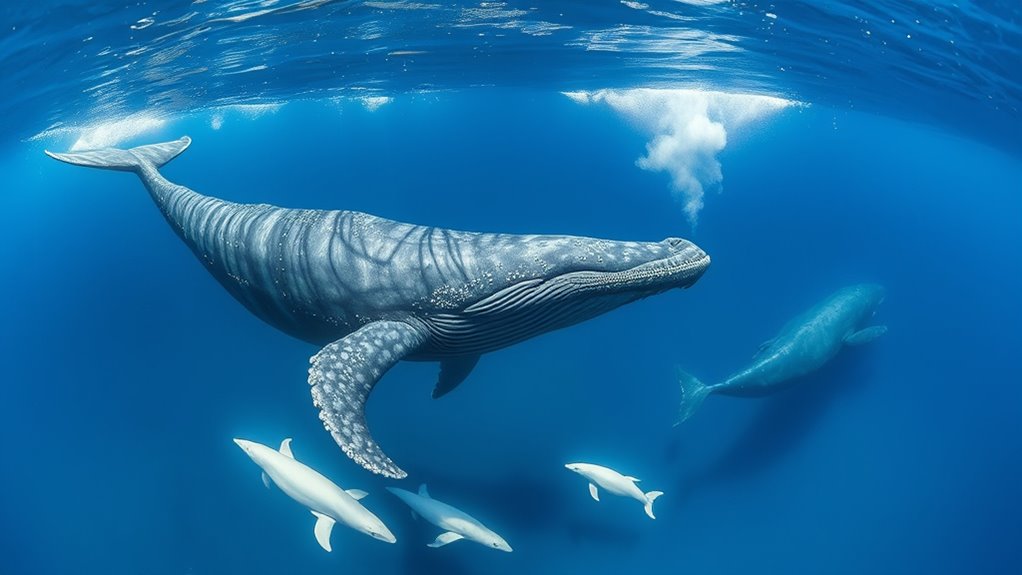
While whale lifespans vary widely across species, you’ll find some fascinating differences when you look closely. Among marine mammals, the bowhead whale stands out as one of the longest-lived whales, with a whale lifespan that can exceed 200 years.
When it comes to species of baleen whales, blue whales typically live between 70 and 90 years in the wild, while humpbacks usually reach 45 to 50 years, though some live longer. Other whale species like sperm whales, which are toothed whales, generally have a lifespan of about 60 to 70 years.
Meanwhile, North Atlantic right whales face human-related threats that reduce their average lifespan to around 22 years. Understanding these variations helps you appreciate the diversity in whale species and their unique life expectancies.
How Do Lifespans Differ Between Baleen and Toothed Whales?
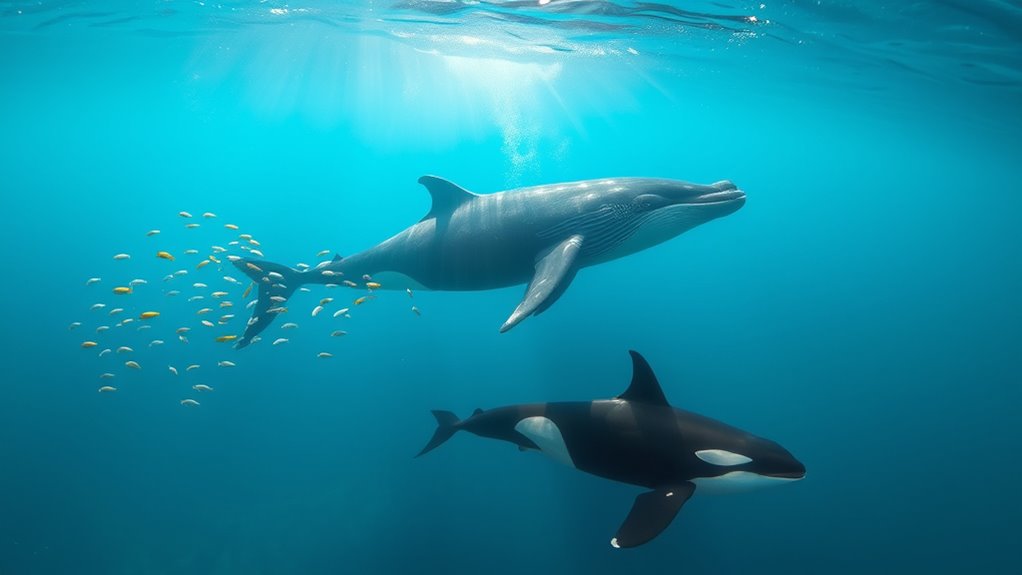
You’ll notice baleen whales, like the bowhead, often live much longer than toothed whales such as orcas.
Their lifespan differences come down to genetics, size, and how their habitats affect them.
Let’s explore how these factors shape the years each whale species can expect.
Lifespan Variations By Species
Because baleen and toothed whales have different biological traits, their lifespans vary considerably. Baleen whales like blue and bowhead whales generally live longer, with some species reaching over 200 years. In fact, bowhead whales hold the record as the longest-living whale species, thanks to unique genetic traits.
On the other hand, toothed whales such as sperm whales and orcas typically have shorter lifespans, ranging from 30 to 70 years depending on the species. These differences arise from factors like size, diet, and evolutionary adaptations. Larger baleen whales benefit from better DNA repair mechanisms, which contribute to their extended lifespan compared to smaller toothed whales.
Genetic Longevity Factors
Understanding why baleen whales outlive toothed whales requires looking at their genetic makeup. You’ll find that baleen whales possess unique genetic traits that boost their longevity. Here’s how their genetics differ:
- Baleen whales have enhanced DNA repair mechanisms, reducing cellular damage and cancer risks.
- Specific mutations in baleen whales improve DNA maintenance, supporting a long lifespan.
- Toothed whales lack these advanced genetic adaptations, leading to shorter lifespans of 30 to 70 years.
- Genetic traits linked to slow growth support baleen whales’ ability to live over 200 years.
Habitat Influence on Lifespan
While baleen and toothed whales both thrive in the ocean, their habitats play a crucial role in shaping their lifespans. Baleen whales, often found in cold, nutrient-rich waters like the Arctic habitat, enjoy remarkable longevity, sometimes living over 200 years. This environment promotes slow growth and effective DNA repair, boosting their lifespan.
On the other hand, toothed whales face harsher environmental factors such as predation and human impacts, limiting their longevity to about 30-70 years. Understanding these differences helps you appreciate how habitat influences whale lifespan.
| Whale Type | Typical Lifespan (years) | Key Habitat |
|---|---|---|
| Baleen Whales | 80 – 200+ | Arctic, cold waters |
| Toothed Whales | 30 – 70 (rarely 100+) | Varied, warmer seas |
| Bowhead Whale | 200+ | Arctic habitat |
Why Do Bowhead Whales Live Over 200 Years?
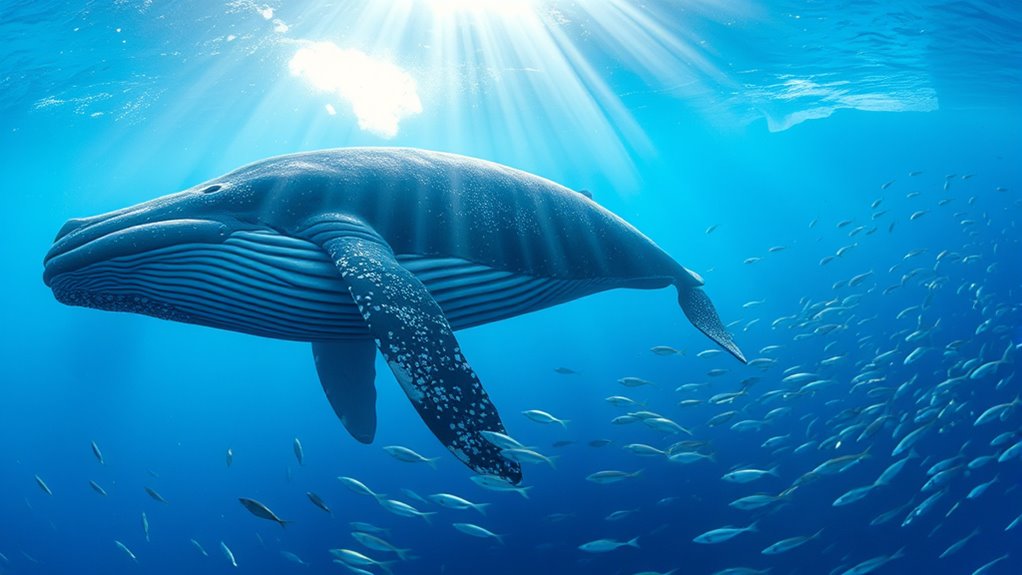
Several factors help bowhead whales live over 200 years, a lifespan that far exceeds most other mammals. You can appreciate their longevity by considering these key points:
- Bowhead whales possess unique genetic mutations that enhance DNA repair, minimizing damage and reducing cancer risk. Their habitat in cold Arctic waters slows metabolism, contributing to a slower aging process.
- They grow slowly and reach sexual maturity late, traits linked to extended lifespans. Their thick blubber and specialized physiology shield them from harsh environmental stressors, supporting longevity.
What Genetic Factors Affect Whale Lifespan?
Because whales face unique challenges due to their large size and long lives, they’ve developed genetic adaptations that help them age gracefully. You’ll find that some whales, like bowheads, have enhanced DNA repair mechanisms, which fix cellular damage and contribute to their longevity. Their telomeres—the protective caps on chromosomes—are longer than in many other animals, helping slow aging.
Whales also possess strong cancer suppression systems, preventing tumors despite their massive bodies and extended lifespans. Additionally, unique genetic markers related to metabolism and cellular maintenance play critical roles in how whales resist age-related diseases. When you look closely, these genetic factors work together, giving whales the ability to live decades or even centuries, far beyond most other mammals.
How Do Scientists Estimate the Age of Living Whales?
You can learn a lot about a whale’s age by studying the unique patterns on its flukes or dorsal fins through photo identification. Scientists also use tracking tags and drones to monitor their growth and movement over time.
These methods give you a clearer picture of how old a living whale might be.
Photo Identification Techniques
When scientists track whales over many years, they rely on photo identification techniques to estimate their age. This method uses unique physical features to recognize individual whales and monitor their lifespan through long-term monitoring.
Here’s how it works:
- Scientists photograph distinct markings like fluke patterns, scars, and dorsal fins.
- They compare images over time to track changes in these physical features.
- Repeated sightings help estimate how long individual whales have lived.
- This non-invasive approach provides valuable data on age at death and life history.
Tracking Tags And Drones
Tracking individual whales through photo identification gives researchers valuable long-term data, but scientists also rely on tracking tags and drones to gain more detailed insights into whale age. You’ll find that tracking tags monitor movements, behaviors, and growth, helping scientists estimate the whale’s age and better understand its lifespan.
Meanwhile, drones capture high-resolution images that measure size and growth rates without disturbing the whale. This combination of tracking tags and drones enhances age estimation accuracy by providing continuous monitoring and precise data. Together, these technologies build detailed life histories, allowing researchers to track whale lifespan more effectively.
What Can Whale Earplugs Reveal About Lifespan?
A whale’s earplugs hold a detailed record of its life, revealing its age and experiences through growth rings similar to those in trees. By examining whale earplugs, scientists can accurately estimate lifespan and age estimation.
Here’s what they uncover:
- Growth rings in earplugs represent about six months each, allowing precise age calculation.
- Layers reveal environmental history, showing conditions the whale faced through its life.
- Chemical markers indicate exposure to pollutants and stress events that affected health.
- Studying these layers in dead whales helps determine maximum lifespan for different species.
Using whale earplugs, researchers gain valuable insights into how long whales live and the challenges they endure, making it a vital tool for understanding their lifespan and environmental interactions.
How Do Environment and Climate Affect Whale Lifespan?
Although whales have evolved to thrive in diverse marine environments, changes in climate and pollution can markedly reduce their lifespan by disrupting habitats, food availability, and overall health. Climate change alters ocean temperature and acidity, impacting food sources and migration routes. Pollution accumulates in their bodies, weakening immunity.
| Factor | Effect on Whales |
|---|---|
| Climate Change | Disrupts habitats and food sources |
| Pollution | Impairs health through contaminants |
| Migration | Shifts routes, causing stress |
| Food Sources | Variability leads to malnutrition |
You can see how these environmental shifts combine to shorten whale lifespans by stressing their bodies and limiting survival opportunities.
What Human Actions Shorten Whale Lifespans?
You might not realize how much human actions harm whales, but things like whaling and illegal hunting cut their lives short. Pollution and contamination from chemicals and plastics also damage their health over time.
On top of that, vessel strikes and entanglement in fishing gear create serious injuries that whales struggle to survive.
Whaling And Hunting
How exactly do human actions shorten whale lifespans? Whaling and hunting have had a major impact on whale populations. Here’s how these activities affect whales:
- Whaling, both commercial and illegal whaling, drastically reduces whale numbers, cutting down the average age you’d expect a whale to reach.
- Overhunting in past centuries wiped out many older, mature whales, leading to a loss of genetic diversity that can weaken future generations.
- Hunting disrupts natural population structures, making it harder for whales to thrive and live long lives.
- Illegal whaling continues to threaten certain species, preventing populations from recovering fully and shortening their overall lifespans.
Pollution And Contamination
Where do whales face the greatest threats beyond hunting? You’ll find that marine pollution poses significant dangers. Plastic debris and chemical contaminants can injure whales, poison them, and cause reproductive problems, all of which shorten their lifespans.
Noise pollution from ships, drilling, and sonar disrupts whale communication and navigation, increasing stress and the chance of strandings. Oil spills expose whales to toxic substances, weakening their immune systems and leading to long-term health issues.
Additionally, fishing gear, while vital for humans, causes injuries and infections to whales when they become entangled, drastically reducing their chances of survival. These human actions degrade habitats and contaminate feeding grounds, pushing whales toward malnutrition and early death.
You can see how pollution and contamination critically threaten whale longevity.
Vessel Strikes And Entanglement
Although whales face many threats, vessel strikes and entanglement in fishing gear stand out as leading causes of injury and death. These human actions drastically shorten whale lifespans by causing severe whale injuries and increasing whale mortality rates. Here’s what you should know:
- Vessel strikes cause about 85,000 whale injuries and deaths worldwide annually.
- Entanglement leads to infections, starvation, and often death.
- Critically endangered North Atlantic right whales suffer shortened lives due to frequent ship collisions.
- Noise pollution from vessels disrupts whale communication, indirectly affecting survival.
Understanding these impacts is vital for whale conservation efforts. By reducing vessel speeds and improving fishing gear, you can help protect these majestic creatures and extend their natural lifespans.
How Does Whale Lifespan Research Support Conservation?
Because understanding whale lifespans reveals which age groups are most vulnerable, researchers can guide conservation efforts more effectively. By studying whale lifespan and aging patterns, you’ll see which individuals need the most protection, especially mature, breeding whales like bowheads. This insight helps you focus conservation strategies on these critical groups, improving population management.
You can also use lifespan data to design marine protected areas that safeguard essential habitats and reduce human impacts such as hunting and ship strikes. Knowing how long whales live and how they age enables you to implement targeted measures that support species recovery and sustainability.
Ultimately, whale lifespan research equips you with the knowledge to develop informed, effective conservation plans that preserve these majestic creatures for generations to come.
What New Technologies Are Changing Whale Age Studies?
As technology advances, researchers are transforming how they study whale age with more accurate and less invasive methods. You can now see how these innovations improve age estimation and deepen understanding of whale lifespans:
- Drone technology captures precise growth measurements without disturbing whales, enhancing age estimation accuracy.
- DNA methylation analysis from tissue samples offers a reliable molecular clock to determine whale age.
- Biochemical methods analyze earwax or earplugs, revealing detailed chemical and stress histories that indicate life stages.
- Tracking through tagging and satellite monitoring collects long-term data on individual whales’ growth and longevity.
These breakthroughs let you appreciate how modern science refines whale age studies, helping conservationists protect these majestic creatures more effectively.
Frequently Asked Questions
Can Whales Live Past 100?
Yes, whales can live past 100 years. You’ll find species like bowhead and gray whales often exceed a century, with some even reaching over 200 years.
Their longevity truly amazes anyone studying marine life.
What Animal Can Live up to 1000 Years?
You might be surprised, but no animal is confirmed to live up to 1,000 years. The ocean quahog clam comes closest, living over 500 years, while the Greenland shark reaches nearly 400 years.
What Did Whales Look Like 40 Million Years Ago?
Forty million years ago, whales had streamlined bodies, functional flippers, and tiny hind limbs. You’d see elongated skulls and sharp teeth, perfect for catching fish, but they didn’t have baleen plates like some whales today.
Can a Whale Live for 200 Years?
You might think whales can’t outlive centuries, but bowhead whales can live over 200 years. They’re true ocean time travelers, thanks to slow growth and strong DNA repair that keeps them thriving in Arctic waters.
Conclusion
You’ve seen how whale lifespans vary widely—from around 30 years for some toothed whales to over 200 for bowheads. Imagine tracking a bowhead named “Elder” who’s lived through centuries, revealing secrets about longevity and climate resilience. These majestic creatures hold remarkable stories within their long lives.
By understanding these incredible lifespans and the threats whales face, you can appreciate why protecting their habitats and reducing human impact is vital. Your awareness directly supports ongoing conservation efforts and groundbreaking research. Protecting whale habitats and promoting conservation are essential to ensure these amazing animals continue to thrive for generations to come.