5 Tips to Find Shark Teeth on the Beach
To find shark teeth on the beach, start by choosing fossil-rich beaches and visit during low tide when fossils are exposed. These keywords are crucial for a successful search: fossil-rich beaches, low tide, and shark teeth. Look for shell beds and strand lines where teeth often gather.
Learn to identify fossilized teeth by their dark color and triangular shape. Use a small shovel or scoop to carefully sift through sand and shells.
Keep an eye out for other fossils too, as they often appear nearby. Keep exploring, and you’ll uncover even more useful tips and tricks.
Choose the Best Beaches and Tides for Shark Teeth
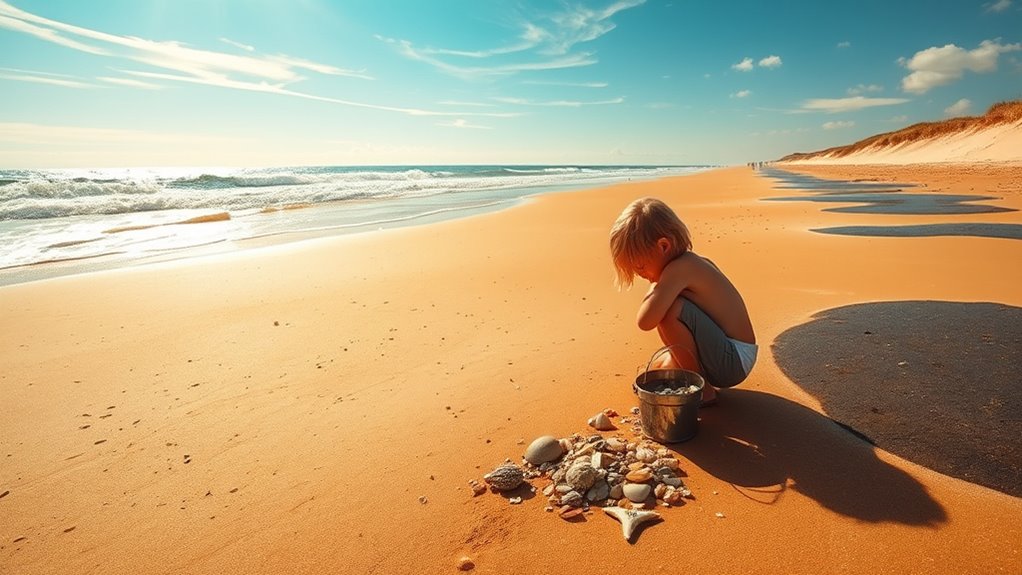
When you choose the best beaches and tides for shark teeth, you’ll boost your chances of finding these fascinating fossils. Head to beaches known for fossil-rich sediment deposits like Folly Beach, Topsail Beach, Amelia Island, Wilmington, and Venice Beach. These spots often get dredged or renourished, exposing fresh fossil finds.
Timing matters—search during low tide, especially an hour or two before the water recedes, when shells and shark teeth become more visible. Tidal changes reshape beaches every 12 hours, so visiting frequently helps you catch newly revealed fossils. Dredging and natural sediment disturbance also bring buried fossils to the surface, making spoil islands and shorelines prime hunting grounds.
Spot Shell Beds and Strand Lines to Search
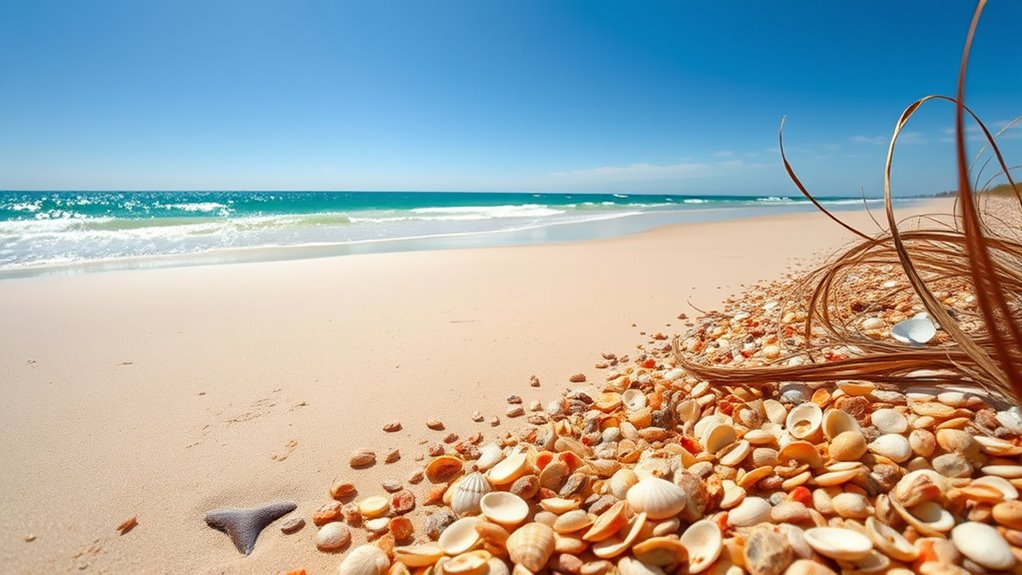
Since shell beds form from crushed shells deposited during tide changes, spotting these bands of shell fragments along the high tide line can lead you to promising fossil finds. Focus on shell beds where the sand meets the shell fragments near the shoreline, as these areas often hide fossilized teeth.
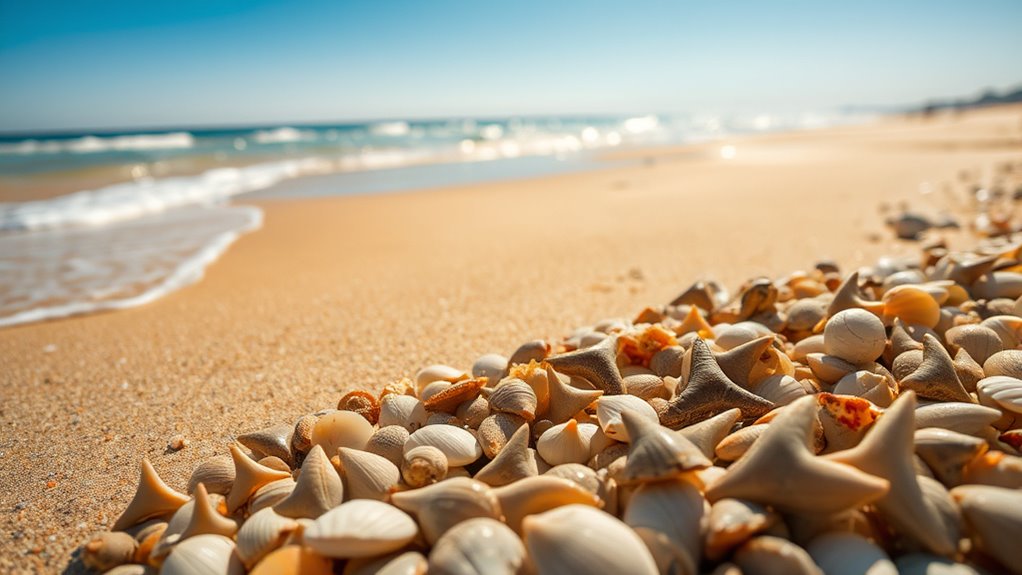
Pay close attention to strand lines and shell piles, natural accumulations created by wave action that concentrate shells, coral, and sometimes shark teeth. Active erosion of these shell beds by waves exposes more fossilized teeth, so searching along these zones increases your chances.
Look for larger shell pieces within shell beds, as they often indicate the presence of bigger fossils. By targeting these specific areas, you’ll improve your odds of finding shark teeth during your beachcombing adventures.
How to Identify Fossilized Shark Teeth

Although fossilized shark teeth might look similar to ordinary shells at first glance, you can quickly spot them by their distinct black color and sturdy, triangular shape.
To identify fossilized shark teeth confidently, focus on these key features:
- Color: Look for a deep black hue caused by phosphate mineralization, which sets them apart from lighter shells.
- Pattern: Notice the symmetrical, sharp edges and consistent triangular or T-shape pattern that fossilized teeth exhibit.
- Texture: Feel for a dense, solid structure that’s tougher than modern or recent teeth and shells.
Tools and Techniques for Finding Shark Teeth
Now that you know how to identify fossilized shark teeth, it’s time to equip yourself with the right tools and techniques to find them effectively. Use a small shovel or scoop to gently disturb the sand, carefully exposing shark teeth without causing damage. Focus on shell piles and gravel near the strand line, where shiny black triangular shapes often indicate teeth.
Searching during receding low tide, especially in areas of active erosion like shell beds, increases your chances of exposure. Rinse your scoop or findings in water to reveal hidden teeth more clearly and reduce debris. Always handle your finds with gloves or tools, and check the top layers of shells and gravel, where heavier shark teeth tend to settle.
These tools and techniques make your search efficient and rewarding.
Look for Other Fossils Beyond Shark Teeth
When you search for shark teeth on the beach, don’t overlook the variety of other fossils waiting to be discovered. Beaches often reveal more than just shark teeth, including fossilized bones and terrestrial fossils like bison teeth or turtle shells.
Keep an eye on areas with sediment erosion or shell beds, as these spots concentrate marine fossils and other remnants. To broaden your finds, focus on:
- Dark-colored fossils with unique patterns or symmetry, indicating mineralization
- Shell beds and sediment erosion zones where diverse fossils accumulate
- Using identification guides and community resources to distinguish marine fossils from terrestrial ones
Frequently Asked Questions
What Is the Trick to Finding Shark’s Teeth?
The trick to finding shark teeth is to focus on low tide, carefully sift through shell piles, and look for shiny, black, triangular shapes.
Flip debris gently to reveal hidden teeth and spot the denser ones on top.
Where Is the Best Place to Look for Shark Teeth on the Beach?
Think of the shoreline as a treasure chest—your best bet is the high tide line near eroding shell beds, especially after storms.
Focus on gravel and shell piles where waves expose black, shiny shark teeth waiting to be found.
What Is the Best Time of Day to Find Shark Teeth?
You’ll find the best time to search for shark teeth is early morning, around 6:45 am, especially an hour or two before low tide.
During this time, the water’s calm and shell beds are more exposed, making it easier to spot teeth.
Heading out then can significantly increase your chances of a successful find.
What Is the Best Tool for Finding Shark Teeth?
You’ll want a small scooping tool like a beach scoop or garden trowel to efficiently dig through shells. Pair it with a fine mesh sieve to filter debris, making it easier for you to spot shark teeth quickly.
Conclusion
So, you’ve got your beach picked, your eyes peeled for shell beds, and your fossil ID skills sharpened—congratulations, you’re basically a shark tooth detective now.
Just remember, if you don’t find a treasure trove of prehistoric teeth by sunset, it’s probably because the sharks are just too shy to leave their calling cards.
But hey, at least you got some fresh air and a great excuse to avoid laundry. Keep hunting those shark teeth on the beach!