How Can You See a Blue Whale?
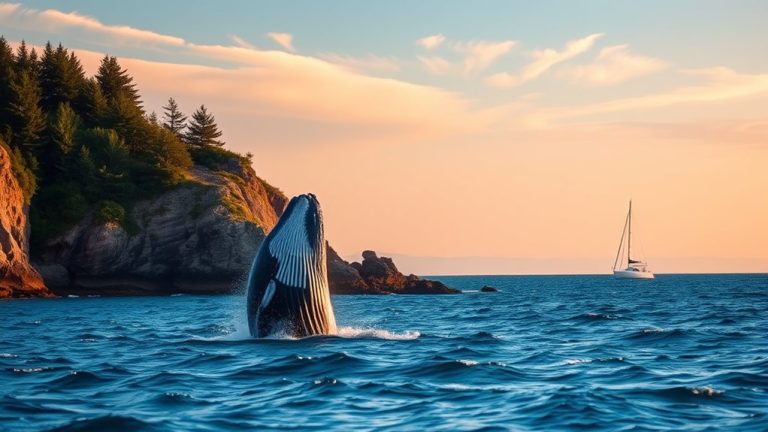
You can see a blue whale by visiting popular coastal hotspots like California between June and September, when these magnificent giants feed and migrate nearby. Whale watching tours offer a great opportunity to observe these creatures in their natural habitat. Joining a reputable tour increases your chances of a successful sighting.
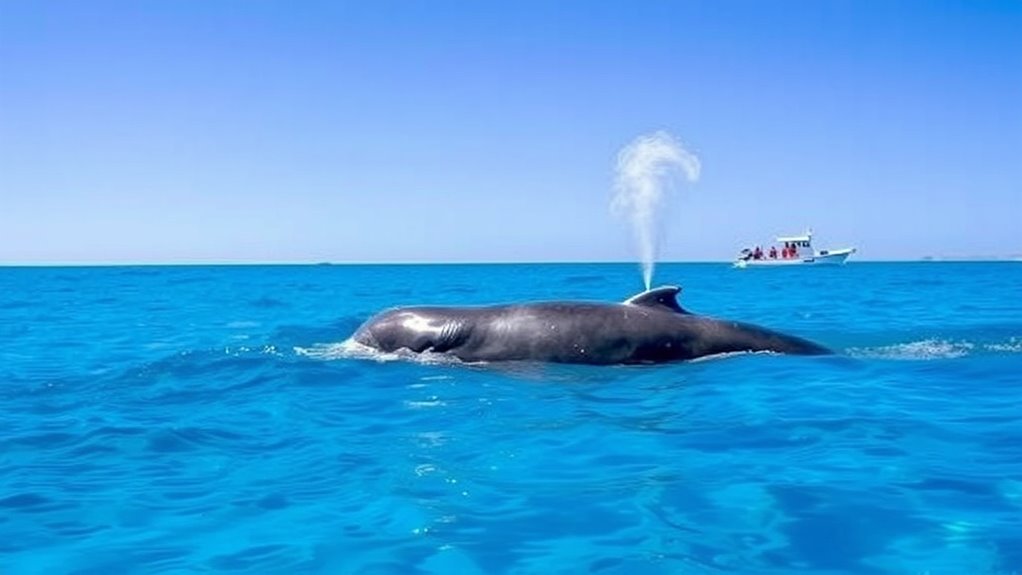
Choose tours that use eco-friendly boats and provide binoculars for a closer look. Flexible timing during the trip also helps maximize your chances of spotting a blue whale. Watch carefully for their towering spouts, graceful surface glides, and massive size.
With some preparation and respect for their space, you’re set for an unforgettable experience. There’s much more to learn about the best timing, whale behavior, and helpful spotting tips ahead.
Where and When Are Blue Whales Most Commonly Seen?
If you want to see blue whales, your best bet is off the coast of California between June and September. During these summer months, blue whales migrate along the California coast, moving from their feeding grounds toward breeding areas. Sightings peak in July and August, offering you a high chance of spotting these majestic creatures.
The Eastern Pacific hosts large blue whale populations from Alaska down to Costa Rica, but California’s waters are especially rich feeding grounds during this time. By heading out during these months, you’ll catch them when they’re most active and visible near the surface.
How to Choose the Best Blue Whale Watching Tours
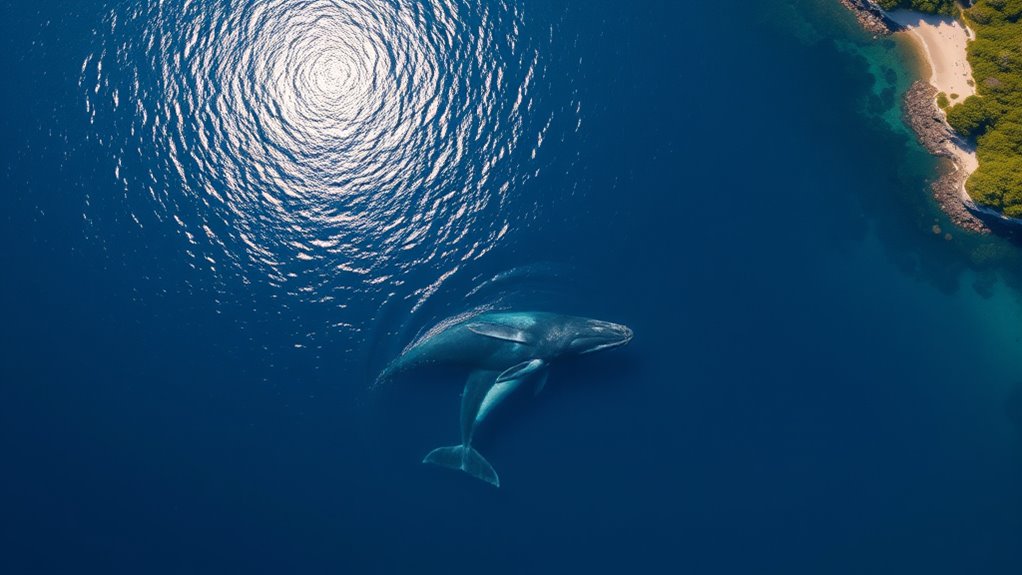
Where should you start when choosing a blue whale watching tour? Begin by selecting reputable operators known for responsible wildlife guidelines and positive reviews. Opt for tours running during peak migration months—May to October in California or December to March in Sri Lanka—to boost your sighting probabilities.
Look for trips offering immersive experiences like underwater viewing pods, enhancing your chances to see blue whales up close. Prioritize tours with flexible durations, so you’re not rushed and can extend your search if needed. Also, choose eco-friendly vessels that minimize environmental impact, ensuring a sustainable experience.
What Makes Blue Whales Unique and Easy to Spot
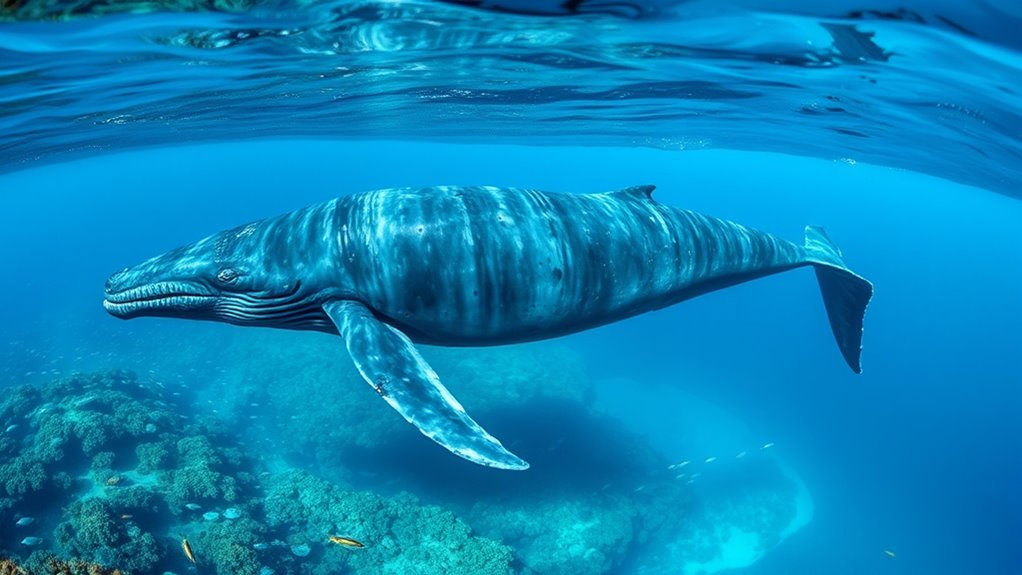
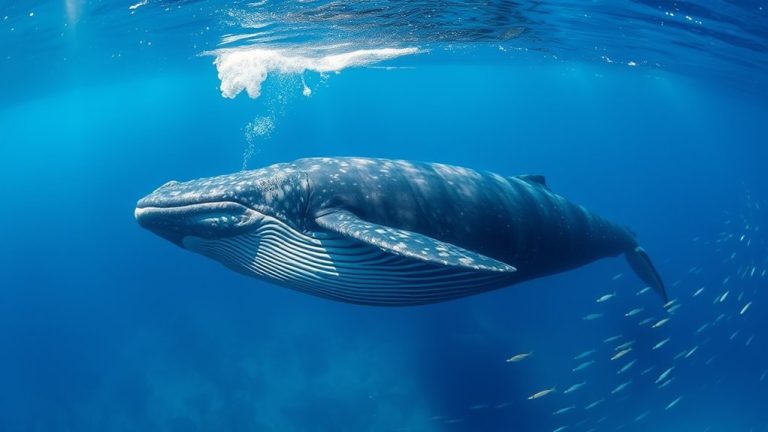
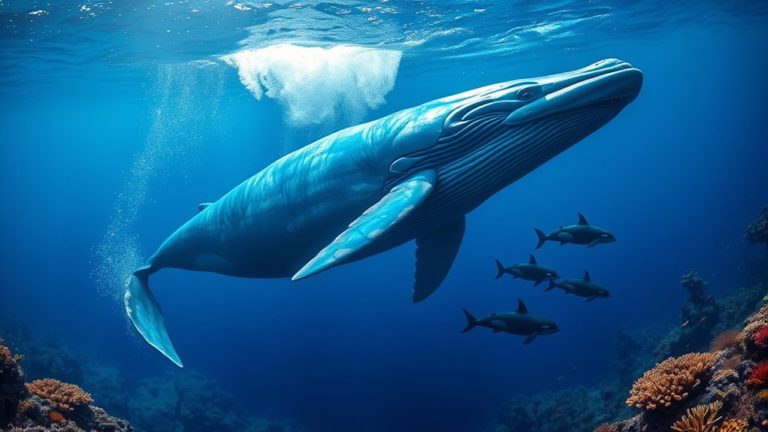
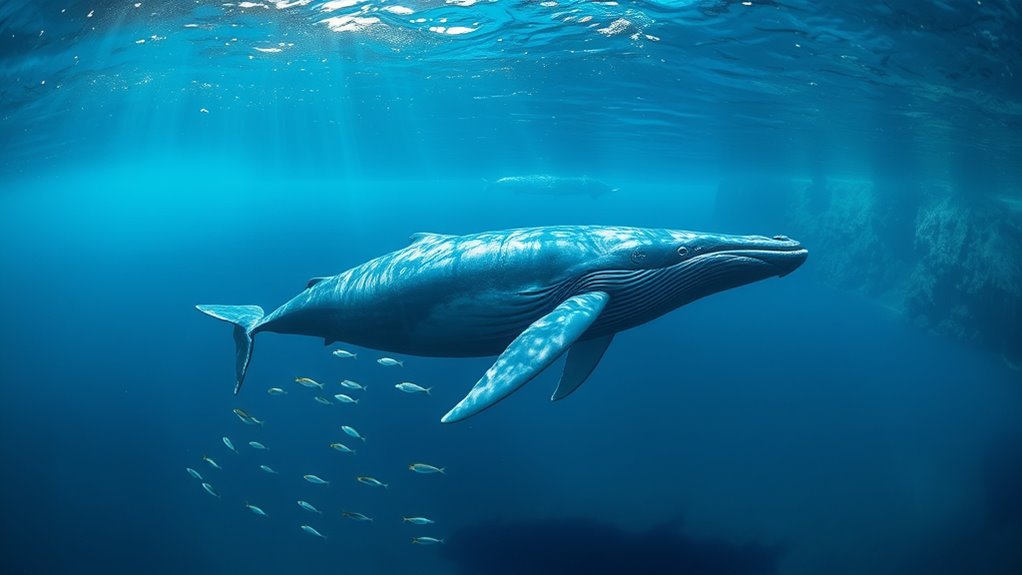
What makes blue whales stand out when you’re scanning the ocean? Their massive size—over 100 feet long and weighing up to 330,000 pounds—makes blue whale identification straightforward compared to other whales. You’ll notice their distinctive bluish-gray coloration with mottling, giving them a brilliant azure look underwater.
Key whale features like the small dorsal fin located three-quarters back on their body help you confirm your sighting blue whales correctly. Also, watch for their unique throat grooves that expand when feeding; these are visible when they surface.
Don’t miss their thunderous exhalations, or “blows,” which can reach nearly 20 feet high. These whale characteristics make blue whales unique and relatively easy to spot during your ocean adventures.
How Do Blue Whales Behave When You See Them?
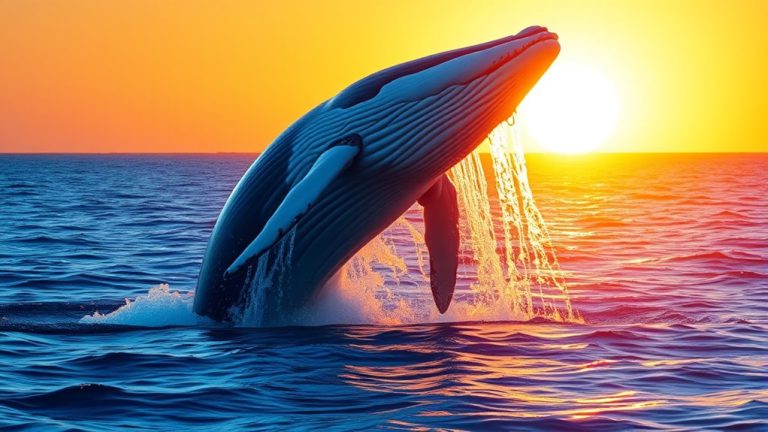
Though blue whales often move slowly, you’ll be captivated by their graceful behavior when you see them. Their surface activities include slow swimming with mouths open to feed on krill, blowing a thunderous spout nearly 20 feet high, and occasionally lifting their tail high before diving.
Usually spotted alone or with a calf, their elusive movements make every sighting special.
| Behavior | Description |
|---|---|
| Surface Activities | Feeding, blowing, and breaching |
| Blow | Loud, towering spout nearly 20 feet high |
| Tail | Raised above water during profound explorations |
| Movement Speed | Typically slow but capable of bursts over 20 mph |
These behaviors reveal how blue whales interact with their environment and make observing them a thrilling experience.
How to Prepare for Your Blue Whale Watching Adventure
To get ready for your blue whale watching adventure, focus on packing the right gear like layered waterproof clothing and a good camera with a zoom lens.
Make sure you book your trip early, especially between May and October, to lock in your preferred dates. Timing and preparation are key to making the most of this incredible experience.
Essential Gear Checklist
Since blue whales often stay far offshore, you’ll need the right gear to guarantee a successful and comfortable whale-watching experience. Start with binoculars offering at least 10x magnification to spot distant whales and their spouts. Wear waterproof clothing in layers and a hat to stay dry and comfortable against changing sea conditions.
Don’t forget a high-quality camera with a telephoto lens to capture close-up shots of these magnificent creatures. If you’re prone to motion sickness, pack seasickness medication to keep nausea at bay during choppy boat rides. Finally, apply sunscreen and bring polarized sunglasses to protect yourself from the sun’s glare, plus a water bottle to stay hydrated throughout your adventure.
With this essential gear checklist, you’ll be fully prepared for your blue whale watching trip.
Timing Your Excursion
Having the right gear sets you up for success, but picking the right time for your trip plays a big role too. The best time to see blue whales is during their peak migration from May to October, with prime viewing in June and July. Planning your excursion during these summer months maximizes your chances of whale sightings.
To make the most of your adventure:
- Book your tour well in advance to secure spots during prime viewing.
- Expect variable weather and bring suitable clothing and sun protection.
- Choose tours that align with the official migration and feeding seasons.
What to Expect on a Blue Whale Watching Trip
You’ll spend around six hours on the water, often on boats equipped with viewing platforms or underwater pods to get closer to the whales. Trips usually run from May to October, with safety guidelines in place to protect both you and the wildlife.
Knowing what to expect helps you enjoy the experience while respecting these incredible creatures.
Trip Duration And Timing
How long will your blue whale watching trip last? Typically, the trip duration ranges from 4 to 8 hours, averaging about 6 hours to maximize blue whale sightings. California whale tours schedule excursions during the best time to see blue whales, which is from May to October.
This peak viewing season coincides with their coastal migration for feeding and breeding.
Here’s what you can expect on your trip:
- Extended excursions with flexible timing to improve chances of spotting whales
- Highest success rates, over 97%, from late May to June
- Tours operate only when whales are confirmed, especially in August
Viewing Platforms And Boats
While the excitement of spotting a blue whale builds, your experience will be shaped by the type of boat or viewing platform you choose. Whale-watching boats vary from rigid hull inflatables for close encounters to glass-bottomed vessels offering underwater views of marine mammals. Many eco-friendly tours prioritize minimal disturbance, letting you enjoy face-to-face moments responsibly.
Trips typically last 4 to 8 hours, maximizing your chances to see these giants. Here’s a quick guide:
| Platform Type | Features | Experience |
|---|---|---|
| Rigid Hull Inflatable | Stable, close to water | Intimate, dynamic encounters |
| Glass-bottomed Boats | Underwater viewing | Unique, immersive perspective |
| Viewing Pods | Submerged observation areas | Quiet, minimal whale disturbance |
Choose wisely to make your blue whale adventure unforgettable.
Wildlife And Safety Guidelines
Because blue whales are gentle giants but easily disturbed, you must follow strict wildlife and safety guidelines during your trip. Responsible whale-watching ensures you observe this marine mammal with respect, supporting conservation efforts while enjoying safe viewing. Understanding whale behavior helps you avoid causing stress or harm.
Keep these tips in mind:
- Choose licensed operators committed to minimal disturbance and conservation.
- Maintain a safe distance of at least 100 yards to protect the whale’s natural behavior.
- Be patient; whales move unpredictably, especially during peak seasons from May to October.
Listen closely to the crew’s instructions—they’re trained to guide you in observing blue whales safely and responsibly. Following these guidelines lets you experience these majestic creatures while preserving their habitat for future generations.
How to Respect Blue Whales and Protect Their Habitat
To protect blue whales and their habitats, you need to choose licensed, eco-friendly whale-watching operators that follow strict guidelines to minimize disturbance. Always keep a respectful distance of at least 100 yards, avoid loud noises, and support conservation efforts through responsible tourism. Using low-impact boat engines helps reduce noise pollution and safeguards their feeding and communication areas.
Educate yourself on habitat protection to avoid disrupting migration routes and feeding grounds.
| Action Taken | Impact on Blue Whales |
|---|---|
| Maintain respectful distance | Keeps whales calm and safe |
| Use low-impact engines | Preserves natural soundscape |
| Choose eco-friendly tours | Supports conservation efforts |
| Avoid touching/swimming | Prevents stress and injury |
What Gear and Equipment Help You Spot Blue Whales
To spot blue whales more effectively, you’ll want to equip yourself with powerful binoculars and technology like radar or sonar. Real-time tracking apps and stabilized cameras with telephoto lenses can also boost your chances of spotting these giants.
Don’t forget that bright clothing and visual aids help your crew stay alert during sightings.
Essential Viewing Tools
When you want to spot blue whales, having the right gear makes all the difference. High-powered binoculars with 10x magnification or more let you scan the horizon, while telephoto lenses on your camera capture detailed images from a safe distance.
For a closer, immersive experience, underwater viewing pods or glass-bottom boats bring you face-to-face with these giants beneath the surface. GPS plays a vital role in whale tracking, helping you pinpoint feeding grounds and track whale movements efficiently. Combining these tools boosts your chances of a successful sighting.
Here are essential viewing tools to consider:
- High-powered binoculars and telephoto lenses for distant spotting and photography
- Underwater viewing pods or glass-bottom boats for close encounters
- GPS devices for precise whale tracking and location navigation
Technology Enhancing Sightings
Although spotting blue whales can be challenging, technology makes it much easier to locate and observe these magnificent creatures. You can use high-powered binoculars to scan the horizon from shore, spotting their distant spouts and movements.
On boats, underwater cameras and GoPro devices provide real-time footage, helping you identify whale locations during tours. Sonar and hydrophones detect blue whale songs beneath the surface, giving you an audio cue to their presence.
GPS tracking tags attached to whales allow researchers—and you, if you have access—to monitor their migration routes and feeding areas precisely. Plus, advanced marine radar systems assist vessels in detecting large marine mammals like blue whales, especially in low-visibility conditions.
Using this gear, you’ll increase your chances of a memorable blue whale sighting.
How to Identify Blue Whales in the Wild
How can you spot a blue whale in the vast ocean? To identify blue whales, focus on their unique blue-gray coloration with mottling and their massive size—over 75 feet long.
When whale watching, watch for these key blue whale features:
- A small dorsal fin positioned about three-quarters down their back.
- A towering blowhole spout that can reach nearly 20 feet high, visible from afar.
- 60-90 throat grooves that expand during feeding, along with a yellowish or greenish underside from diatom growth.
Blue whale sightings often include seeing their massive tails lift 12-15 feet as they dive. Knowing these traits helps you identify blue whales in the wild and makes your whale watching experience unforgettable.
Where to Book Blue Whale Watching Trips
Now that you know how to spot blue whales in the wild, the next step is finding the best places to reserve your whale watching trip. Look for blue whale watching trips offered by licensed operators in top locations like Dana Point, California, Los Cabos, Sri Lanka, and the Maldives.
You can easily book online with many providers, especially during peak months from May to October, guaranteeing your spot in advance. Choose tours that prioritize sustainable viewing to protect these magnificent creatures, and consider specialized options like Zodiac safaris or private charters for closer encounters.
Many organized trips guarantee whale sightings and include educational experiences, making your adventure both memorable and responsible. Booking through reputable operators ensures you enjoy the experience while supporting eco-friendly practices.
Frequently Asked Questions
Where in the World Can You See a Blue Whale?
You can see blue whales off California, Alaska, Iceland, Norway, the Maldives, Chile, Antarctica, and Mexico’s Los Cabos.
Join whale-watching tours there, especially during migration seasons, to catch these majestic giants in action.
How Rare Is It to See Blue Whales?
Seeing blue whales is quite rare because they spend most time underwater and migrate unpredictably.
Even with tours that have a 97% success rate, you’ll find spotting these giants a truly special and uncommon experience.
Has a Blue Whale Ever Been Spotted?
Spotting a blue whale is like finding a needle in a haystack, but yes, they’ve been spotted worldwide during migration seasons.
You can catch glimpses off California, Sri Lanka, and even the Southern Hemisphere with patience and timing.
Are There Blue Whales in the USA?
Yes, you can see blue whales in the USA, especially off California’s coast during summer.
You’ll find whale watching tours in Monterey Bay and Southern California that increase your chances of spotting these magnificent creatures.
Conclusion
Seeing a blue whale is truly a once-in-a-lifetime experience, and with the right timing, gear, and respect for their habitat, you’ll have a better chance of spotting these gentle giants. Remember, “patience is a virtue”—so stay calm and enjoy the moment.
Whether you book a tour or explore on your own, being prepared and informed makes all the difference. Get ready, stay safe, and cherish every sighting of these magnificent creatures!
By following these tips on how to see a blue whale, you can maximize your chances of a successful and memorable encounter with the largest animal on Earth. Enjoy the adventure and the awe-inspiring beauty of these incredible marine mammals.