10 Reasons Morning Is Better Than Afternoon for Whale Watching
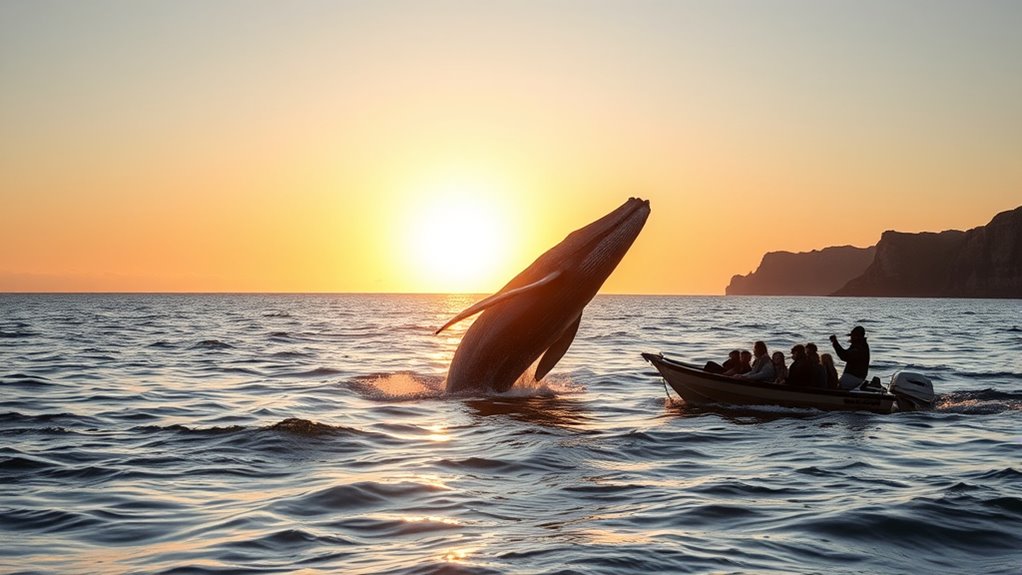
You’ll enjoy calmer seas in the morning with less wind and boat traffic, making it easier to spot whales’ fins and breaches against smooth water. Whale watching in the morning offers a unique advantage as whales are more active early, feeding near the surface before they rest later in the day.
The softer morning light reduces glare and boosts photo quality, while cooler temperatures keep you comfortable and relaxed. Morning tours also have the highest sighting rates, giving you a better chance of close encounters.
Keep exploring to uncover even more benefits of whale watching in the morning.
Why Morning Whale Watching Offers Calmer Seas
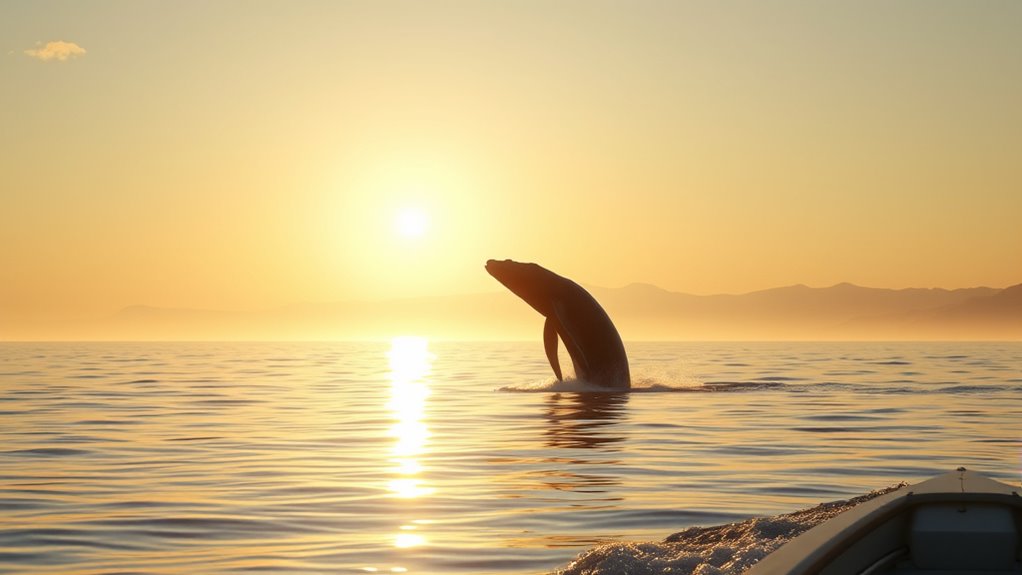
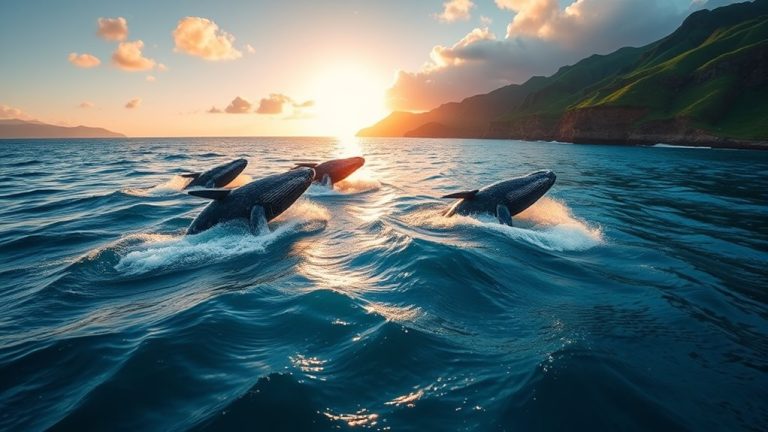
When you head out for whale watching in the morning, you’ll often find the seas much calmer than later in the day. The morning light casts a gentle glow over the water, revealing the tranquil environment that makes spotting whales easier. Calmer seas result from reduced wind and less boat traffic, creating smooth waters that improve visibility.
You’ll notice fins, flukes, and breaches more clearly against this peaceful backdrop. Plus, the gentler waves mean a steadier ride, so you’re less likely to feel seasick and can stay focused on the experience. This serene setting not only enhances your comfort but also encourages whales to behave naturally, making your morning whale watching trip truly special.
Why Whales Are More Active During Morning Whale Watching
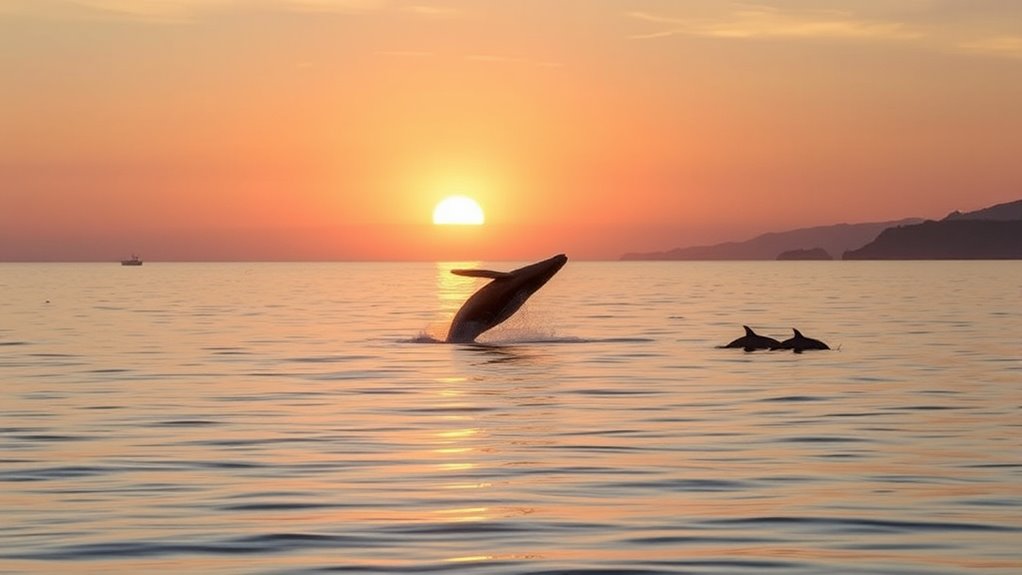
You’ll notice whales are more active in the morning because they feed when small fish gather near the surface. With fewer boats around, there’s less disturbance, so whales feel free to socialize and show off their behaviors.
This combination makes morning whale watching the best time to catch lively whale activity.
Morning Feeding Patterns
Because small fish and krill gather near the surface in the early morning, whales take advantage of this time to feed actively. During morning feeding, cooler water temperatures and tidal movements concentrate prey, boosting whale activity near the surface. This means you’re more likely to witness whales lunging and diving as they chase their breakfast.
Plus, the morning light improves visibility, making it easier for you to spot these impressive feeding behaviors clearly. As the day progresses, whales often shift from feeding to resting or traveling, so your best chance to see dynamic whale activity is during these early hours.
If you want a memorable whale watching experience, heading out in the morning guarantees you catch the whales when they’re at their most active and visible.
Reduced Disturbance Effects
Morning whale watching offers more than just prime feeding displays; it also benefits from reduced disturbances that keep whales active and visible. During the early hours, calmer seas create less noise and water disturbance, allowing you to witness more natural whale behavior. Reduced disturbance from fewer boats and less human activity means whales experience less stress, encouraging surface activities like breaching and spyhopping.
This quieter environment helps whales interact more freely, making their movements more engaging for you to observe. Studies confirm that calmer conditions typical of mornings lead to more frequent and lively whale sightings.
How Less Boat Traffic Improves Whale Encounters
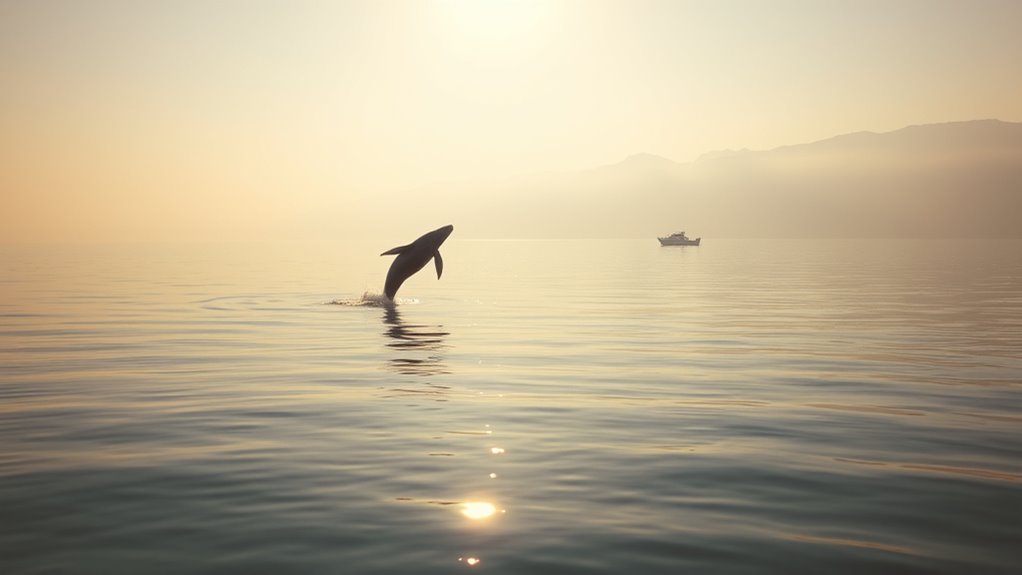
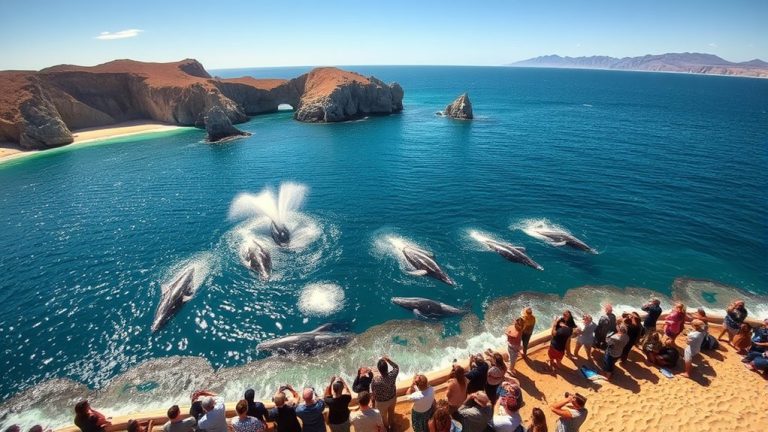
When you head out early, you’ll notice fewer boats on the water, which means less disturbance for the whales. This quieter environment lets them act naturally and often brings them closer to your vessel.
With less noise and traffic, you get a better chance to see whales showing off their full range of behaviors.
Reduced Water Disturbance
Although boat traffic picks up later in the day, you’ll find the waters much quieter in the early hours. This reduced water disturbance during your morning trip allows whales to display natural whale behavior like feeding and socializing without stress.
With fewer boats, whales remain calm, making your encounter more intimate and memorable.
| Time of Day | Water Traffic Level | Effect on Whale Behavior |
|---|---|---|
| Morning | Low | Natural, relaxed behaviors |
| Afternoon | High | Startled, cautious |
| Evening | Moderate | Mixed activity |
Opting for a morning trip means less noise and disruption, giving you a better chance to observe whales up close while they engage in their natural routines peacefully.
Enhanced Wildlife Activity
Since fewer boats navigate the waters early in the day, you get a front-row seat to whales engaging in their most natural and energetic behaviors. The reduced boat traffic in the early morning means less noise and disturbance, allowing marine life to feel comfortable and act freely. Whales surface more often, feeding, breaching, and interacting dynamically in spacious, calm waters.
This quieter environment encourages vibrant wildlife activity, making your whale watching experience more exciting and authentic. Studies confirm that marine mammals display livelier behaviors when boat presence is minimal, which typically happens during morning trips. So, choosing early morning for your whale watching not only means calmer seas but also a better chance to witness the amazing, uninhibited movements of marine life up close.
Why Morning Light Helps Spot and Photograph Whales
Because the morning light is softer and more diffused, you’ll find it much easier to spot and photograph whales without the glare and reflections that often plague afternoon views. This gentle morning light reduces harsh shadows and highlights, making whale spotting far more effective. The low angle of the sun beautifully illuminates whale fins and flukes, capturing their surface behaviors with clarity.
Calmer seas in the morning also mean clearer water, enhancing your chances to photograph whales with sharp, vibrant details. Plus, the colorful sunrise backdrop adds stunning contrast and depth to your photos. When you choose morning light for whale spotting, you’re setting yourself up for clearer, more vivid images that truly showcase these majestic creatures in their natural beauty.
Why Morning Whale Watching Is More Comfortable
When you head out for whale watching early in the morning, you’ll enjoy calmer seas and lighter winds that make the boat ride much smoother and more comfortable. These calmer seas reduce the chances of seasickness, letting you relax and focus on the experience. With fewer boats on the water at this time, you’ll find a quieter, more peaceful environment, free from the noise and disruptions common later in the day.
Better visibility over calm waters means you can spot whale fins, flukes, or breaches from a distance without straining your eyes. Plus, the cooler morning air and softer light make it easier to observe and photograph whales comfortably, without the harsh glare or heat that builds up in the afternoon.
How Morning Tours Deliver the Latest Whale Sightings
Beyond the comfort and calm of morning whale watching, these early tours give you the best chance to see the most recent whale activity. Morning tours boast a 95% success rate for whale sightings because crews receive fresh reports before setting out, guiding you straight to active hotspots.
You’ll notice whales are more visible and engaged in natural feeding behaviors during these hours, as less boat traffic keeps them undisturbed. Plus, calmer seas in the morning make spotting surface activity easier, while prime lighting helps you catch every detail of whale behavior.
Choosing a morning tour means you won’t just see whales—you’ll experience the latest, most vivid encounters, making your whale-watching adventure truly unforgettable.
Frequently Asked Questions
Is Morning or Afternoon Better for Whale Watching?
Morning’s better for whale watching because you’ll enjoy calmer seas, clearer views, and less boat traffic. You’ll spot whales more easily, experience peaceful surroundings, and capture stunning photos with perfect lighting.
You won’t want to miss it!
What’s the Best Time to Go Whale Watching?
You’ll want to go whale watching in the morning since sightings happen nearly 95% of the time then.
You’ll enjoy calmer seas, less noise, and better light, making your experience more memorable and comfortable.
Is Whale Watching in Maine Better in the Morning or Afternoon?
You’ll find whale watching in Maine better in the morning because calmer seas improve visibility, whales are more active, and there’s less boat traffic.
Morning light also helps you capture stunning photos of these majestic creatures.
What Time of Day Is Best to Spot Whales?
You’ll catch whales best when the sea’s calm, usually in the morning. It’s like nature’s quiet hour, giving you clearer views and less boat traffic, so you’ll spot those magnificent giants more easily and peacefully.
Conclusion
Choosing morning for whale watching means you’ll enjoy gentler seas and livelier whale antics, making your adventure smoother and more exciting. With fewer boats around, you’ll have a quieter, more intimate experience. The soft morning light not only helps you spot whales better but also makes your photos glow with magic.
Plus, you’ll stay comfortable and catch the freshest sightings. So, why settle for the usual when mornings offer a touch of nature’s finest? Morning whale watching truly provides the best conditions for unforgettable encounters and breathtaking views.