Is Whale Eye in Dogs Always Bad?
Whale eye in dogs isn’t always a bad sign, but you should pay attention when you see it. This subtle canine cue often shows that your dog is feeling stressed, uncomfortable, or threatened, especially if paired with stiff body language or pinned ears.
However, sometimes it just means your dog is curious or alert without distress. To know how to react and when to worry, it helps to understand the context and your dog’s other signals.
There’s more to discover about whale eye and what it really means in different situations. Observing the full range of your dog’s behavior can give you better insight into their feelings.
What Is Whale Eye in Dogs?
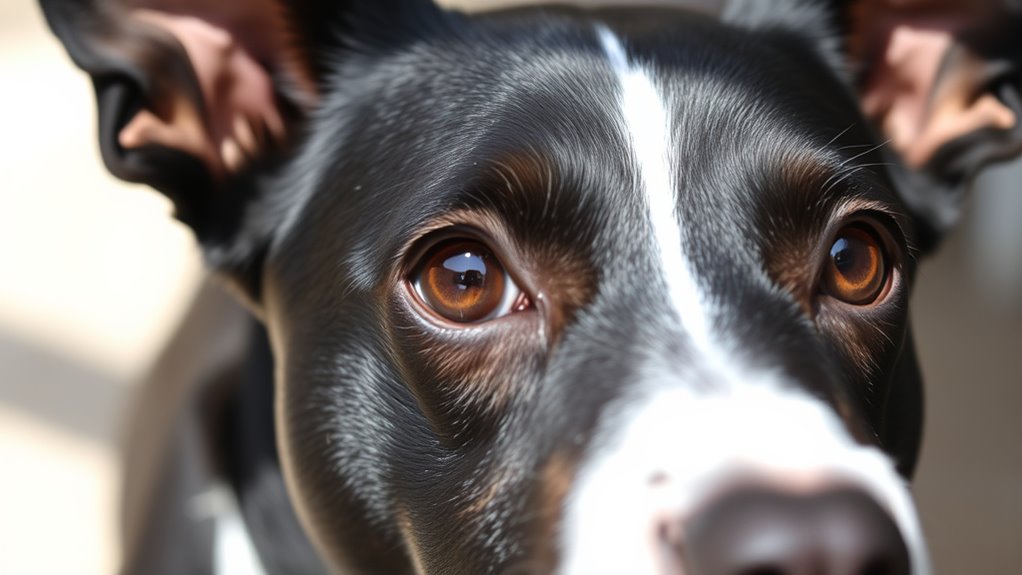
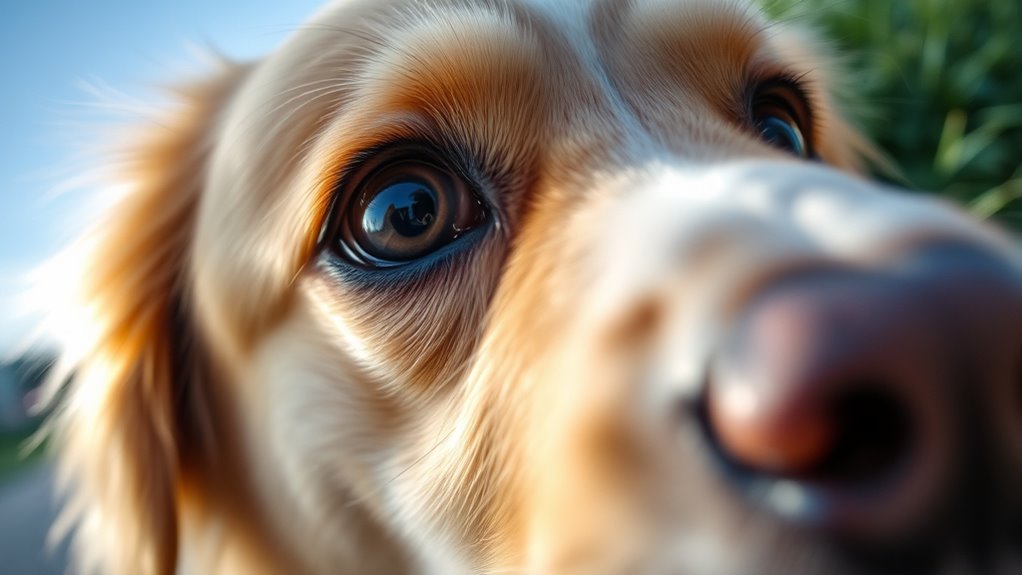
Have you ever noticed the whites of a dog’s eyes showing in a half-moon shape? That’s called whale eye, a clear part of canine body language. In dogs, whale eye happens when the whites of their eyes become visible, often because they turn their head slightly but keep eye contact.
This subtle shift in dog behavior is a key sign of stress or discomfort. When a dog feels threatened or uneasy, whale eye serves as an important warning signal. Understanding whale eye helps you read your dog’s emotions better and recognize when they’re anxious or fearful.
Common Triggers That Cause Whale Eye
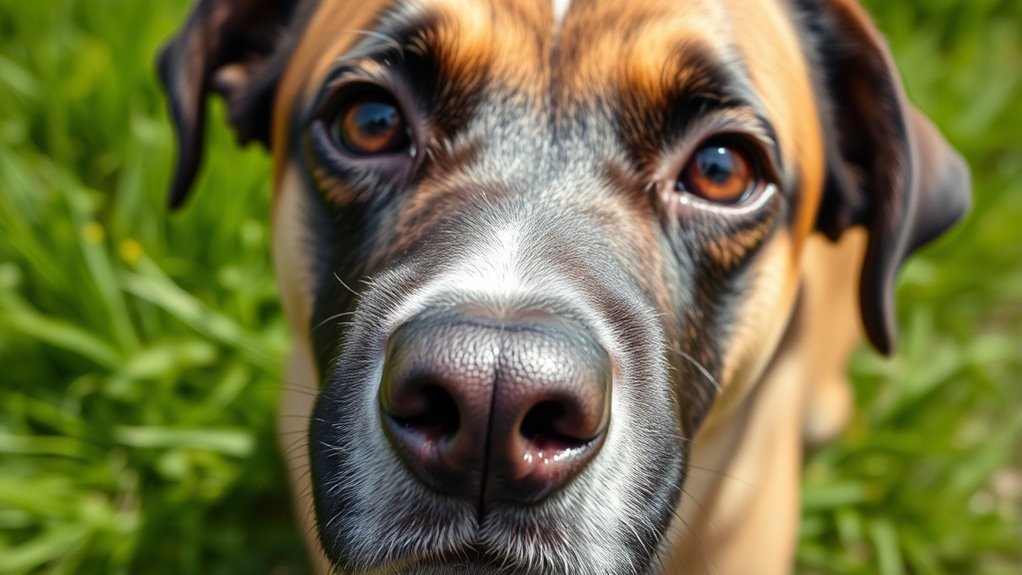
When your dog shows whale eye, it’s often because something around them feels threatening or overwhelming. Common triggers include unfamiliar people, loud noises, or a new environment—each can cause stress signals in your dog’s body language. You might also see whale eye during dog-dog standoffs or when your dog experiences overstimulation from rough play, excessive petting, or invasive handling.
These warning signs indicate dog discomfort, so it’s important to recognize them early. Sometimes, medical issues can also trigger whale eye if your dog feels vulnerable or in pain. Understanding these triggers helps you respond appropriately during dog training, ensuring your dog stays calm and safe. Watching for whale eye allows you to prevent stress before it escalates into aggression or fear.
How to Tell When Whale Eye Means Stress or Danger
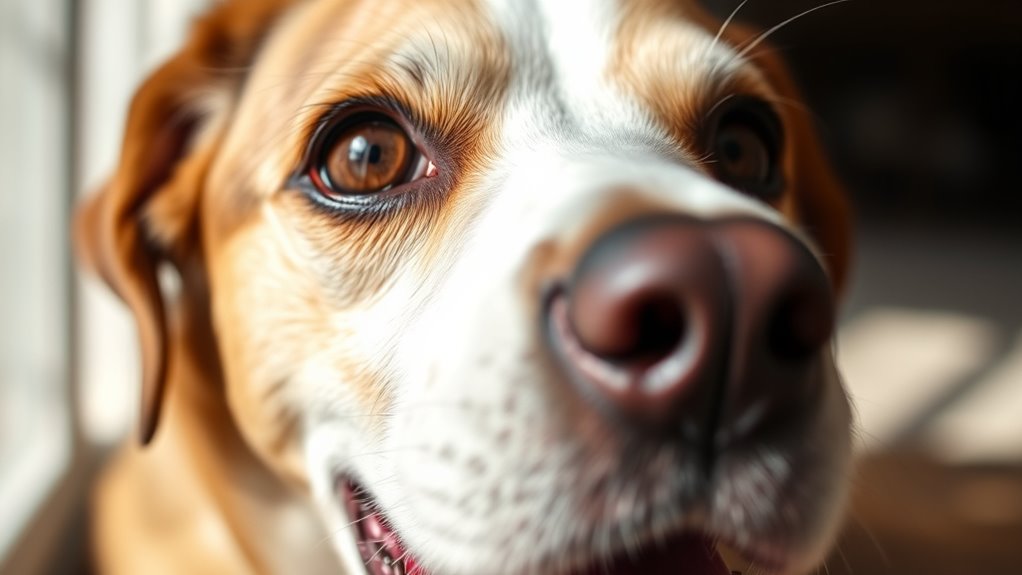
Recognizing whale eye is just the first step; comprehending what it signals can make all the difference in keeping you and your dog safe. Whale eye often indicates stress or danger, especially when paired with other warning signs.
Watch your dog’s body language closely to interpret these signals accurately.
| Whale Eye Behavior | Possible Meaning |
|---|---|
| Stiff posture | Threatening stance |
| Pinned ears | Fearful or stressed |
| Growling | Warning of potential bite |
| Persistent whale eye | High stress, danger |
If you notice whale eye with these behaviors, your dog feels threatened or fearful. These signals warn you to give your dog space and avoid escalating the situation.
Understanding these signs helps prevent confrontations and ensures safety for both of you.
When Whale Eye Is Normal and Not a Concern
Although whale eye often signals stress, it can also appear during normal, harmless moments when your dog is curious or alert. If your dog’s body language remains relaxed and calm, whale eye is usually benign. You’ll notice it when your dog observes something unfamiliar or during brief encounters that spark curiosity.
Some breeds naturally show more of the sclera, making whale eye a normal feature rather than a sign of discomfort. When your dog is in a familiar environment, whale eye combined with relaxed posture often reflects alertness without concern.
Paying attention to the whole body language helps you distinguish between whale eye caused by stress and whale eye that’s simply part of your dog’s typical, relaxed curiosity and alertness.
How to Respond When Your Dog Shows Whale Eye
If your dog shows whale eye, giving them space and avoiding sudden movements can help prevent escalating their stress. To effectively respond to whale eye, watch for other dog body language cues like stiff posture or pinned ears, which are clear signs of discomfort and stress signals.
Keep the environment calm and quiet, speaking softly to provide calming signals that ease dog anxiety. Identify and eliminate any triggers causing dog stress, such as loud noises or unfamiliar people.
Use positive redirection by offering treats or toys to shift your dog’s focus away from distress. By paying close attention to these body language cues and responding thoughtfully, you can help your dog feel safer and reduce their overall anxiety when whale eye appears.
Frequently Asked Questions
How Do You Treat Whale Eyes in Dogs?
You treat whale eyes by calmly removing your dog from stress, giving them space, and using treats with gentle praise. Identify triggers, gradually desensitize them, and consult a vet or trainer if signs persist or worsen.
Is It Normal for My Dog to Have Eye Boogers Constantly?
Think of your dog’s eyes as tiny rivers—some discharge is normal, like gentle ripples.
But if eye boogers flood constantly, it’s time to clean and watch closely.
Thick, colored gunk means a vet visit’s due.
What Should I Do if My Dog’s Third Eyelid Is Showing?
If your dog’s third eyelid is showing, you should monitor for other symptoms like redness or pain and schedule a vet visit promptly.
Sudden or persistent visibility often signals discomfort or health issues needing professional care.
What Is the Difference Between Whale Eye and Side Eye in Dogs?
Whale eye screams stress with wide sclera showing, while side eye subtly peeks with just a sliver visible.
You’ll spot tense muscles in whale eye, but side eye keeps your dog’s body relaxed and curious.
Conclusion
Whale eye in dogs, like a sudden flash of lightning, can catch your attention quickly. It’s not always a sign of trouble—sometimes, it’s just your dog feeling curious or cautious.
But if you notice it alongside other stress signals, it’s time to act. By understanding when whale eye signals discomfort or danger, you can respond calmly and keep your furry friend safe and happy.
Stay attentive, and you’ll know just what your dog’s eyes are telling you. Remember, whale eye in dogs is not always bad, but recognizing the context is key to your pet’s wellbeing.