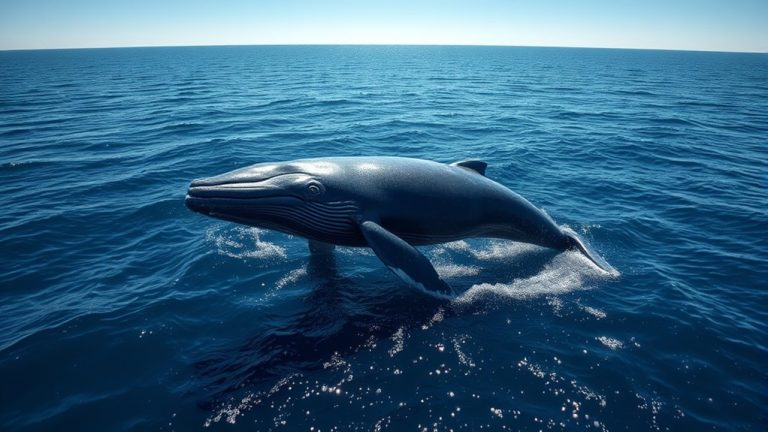

How to Understand If Jonah Was Swallowed by a Whale
You might think Jonah was swallowed by a whale, but the Bible actually says a “great fish,” which leaves the creature’s exact species open. Understanding if Jonah was swallowed by a whale requires looking at the original language and context.
Ancient terms refer to large sea animals, not necessarily whales. Scientifically, swallowing a person whole is unlikely but fits the story’s miracle focus.
So, it’s less about the fish itself and more about the message Jonah’s experience conveys. If you explore further, you’ll discover how language, science, and tradition shape this timeless tale.
What the Bible Actually Says About Jonah’s Fish

How exactly does the Bible describe the creature that swallowed Jonah? In the Old Testament, the Bible refers to this sea creature as a “great fish,” using the Hebrew term “gādol dāg” and the Greek “kētous.” These terms simply mean large marine animals, not specifically whales or any particular species.
While older translations like the King James Version use “whale,” this reflects the understanding of sea life at that time rather than a scientific classification. You’ll find that the biblical account focuses more on divine intervention and the purpose behind Jonah being swallowed than on identifying the exact marine animal.
Modern interpretations often suggest a large creature, such as a sperm whale, could fit the description, but the Bible itself leaves the species open to interpretation.
How Language and Translation Shape the “Whale” Story

Language and translation choices play a big role in shaping the story you might imagine when reading about Jonah’s encounter with the sea creature. The original text in biblical language uses Hebrew and Greek terms like “gādol dāg” and “kētous,” meaning “great fish” or generic marine creature, not specifically a whale.
The Greek “kētous” could mean anything from a large sea monster to a sea serpent, which leaves room for interpretation. When the King James Version popularized the term “whale,” it reflected 17th-century word choice rather than the original intent. Different translations emphasize either “great fish” or “whale,” showing how translation affects your understanding.
Ultimately, the focus lies on the divine message, not the exact species, so knowing the nuances in biblical language helps you see the story’s deeper meaning.
Science and History on Jonah’s Great Fish

Although the biblical text describes Jonah’s great fish without specifying the species, science and history offer intriguing clues about what kind of creature might have swallowed him. The term “great fish” or “whale” in the biblical account corresponds to the Greek “kētōn,” which can mean large sea creatures, sea monsters, or whales.
Marine biology suggests sperm whales as plausible candidates due to their ability to swallow large prey whole and their presence in nearby seas. Whale sharks, however, are less likely given biological constraints.
Historical sightings include reports of massive sea monsters over 100 feet long, hinting at unknown sea creatures. Many scholars believe divine intervention played a role, preparing or guiding a suitable great fish to fulfill this miraculous event.
Could a Whale Really Swallow a Person?
Even if you consider the largest whales, swallowing a person whole is highly improbable due to their anatomy. Most large whales, including baleen species, have narrow esophagi and feeding mechanisms that prevent them from swallowing a human.
The sperm whale, often linked to the biblical story, has the throat size to swallow a person, with a mouth opening up to 16 inches wide. However, scientific evidence shows that such an event is rare in nature.
Whale sharks, despite their size, have narrow throats unsuitable for swallowing humans. So, while a large whale could physically swallow a human, modern science suggests the biblical account is more likely a miracle or symbolic story rather than a natural occurrence.
The James Bartley Whale Story: Fact or Fiction
How could someone survive being swallowed by a whale? The James Bartley whale story claims he survived 36 hours inside a Sperm whale’s stomach in 1891, but is it legend or hoax? Let’s break it down:
- Bartley reportedly emerged unconscious, disoriented, and covered in a slimy substance.
- Some accounts say his skin appeared bleached or bluish after.
- Whale experts argue that whale anatomy—especially the whale stomach—makes human survival inside nearly impossible.
- There’s no solid scientific evidence backing the survival inside whale claims.
- The story became popular in the early 20th century but is widely debated as a sensationalized survival myth.
If you ask whale experts, the James Bartley whale story likely belongs to survival myths rather than fact.
Why the Sea Creature’s Species Doesn’t Change Jonah’s Story
While many focus on identifying the exact species of the sea creature that swallowed Jonah, you should remember that the biblical terms used simply mean “large sea creature” rather than a specific whale or fish. The Old Testament’s biblical account doesn’t specify the species, emphasizing divine intervention instead.
This allows you to focus on the story of Jonah’s miraculous survival and divine purpose rather than get caught up in scientific details. The sea creature’s symbolic role highlights God’s power and mercy, making its species less important in interpretation.
Whether mammal or fish, the creature serves as a vessel for Jonah’s transformation, reinforcing the divine message. Ultimately, the story’s core lesson remains unchanged regardless of the species, underscoring the story’s enduring spiritual significance.
What Jonah’s Whale Story Teaches About God’s Mercy
What does Jonah’s encounter with the great fish reveal about God’s mercy? It shows that God’s mercy is abundant, patient, and ready to forgive, even when you run from His calling. Jonah’s repentance inside the fish highlights divine forgiveness through sincere prayer. This biblical story teaches you about mercy and compassion as central themes.
Consider these lessons:
- God’s mercy gives Jonah a second chance to fulfill his divine plan.
- Jonah’s prayer inside the fish reflects genuine repentance and trust.
- Divine forgiveness is available to all who seek it, no matter their past.
- God spares Jonah’s life, showing mercy surpassing human sin.
- Mercy and compassion extend even to the people of Nineveh, whom Jonah is sent to warn.
This story encourages you to embrace God’s mercy and respond to His call with faith.
Frequently Asked Questions
Where Does It Say Jonah Was Swallowed by a Whale?
The Bible doesn’t say Jonah was swallowed by a whale specifically; it says a “great fish” swallowed him.
The original terms mean a large sea creature, so you shouldn’t assume it was definitely a whale.
Was Jonah Dead or Alive in the Fish?
You’re neither fully dead nor alive inside the fish; you’re caught between depths, symbolizing death’s shadow and life’s spark.
Jonah’s struggle shows God’s power to revive you, turning despair into a new beginning.
What Was Jonah’s 8 Word Message?
Jonah’s eight-word message was, “Yet forty days, and Nineveh shall be overthrown.”
You’ll see he warned the city to repent quickly or face divine judgment, emphasizing urgency and God’s coming justice.
Why Did Jonah Get Swallowed up by the Whale?
You know what they say, “What goes around comes around.” Jonah got swallowed by the whale because he tried to run from God’s command, teaching you that disobedience can lead to unexpected, yet purposeful, consequences meant to guide you back.
Conclusion
As you immerse yourself in Jonah’s story, remember it’s less about the creature and more about the journey. Whether whale or great fish, this tale swims deep in lessons of mercy and faith. Don’t get caught in the waves of literal debate—let the story’s current carry you toward understanding God’s grace.
Like Jonah emerging from the depths, you too can rise from your struggles, transformed and ready to face what lies ahead. To truly understand if Jonah was swallowed by a whale, focus on the message rather than the details. The story invites us to explore themes of repentance, forgiveness, and divine intervention.