What Does a Pilot Whale Eat in the Wild?
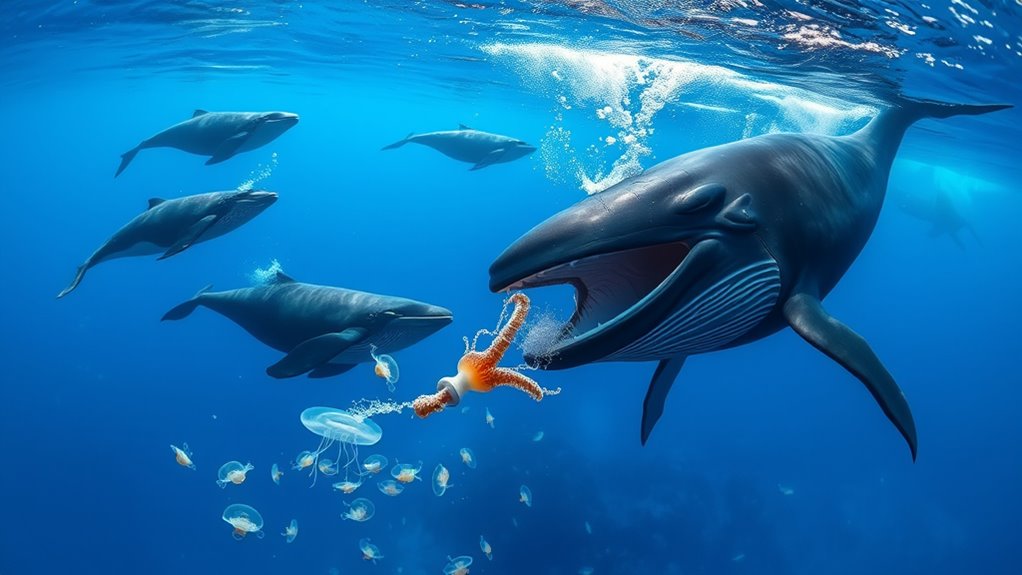
If you spot a pilot whale in the wild, you’ll find it mainly feasts on deep-sea squid, diving over 600 meters to hunt. Pilot whale diet varies between species; short-finned pilot whales target large squid, while long-finned ones add fish like mackerel and cod to their diet.
They use echolocation to track prey in dark waters and often hunt near continental shelf breaks.
Curious about how their habitat shapes their feeding habits? There’s more to uncover about their impressive hunting skills.
What Do Pilot Whales Eat?
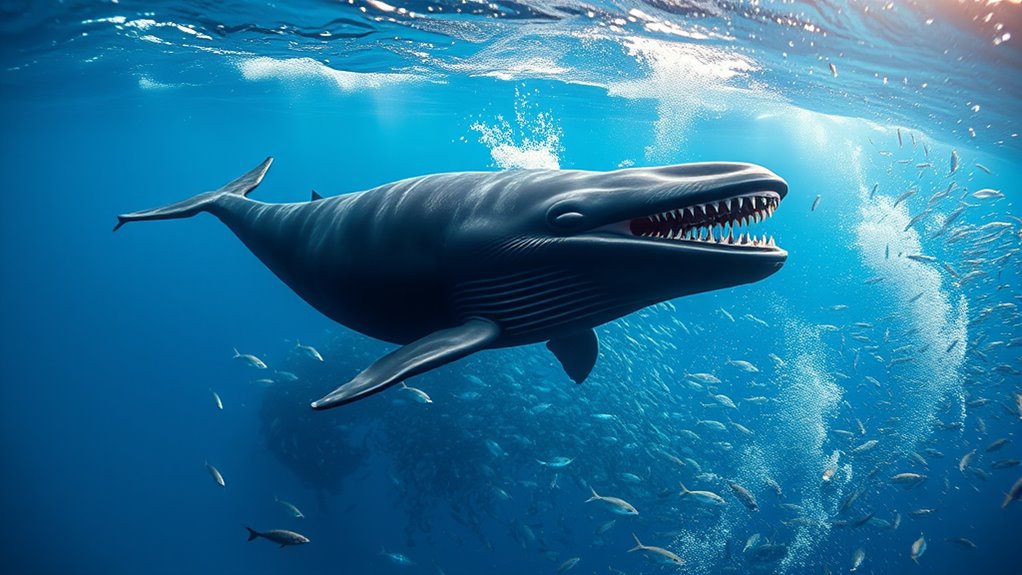
What exactly do pilot whales eat? You’ll find that their marine diet mainly centers on squid, especially large squid found in deep-sea environments. These whales are skilled predators, making profound dives often surpassing 1,000 feet to hunt their prey.
Using echolocation, they locate deep-sea prey even in pitch-black waters. Their feeding behavior involves rapid, energetic dives, sometimes reaching depths near 3,000 feet, as they chase squid and fish like mackerel, herring, and cod.
Pilot whales’ hunting techniques enable them to exploit resources beyond the reach of many fisheries, relying on their speed and echolocation clicks to capture elusive targets. So, when you think about what pilot whales eat, it’s a dynamic pursuit of squid and fish during intense deep dives.
How Short- and Long-Finned Pilot Whales’ Diets Differ
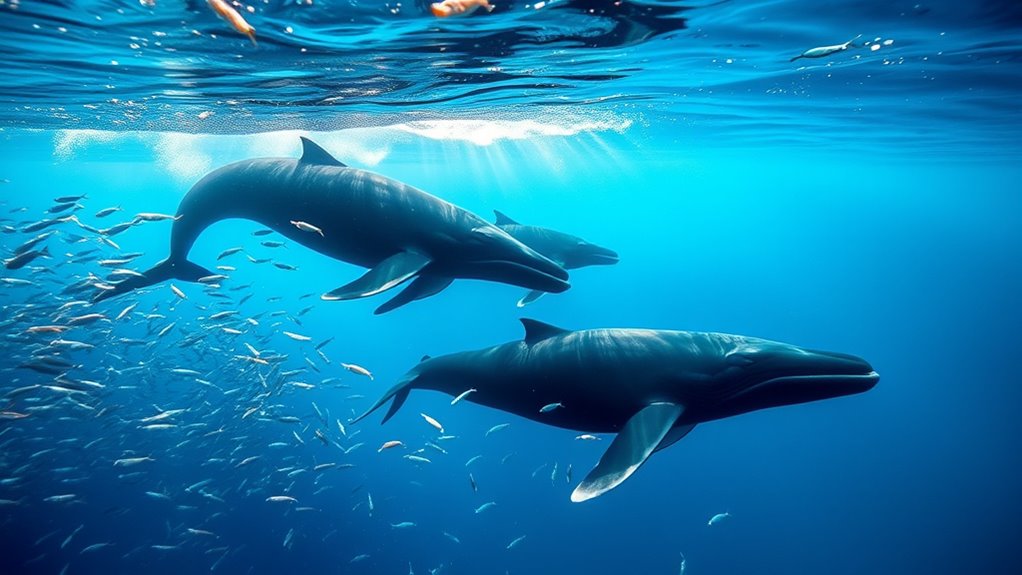
You’ll notice that short- and long-finned pilot whales have different dietary preferences shaped by their hunting styles and habitats. Short-finned whales mostly go after large, deep-sea squid, while long-finned whales eat a wider variety of fish and smaller squid.
These differences also vary depending on the regions they live in and feed.
Dietary Preferences Comparison
Although both short- and long-finned pilot whales rely heavily on squid, their diets differ markedly based on their hunting strategies and habitats. You’ll find short-finned pilot whales diving over 600 meters deep to catch large deep-sea cephalopods like giant squid, using rapid, sprinting dives to secure their prey.
In contrast, long-finned pilot whales focus on smaller squid and octopus, combining energetic, short-duration dives with active pursuit tactics. Their diet also includes fish such as mackerel, herring, and cod, reflecting a broader prey selection.
These differences in foraging and hunting tactics align with the whales’ distinct habitats, showing how each species has adapted its diet to available prey. Understanding these dietary preferences helps you appreciate the diverse feeding ecology of pilot whales.
Regional Feeding Variations
The distinct hunting strategies of short- and long-finned pilot whales lead to notable regional differences in their diets. You’ll find short-finned pilot whales mainly targeting deep-sea squid, including giant squid, in warmer, tropical, and temperate waters. Their prey selection focuses on these squid, with occasional fish prey like mackerel and herring.
On the other hand, long-finned pilot whales adapt to cooler southern and North Atlantic regions, diving to similar foraging depths but choosing a broader range of prey, including cod, Greenland turbot, and herring alongside giant squid. These diet differences reflect habitat adaptations and prey availability, allowing both species to coexist without direct competition.
Understanding these regional variations highlights how pilot whales optimize their feeding strategies based on local ecosystems and foraging opportunities.
How Pilot Whales Use Echolocation to Hunt Prey
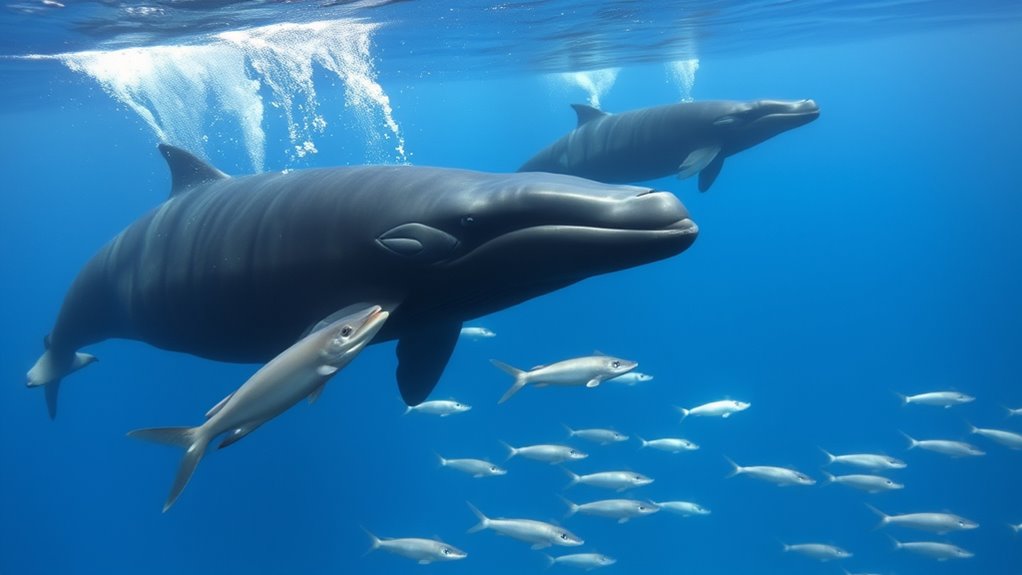
When pilot whales plunge into the deep ocean, they rely on echolocation to find their prey in the darkness. They emit high-frequency clicks and burst pulses, producing rapid “buzzes” during active prey pursuit. These underwater sounds bounce off squid, fish, and octopus, and the whales detect echo reflections to pinpoint prey location precisely.
This sophisticated prey detection system is crucial for deep-sea hunting, especially at depths exceeding 600 meters where light is scarce. Their foraging behavior depends on interpreting these echoes, allowing them to track and capture elusive prey in pitch-black waters. Researchers use D-tags to study these vocalizations, revealing how echolocation drives successful hunting.
Where Pilot Whales Hunt and How Habitat Affects Feeding
You’ll find pilot whales hunting mostly in deep offshore waters, often beyond 1,000 feet, where their preferred prey thrives. The habitat, especially areas near continental shelf breaks, shapes what they eat by influencing prey availability.
Understanding these hunting depths and habitats helps explain how their diet varies in different regions.
Preferred Hunting Depths
How deep do pilot whales dive to find their favorite meals? They hunt primarily at depths between 600 and 1,000 meters, where large squid like Architeuthis thrive. These preferred hunting depths lie in the dark, cold ocean depths, perfect for big prey.
You’ll notice their diving behavior involves high-speed, energetic dives lasting up to 16 minutes, enabling them to chase swift squid through deep water efficiently. Pilot whales rely on echolocation clicks and buzzes to locate and track prey, steering the vertical movement in the water column.
They dive deep during the night when prey distribution shifts, targeting larger prey size in nutrient-rich zones. This precise adaptation in hunting depths ensures they exploit prey effectively in the vast ocean depths.
Habitat Influence On Diet
Because pilot whales hunt mainly in deep offshore waters near continental shelves, their diet closely reflects the prey available in these habitats. Habitat features like water temperature, depth, and prey distribution directly influence their foraging behavior and diet composition.
You’ll notice pilot whales focus on shelf break and slope regions where prey availability—such as giant squid and mackerel—is high. Their foraging strategies adapt to prey dispersal patterns, prompting deep, high-speed dives to capture elusive prey.
Seasonal movements across oceanic regions further demonstrate habitat influence, as pilot whales follow shifting prey distribution to optimize feeding. Understanding how habitat shapes their diet helps explain the dynamic relationship between pilot whales and their environment, highlighting the critical role of habitat features in determining what and where they hunt.
Regional and Seasonal Variations in Pilot Whale Diet
Although pilot whales mainly hunt squid, their diet shifts depending on where they live and the season. You’ll notice diet variation driven by prey availability and regional differences in marine prey. During seasonal change, prey distribution alters, influencing what pilot whales eat.
- In the North Atlantic, they focus on deep-sea feeding of giant squid and fish like mackerel and cod.
- Tropical populations switch to smaller or different prey species as prey distribution changes year-round.
- Summer months often see increased squid consumption when prey is abundant at certain depths.
Understanding these shifts shows how pilot whales adapt their diet to regional and seasonal patterns, balancing squid and fish intake based on the local marine ecosystem’s offerings.
Pilot Whales’ Role in the Marine Food Web
When you think about the marine food web, pilot whales play an essential role as mid- to upper-level predators. You’ll find them hunting deep-sea squid and various fish prey like mackerel and cod, using echolocation and high-speed dives to capture prey species in dark ocean depths.
Acting as predators, pilot whales help control populations of squid and fish, maintaining balance in trophic levels. Their position links smaller marine organisms to larger marine mammals and apex predators, highlighting their importance in the ecosystem.
| Role | Details |
|---|---|
| Predator Type | Mid- to upper-level |
| Primary Diet | Deep-sea squid, fish prey |
| Hunting Method | Echolocation, high-speed dives |
| Ecological Impact | Controls prey species populations |
| Food Web Position | Connects trophic levels |
Frequently Asked Questions
Are Pilot Whales Aggressive?
You won’t find pilot whales aggressive most of the time; they’re social and curious. They only get defensive or display aggression when protecting themselves or their pod, rarely attacking others outright in the wild.
What Do Pilot Whales Feed On?
You’d think pilot whales feast on an ocean’s worth of squid—they mainly hunt giant squid, octopus, and fish like mackerel. Using echolocation, they dive deep and chase prey with lightning speed, staying submerged for minutes.
Are Pilot Whales Larger Than Orcas?
No, pilot whales aren’t larger than orcas. You’ll find orcas can reach up to 30 feet and weigh over 6 tons, while pilot whales max out around 24 feet and 6,600 pounds, making orcas considerably bigger.
How Intelligent Are Pilot Whales?
You might think pilot whales are just big sea creatures, but they’re incredibly intelligent. They use echolocation, recognize individuals, communicate with unique calls, and adapt behavior, showing complex social skills and problem-solving abilities you’d expect from smart mammals.
Conclusion
You’ll find pilot whales patiently pursuing prey, perfectly pairing powerful echolocation with precision hunting. Whether short- or long-finned, they feast on fish and squid, shifting their selections seasonally and swimming through shifting seas.
Their role ripples through the marine domain, balancing bustling food webs beneath blue waves. So, next time you think of these mysterious mariners, remember their rhythmic, relentless hunt, harmonizing with the heartbeat of the hidden ocean world.
In the wild, pilot whales eat a diet that primarily includes fish and squid, making them key players in the marine ecosystem. Their hunting strategies and prey choices are vital to maintaining the balance in oceanic food webs.