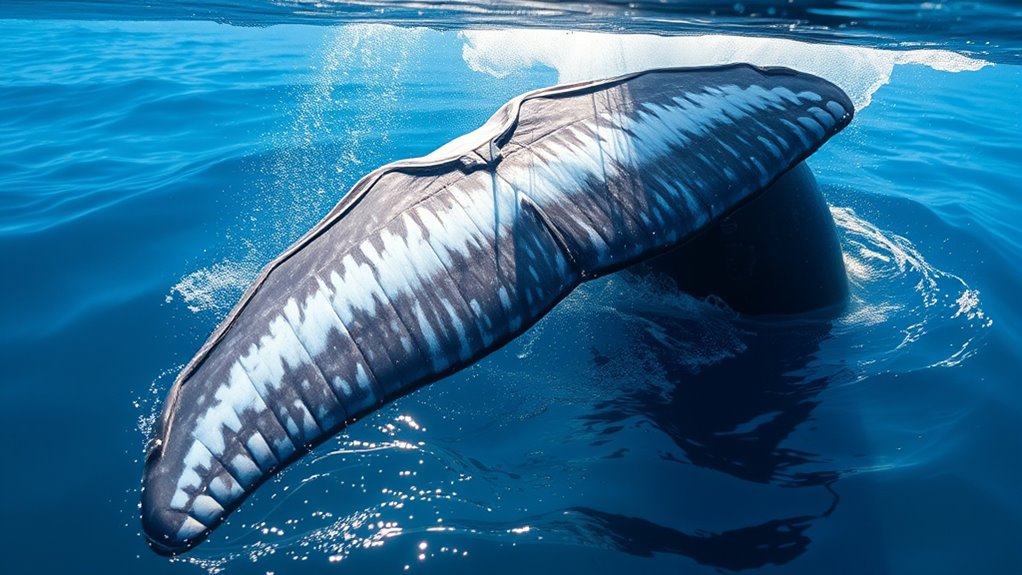
What Is a Whale Fluke?
A whale fluke is the large, flat tail fin you see when a whale lifts it out of the water. This powerful fluke helps the whale swim efficiently and dive deeply by pushing water with strong, up-and-down motions.
Understanding the whale fluke is key to learning how these majestic creatures navigate the ocean.
Each fluke has unique patterns and scars, almost like fingerprints, which scientists use to identify and track individual whales. These markings tell stories of their lives and challenges.
Keep exploring to uncover how these amazing tails reveal so much about whales’ journeys.
Whale Flukes: Definition and Importance
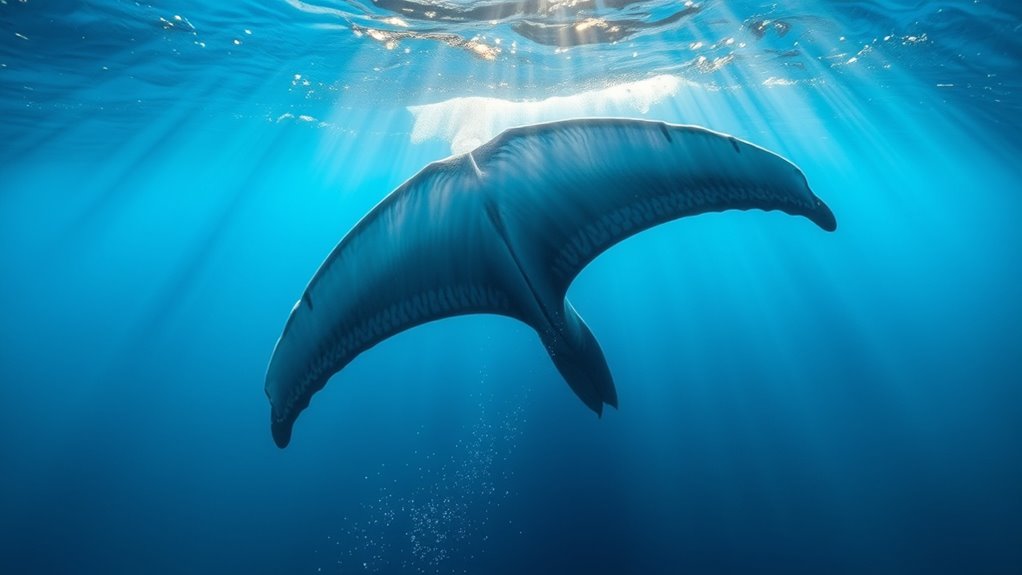
What makes a whale’s fluke so essential? Whale flukes are the large, powerful tail fins that extend horizontally from a whale’s body. They play a crucial role in the whale’s life, not just as a tool for movement but as a unique identifier.
When you look at the underside of a whale’s fluke, you’ll notice distinct patterns and scars that researchers use to recognize individual whales. These flukes can be enormous—some species have tails up to 18 feet across! Besides being a signature feature, whale flukes are often raised and displayed during behaviors like diving or slapping the water, signaling different actions or communication.
Understanding whale flukes helps you appreciate just how vital they are to a whale’s identity and survival.
How Whale Flukes Help Whales Move and Dive
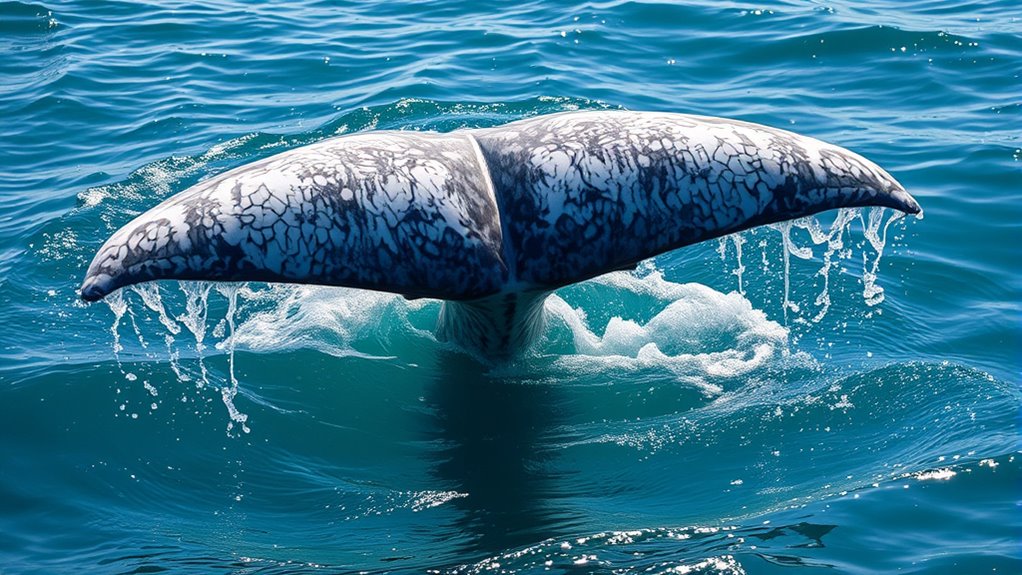
Although you might not always notice them, whale flukes provide the powerful thrust that lets whales move swiftly and plunge deep. These muscular tail fins generate the up-and-down motion necessary for propulsion and controlling direction underwater. When you watch whales, especially a humpback whale fluke rising before a dive, you’re seeing a signal that the whale is about to well dive into the depths.
Whale flukes power swift movement and deep dives through strong, rhythmic tail motions underwater.
Here’s how flukes help:
- They push water downward, giving whales the force to accelerate and dive deeply.
- Their size and shape allow efficient movement through complex marine environments.
- Whales tail movements help them navigate and maintain balance underwater.
Whale flukes are also used to identify individual whales during whale watching, helping researchers create new accounts of marine mammals worldwide.
What Makes Each Whale Fluke Unique?
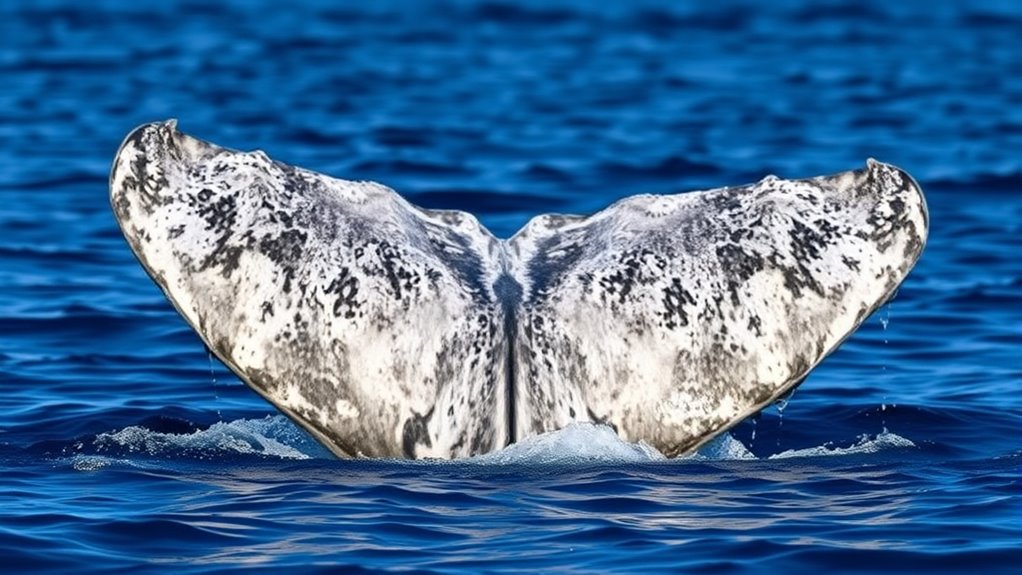
Because no two whale flukes share the same pattern, you can think of each one as a natural ID card. You’ll notice unique pigmentation of black, white, and gray, much like a fingerprint. Scars, notches, and deformities on the trailing edge add even more distinction.
The shape and size of the lobes and tips vary, making each fluke unmistakable. Barnacle embedment and predator rake marks create additional unique features.
Here’s a quick look at what makes each fluke unique:
| Feature | Description |
|---|---|
| Pigmentation | Black, white, and gray patterns |
| Physical Marks | Scars, notches, deformities |
| Shape Variations | Lobes and tips differ in size/shape |
Together, these traits ensure every whale fluke stands out.
How Scientists Use Fluke Patterns to Track Whales
You can see how the unique patterns on each whale’s fluke act like a fingerprint, helping scientists identify individual whales. By cataloging these patterns in databases, researchers track whales over time and across vast oceans.
This method also reveals migration routes, giving us valuable insights into their movements and habits.
Unique Identification Patterns
How do scientists keep track of individual whales across vast oceans? They rely on the unique patterns found on the underside of each whale’s fluke. Just like a human fingerprint, no two flukes are alike.
You’ll notice three key features that make each fluke unique:
- Pigmentation patterns — variations in color that create distinctive designs.
- Scars and notches — marks from encounters or injuries that add individuality.
- Shape and contour — the outline and edges that differ from whale to whale.
Scientists capture high-resolution photos of these flukes and use pattern recognition software to match images from different sightings. This method helps track whale movements, age, and health over time, giving you a deeper understanding of these majestic creatures.
Cataloging Individual Whales
A whale’s fluke holds the key to identifying it across vast oceans. When you look at the underside, you’ll notice unique black and white pigmentation patterns, along with scars, notches, and deformities that act like natural fingerprints. Scientists photograph these flukes and upload the images to databases like Happywhale, where each whale’s pattern is cataloged for future reference.
By comparing fluke photos from different sightings, you can confirm if it’s the same whale returning. This method provides a non-invasive and accurate way to monitor whale populations over time, helping researchers track individual whales without disturbing them.
Cataloging flukes not only supports conservation efforts but also deepens our understanding of whale behavior and population dynamics.
Tracking Migration Routes
Tracking whale migration routes relies heavily on the distinctive patterns and scars on their flukes. You can see how scientists photograph and catalog these unique markings to identify individual whales and follow their journeys across oceans.
By comparing images over time, researchers detect changes in pigmentation and scars that reveal movement between populations. They also track migration timing and routes to breeding and feeding grounds. Additionally, habitat use patterns provide valuable information that informs conservation efforts.
Projects like Happywhale compile extensive photo databases, allowing you to track whales without disturbing them. This non-invasive method helps scientists understand migration on a global scale, monitor whale health, and protect critical habitats.
Common Injuries on Whale Flukes and Their Impact
Although you might not notice at first glance, whale flukes often bear scars and deformities from encounters with fishing gear, boat strikes, or predators like killer whales. These injuries include rake marks from killer whale teeth and circular scars from barnacle embedment, which can affect the whale’s skin and overall health.
You may also see asymmetrical lobes or missing portions caused by previous trauma or developmental issues. Such damage can reduce a whale’s swimming efficiency, making it harder for them to move through water.
Additionally, these scars serve as valuable indicators of a whale’s health and life history, helping researchers understand the challenges the whale has faced. Paying attention to these marks reveals much about the individual’s survival journey.
How You Can Support Whale Conservation
How can you make a real difference in protecting whales? Start by taking simple, impactful actions that support conservation efforts.
- Join eco-friendly whale watching tours that fund research and protection programs, giving you a firsthand look at these majestic creatures while helping their survival.
- Donate to organizations like the Oceanic Society, which finance vital habitat preservation, rescue missions, and scientific studies.
- Advocate for marine protected areas and choose sustainable seafood to reduce threats like fishing gear entanglement and habitat destruction.
Frequently Asked Questions
What Does It Mean When a Whale Flukes?
When a whale flukes, it means it’s about to dive deep or travel far. You’ll notice its tail lift above water, signaling a big dive or change in movement.
This behavior often occurs during feeding or migration. The raised tail, or fluke, is a clear sign that the whale is preparing for a significant shift in its activity or location.
What Are Whale Flukes Used For?
Whale flukes help you propel through water with powerful strokes, dive deep, steer smoothly, and maintain your position.
You also raise them as signals or before diving, using these strong paddles to navigate and communicate.
Do Whales Let People Remove Barnacles?
You won’t usually get a whale to let you remove barnacles since it stresses them and risks injury.
Most barnacles stay because they’re part of the whale’s natural ecosystem and don’t harm it.
Why Is a Whale Tail Called a Fluke?
You’d think a whale’s tail is as powerful as a rocket engine!
It’s called a fluke because its broad, flat shape bends and folds, propelling whales through water with incredible strength and grace.
Conclusion
Now that you know a whale’s fluke is like its fingerprint, you can see how these powerful tails tell stories of deep ocean journeys and survival. Every unique pattern is a silent song, helping scientists follow their path through vast blue highways.
By supporting whale conservation, you become part of that song, protecting these majestic dancers of the deep. Ensuring their flukes keep painting the waves for generations to come highlights the importance of preserving these incredible marine giants.