What Is the Average Lifespan of a Whale?
You’ll find that whales live anywhere from 20 to over 200 years, depending on the species. Understanding the average lifespan of a whale is fascinating because it varies so much among different types.
Most whales, like blue and humpbacks, live around 70 to 90 years, while bowhead whales can live more than 200 years.
Their lifespan hinges on factors like genetics, environment, and human impacts. These elements play crucial roles in how long whales can thrive in the wild.
If you want to know how scientists figure out these ages and what helps whales live so long, there’s a lot more to explore about these incredible creatures.
How Long Do Whales Live on Average?
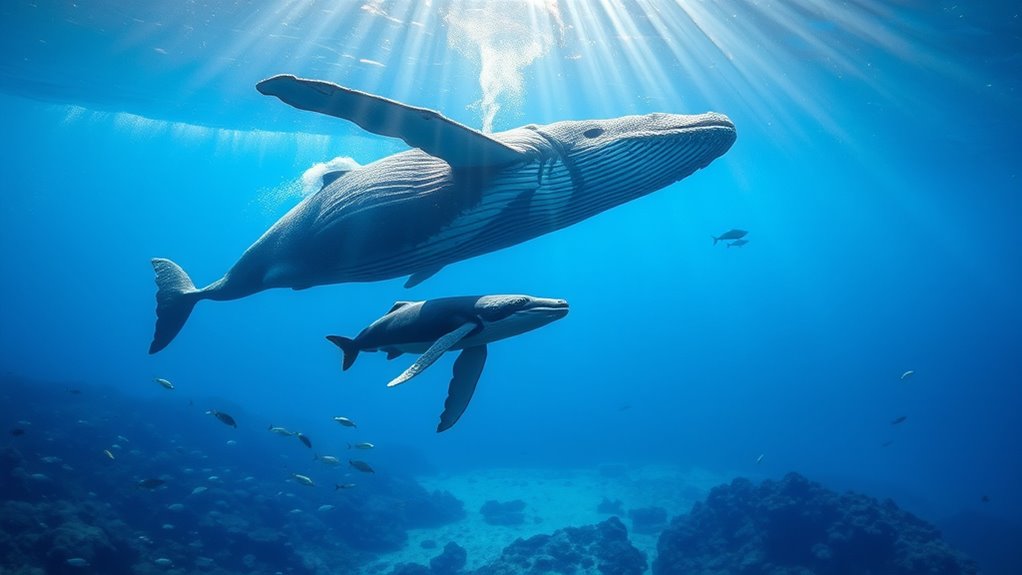
While whale lifespans vary widely across species, most live between 20 and 90 years. When you consider whales as a whole, their lifespan depends largely on the species. For example, blue whales typically live around 70 to 90 years, showing impressive longevity for such massive creatures.
Gray whales usually have a shorter lifespan, reaching about 55 to 70 years. Among whale species, the bowhead whale stands out with exceptional longevity, often living over 200 years, making it one of the longest-living mammals on Earth.
Understanding these general lifespan ranges helps you appreciate the diversity of whales and their remarkable adaptations for survival in the ocean. This overview gives you a solid picture of how long whales generally live before diving deeper into species-specific differences.
Whale Lifespan Differences by Species
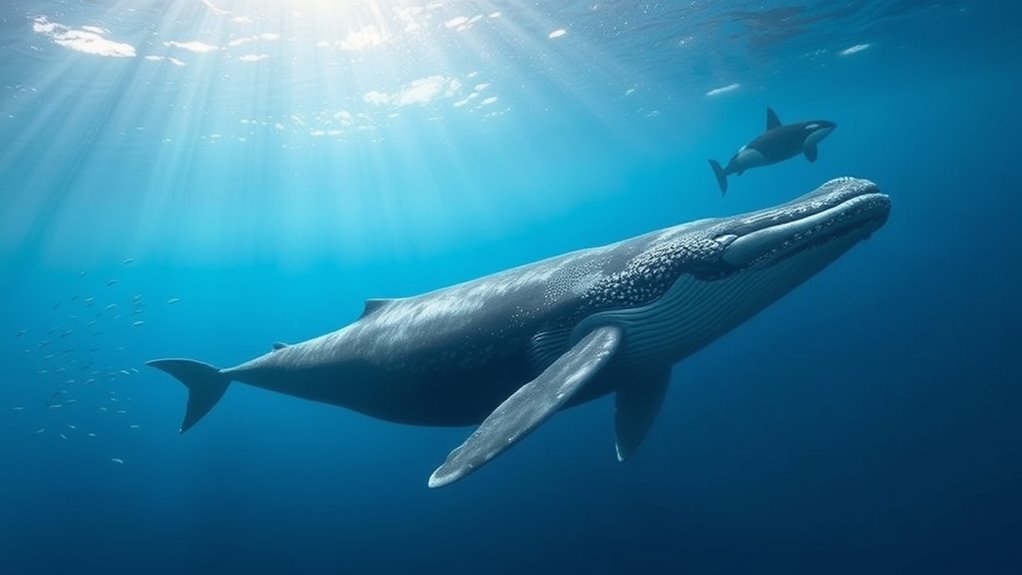
You’ll notice whale lifespans vary widely depending on the species. While blue and humpback whales live around 70 to 90 years, bowhead whales can exceed 200 years, making them the longest-living mammals.
Understanding these differences helps you appreciate the unique biology of each whale species.
Species Lifespan Range
How long do different whale species live? The lifespan range among whale species varies remarkably, reflecting diverse longevity and aging patterns. Blue whales typically live between 70 and 90 years, while bowhead whales stand out with their extraordinary lifespan, often surpassing 200 years.
Other whale populations, like humpback and orca whales, generally live around 80 to 90 years, with some differences between genders. Gray whales have a shorter lifespan, usually 55 to 70 years. Understanding these variations in whale species helps you appreciate the complexity of their aging processes and the factors influencing their survival.
Longest Living Whales
Different whale species show remarkable differences in lifespan, with some living far longer than others. When you explore the longest living whales, you’ll see how the lifespan of whales varies widely across species, impacting marine ecosystems and whale populations.
- Bowhead whales top the list, living over 200 years – the longest living whales known.
- Baleen whales like blue and humpback whales usually live between 70 and 90 years, with humpbacks occasionally surpassing a century.
- North Atlantic right whales face human threats, averaging about 22 years but can live up to 70 years in the wild.
- Sperm whales typically live 60 to 70 years, with some reaching over 80.
Understanding these differences helps you appreciate whale conservation’s role in sustaining marine ecosystems.
Longest-Living Whale Species and Their Secrets
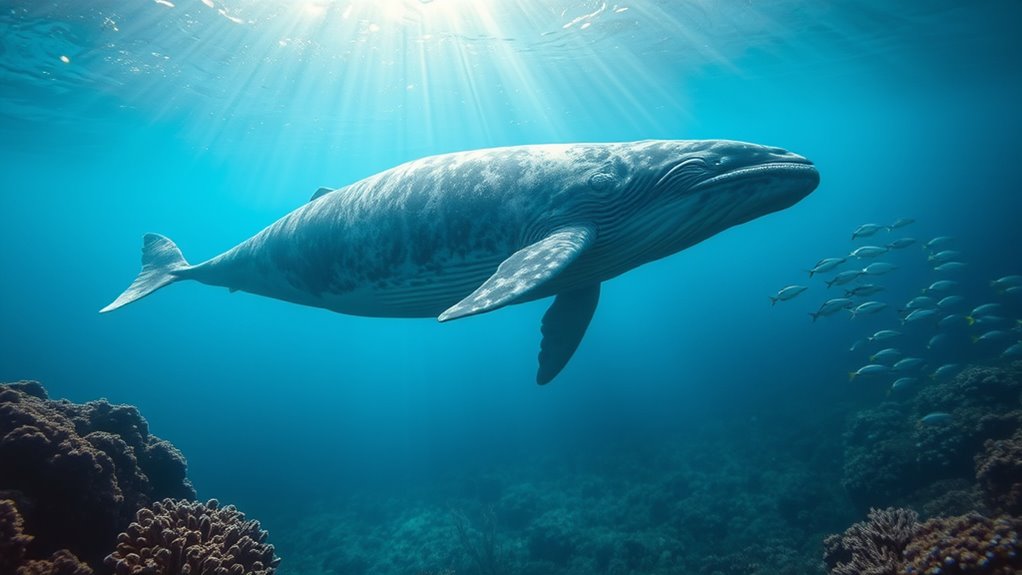
What allows some whales to live for centuries while others have shorter lifespans? Bowhead whales hold the record as the longest-living whale species, with individual whales confirmed to live beyond 200 years. These oldest known whales reveal secrets through chemical analysis and ancient harpoon tips embedded in their bodies.
Southern right whales also impress with lifespans up to 150 years, showing that whale longevity varies widely among species. Understanding the lifespan of whales helps you appreciate their resilience and vulnerability. Protecting whale populations becomes vital, as conservation efforts aim to support these long-living whale species.
How Scientists Determine Whale Age and Lifespan?
Understanding the remarkable lifespans of whales like the bowhead and southern right whales raises an important question: how do scientists figure out their ages with such accuracy? Whale age determination relies on several key techniques:
- Counting growth layer groups in earplugs or teeth, much like tree rings, reveals age.
- Long-term photo identification tracks individual whales over decades, aiding lifespan estimation.
- Chemical analysis of eye lens proteins provides age estimates, as these proteins change over time.
- Discovering ancient harpoon tips in bowhead whales verifies their extreme longevity.
Biological Factors Affecting Whale Lifespan
Although many factors influence how long whales live, their biological makeup plays an essential role in determining their lifespan. Genetic makeup largely sets the potential whale lifespan, with some species naturally living over a century. Biological factors like slow growth rates and low metabolism contribute to greater longevity, especially in bowhead and right whales.
You’ll also notice that reproductive strategies, such as age at sexual maturity and calving intervals, link closely to lifespan variation across species. Species differences in biological adaptations—like baleen filtering and surviving cold Arctic waters—help certain whales live longer. Overall, understanding these biological factors gives you insight into why whale lifespan varies so much, with genetic and physiological traits shaping how long these majestic creatures thrive in the wild.
Environmental Conditions That Influence Whale Lifespan
You’ll find that habitat quality plays a huge role in how long whales live, as degraded environments can limit their food and safety. Climate change also shifts ocean conditions, affecting where whales find prey and how well they can survive.
Understanding these factors helps you see why protecting their environment is key to extending whale lifespans.
Habitat Quality Impact
Because habitat quality directly affects the resources whales rely on, poor environmental conditions can substantially shorten their lifespan. When you consider how whales depend on clean water and abundant food, you realize that habitat quality is critical.
Here are four key ways environmental changes impact whale longevity:
- Pollution and poor water quality expose whales to harmful chemicals, causing health issues.
- Habitat degradation from coastal development reduces essential breeding and feeding grounds.
- Climate change lowers prey availability, affecting nutrition and survival chances.
- Noise pollution disrupts whale communication, increasing stress and mortality risks.
Climate Change Effects
How does climate change affect whale lifespan? Rising ocean temperatures disrupt migration patterns and breeding grounds, directly influencing whale longevity. As climate change alters sea ice coverage, species like bowhead whales face habitat loss, threatening their survival.
Ocean acidification harms the tiny prey whales rely on, reducing prey availability and weakening their nutrition. Additionally, severe storms and shifting ocean currents destroy habitats, further shortening whales’ lifespans. These environmental changes force whales to adapt to new conditions, often with limited success.
When prey becomes scarce or habitats degrade, you can expect a decline in whale health and longevity. Understanding these impacts helps highlight why addressing climate change is vital for preserving whale populations and ensuring they live out their natural lifespans.
Human Activities That Shorten Whale Lifespans
What role do human activities play in shortening whale lifespans? Human activities considerably reduce whale lifespans by causing direct harm and disrupting their environment. You should know these main threats:
- Ship strikes often kill whales before they reach their natural age.
- Entanglement in fishing gear injures whales and stops them from feeding or migrating properly.
- Pollution, including chemicals and plastic, accumulates in whales, harming their health over time.
- Noise pollution from ships and industry disrupts whale communication and navigation, increasing stress.
These impacts from human activities have cut whale lifespans drastically, emphasizing the urgent need for conservation efforts to protect these majestic creatures and extend their lives in the wild.
Conservation Efforts to Extend Whale Lifespans
While human activities have shortened whale lifespans, conservation efforts are making a real difference in reversing this trend. You’ll find that whale conservation relies heavily on marine protected areas (MPAs), which shield vital habitats from disturbances, directly supporting longer whale lifespans. Regulations targeting ship strikes and fishing gear entanglements reduce deaths, tackling major threats effectively.
Pollution reduction initiatives also improve ocean health, creating safer environments for whales. By practicing responsible whale watching, you help minimize stress, allowing whales to maintain natural behaviors essential for their longevity. Ongoing monitoring and research provide you with essential data, shaping informed conservation strategies that increase whale survival rates.
Together, these focused efforts help extend whale lifespans and promote healthier populations.
Why Understanding Whale Lifespan Matters for Ocean Health?
Because whales play a crucial role in ocean ecosystems, understanding their lifespan helps you gauge the health and stability of marine environments. Knowing about whale lifespan lets you:
Understanding whale lifespan is key to gauging ocean health and ecosystem stability.
- Monitor whale populations to detect environmental threats impacting ocean health.
- Support conservation by protecting long-lived species critical for reproduction and biodiversity.
- Assess marine biodiversity changes, revealing shifts in ecosystem balance.
- Gain insights into resilience and aging, helping predict how whales and oceans respond to stressors.
Frequently Asked Questions
Can Whales Live up to 200 Years?
Yes, bowhead whales can live up to 200 years thanks to their slow metabolism and Arctic environment.
You’ll find they’re the longest-living mammals, far outlasting most other whale species you might know.
What Animal Can Live up to 1000 Years?
Imagine a wise old tree standing for centuries—that’s like the Greenland shark, which can live close to 1,000 years.
You’ll find this ancient creature slowly steering Arctic waters, defying time with its incredible lifespan.
Can Whales Live for 500 Years?
No, whales can’t live for 500 years. The longest-lived bowhead whales reach over 200 years, but other species usually live around 70 to 90 years.
What Animal Can Live to Be 500 Years Old?
You might be surprised, but it’s the ocean quahog clam that can live over 500 years.
While whales don’t reach that age, this tiny clam quietly holds the record for incredible longevity beneath the waves.
Conclusion
Now that you know whales can live as long as a classic rotary phone has been ringing, you’ll see why their lifespan matters so much. These majestic creatures aren’t just ocean giants; they’re crucial to the health of our seas.
By understanding what affects their years—whether it’s biology, environment, or human impact—you can appreciate why protecting whales today means securing a better ocean tomorrow. Your awareness can truly make a difference in conserving these magnificent animals.
The average lifespan of a whale varies by species, but many live for several decades, some even over a century. This longevity highlights the importance of marine conservation and the urgent need to address threats like climate change and pollution.
Protecting whale populations ensures the balance of marine ecosystems, which benefits all life in the ocean. Understanding the average lifespan of a whale helps underline why their survival is vital for a healthy ocean environment.