What to Wear Whale Watching: Top 3 Clothing Tips
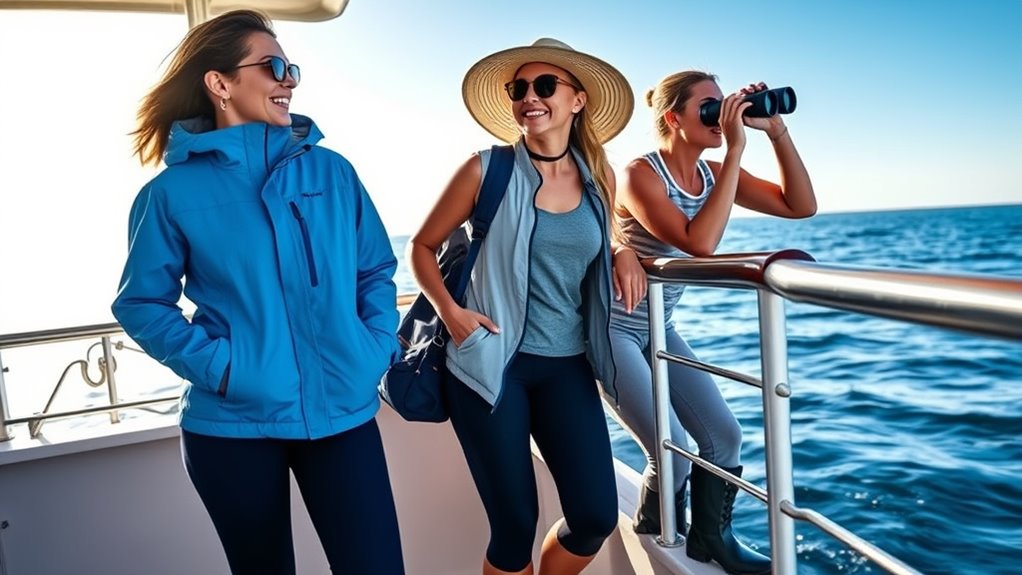
When you go whale watching, dressing appropriately is key to staying comfortable and safe. Always dress in layers so you can easily adjust to changing weather conditions.
Start with a moisture-wicking base layer, add a warm fleece, and top it with a waterproof, windproof jacket.
Wear waterproof pants and shoes with non-slip soles to stay dry and steady on wet decks.
Also, bring waterproof accessories like gloves or hats for extra protection.
Ready for tips on staying comfortable and safe during your adventure? Keep exploring to find out more.
Dress In Layers For Whale Watching Weather
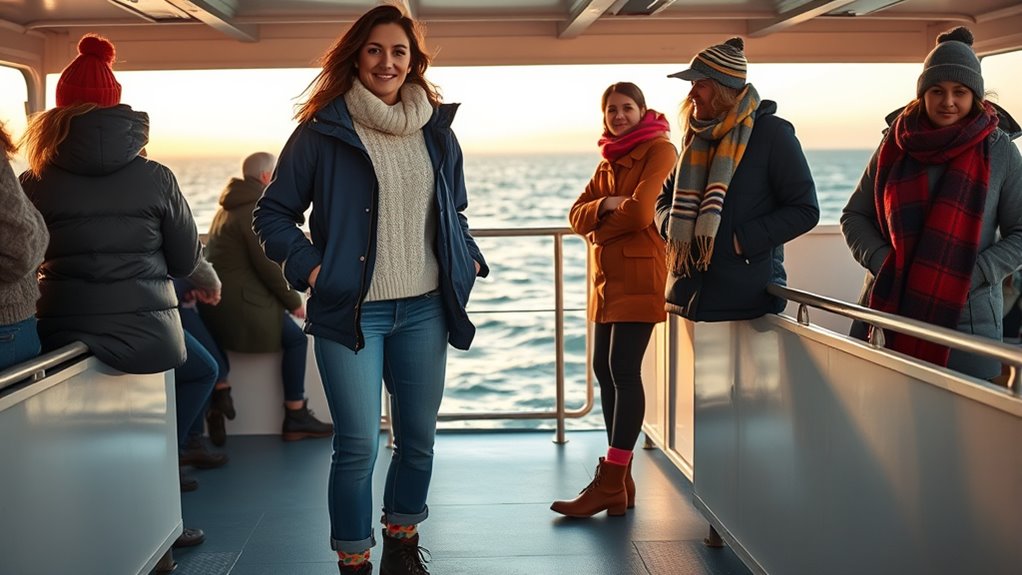
Because weather conditions can change quickly during your whale-watching trip, dressing in layers helps you stay comfortable and prepared. Start with a moisture-wicking base layer that keeps sweat off your skin, preventing chills when the wind picks up.
Next, add an insulation layer like a fleece or hoodie to stay warm as temperatures drop. On top, wear a waterproof outer layer—such as a rain jacket—that shields you from splashes and rain while also blocking the wind.
Layering clothing this way lets you adjust easily as weather conditions fluctuate, peeling off or adding layers to maintain comfort. Don’t forget a windproof jacket, especially if you expect breezy conditions.
Wear Waterproof And Windproof Clothing For Whale Watching
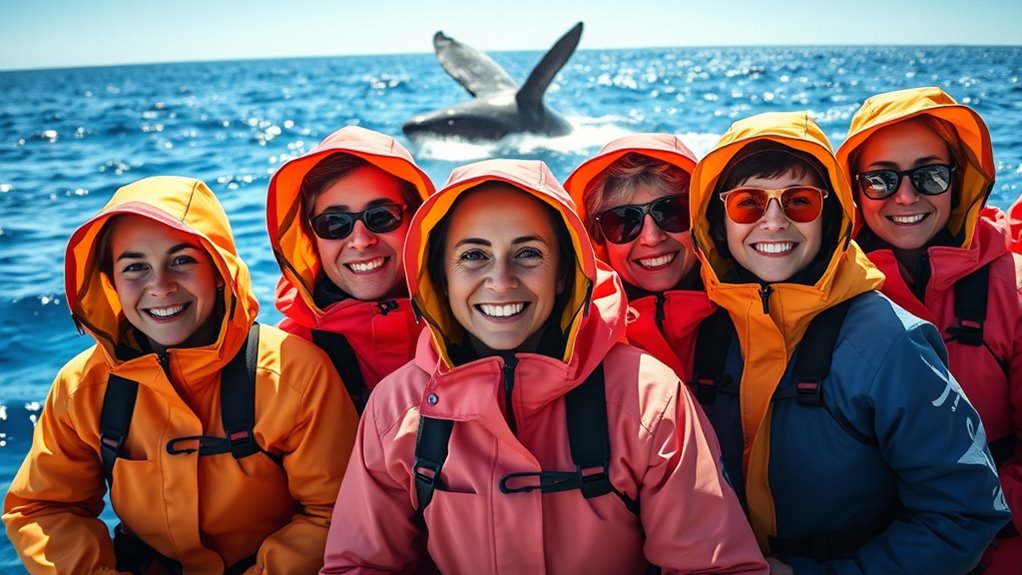
Once you’ve layered your clothing to stay warm, it’s important to make certain those layers can withstand wet and windy conditions out on the water. To guarantee moisture protection and wind chill protection during whale watching, focus on these essentials:
- Wear waterproof jackets with hoods paired with thermal basewear underneath for effective rain gear and warmth.
- Choose windproof outdoor pants or waterproof pants to block wind and water spray.
- Opt for waterproof footwear that offers boat deck grip to keep your feet dry and stable.
- Use waterproof accessories like hats and gloves to shield against moisture and wind.
Choose Comfortable, Non-Slip Shoes For Wet Decks
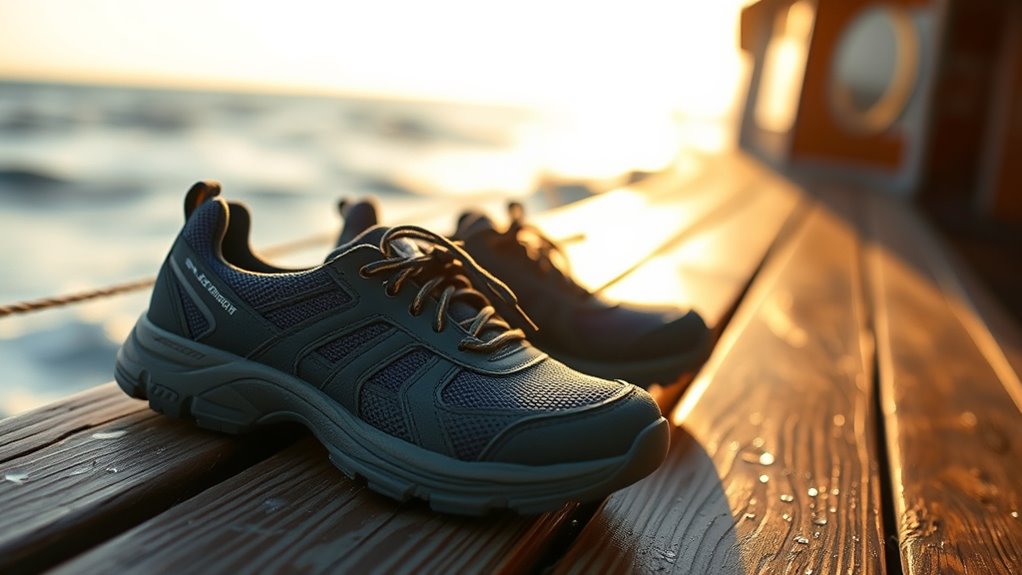
When you’re out on a boat for whale watching, choosing shoes with non-slip rubber soles is essential to keep you steady on wet, slippery decks. Opt for non-slip shoes like sneakers or lightweight hiking shoes that offer excellent grip and stability. Avoid sandals or flip-flops, as they lack traction and increase the risk of slipping.
Your footwear should be closed-toe to protect your feet from bumps and wet conditions. Waterproof shoes are a smart choice to keep your feet dry and comfortable throughout the trip. Make sure your shoes fit well to prevent discomfort during long periods of standing and walking on boat decks.
Prioritize comfort and safety to fully enjoy your whale-watching adventure without worrying about slipping or sore feet.
Frequently Asked Questions
How Should I Dress for Whale Watching?
You should dress in layers, including a moisture-wicking base, insulating middle, and waterproof outer shell. Wear sturdy, non-slip shoes, a waterproof jacket with a hood, and bring warm accessories plus sun protection for comfort.
What Shoes Should I Wear When Whale Watching?
About 70% of slips on boats happen due to improper footwear. You should wear flat, closed-toe shoes with rubber soles, like sneakers or lightweight hiking shoes.
They’ll give you grip, stability, and comfort on wet decks.
What Pants to Wear When Whale Watching?
You should wear long, windproof pants made of waterproof or fleece-lined material. Avoid shorts and lightweight fabrics. Choose flexible, quick-drying pants with thermal leggings underneath if it’s cold or windy for maximum comfort and protection.
Is It Cold When You Go Whale Watching?
You won’t exactly need a swimsuit and flip-flops—it’s pretty chilly out there. Expect wind, spray, and temperatures dropping 10-20°F cooler than land.
Conclusion
When you dress in layers, wear waterproof gear, and choose non-slip shoes, you’re not just preparing for whale watching—you’re embracing whatever surprises the sea throws your way.
Funny how the same outfit that keeps you warm and dry also helps you stay steady when the deck gets slippery.
By gearing up right, you’ll focus more on the magnificent whales rather than the unpredictable weather, making your adventure both safe and unforgettable.
Remember, choosing the right clothing for whale watching is key to enjoying the experience fully. Proper layers, waterproof gear, and sturdy, non-slip shoes ensure comfort and safety throughout your trip. So, when planning your whale watching outfit, prioritize these essentials to make the most of your adventure.