
Best Times to Whale Watch in Alaska
You’ll find the best whale watching in Alaska from May through September, with June and July offering your highest chances to spot humpbacks, gray whales, orcas, and blue whales. Gray whales migrate early in spring, while blue and humpbacks feed most actively in summer. Belugas peak in July and August.
Choosing tours during these months and calm days boosts your chances dramatically.
Stick around to uncover which spots and species you won’t want to miss.
When Is the Best Time for Alaska Whale Watching?

If you want to catch the best whale watching experience in Alaska, plan your trip between May and September. This period marks the peak whale watching season, offering the best time to see a variety of whale species. Humpback whales arrive for feeding during these months, while orcas migrate northward, increasing your chances of whale sightings.
Early in this window, from March to May, gray whales migrate through Alaskan waters, making spring a good time as well. An Alaska cruise during this season maximizes your opportunities to witness whale migration firsthand. Whether you choose early summer or later in the season, you’re sure to experience incredible whale activity, making May through September the ultimate timeframe for memorable whale watching in Alaska.
Why Summer Is the Best Season for Whale Sightings in Alaska

While May through September offers excellent whale watching opportunities in Alaska, summer stands out as the prime season for spotting these magnificent creatures. During summer, from June to August, you’ll enjoy the longest daylight hours, giving you more chances for whale sightings.
Whales migrate to Alaska’s nutrient-rich waters in summer to feed, leading to peak activity in June and July. You’ll witness spectacular whale behavior like breaching and feeding as they take advantage of abundant food sources such as krill and herring.
Plus, summer’s calm seas and clear waters improve visibility, making it easier to spot humpbacks, orcas, and other species. If you want the best whale watching experience, summer in Alaska is when whale behavior is at its most active and visible.
How Whale Migrations Affect When and Where to See Them
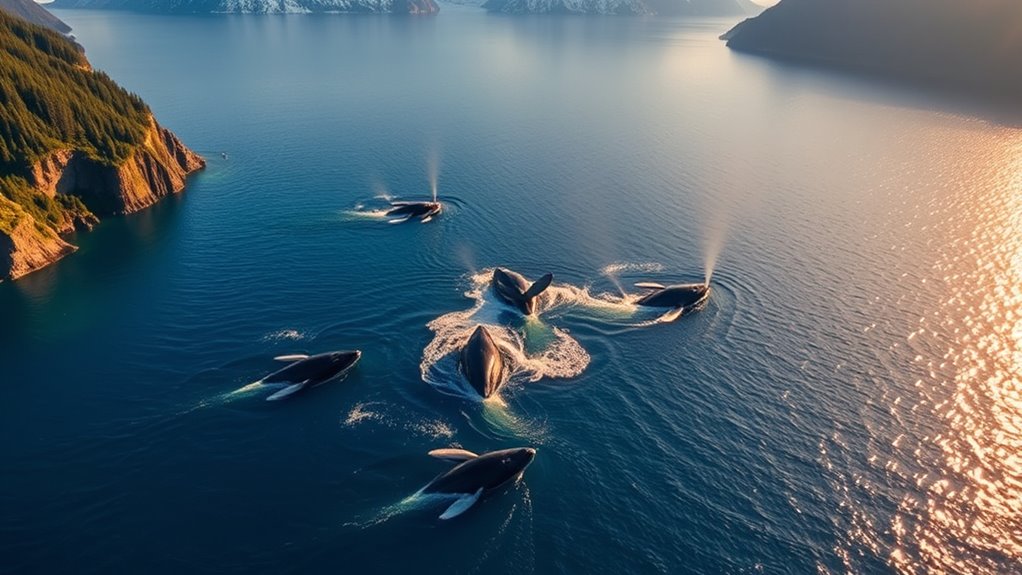
You’ll notice whale sightings change throughout the year because whales follow seasonal migration patterns tied to feeding and breeding. Knowing when and where different species move helps you pick the best spots and times to watch them.
For example, humpbacks and grays show up in spring and peak in summer, while orcas are more active along the coast during warmer months.
Seasonal Migration Patterns
Because whale migrations follow seasonal patterns, knowing when and where to watch them in Alaska can greatly boost your chances of sightings. Most whale species migrate north from tropical breeding grounds to Alaska’s nutrient-rich feeding grounds between April and June. You’ll see humpback whales arriving from May to September, with peak sightings in June and July.
Gray whales start migrating in mid-March, reach feeding grounds by April, and leave by October. Although orcas are around year-round, they’re especially active during spring and summer as they follow prey migration. Blue and minke whales also appear from April through September, aligning with the summer feeding season.
Understanding these seasonal migration patterns will help you plan the best time to catch a glimpse of these majestic creatures.
Feeding Grounds Timing
The timing of whale migrations directly influences when and where you can spot them in Alaska’s feeding grounds. Most whales arrive between April and September, following their seasonal feeding patterns. Gray whales make their migration from Mexico, arriving in Alaska’s feeding grounds from March to May.
Humpbacks show up around May and stick around through September, feeding on krill and small fish. Blue and minke whales visit the nutrient-rich waters mainly during summer for feeding. Orcas, though present year-round, become more active in spring and summer as they track prey along the coast.
Regional Whale Movements
While whale migrations vary by species, understanding their regional movement patterns helps you know the best times and places to see them in Alaska. Gray whales follow a long migration route, arriving in Alaska waters from mid-March to April for seasonal feeding. Peak sightings of humpbacks occur in June and July, aligning with their spring arrival and fall departure.
Orcas are most active from May to June, while blue whales appear mainly in summer.
- Gray whales’ migration route spans about 12,000 miles annually.
- Humpbacks feed and breed between May and September.
- Orcas hunt actively in spring and early summer.
- Blue whales frequent northern and eastern Alaska in summer.
Knowing these patterns guarantees you catch the best whale watching moments.
When and Where to See Humpback Whales in Alaska
If you want to catch humpback whales at their most active, plan your visit to Alaska between June and August. This period marks their peak feeding and migration, offering prime Alaska Whale Watching opportunities. You’ll find the best viewing time in hotspots like Kenai Fjords National Park, Juneau, Sitka, and Prince William Sound.
Humpback whales arrive around May and linger through summer, thriving in nutrient-rich waters with extended daylight. During these months, you can witness spectacular behaviors like breaching, feeding, and socializing. Kenai Fjords National Park stands out for its abundant marine life and accessible boat tours, making it a top choice to watch humpback whales in action.
For an unforgettable experience, target your trip during this vibrant season.
When and Where to Spot Orcas on Your Alaska Cruise
You’ll have the best chance to spot orcas from May to June as they migrate north along Alaska’s coast. Keep an eye out in top spots like the Inside Passage, Kenai Fjords, and Kodiak, where pods often hunt together.
Some areas like Juneau and Prince William Sound offer orca sightings year-round, so plan your cruise accordingly.
Orca Migration Patterns
Because orca sightings depend heavily on their migration patterns, knowing when and where to look can greatly enhance your Alaska cruise experience. Orca migration in Alaska varies by pod type and season, influencing your chances of spotting these majestic creatures during whale watching.
Resident orcas stick around year-round, especially near Juneau, Kenai Fjords, and Prince William Sound. Transient orcas migrate along southern and eastern coasts from spring to fall. Offshore orcas are less predictable but appear from late spring through early fall.
To maximize your orca viewing:
- Visit between May and June for peak sightings.
- Focus on coastal areas favored by resident orcas.
- Spot transient orcas hunting marine mammals along southern routes.
- Join dedicated whale watching tours for the best experience.
Top Orca Viewing Spots
While orcas can appear throughout Alaska’s coastal waters, your best chances to spot them come between May and June, when they migrate northward along rich feeding grounds. For prime whale watching, head to Prince William Sound, the Inside Passage, and Juneau, where orcas gather to feed on abundant prey. Kodiak Island and the Aleutian Islands also offer excellent viewing opportunities during this period.
Resident orca pods linger year-round in coastal waters, but sightings peak in spring and summer. Transient pods hunting seals and sea lions appear from May to August, adding excitement to your cruise experience. Booking dedicated whale-watching tours in these hotspots will maximize your chances of seeing orcas breaching, hunting, and socializing in Alaska’s stunning coastal environment.
When and Where to See Beluga Whales in Alaska
If you want to see beluga whales in Alaska, the best time to visit is between July and August. During these warm months, belugas gather in shallow, brackish waters, especially around Anchorage and the Turnagain Arm. This is prime whale-watching season for spotting these distinctive white whales.
You’ll enjoy their unique whistles and clicks as they feed on salmon and hooligan fish. To maximize your beluga-watching experience, consider visiting the Cook Inlet region, a hotspot for beluga sightings. Taking guided whale-watching tours can provide expert insight and enhance your experience.
Exploring the Turnagain Arm offers opportunities for close encounters with these fascinating creatures. Timing your trip for July and August when beluga activity peaks is key. This combination of location and timing guarantees a memorable beluga whale experience in Alaska.
Best Times and Places to See Gray and Blue Whales
When you visit Alaska from April through August, you’ll have excellent chances to spot both gray and blue whales during their seasonal migrations and feeding periods. The peak time for gray whales is April and May, as they migrate from Baja California to Arctic waters. You’ll find them closer to shore, making whale watch excursions especially rewarding in these months.
Blue whales, the largest animals on Earth, are more commonly seen from June to August in northern and eastern Alaska, often in deeper offshore waters. Their sightings peak during calm summer days when they feed on abundant krill. For the best whale watch experience, plan your trip between April and August, focusing on nearshore areas early for gray whales and offshore locations later for blue whales.
Which Alaska Whale Species Are Most Active by Season?
Since Alaska’s whale species follow distinct seasonal patterns, knowing when each is most active can help you plan the perfect whale watching trip. Understanding whale activity by season ensures you catch the best moments of their behavior.
Here’s what to expect during seasonal whale viewing:
- Humpback whales peak from June to August, showing breaching and feeding.
- Orca whales are active year-round, with spring to early summer (May–June) as prime hunting and traveling times.
- Gray whales are most visible during their migration from April to June.
- Blue whales, though rarer, feed in northern Alaska’s waters mainly in summer.
How to Increase Whale Sightings With Tours and Excursions
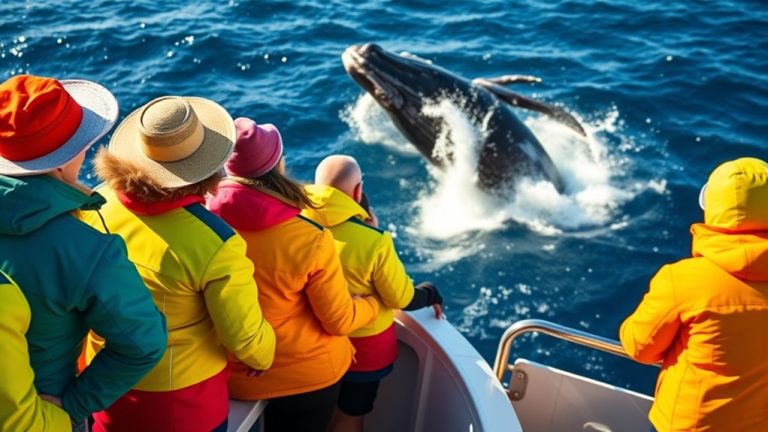
Understanding the seasonal activity of different whale species gives you a solid foundation, but joining dedicated whale-watching tours can dramatically boost your chances of spotting these magnificent creatures.
Opt for tours led by experienced guides and naturalists who know how to interpret whale behaviors and maximize whale sightings. Longer trips during peak whale activity months, like June and July, increase opportunities to see breaching and feeding pods.
Stay alert, especially on the starboard side, as whales can appear anytime.
| Tour Feature | Benefit | Best Time |
|---|---|---|
| Experienced Guides | Expert spotting & insights | Year-round |
| Longer Duration | More whale encounters | June – July |
| Multiple Stops | Diverse whale habitats | Peak whale activity |
| Naturalists Onboard | Behavioral explanations | Throughout the season |
Frequently Asked Questions
What Months Are Best to See Whales in Alaska?
You’ll have the best chance to see whales in Alaska from May through September, with peak sightings in June and July.
Humpbacks, orcas, grays, and other species are most active and visible during these months.
Where Is the Best Place to See Whales in Alaska?
You’ll find the richest stage for whale watching in Juneau and the Inside Passage, where nature’s giants dance gracefully. Seward and Kenai Fjords also offer breathtaking shows, making them prime spots for your unforgettable Alaska adventure.
Will I See Whales From My Cruise Ship in Alaska?
You might see whales from your cruise ship, but sightings aren’t guaranteed.
To boost your chances, book a dedicated whale-watching tour during peak months. Those tours get you closer and offer better views than the ship alone.
Is the Morning or Afternoon Better for Whale Watching?
Wondering if morning or afternoon’s better for whale watching? You’ll have more luck in the morning when whales feed and waters are calmer, but don’t rule out afternoons—sometimes orcas show up, and visibility can improve then.
Conclusion
If you plan your Alaska trip during summer, you’ll not only catch the stunning midnight sun but also the peak whale activity, making your sightings unforgettable. Coincidentally, the same warm months that bring humpbacks, orcas, and belugas together also offer the best weather for cruising.
So, pack your binoculars and camera—your perfect whale-watching adventure is waiting, aligned with nature’s timing and Alaska’s breathtaking beauty. Don’t miss out on the best times to whale watch in Alaska for an experience you’ll cherish forever.