Best Times to Whale Watch in Maine
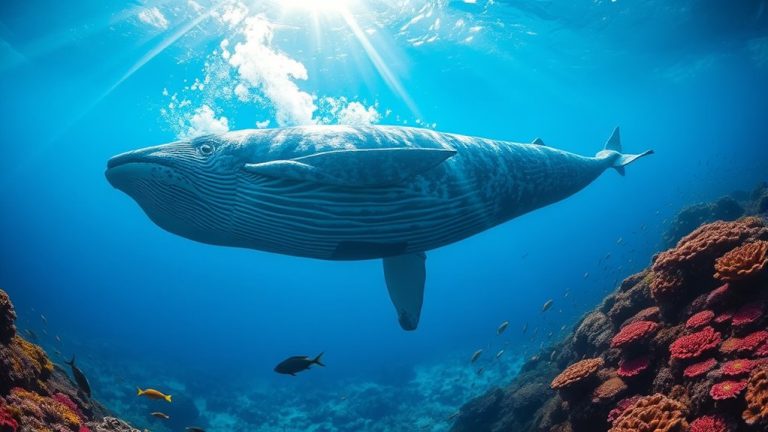
You’ll find the best time to whale watch in Maine is from late spring through early fall, especially May to September, when humpbacks, minkes, fin whales, and others migrate and feed along the coast. These months offer prime whale watching opportunities due to the abundance of marine life.
Summer provides calm seas and clear skies, making sightings easier and more enjoyable. If you want the best chances and know where to go, planning your trip during these months really pays off.
Keep exploring to discover the top spots and species you might see while whale watching in Maine. With the right timing and location, your experience will be unforgettable.
Best Times to Whale Watch in Maine
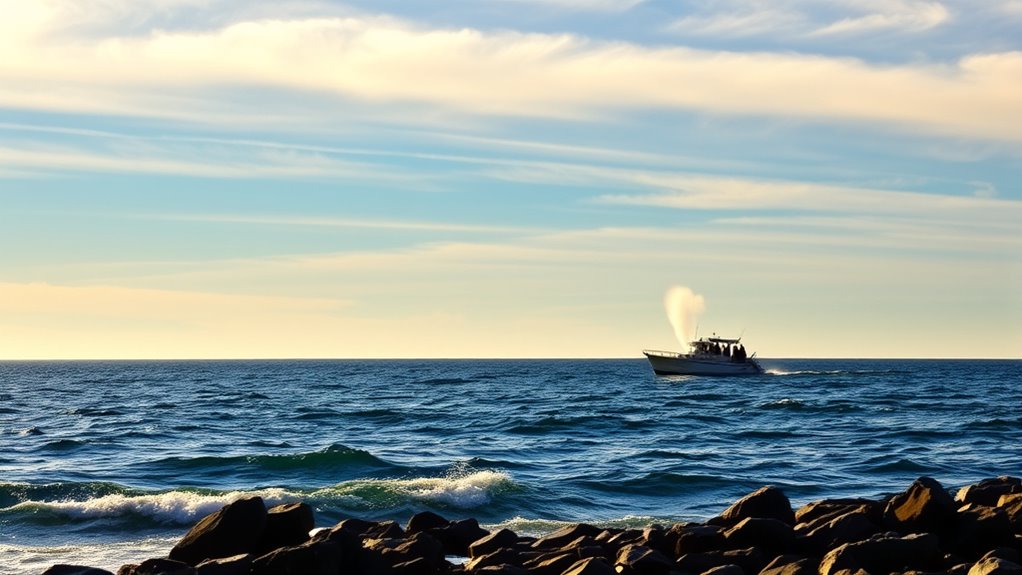
Although whale watching in Maine can be rewarding year-round, you’ll have the best chances of spotting humpback and minke whales between May and September. This period marks the peak whale watching season along the Maine coast when marine life is most active. The summer months offer the best time of year for clear skies and calm seas, increasing your chance of seeing whales.
During this time, numerous whale species feed and migrate, making sightings more frequent and diverse. While early spring still provides opportunities, it’s the warmer months that truly bring the coast alive with whale activity. If you want to maximize your experience and enjoy the rich marine life that Maine offers, planning your trip between late spring and early fall is your best bet.
Whale Species to Spot by Season in Maine
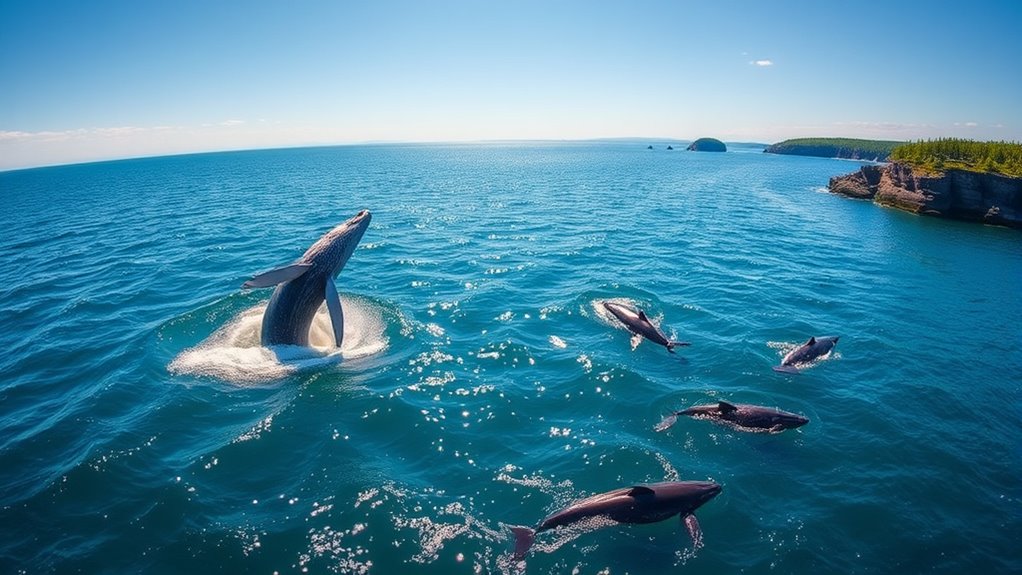
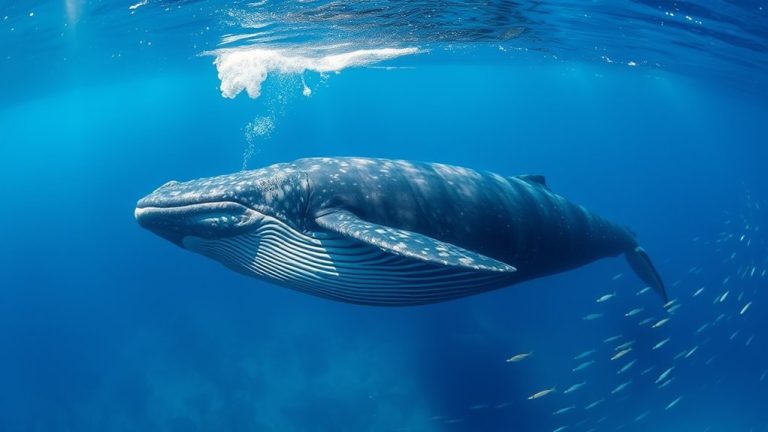
When you head out whale watching in Maine, you’ll notice different species appear depending on the season. Humpbacks and minkes stick around from late spring through early fall, while fin whales peak in early summer.
Keep an eye out in spring and fall for the rare North Atlantic right whales passing through during migration.
Seasonal Whale Sightings
Since Maine’s coastal waters attract different whale species throughout the year, you can plan your trips based on which whales you hope to see. From June to September, the peak season for whale sightings, you’ll spot humpback and minke whales actively feeding close to shore. Fin whales also appear mainly in June and July, often during their peak feeding times near the coast.
In spring and fall, you might catch glimpses of North Atlantic right whales as they follow their migration patterns to breeding grounds. Late summer and fall bring the rare sei whale to these coastal waters. By aligning your visit with these seasonal feeding behaviors and migration patterns, you’ll increase your chances of witnessing a diverse array of whale species in Maine.
Species Migration Patterns
If you want to catch Maine’s most iconic whales, timing your visit around their migration patterns is key. From April to November, several whale species follow seasonal migration routes to Maine’s rich feeding grounds. Humpback whales show peak sightings from June to September during their feeding season, while fin whales are most commonly seen between June and August.
Minke whales stick closer to shore from June to September, taking advantage of abundant prey. The North Atlantic right whales have two main migration periods: April to early June and September to November, often spotted during these seasonal migrations. Understanding these whale migration patterns helps you plan the best times to see each species, ensuring you don’t miss out on Maine’s incredible whale watching opportunities.
Top Whale Watching Locations in Maine
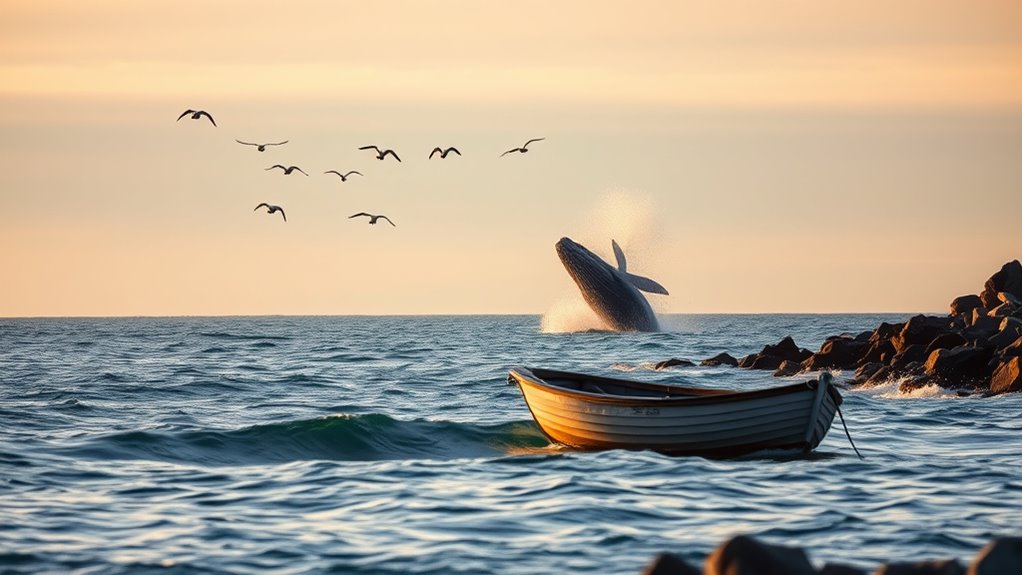
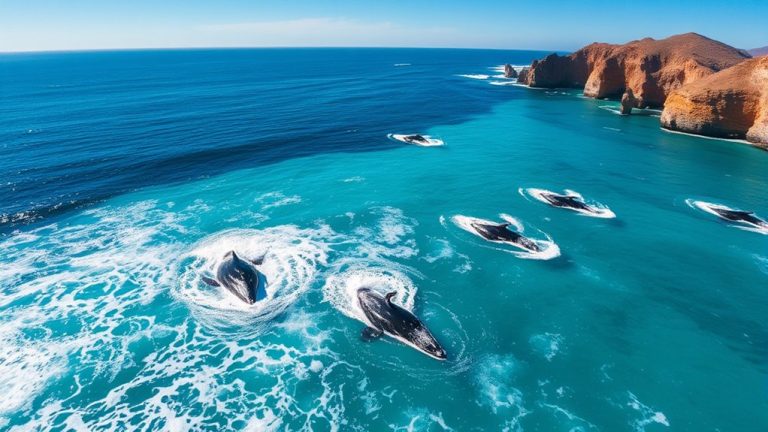
Although Maine offers numerous spots to catch whales, some locations stand out for their accessibility and frequent sightings. When you plan your whale-watching trip, focus on prime locations like Bar Harbor, Portland, and Boothbay Harbor. Each offers unique chances to spot marine creatures, especially during the peak season from May to September.
The Gulf of Maine serves as the central habitat, making coastal tours highly rewarding.
| Location | Highlights |
|---|---|
| Bar Harbor | Close to humpback feeding grounds |
| Portland Harbor | Accessible tours; minke and fin whales |
| Boothbay Harbor | Scenic views; multiple species sightings |
Choosing any of these spots boosts your chances of unforgettable whale sightings in Maine.
How Weather Affects Whale Watching Trips
Because weather plays a crucial role in your whale watching experience, you’ll want to choose calm, clear days for your trip. Calm sea conditions and low wind improve visibility, making it easier to spot whales. Rough seas and strong wind not only reduce your chances of sightings but can also compromise safety, sometimes causing trips to be canceled.
Rain and overcast skies tend to decrease whale activity near the surface, which affects how likely you are to see them. Checking the weather forecast before booking helps you pick the best day, ensuring better sea conditions and higher visibility. By paying attention to weather, you’ll enhance your chances of a safe, successful whale watching adventure in Maine.
Planning Tips for Your Whale Watching Adventure
Make sure you book your whale watching tour a few weeks ahead, especially during the busy summer months.
Plan for early morning or late afternoon trips to catch the most whale activity. Dress in layers and bring rain gear to stay comfortable no matter what Maine’s weather throws at you.
Booking and Timing
When you plan your whale watching adventure in Maine, booking your tour several weeks in advance during peak season—from June to September—can secure the best options and availability. Timing your trip for early morning or late afternoon increases your chances of spotting active whales.
Always check the weather and tour schedule ahead to avoid cancellations and guarantee smooth sailing. Consider visiting from late spring to early fall to align with whale migration patterns.
| Tip | Benefit |
|---|---|
| Book in advance | Ensures availability |
| Visit peak season | Maximizes whale sightings |
| Choose early morning | More active whale behavior |
| Check weather | Avoid cancellations |
| Review tour schedule | Plan your day effectively |
Preparing for Conditions
If you want to enjoy the best whale watching experience in Maine, preparing for changing weather and sea conditions is essential. Start by checking the weather forecast closely before your trip to ensure calm seas and clear visibility. Since Maine’s weather can be unpredictable, dress in layered, waterproof clothing to stay comfortable, especially during open boat tours.
Plan your timing carefully—early morning or late afternoon often offers the best whale activity. Because peak season runs from June to September, book your tour well in advance to secure your spot. Finally, maintain flexibility in your schedule. Weather shifts may require rescheduling or adjusting your plans, but this adaptability ensures you won’t miss out on the incredible whale watching adventure you’ve planned.
What to Expect on Maine Whale Watching Tours
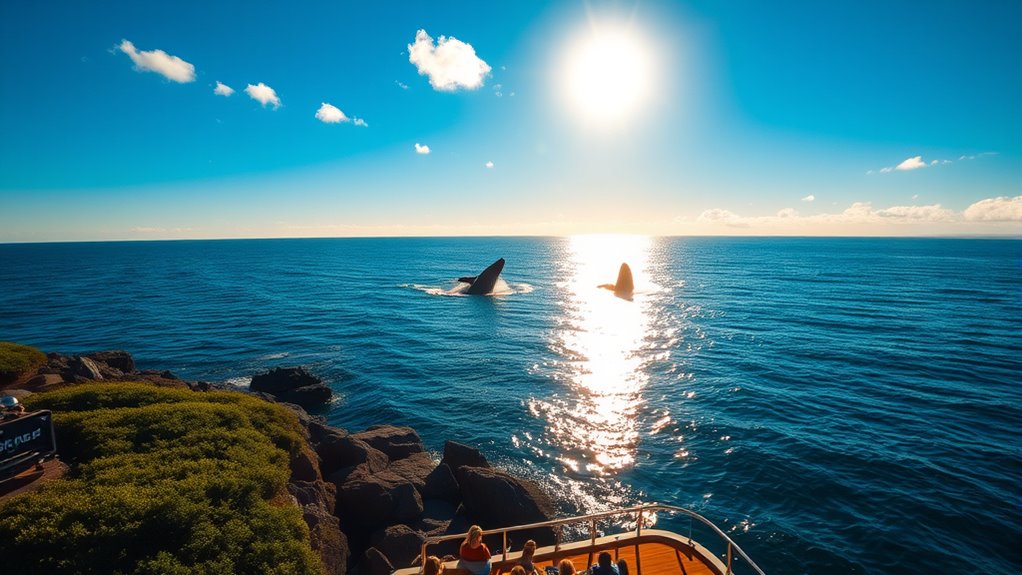
Although the tour lasts three to four hours, you’ll stay engaged as guides scan the waters for whale spouts, breaches, and tail slaps. Whale watching tours in Maine offer excellent chances of seeing humpback, minke, finback, and North Atlantic right whales, especially during the best seasons and peak months from June to September.
As you cruise, expect informative commentary about these marine creatures, their behaviors, and conservation efforts. Weather and sea conditions can change, so be prepared for choppy waters with proper gear to stay comfortable and safe.
Whether you’re a first-timer or experienced, Maine whale watching tours provide a thrilling opportunity to connect with nature and witness majestic whales in their natural habitat during the most favorable times of the year.
Frequently Asked Questions
What Time Are Whales Most Active in Maine?
Whales are most active in Maine during early mornings and late afternoons. You’ll want to head out between 8 a.m. and 4 p.m. when they feed and socialize most, increasing your chances of great sightings.
Is Morning or Afternoon Better for Whale Watching?
You’d think afternoon is better, but mornings actually win for whale watching.
You’ll catch calmer seas, clearer skies, and more active whales.
What Is the Best Month for Whale Watching in Bar Harbor, Maine?
August is the best month for whale watching in Bar Harbor, Maine. You’ll enjoy the most consistent whale encounters, great weather, and peak wildlife activity, making your experience both exciting and memorable during this prime time.
The conditions in August provide excellent opportunities to see a variety of whale species. The warm weather also makes boat trips more comfortable. This month is truly the highlight of the whale watching season in Bar Harbor.
Is There Good Whale Watching in Maine?
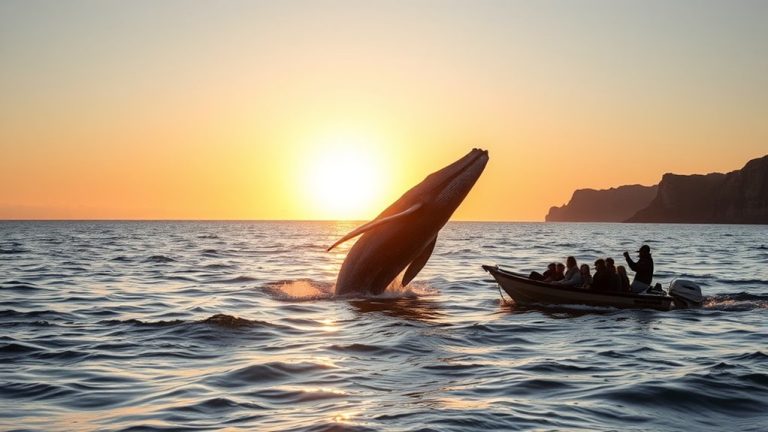
Imagine spotting a massive humpback whale breaching just feet from your boat.
Yes, you’ll find great whale watching in Maine, especially with guided tours that increase your chances of seeing these majestic creatures up close and personal.
Conclusion
Whale watching in Maine isn’t just a trip—it’s a breathtaking plunge into nature’s most majestic spectacle. No matter when you go, you’re practically guaranteed to witness giants of the sea performing their awe-inspiring dance. With the perfect timing, weather, and spots, your adventure will feel like you’ve stumbled upon a secret world where whales reign supreme.
So, grab your binoculars and get ready for a jaw-dropping experience you’ll never forget! To make the most of your visit, consider the best times to whale watch in Maine, when the chances of spotting these magnificent creatures are at their peak. Planning ahead ensures your whale watching tour in Maine is truly unforgettable.