Best Months for Whale Watching in Cabo San Lucas
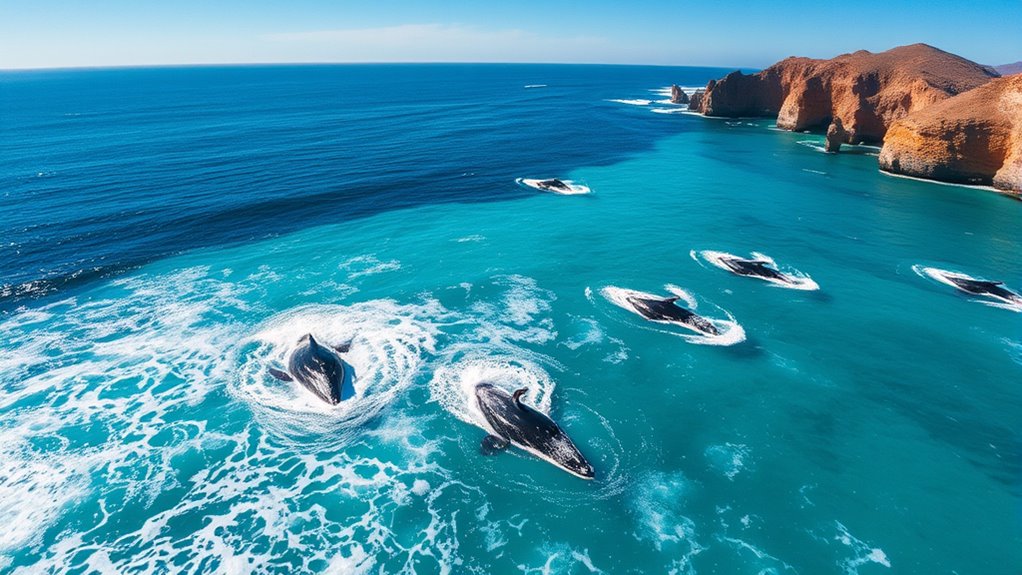
The best months for whale watching in Cabo San Lucas are January and February, when whale activity peaks and your chances of sightings are highest. This prime whale watching season offers incredible opportunities to see playful humpback calves and hear males singing complex songs.
The official whale watching season runs from December 15 to April 15. During this period, calmer weather and energetic whale displays make the early months especially ideal for visitors.
Keep exploring to learn more about the species you might encounter, their behavior, and how weather conditions can shape your whale watching experience in Cabo San Lucas.
Whale Watching Season in Cabo: When It Starts and Ends
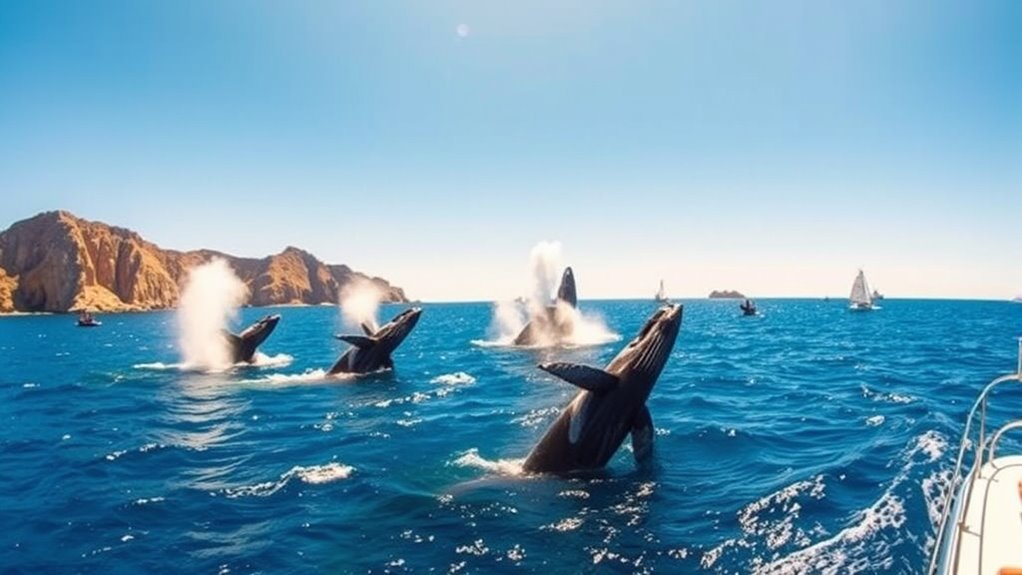
Although whale sightings can occasionally happen outside these times, the official whale watching season in Cabo San Lucas runs from December 15 to April 15, as set by SEMARNAT. During this whale watching season, humpback whales and other species arrive in the area, bringing vibrant whale activity.
You’ll notice that whale sightings pick up markedly in mid-December, with the animals lingering until mid-April. The peak months, especially January and February, offer the highest chances to witness these majestic creatures up close.
If you’re planning your trip, aiming for these core months maximizes your opportunity to catch exciting whale behavior. While you might see whales early in December or late April, sticking within the official whale watching season in Cabo San Lucas ensures the best experience.
Best Months for Whale Watching and Why They Matter
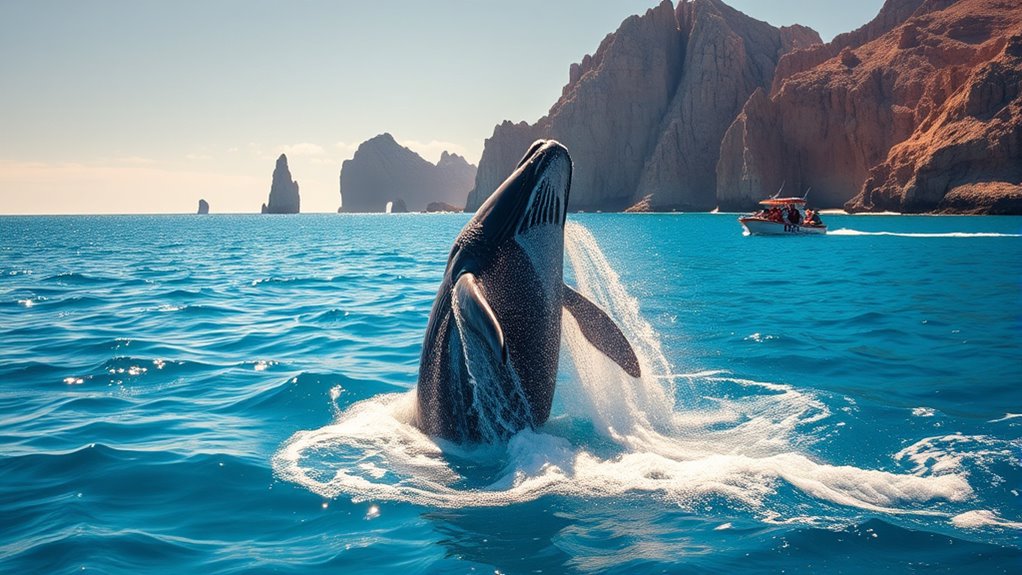
If you want the best whale watching experience in Cabo, plan your trip for January and February when whale activity peaks. This is when you’ll see humpback whales calving and showing off playful behaviors, especially curious calves near the boats.
Timing your visit during this migration season means you’ll catch these unforgettable moments at their most vibrant.
Peak Whale Activity
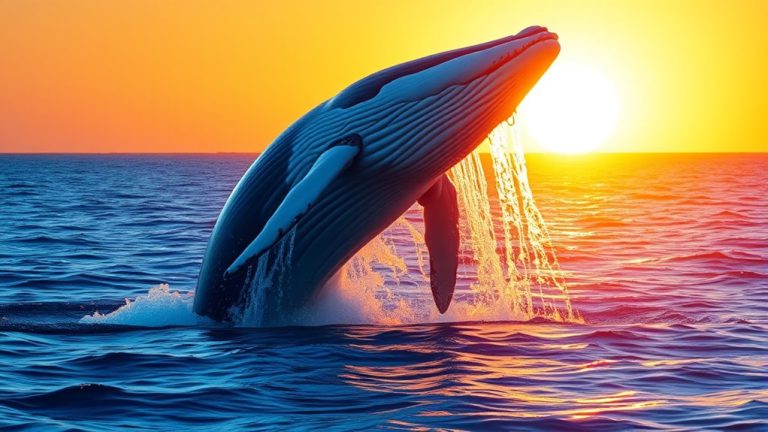
When you visit Cabo San Lucas in January and February, you’ll catch the peak of whale activity, making it the ideal time for whale watching. During this whale season, humpback whales fill the waters with breaching and singing, boosting your chances of exciting whale sightings. Whale watching tours in these months maximize your opportunity to see these majestic creatures up close.
Here’s why January and February stand out for peak whale activity:
- Humpback whales display playful behaviors, making sightings more dynamic and memorable.
- Gray whales arrive near shore, increasing encounter rates during this period.
- The migration pattern concentrates whale populations in Cabo, enhancing visibility.
Choosing these months means you’re timing your trip perfectly for unforgettable whale encounters.
Calving Season Highlights
Since late December through January marks the peak calving season, you’ll find humpback whales gathering in shallow, protected lagoons near Cabo San Lucas to give birth and nurse their calves. During early January, these shallow lagoons become bustling nurseries where baby whales rest and grow under their mothers’ watchful eyes.
This calving season offers you a rare chance to see juvenile whales interact playfully, showcasing their early swimming skills and curiosity. The presence of these young calves makes whale watching especially rewarding, as you can witness tender mother-calf bonds and energetic antics unique to this time of year.
If you want the best experience, plan your visit during this window to enjoy close encounters with humpback whales and their adorable baby whales in their safe lagoon habitats.
Migration Timing Effects
Because humpback whales migrate from colder northern waters to Cabo San Lucas’s warmer breeding grounds, the months between mid-December and late January offer the best whale watching opportunities. This migration brings peak whale activity, increasing your chances of whale sightings, especially of calves and their playful behaviors. The timing is vital because it guarantees more predictable whale locations.
You’ll experience the best months for observing dynamic interactions and energetic displays. During this period, you can expect a high concentration of whales, making sightings more frequent. Visibility of calves bonding with their mothers is common, along with exciting behaviors like breaches and tail slaps.
Planning your trip around this migration ensures you don’t miss out on the richest whale watching experience in Cabo San Lucas.
Which Whale Species You’ll See Each Month

Although whale sightings vary throughout the season, you can expect to see different species each month in Cabo San Lucas. In December and early January, Humpback Whales dominate the scene, actively migrating and breeding.
As you continue whale watching into January through late March, Gray Whales appear nearshore in lagoons and along coastlines. February offers a lively display with both humpbacks and grays showcasing playful calves and energetic behaviors.
Blue Whales, though rare, can be spotted between December and April, especially mid to late season. The peak season for observing multiple species, including both humpbacks and grays, spans from mid-December to late February.
Knowing the migration patterns and seasons helps you plan the best time for whale watching in Cabo San Lucas.
How Whale Behavior Changes Throughout the Season
As the whale watching season progresses in Cabo San Lucas, you’ll notice their behavior shifts noticeably. Early in the season, whale behavior tends to be calmer and more predictable. However, during the peak months from late December to February, the activity ramps up with more energetic displays.
You’ll see calves growing larger and increasingly playful, often breaching near the shore. Male humpbacks also become more vocal, singing complex songs tied to mating rituals. Key changes in whale behavior throughout the season include:
- Calves engaging in playful breaching and socializing as they mature
- Increased mating activity marked by frequent and complex male songs
- Fluctuating periods of intense activity every 2-3 days, with calmer intervals in between
These shifts make each visit during the season uniquely exciting.
How Weather Affects Your Whale Watching Experience
When weather conditions stay calm and seas remain smooth, you’ll enjoy much better visibility and a more comfortable whale watching experience. Calm weather, especially in the early morning with minimal wind, creates ideal sea conditions for spotting whales clearly and riding steadily.
On the other hand, storms and strong winds bring rough seas that reduce visibility and make boat trips unstable and less enjoyable. While overcast skies might slightly dim visibility, they usually don’t affect whale activity.
Keep in mind that tides and currents can also influence whale presence, sometimes making sightings more frequent. Planning your trip during clear, stable weather in peak months ensures you get the most from your whale watching adventure in Cabo San Lucas.
Tips for Booking Whale Watching Tours in Peak Season
Securing your whale watching tour well in advance is crucial during peak season, especially in January and February. To make the most of your experience, you should book early and reserve spots promptly, as tours fill up quickly. Aim for early morning departures when whale activity tends to be higher.
Here are key tips for booking whale watching tours in peak season:
- Book several months ahead to guarantee availability and access to exclusive discounts.
- Choose experienced operators with eco-friendly practices to ensure responsible and safe viewing.
- Be flexible with your schedule to allow multiple tour attempts, increasing chances to see active whales.
Frequently Asked Questions
What Is the Best Month to See Whales in Cabo San Lucas?
The best month to see whales in Cabo San Lucas is February. You’ll catch playful whale calves and frequent sightings as humpbacks and gray whales migrate.
Book your tour then to maximize your chances of amazing whale encounters.
What Are the Best and Worst Months to Go to Cabo?
You’ll want to visit Cabo between December and April for the best experience, especially January and February.
Avoid early November and late April since whale activity drops, making those the worst months for whale watching.
What Month Are Whales Most Active?
You’ll find whales most active in January and February, when they breach, tail slap, and sing frequently. Their feeding and social behaviors peak, offering you the best chance to witness lively whale activity during these months.
Is Whale Watching Worth It in Cabo?
You’ll find whale watching in Cabo totally worth it, especially since you can often see multiple species breaching and tail-slapping during tours.
Expect unforgettable, close encounters that bring you face-to-face with majestic giants in their natural habitat.
Conclusion
If you want to catch the best whale sightings in Cabo San Lucas, plan your trip between December and April. That’s when these majestic creatures are most active and visible. Don’t miss out—book your tour early, especially during peak months.
Otherwise, you might feel like you’re trying to find a rotary phone in the smartphone era. With a little planning, you’ll have an unforgettable whale watching adventure that’s truly timeless.
For the best months for whale watching in Cabo San Lucas, remember to schedule your visit during this prime season to maximize your chances of incredible sightings.