10 Facts About Why Georgia Aquarium Will Get More Whale Sharks
You’ll see more whale sharks at Georgia Aquarium because they’ve mastered advanced care and husbandry techniques that keep these giants healthy and thriving. Using cutting-edge research, like satellite tracking and non-invasive health checks, they closely monitor and protect whale sharks.
Their strong partnerships expand rescue and transfer programs, ensuring ethical, safe growth of their population.
Plus, their habitat is specially designed for the long-term well-being of these magnificent creatures.
Keep exploring to discover how these dedicated efforts pave the way for even more whale sharks to thrive at Georgia Aquarium.
How Georgia Aquarium Became a Leader in Whale Shark Care
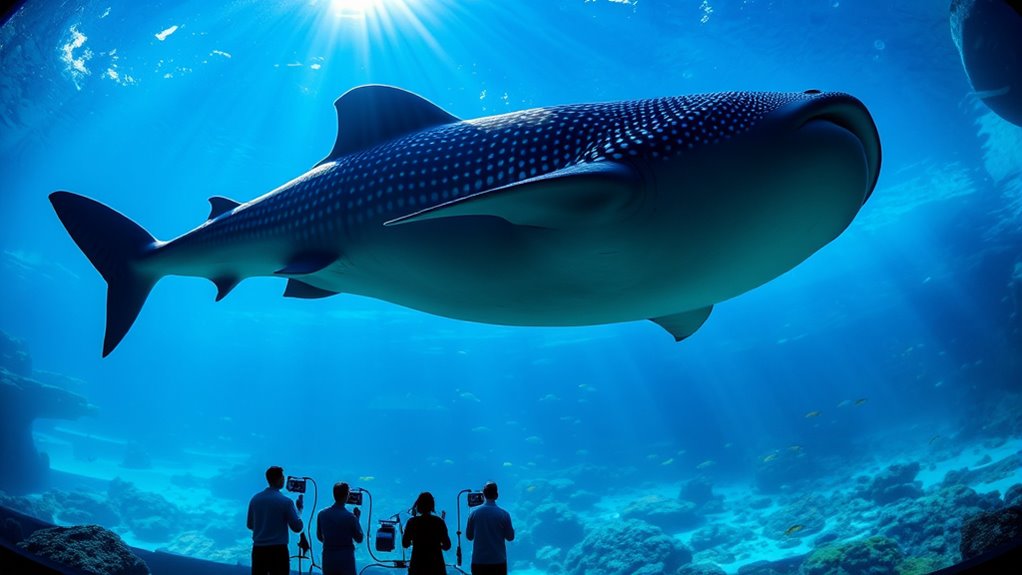
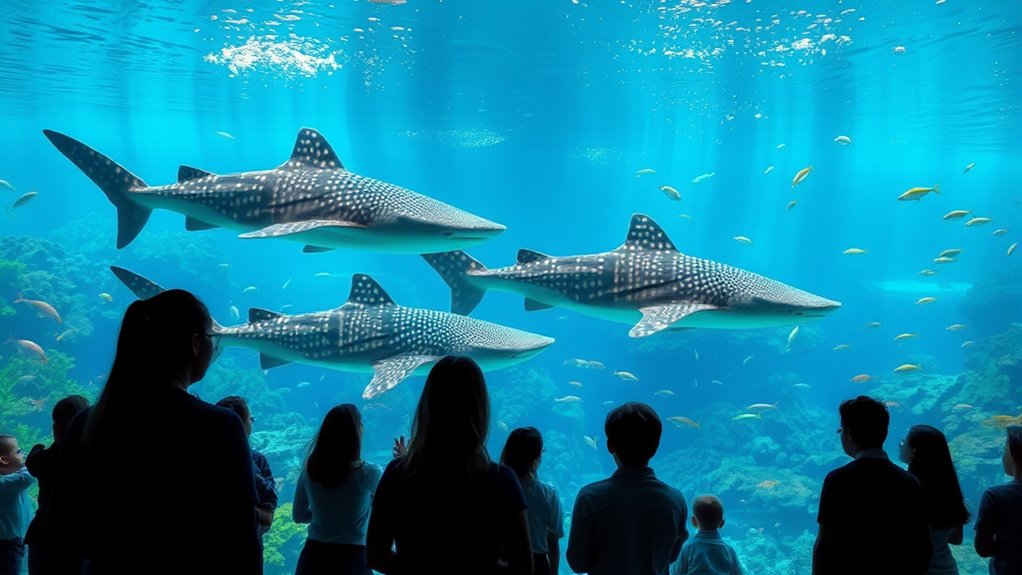
Since opening in 2005 as the first U.S. facility to care for whale sharks, Georgia Aquarium has set the standard in their husbandry. You’ll find whale sharks thriving in the massive 6.3-million-gallon Ocean Voyager exhibit, specially designed to meet their unique needs. Georgia Aquarium developed advanced care techniques, like safe blood and tissue sampling, to closely monitor their health.
This hands-on approach ensures the gentle giants receive exceptional care every day. Beyond husbandry, the aquarium leads groundbreaking research on whale shark biology and migration, deepening our understanding of these creatures. Their commitment to conservation and education makes Georgia Aquarium a global leader, setting a high bar for whale shark care and inspiring others to follow their example.
You can see why their dedication is unmatched.
How Georgia Aquarium Research Is Growing Whale Shark Numbers
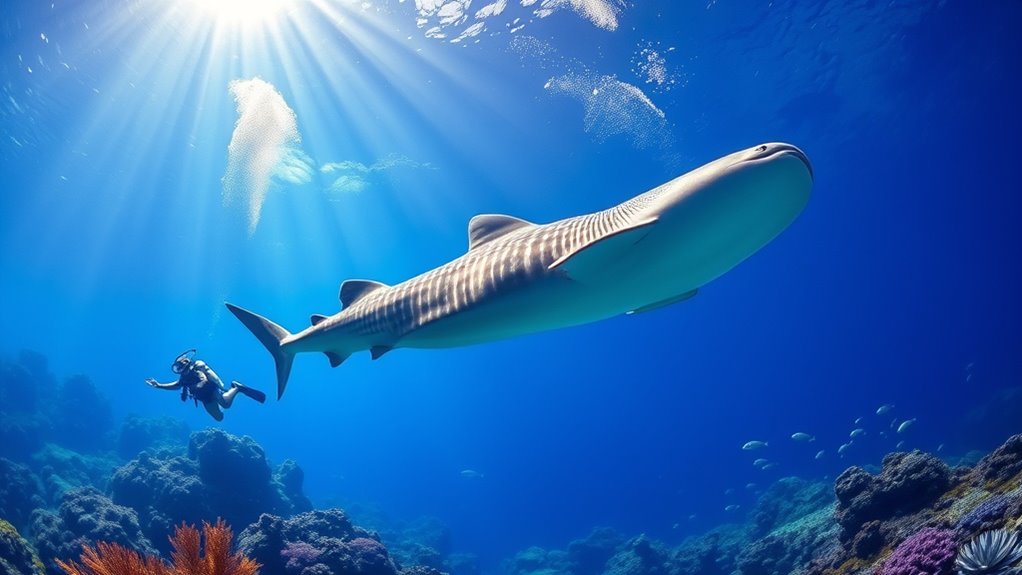
You’ll see how Georgia Aquarium uses cutting-edge health assessments to monitor whale sharks closely. Their global tracking reveals migration routes that are essential for protecting these giants.
Plus, by working with international partners, they boost conservation efforts that help whale shark numbers grow steadily.
Innovative Health Assessment Techniques
Although whale sharks are massive and majestic, Georgia Aquarium has developed safe, non-invasive techniques to collect blood and tissue samples from them. These innovative methods enable precise health assessments that monitor nutrition, immune function, and pollutant levels without stressing the animals.
By tracking individual whale sharks’ health over time, Georgia Aquarium improves care strategies tailored to their unique needs. This continuous monitoring helps identify potential health issues early, allowing for optimized treatment protocols that enhance their well-being.
The data gathered supports both captive care and broader conservation efforts by deepening understanding of whale shark biology. Thanks to these advancements, you can trust that Georgia Aquarium is at the forefront of ensuring healthier whale sharks and growing their populations responsibly through cutting-edge, non-invasive research.
Global Migration Tracking
How do whale sharks navigate thousands of miles across the oceans? Georgia Aquarium’s research team uses satellite tags to track whale sharks’ migration, revealing their incredible journeys between places like Mexico, Indonesia, and Australia. This tracking uncovers important migration routes and previously unknown aggregation sites, such as one in the Coral Sea.
By understanding these patterns, you can see how whale sharks depend on multiple seasonal sites for feeding and breeding. This knowledge helps Georgia Aquarium support conservation efforts worldwide, informing policies that protect whale sharks from ship strikes and habitat loss.
Thanks to this global migration tracking, you’re witnessing how research directly contributes to growing whale shark populations and ensures these gentle giants continue to thrive across international waters.
Collaborative Conservation Research
Because conserving whale sharks requires a global effort, Georgia Aquarium teams up with international researchers to track migration patterns and pinpoint essential aggregation sites. This collaborative conservation approach relies heavily on advanced satellite tagging, providing you with critical data on whale shark travel routes and behaviors.
Through international partnerships, including work with Taiwan’s National Taiwan Ocean University, the aquarium conducts long-term species monitoring that strengthens habitat protection across migratory ranges. Their whale shark research also explores health and genetics, helping you understand how to improve conservation strategies.
The insights gained directly influence policy changes, guaranteeing habitats remain safe and supportive for growing whale shark populations. By working together globally, Georgia Aquarium helps guarantee these gentle giants thrive both in the wild and under their care.
Advances in Whale Shark Health Assessments
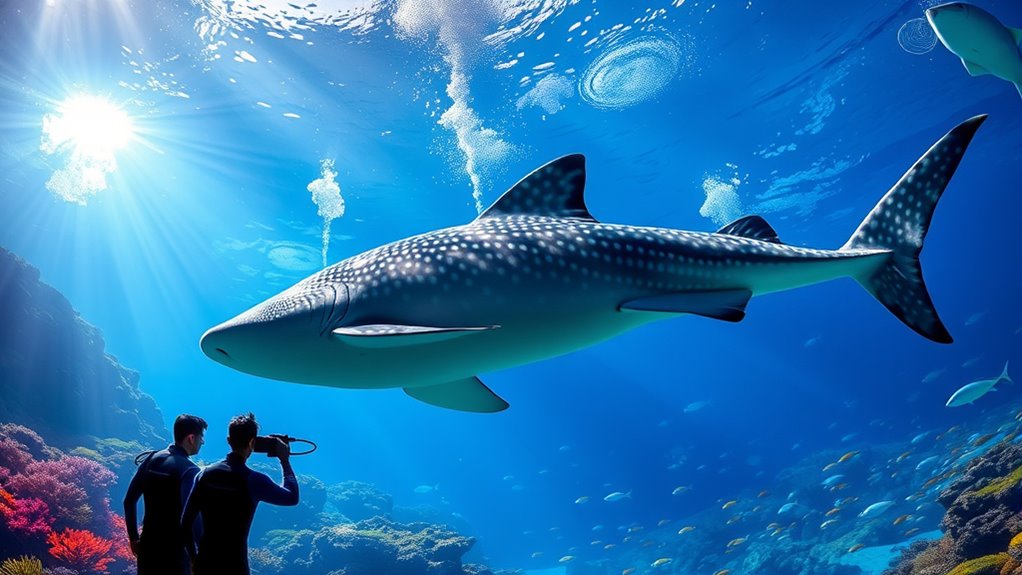
You’ll see how Georgia Aquarium’s innovative sampling techniques make it safer and easier to gather essential health data from whale sharks. This allows you to understand their nutrition and immune status without stressing the animals.
With these advances, you can monitor their well-being more closely and improve care both in captivity and in the wild.
Innovative Sampling Techniques
While studying whale sharks can be challenging due to their immense size, researchers at Georgia Aquarium have developed innovative, minimally invasive sampling techniques that let you gather essential health data safely. These methods allow you to collect blood and tissue samples without harming the sharks, making health assessments more accurate and less stressful.
With specialized tools and protocols designed for the world’s largest fish, you can analyze their nutrition, pollutant exposure, and immune function in detail. Regular monitoring through these sampling techniques helps you spot early signs of illness or stress, improving care both in captivity and in the wild.
Insights Into Nutrition
Although whale sharks’ massive size makes health assessments challenging, Georgia Aquarium’s researchers have developed safe sampling methods that reveal vital insights into their nutrition. By analyzing blood and tissue samples, you can better understand their diet and overall health, which is crucial for both captive care and conservation efforts.
These health assessments also consider water quality and pollutant levels, ensuring that the environment supports optimal whale shark well-being. This knowledge helps you improve nutrition plans and supports the protection of wild populations.
Key insights include:
- Detailed diet analysis to optimize feeding strategies
- Monitoring immune function linked to nutrition
- Assessing pollutant impacts on health
- Using non-invasive techniques for ongoing evaluations
Georgia Aquarium’s advances empower you to enhance whale sharks’ care and conservation.
Health Monitoring Advances
Because Georgia Aquarium has developed safe methods to collect blood and tissue samples from whale sharks, you can now conduct detailed health assessments that reveal crucial information about their nutrition, immune function, and exposure to pollutants. These advances in tissue sampling, combined with improved non-invasive monitoring techniques, let you track whale shark health more accurately and frequently.
This ongoing long-term monitoring helps detect health trends and potential issues early, ensuring optimal care. The data you gather not only refines care standards but also supports broader conservation strategies by providing insights into the health of wild whale sharks.
How Satellite Tracking Supports Future Whale Shark Rescues
If you want to protect whale sharks effectively, satellite tracking is a game-changer. This technology lets you monitor migration routes and identify critical habitats, making rescue efforts more precise. By using real-time location data, you can quickly locate injured or stranded whale sharks, speeding up response times.
Satellite tracking also reveals long-distance movements, helping you develop global protection strategies and targeted conservation policies.
Key benefits include:
- Monitoring migration routes for better rescue planning
- Identifying high-risk zones to prevent ship strikes
- Providing real-time location for swift rescue efforts
- Informing international conservation and protection strategies
With satellite tracking, your efforts to safeguard whale sharks become smarter and more efficient, ensuring these majestic creatures receive timely help when they need it most.
How Conservation at Georgia Aquarium Supports Whale Shark Care
You’ll see how Georgia Aquarium uses advanced care techniques to keep whale sharks healthy and thriving. Their collaborative conservation research helps improve treatment and protection strategies worldwide.
This teamwork guarantees each whale shark receives the best care possible while supporting the species in the wild.
Advanced Care Techniques
How does Georgia Aquarium guarantee whale sharks receive the best possible care? They employ advanced care techniques grounded in scientific research and continuous innovation. You’ll find their approach combines precise habitat control with meticulous health monitoring to ensure whale sharks thrive.
Key elements include:
- Advanced water quality systems maintaining optimal habitat conditions.
- Non-invasive sampling methods for blood and tissue that minimize stress.
- Comprehensive health assessments revealing nutrition, pollutant exposure, and immune status.
- Cutting-edge conservation strategies informed by genome sequencing and satellite tagging.
These care practices elevate welfare standards and deepen understanding of whale shark biology. When you visit, you’re seeing conservation and care that set global benchmarks—helping these gentle giants live safely and healthily in captivity.
Collaborative Conservation Research
Because Georgia Aquarium partners with international research institutions like Taiwan’s National Taiwan Ocean University, it gathers essential data on whale shark migration, health, and behavior. This collaborative conservation effort allows you to access cutting-edge whale shark research through international partnerships that enhance species protection worldwide.
By sharing scientific data such as satellite tracking and health assessments, Georgia Aquarium improves care standards and informs effective conservation strategies. These joint projects identify critical habitats and migration routes, guiding policies that protect whale sharks across their global range.
Plus, the aquarium develops safe, non-invasive methods for health monitoring, benefiting both captive and wild populations. When you support Georgia Aquarium’s research, you contribute directly to advancing global understanding and protection of whale sharks, increasing the chances of successful future rescue and care initiatives.
How Veterinary Innovations Improve Whale Shark Survival
Why do veterinary innovations play a crucial role in the survival of whale sharks at Georgia Aquarium? These advancements allow you to monitor and treat whale sharks more effectively, boosting their survival rates. By using veterinary innovations, the aquarium guarantees whale sharks receive top-notch medical care and accurate health assessments without unnecessary stress.
Key veterinary innovations include:
- Safe blood and tissue sampling methods that minimize stress
- Early detection of health issues for prompt treatment
- Non-invasive imaging techniques like ultrasound to monitor internal health
- Research on nutrition and pollutant exposure that informs care strategies
Thanks to these innovations, you can help maintain the health and well-being of whale sharks, securing their long-term survival at Georgia Aquarium.
The Importance of Suitable Habitat for Housing Whale Sharks
Veterinary innovations help keep whale sharks healthy, but their well-being also depends on where they live. You need a habitat that provides large tanks—at least 6 million gallons—to accommodate whale sharks’ size and swimming habits. The water quality must be carefully monitored, ensuring temperature, salinity, and oxygen levels mimic their natural environment.
Without this, whale sharks can experience stress or health issues. Environmental enrichment, like deep pools and open swim areas with proper lighting, encourages natural behaviors such as migration and feeding. Advanced life support systems maintain these conditions continuously, while regular assessments guarantee the habitat remains suitable over time.
When you create a space that truly replicates the whale sharks’ tropical ocean home, you support their health and longevity in captivity.
How Partnerships Could Bring New Whale Sharks to Georgia Aquarium
When you consider the complexity of caring for whale sharks, strong partnerships are essential for bringing new individuals to the Georgia Aquarium. These partnerships with Taiwanese institutions like National Taiwan Ocean University and Fisheries Research Institute enable rescue efforts and facilitate the transfer of whale sharks.
International collaboration also advances research and conservation, ensuring ethical and legal acquisition of these majestic creatures. Through these connections, Georgia Aquarium participates in long-term studies that improve care protocols and support rescue initiatives.
Key partnership benefits include:
- Access to rescue and transfer programs for whale sharks
- Collaboration on conservation and research projects
- Exchange of scientific knowledge and best practices
- Strengthened case for ethical whale shark acquisition
Your support of these partnerships directly helps expand Georgia Aquarium’s whale shark population.
How Public Engagement Boosts Support for Whale Shark Growth
Because public engagement brings people closer to whale sharks, it plays a crucial role in boosting support for their growth at Georgia Aquarium. You experience immersive exhibits and educational programs that deepen your connection to these gentle giants. These efforts increase awareness and inspire you and others to back conservation efforts actively.
The Aquarium shares compelling stories and live updates, motivating community support and donations. Virtual tools even let you follow whale sharks remotely, expanding engagement worldwide. Here’s how public engagement fuels growth:
| Engagement Method | Impact on Whale Shark Growth |
|---|---|
| Immersive Exhibits | Creates emotional connection |
| Educational Programs | Raises awareness |
| Interactive Experiences | Fosters personal appreciation |
| Storytelling & Updates | Inspires community support |
| Virtual Viewing Tools | Expands global engagement |
Through these, Georgia Aquarium strengthens conservation efforts and your support for whale sharks.
How Education Programs Inspire Support for Whale Shark Conservation
How do Georgia Aquarium’s education programs turn curiosity into conservation? By engaging you through interactive exhibits and classroom resources, they boost awareness about whale shark conservation and the essential role of marine life. These programs don’t just inform—they inspire your active support for protecting these gentle giants.
You’ll find opportunities like:
- Hands-on learning activities led by educators that deepen your understanding of whale shark biology
- Virtual tools that make marine life accessible from anywhere
- The SEA Program offering free access to underserved communities, expanding conservation reach
- Adoption initiatives encouraging emotional and financial commitment to whale shark conservation
Frequently Asked Questions
Is the Georgia Aquarium Going to Get Another Whale Shark?
No, you won’t see another whale shark at Georgia Aquarium soon. They’re focusing on conservation and rescue efforts, not acquiring new whale sharks, due to strict protections and the complexity involved in caring for these rare giants.
Why Are There Whale Sharks in the Georgia Aquarium?
You’ve got to see it to believe it—Georgia Aquarium houses whale sharks to unveil secrets of these ocean giants.
You’ll help protect them by learning, supporting research, and raising global awareness for their survival.
How Do They Get the Whale Sharks Into the Georgia Aquarium?
You’ll see whale sharks carefully transported in specialized tanks with strict health protocols, minimizing stress.
The aquarium works with global partners, rescuing and rehabilitating sharks ethically before bringing them safely into their massive tanks.
What Aquarium Has the Most Whale Sharks?
You’ll find the most whale sharks at the Georgia Aquarium, which houses two, more than any other U.S. facility. They’ve built specialized habitats to support these gentle giants, leading global care and conservation efforts.
Conclusion
You’re witnessing a modern marvel at Georgia Aquarium, where cutting-edge science meets the timeless art of care—almost like a Renaissance painting coming to life. Thanks to groundbreaking research, satellite tracking, and strong partnerships, more whale sharks will soon grace these waters.
Your support and enthusiasm fuel this incredible journey, ensuring these gentle giants thrive. So, get ready to plunge into the future of conservation, where every splash counts for whale sharks!
By supporting Georgia Aquarium’s efforts, you’re playing an essential role in whale shark conservation and helping these majestic creatures flourish in their aquatic home.