Will Whale Sharks Eat Humans and How to Stay Safe
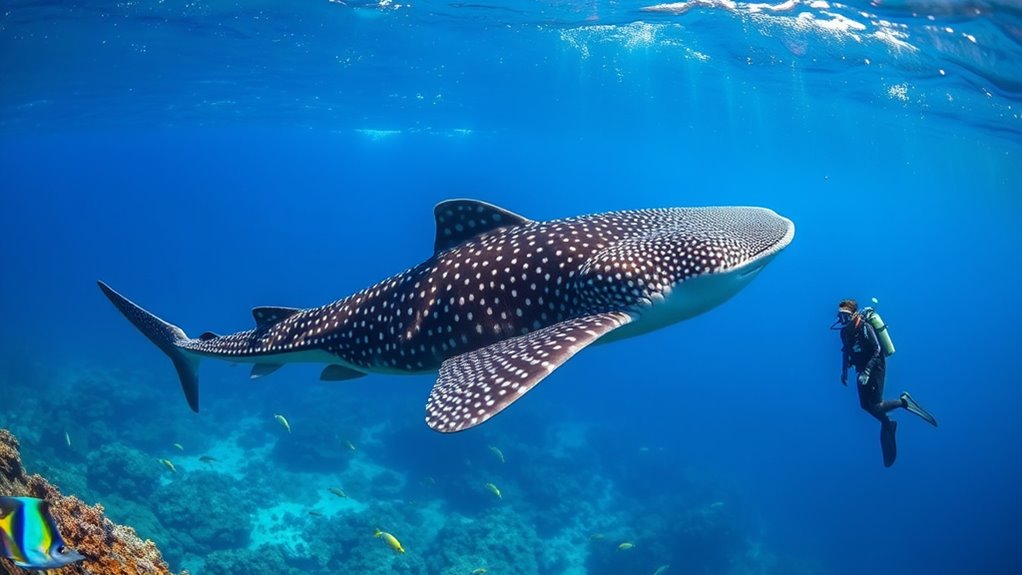
You won’t be eaten by a whale shark because they feed only on tiny plankton and small marine life, not humans. Whale sharks are gentle giants with throats too small to swallow large creatures like you, and they don’t bite or attack.
To stay safe, keep a respectful distance, avoid sudden movements, and follow local guidelines. Swimming calmly and respecting their space ensures a safe, amazing encounter.
Discover more tips on how to interact responsibly with these gentle giants and enjoy your time observing whale sharks in their natural habitat.
Why Whale Sharks Don’t Eat Humans
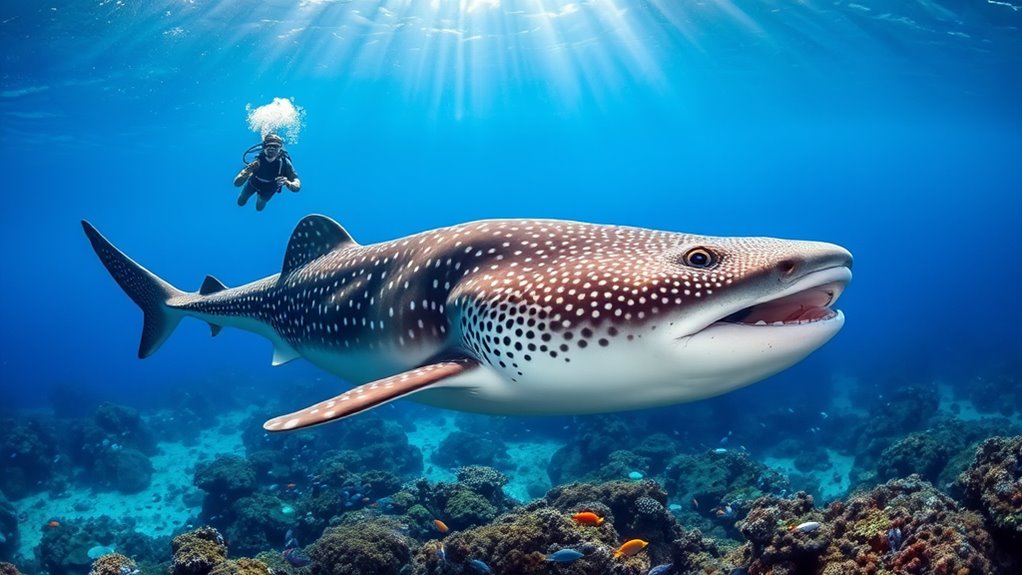
Although whale sharks are the largest fish in the ocean, they don’t eat humans because their diet consists of tiny plankton and small organisms. As filter feeders, whale sharks swim with their mouths wide open, filtering water to catch microscopic prey. Their throat size, about the size of your fist, makes swallowing anything large—like a human—impossible.
You’ll never see them biting or tearing; their feeding method is gentle and passive. Plus, no verified cases exist of whale sharks intentionally attacking or eating people. So, when you encounter these gentle giants, you can be sure they pose no threat.
Understanding their nature as filter feeders helps you appreciate why whale sharks simply aren’t interested in humans as food.
Debunking Common Whale Shark Attack Myths
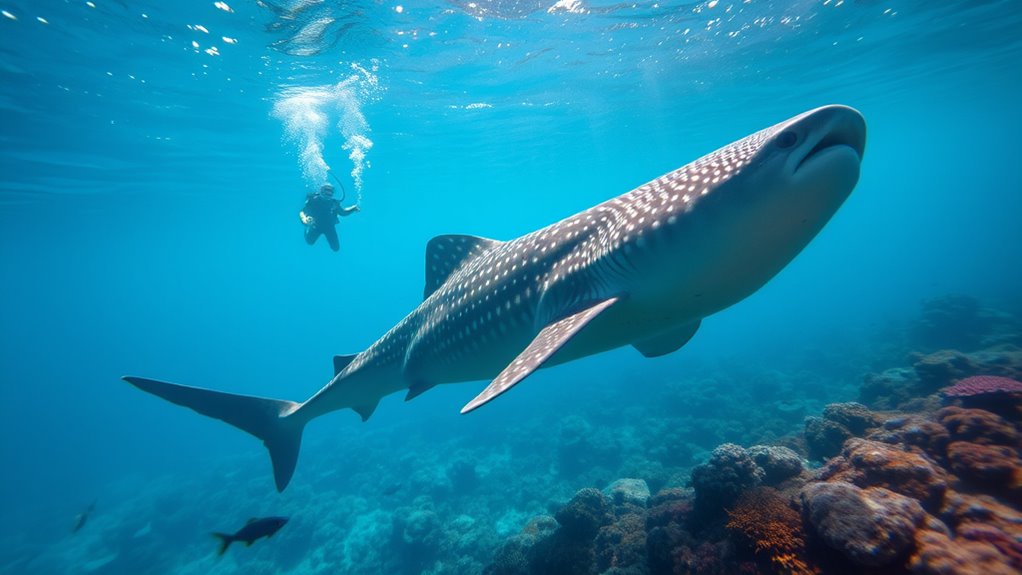
You might think whale sharks could attack people, but their feeding habits tell a different story. They only consume tiny plankton and small fish, not humans, and their throats are too small to swallow anything large.
Let’s clear up these myths and see what the reality really is.
Whale Shark Feeding Facts
While some people fear whale sharks might attack, these gentle giants feed only on plankton, small fish, and tiny marine creatures, not humans. As filter feeders, whale sharks swim with their mouths open, filtering vast amounts of water to catch their microscopic prey. Their throats measure about the size of a human fist, so swallowing a person is simply impossible.
You won’t find any verified cases of whale sharks intentionally attacking or eating humans—most injuries come from accidental collisions, not aggression. The myth that whale sharks eat people likely stemmed from isolated, exaggerated stories of accidental ingestion, which are extremely rare. Understanding these whale shark feeding facts helps you appreciate how safe these magnificent creatures truly are around humans.
Myth Versus Reality
Despite their enormous size, whale sharks pose no real threat to humans. You might have heard myths claiming these gentle giants eat people, but that’s simply not true. Whale sharks are filter feeders, consuming plankton and tiny marine creatures—not humans.
Their mouths, about five feet wide, are designed to filter small prey, making it impossible for them to swallow you. There are no verified cases of whale sharks intentionally attacking or eating humans. While rare incidents of accidental contact happen, these usually end quickly without harm.
Understanding these myths helps you appreciate whale sharks without fear. So, when you encounter one, remember: whale sharks are peaceful creatures, and the myths about attacks don’t reflect reality.
How Whale Sharks Feed and What They Eat
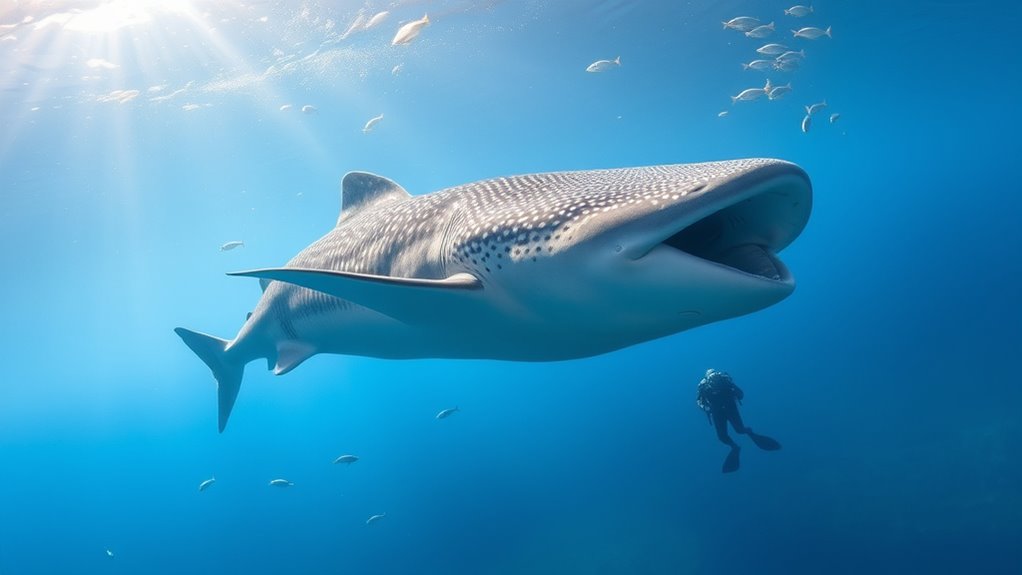
Although whale sharks look formidable, they feed gently by swimming with their mouths wide open to filter plankton, small fish, krill, and other tiny marine creatures from the water.
As filter feeders, whale sharks rely on specialized gill rakers to sieve these tiny organisms efficiently. When you see a whale shark, remember it isn’t hunting large prey — it’s focused on microscopic plankton and small fish.
They don’t have sharp teeth and don’t pose a threat to humans or larger animals. Instead, they swim calmly while filtering water, continuously gathering food.
Understanding how whale sharks feed helps you realize they’re gentle giants, not predators. This knowledge can ease any worries you might have about encountering one in the wild.
How to React Safely When You Encounter a Whale Shark
When you encounter a whale shark, keeping a respectful distance and staying calm guarantees both your safety and the animal’s comfort. These gentle marine animals aren’t aggressive, but your behavior can impact the interaction. To react safely, follow these simple guidelines:
- Maintain distance and avoid touching or disturbing whale sharks to respect their natural behavior.
- Swim away slowly if a whale shark approaches or seems distressed, preventing stress or accidental contact.
- Follow instructions from dive or snorkel guides who know how to keep you and the animals safe.
Avoid sudden movements or splashing, as these can startle whale sharks and cause unintended collisions.
Staying Safe While Swimming With Whale Sharks
When swimming with whale sharks, always enter the water calmly and stay aware of your surroundings.
Keep a respectful distance of at least 3 meters to avoid stressing the animals. Watch for signs of distress in the sharks, and adjust your behavior to keep both you and them safe.
Entry Point Awareness
How should you enter the water to stay safe around whale sharks? Entry point awareness is essential. Before you step in, carefully check your surroundings to avoid startling these gentle giants.
Use controlled movements like a backward roll to prevent sudden splashes or motions that might alarm them. Always keep a safe distance—at least 3 meters (10 feet)—to avoid accidental collisions.
Keep these tips in mind for safe entry near whale sharks:
- Scan the area thoroughly before entering to spot any nearby animals
- Use calm, deliberate entry techniques to minimize disturbance
- Follow your guide’s instructions and local conservation guidelines
Respectful Distance Maintenance
After carefully entering the water, focus on maintaining a respectful distance from whale sharks to keep both you and the animals safe. Stay at least 3 meters (10 feet) away to avoid disrupting their natural habitat or behavior.
Don’t touch or block their path; this can stress or injure them. Instead, use binoculars or a zoom camera to observe closely without intrusion. Follow your guide’s instructions and conservation guidelines strictly to ensure a safe encounter.
Avoid sudden movements or loud noises that might startle these gentle giants, leading to unpredictable reactions. By respecting their space and natural habitat, you help protect whale sharks while enjoying a memorable, safe experience swimming alongside them.
Recognizing Distress Signals
Although whale sharks are gentle creatures, you need to recognize their distress signals to stay safe while swimming nearby. Whale sharks may show signs like rapid swimming or sudden changes in movement when stressed. If you notice excessive tail flicking or an open mouth displayed aggressively, take it as a clear distress signal.
You should stay calm and slowly back away to avoid provoking them. Watching for behavioral cues like body stiffening or tail thrashing helps you respond appropriately.
Here’s what to watch for:
- Rapid swimming or sudden directional changes
- Excessive tail flicking or open-mouth display
- Body stiffening or evasive maneuvers
Recognizing these distress signals lets you keep a safe distance and enjoy your encounter without causing harm.
Best Practices for Respectful Whale Shark Swimming
When you swim with whale sharks, keeping a respectful distance of at least 3 meters is essential to avoid stressing these gentle giants. For respectful interactions, never touch or ride them, as this can harm their protective mucus layer. Instead, focus on calmly swimming alongside them, moving slowly to avoid startling or agitating these peaceful creatures.
Avoid using flash photography or making loud noises, which can disturb their natural behavior. Always follow local guidelines and regulations provided by certified eco-tourism operators to make certain you’re acting responsibly.
Frequently Asked Questions
Could a Whale Shark Eat a Human?
No, a whale shark can’t eat you. Their throat’s too small, and they only filter tiny plankton and fish.
You’re safe around them, but always respect their space and avoid touching them.
What to Do if a Shark Is Circling You?
If a shark is circling you, stay calm and avoid sudden movements. Keep eye contact, slowly back away without turning your back, and gently push it away if it gets too close.
Signal for help calmly.
Could a Whale Shark Accidentally Eat a Human?
No, a whale shark can’t accidentally eat you since its throat is too small. If you get close, it might sweep you in briefly but will quickly spit you out.
Stay calm and avoid sudden moves.
Which Shark Has Killed the Most Humans?
Great white sharks have killed the most humans, with over 300 attacks and about 60 fatalities.
You should stay alert in their habitats and avoid swimming near seals or during low visibility to reduce risk.
Conclusion
Don’t worry—whale sharks aren’t lurking around waiting to gobble you up like a giant underwater vacuum! These gentle giants feed on tiny plankton, not people.
But if you ever come face-to-face with one, stay calm and respectful—think of it as meeting a massive, friendly sea giant who’s more interested in snacks than snacks like you.
Follow safety tips, keep your distance, and you’ll have an unforgettable, safe encounter with the ocean’s biggest fish! Remember, understanding if whale sharks will eat humans and how to stay safe is key to enjoying these magnificent creatures responsibly.