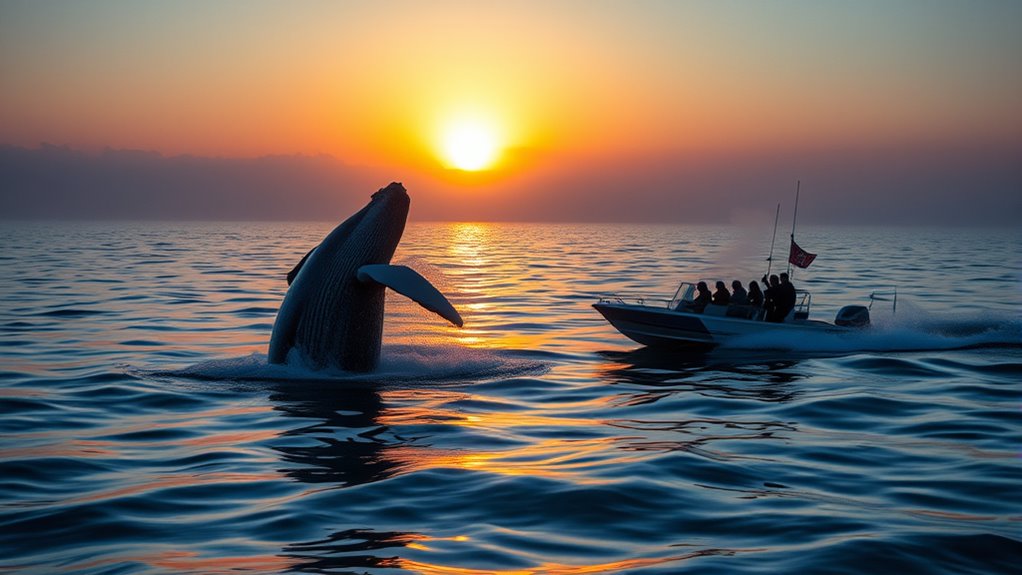
3 Reasons Morning Whale Watching Is Better Than Afternoon
You’ll love morning whale watching because the seas are calmer, making it easier to spot whales and enjoy a smooth boat ride. The soft morning light reduces glare, helping you see and photograph whales better.
Plus, there are fewer boats around, so whales act naturally and stay closer to the surface.
With less crowding and activity, your experience is peaceful and more engaging. If you want to know how mornings make every part of the trip better, keep exploring these benefits.
Why Morning Whale Watching Offers Calmer Seas
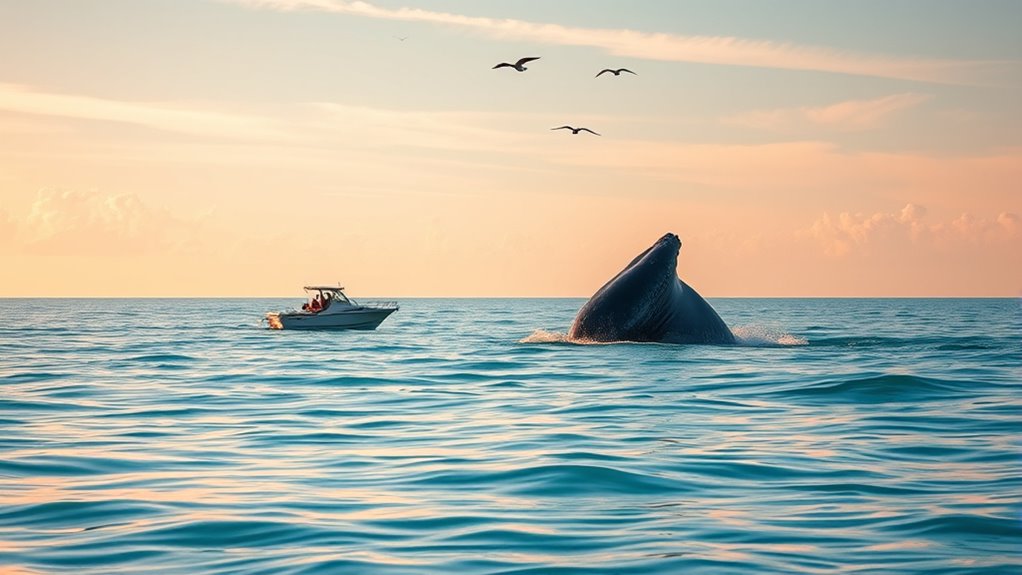
Because morning trips usually face lower wind speeds, the seas stay calmer, making your whale watching experience more enjoyable. You’ll notice the calm seas make it easier to spot whales’ fins, flukes, and breaches from a distance, giving you more chances to see these majestic creatures.
The reduced wave action means the boat ride is smoother, so you won’t feel as much motion, which keeps you comfortable throughout the trip. Morning also means less boat traffic, so the water stays quieter, allowing whales to behave naturally without disturbance.
Plus, morning weather forecasts often predict lighter winds and calmer seas, increasing your chances of a successful sighting. Choosing morning trips puts you in the best position to enjoy calm seas and a memorable whale watching adventure.
How Morning Light Helps You Spot Whales And Take Better Photos
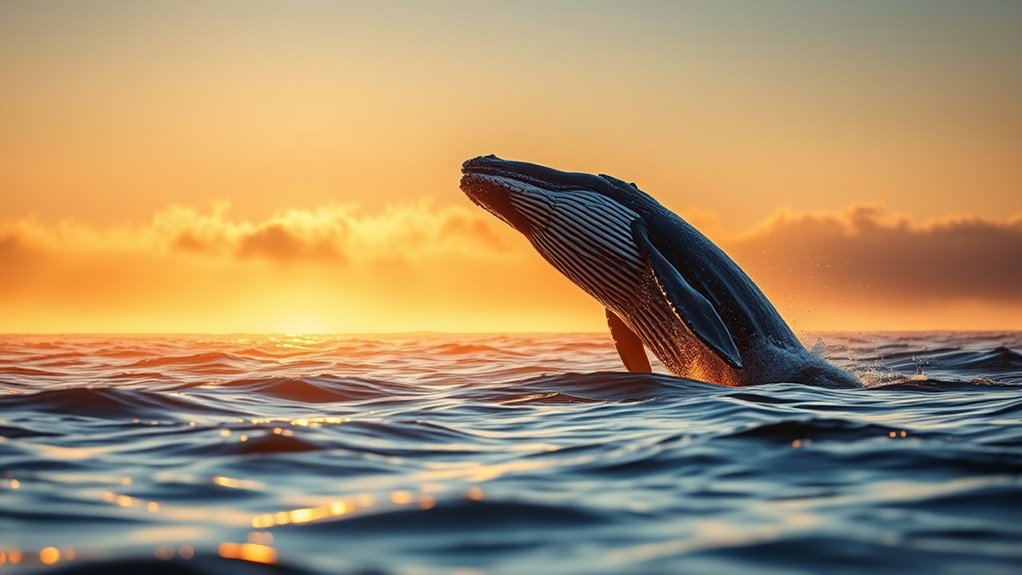
When you head out in the morning, the soft natural light makes it easier to spot whales without harsh glare or reflections. The low sun angle enhances water visibility, helping you see whales from farther away.
Plus, these ideal lighting conditions let you capture sharper, more vibrant photos of every fin and breach.
Soft Natural Lighting
A soft, natural morning light makes it easier for you to spot whales and capture stunning photos. Morning natural lighting is softer and more diffused, reducing glare and helping you see fins, flukes, and breaches clearly. This gentle illumination enhances contrast, allowing your photos to show every detail vividly without harsh shadows or overexposure.
Early sunlight reflects off the water, creating perfect lighting conditions for striking images. The sun’s low angle minimizes shadows on whales, highlighting their features and behaviors beautifully.
| Feature | Morning Natural Lighting Effect |
|---|---|
| Glare | Reduced, easier spotting |
| Contrast | Enhanced for clearer details |
| Shadows | Minimized, highlighting features |
| Reflections | Creates stunning water reflections |
| Photo Quality | Crisp, detailed, well-lit images |
Enhanced Water Visibility
Soft morning light doesn’t just improve your photos—it also sharpens your view of the water. Morning sunlight provides softer, more diffuse lighting, reducing glare and boosting water visibility, so you can spot whales from farther away.
The calm morning waters mean less wave action, allowing you to see beneath the surface more clearly. With the angle of early light enhancing reflections and highlights on the water, you’ll notice whales’ movements and behaviors more distinctly.
This increased contrast between whales and the ocean makes tracking their breaches and fins easier than in the afternoon. When you head out early, you benefit from clearer water visibility, letting you fully appreciate these majestic creatures in their natural habitat.
Ideal Photography Conditions
Because morning sunlight casts a gentler, more diffuse glow, you’ll find it easier to spot whales and capture their details without glare or harsh reflections. The low angle of morning light highlights whale features like fins and flukes, enhancing contrast for your photos. Calm morning waters reduce glare, improving clarity and sharpness.
Plus, the softer light minimizes harsh shadows and overexposure, giving you better-balanced images. These ideal photography conditions let you capture stunning reflections and silhouettes that truly showcase whale behavior.
| Feature | Morning Advantage |
|---|---|
| Light Quality | Softer, diffuse glow reduces glare |
| Visibility | Clearer waters improve sharpness |
| Contrast | Enhanced fins and breaches against sky |
| Shadows | Minimal harsh shadows for balanced shots |
| Artistic Effects | Stunning reflections and silhouettes |
Why Whales Are More Active During Morning Whale Watching Trips
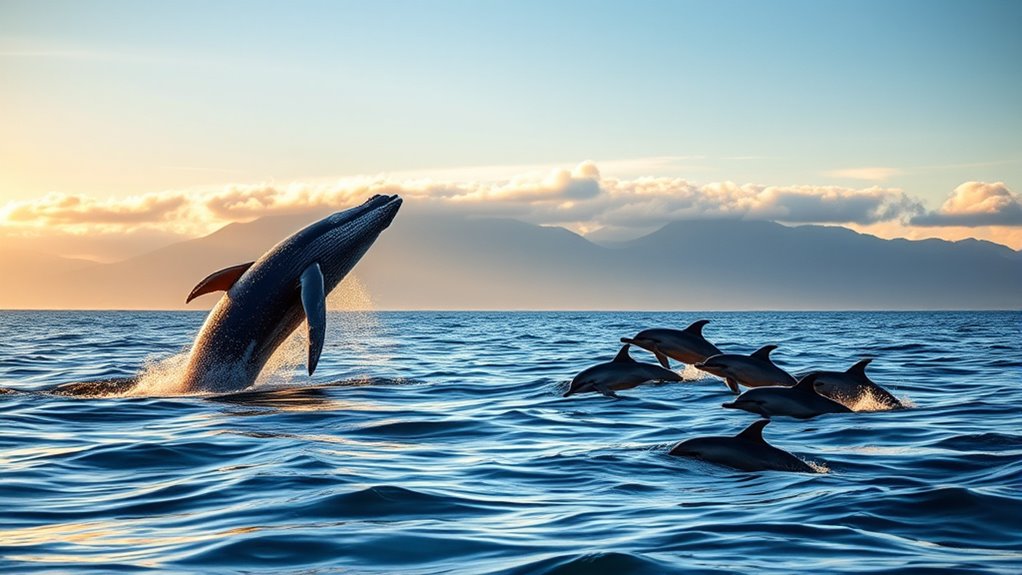
You’ll notice whales are more lively in the morning because calmer seas make them feel safe to surface and play. With fewer boats around, they’re less stressed and more likely to show natural behaviors.
Plus, early hours offer the best feeding opportunities as prey is abundant and easy to catch.
Calmer Seas Encourage Activity
When you head out for whale watching in the morning, calmer seas play a big role in encouraging whale activity. Calm seas reduce boat movement, so whales feel less disturbed and are more likely to breach, feed, and engage in other lively behaviors. The light morning winds create smoother water, improving visibility for you and letting whales move freely near the surface.
With reduced wave heights, whales maintain their normal movement patterns, increasing your chances of spotting surface activities. These tranquil seas also encourage whales to stay closer to the surface, making sightings more frequent and exciting. Overall, the peaceful morning water sets the stage for more active and visible whale encounters, enhancing your whale watching experience markedly.
Less Boat Traffic Impact
Although whale watching tours can get busy later in the day, morning trips usually have less boat traffic, which means less noise and disturbance for the whales. With less boat traffic around, whales feel more at ease and often show natural behaviors like breaching, traveling, and resting.
You’ll notice they’re more active and less shy, sometimes coming closer to the boat, making your experience even more memorable. Studies confirm that whale activity peaks in the morning when fewer vessels disrupt their environment. Plus, the reduced vessel presence helps maintain a peaceful atmosphere, allowing you to observe these majestic creatures without overwhelming them.
Choosing a morning tour means you get to enjoy a quieter, more authentic encounter with the whales, thanks to less boat traffic.
Early Feeding Opportunities
Since whales feed more actively in the early morning, your chances of witnessing exciting behaviors like breaching and lunge feeding increase during morning whale watching trips. Early feeding opportunities make these trips especially rewarding because whales hunt when prey is abundant near the surface.
Here’s why morning outings stand out:
- Whales target small schooling fish during peak feeding times in the early morning.
- Calm seas enhance visibility, letting you see feeding actions clearly.
- Whales exhibit their most energetic behaviors—like lunge feeding—before midday.
- Scientific studies confirm that whale feeding activity peaks in the morning hours.
How Less Boat Traffic Boosts Morning Whale Watching Encounters
Because fewer boats crowd the waters in the morning, you’ll experience a quieter, more natural setting for whale watching. Compared to the afternoon, reduced boat traffic means marine life is less disturbed and more likely to behave naturally. Whales surface calmly, increasing your chances to witness active behaviors like breaching and feeding.
This peaceful environment enhances wildlife visibility, allowing you closer, clearer encounters without the distraction of crowded waters. When fewer boats compete for space, marine animals feel less shy, making your whale watching experience more rewarding.
Easier Parking And Fewer Crowds In The Morning Harbor
Beyond the tranquil waters, your whale watching experience starts the moment you arrive at the harbor. Choosing a morning trip means you’ll enjoy easier parking and fewer crowds, setting a relaxed tone from the start. Compared to afternoon visits, mornings have less harbor traffic and fewer boats docked, making boarding smoother.
Here’s why morning trips stand out:
- Parking lots are less crowded, so you find a spot faster.
- You can park closer to the departure point, minimizing walking.
- Fewer visitors mean shorter lines and less congestion in the harbor.
- Reduced boat and vehicle traffic create a quieter, more peaceful environment.
This ease lets you focus on whale watching instead of stressing about logistics.
Why Morning Weather Means A More Comfortable Whale Watching Trip
When you choose a morning whale watching trip, you’ll benefit from calmer seas and lighter winds that make the ride smoother and more enjoyable. Morning weather typically brings reduced wind activity compared to the afternoon, resulting in calm seas that keep the boat steady and comfortable. These gentler conditions also improve visibility, making it easier for you to spot wildlife in the water.
Unlike the afternoon, when wind speeds often pick up and waves grow choppier, morning trips offer more predictable and pleasant weather conditions. The cooler temperatures and tranquil waters in the morning enhance your overall whale watching experience, allowing you to focus on the incredible wildlife around you without battling rough seas or poor visibility.
Why Morning Whale Watching Is Best For Families And Kids
You’ll find calmer seas in the morning, which makes the trip smoother and safer for kids. Parking and getting on the boat is easier too, thanks to fewer crowds.
Plus, shorter wait times mean less fuss and more time enjoying the whales together.
Calmer Seas Benefit Children
Since the seas are calmer in the morning, you’ll find it much easier to keep children safe and comfortable during whale watching trips. Calmer seas reduce the risk of seasickness and motion sickness, making the experience enjoyable for young kids. Morning tours also mean less boat traffic, which leads to a smoother, gentler ride ideal for families.
Additionally, the peaceful environment lets your children focus on spotting whales without distractions. Here’s why calmer seas benefit children during morning whale watching:
- Safer and more stable boat conditions
- Lower chances of seasickness for kids
- Smoother ride with less boat traffic
- Relaxed atmosphere for better marine life observation
Choosing morning trips helps you create a memorable, worry-free adventure for your family.
Easier Parking And Access
Although whale watching can be exciting any time of day, morning trips offer easier parking and access that make a big difference for families with kids. Parking lots are less crowded early on, so you’ll likely find a spot close to the harbor. Starting before peak traffic means you’ll reach the departure point quicker, reducing stress.
Early arrival gives you extra time to get organized and board smoothly. Less congestion in the harbor also means fewer delays, helping your family enjoy a relaxed start.
| Benefit | Morning Advantage | Why It Matters |
|---|---|---|
| Parking Availability | More spots near harbor | Easier with kids |
| Traffic Conditions | Light traffic before rush | Faster access |
| Boarding Time | Extra prep time | Less rushing |
| Harbor Congestion | Minimal | Stress-free departure |
| Overall Experience | Relaxed and smooth | More enjoyable for all |
Shorter Wait Times
Morning whale watching trips cut down wait times considerably, letting you board quickly before crowds gather.
This is especially helpful when you’re traveling with kids, as shorter lines mean less waiting and more fun. Here’s why morning whale watching is best for families:
- Early departures mean less busy harbors and shorter parking lines.
- Prompt boarding maximizes your time on the water.
- Calmer seas in the morning reduce seasickness and discomfort for kids.
- Booking in advance guarantees smooth, timely boarding.
Choosing morning whale watching helps you avoid long waits, making the experience more enjoyable and stress-free for your family.
You’ll spend less time in lines and more time spotting whales, creating memorable moments without the hassle.
How Morning Tours Give You The Latest Whale Sightings
When you join an early whale watching tour, you get access to the freshest sighting reports from the crew, who track where whales are feeding or traveling. This means you receive the latest whale sightings right before departure, helping your guide choose the best routes to find active whales. Since many whale species feed in the morning, your chances of seeing behaviors like breaching or tail slapping increase.
Morning tours also benefit from calmer seas and less boat traffic, making whales easier to spot when they surface. Because marine mammals are more active after resting overnight, the sightings you experience tend to be more dynamic and engaging. Overall, morning tours offer a real-time advantage that afternoon trips can’t match when it comes to the latest whale sightings.
Why Morning Conditions Encourage More Engaging Whale Behavior
Because the seas are calmer and boat traffic is lighter in the early hours, you’ll find whales more at ease and ready to show off active behaviors like breaching, feeding, and socializing. Morning whale watching conditions create a perfect setting for observing engaging whale behavior. Here’s why:
- Calm seas reduce noise, making whales comfortable and encouraging activity.
- Less boat traffic means quieter waters, so whales surface more often and stay visible longer.
- Lighter morning sunlight helps you spot subtle movements like fins and flukes from afar.
- Reduced wind speeds result in smoother rides, allowing clearer views of whale behaviors without choppy water interference.
These morning conditions combine to give you a more interactive and exciting whale watching experience.
How Morning Whale Watching Fits Early And Flexible Schedules
If you want to make the most of your day, choosing a whale watching trip that departs around 10 a.m. fits perfectly with early and flexible schedules. Morning tours give you the chance to enjoy calmer seas and less crowded harbors, making your experience more comfortable from the start.
Since morning trips often provide fresher whale reports, you’ll have a better shot at spotting these majestic creatures. Plus, starting your adventure in the morning leaves plenty of time afterward for other activities or sightseeing.
You’ll also appreciate easier parking and a less hectic atmosphere, creating a smooth beginning to your day. Opting for a morning whale watching trip means you’re setting yourself up for a rewarding and flexible day ahead.
Frequently Asked Questions
Is Morning or Afternoon Better for Whale Watching?
Morning’s better for whale watching because you’ll enjoy calmer seas, more active wildlife, and softer light for photos.
You’ll also avoid crowded harbors and boat traffic, making your experience smoother and more peaceful overall.
What Is the Best Time for Whale Watching During the Day?
You might think afternoon’s fine, but the best time is morning when seas are calm and whales are active.
You’ll enjoy clearer views, peaceful surroundings, and frequent sightings—making your whale watching unforgettable and truly magical.
What’s the Best Time to Go Whale Watching?
You’ll want to go whale watching in the morning when seas are calmer, whale activity is higher, and lighting’s perfect for photos.
Mornings also mean fewer boats, so you’ll enjoy a peaceful, immersive experience.
Is It Better to Go Whale Watching in the Morning or Afternoon in Maine?
You’ll find morning whale watching in Maine better because the seas are calmer, whales are more active, and there are fewer boats around.
Plus, the lighting’s perfect for spotting and photographing these amazing creatures.
Conclusion
Choosing a morning whale watching tour means you’ll likely enjoy calmer seas—studies show waves are up to 30% smoother before noon. This makes spotting whales easier and your photos sharper.
Plus, with less boat traffic and fewer crowds, you’ll have a more peaceful, engaging experience. So, if you want the best chance to see active whales and enjoy a stress-free trip, morning tours are definitely your best bet.
Get out early and make the most of your adventure with morning whale watching for the best whale sightings and a tranquil ocean experience.