
When Is Whale Watching Season in Cabo
You’ll want to plan your whale watching trip in Cabo between mid-December and mid-April, the prime whale watching season in Cabo, when humpback and gray whales migrate through the area. Humpbacks show up as early as November but become common in December, while gray whales mostly appear from January to March.
Early morning tours offer calm seas, but afternoon trips can bring more whale action. If you keep exploring, you’ll discover tips on timing, tour choices, and how to make the most of your adventure.
Whale Watching Season in Cabo: Start and End Dates
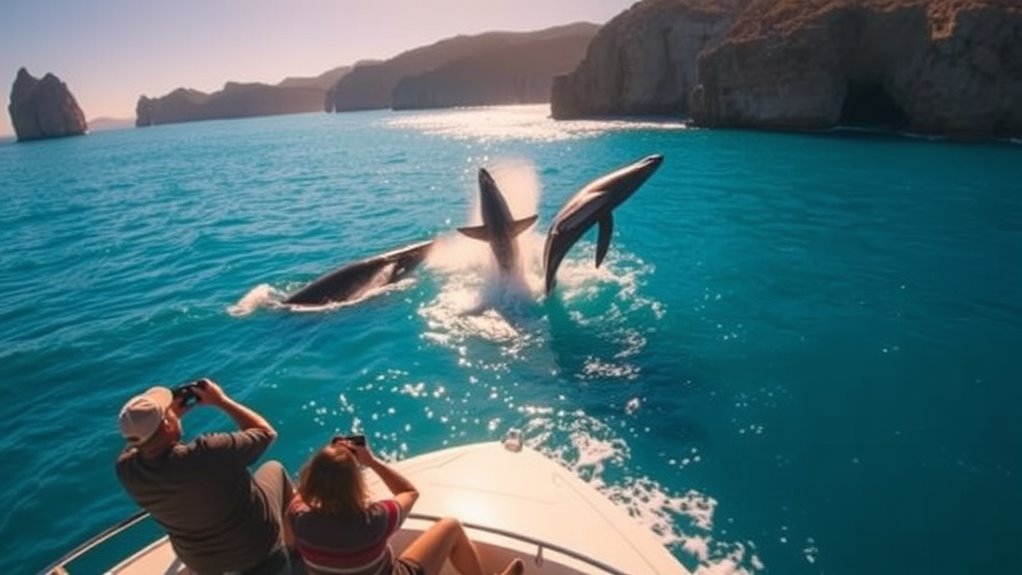
Although whales may appear as early as mid-November, the official whale watching season in Cabo San Lucas runs from December 15 to April 15. You’ll find this period perfectly aligns with the migration patterns of humpback whales and gray whales traveling from colder northern waters. The start and end dates mark when whale sightings become more frequent and dependable, making your experience more rewarding.
Peak whale activity typically occurs between mid-January and late March, so plan your trip accordingly to catch the most impressive displays. While you might spot whales outside the official whale watching season, those are less common. Sticking to the official whale watching season in Cabo San Lucas ensures you witness these magnificent creatures during their prime presence in the area.
Which Whale Species Migrate to Cabo and When
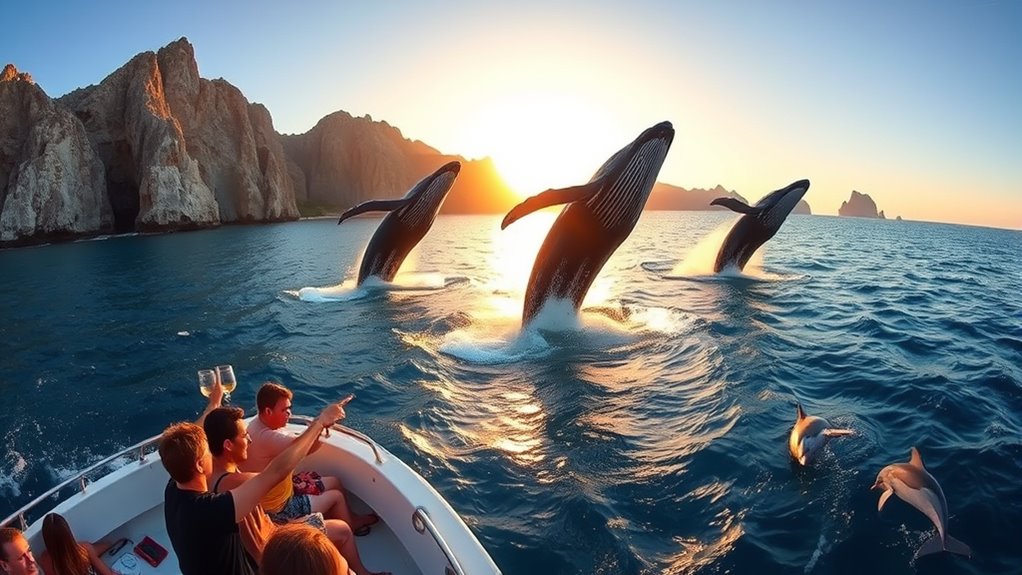
You’ll spot humpback whales arriving in Cabo from mid-November through April, making them the most common visitors during the season.
Gray whales show up a bit later, usually from early January to late March, staying close to shore. Knowing these timings helps you plan the best moments to catch these magnificent creatures.
Humpback Whale Migration
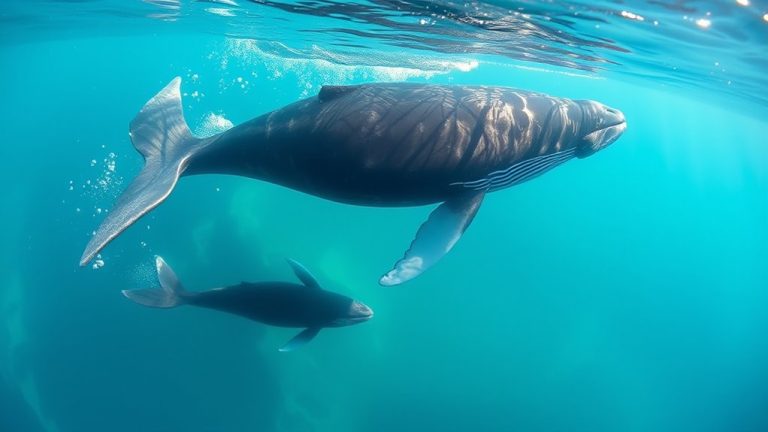
When do humpback whales make their spectacular journey to Cabo San Lucas? You’ll find these majestic creatures migrating from November through April, marking the prime whale watching season. During this time, they leave colder northern feeding grounds to reach the warmer lagoons of Baja California for breeding and calving.
The peak activity happens between mid-December and late January, so that’s when sightings are most frequent.
Here’s what to know about humpback whale migration in Cabo:
- Humpback whales travel long distances to breed and calve in warm waters
- Their migration supports essential feeding before and after breeding
- Male humpbacks sing complex songs audible miles away during breeding
- They’re the most commonly spotted species during whale watching season
- Peak activity offers the best chance to witness their spectacular behaviors
Get ready for an unforgettable experience!
Gray Whale Presence
Besides the humpback whales that captivate many visitors, gray whales also make a remarkable journey to Cabo San Lucas. You’ll find gray whales migrating to this area primarily during the migration season from mid-January to mid-March. They use the region for calving and breeding, especially near Magdalena Bay, where nearshore sightings are most common.
While gray whales typically spend the winter months in Baja California, their offshore migration path often keeps them further north, making sightings in Cabo less frequent than humpbacks. However, if you visit during the peak season in Cabo, you still have a good chance to spot these majestic creatures.
How Whale Activity Changes During the Season

As the whale watching season unfolds in Cabo, you’ll notice their activity peaks from mid-December to late January, coinciding with calving and mating behaviors. During this peak activity, whale behaviors become more vibrant and varied.
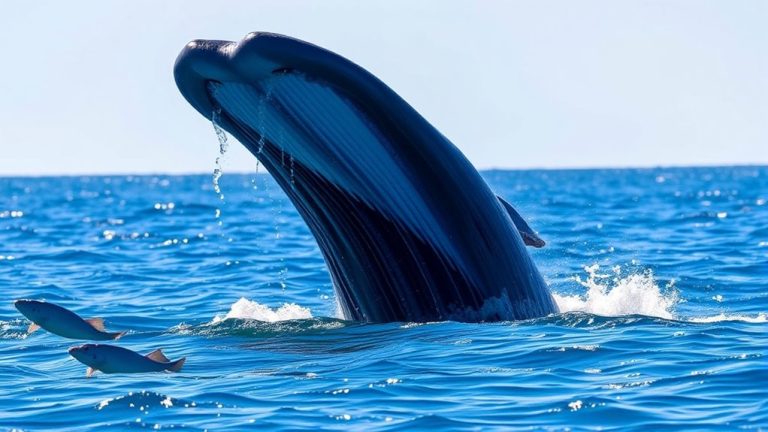
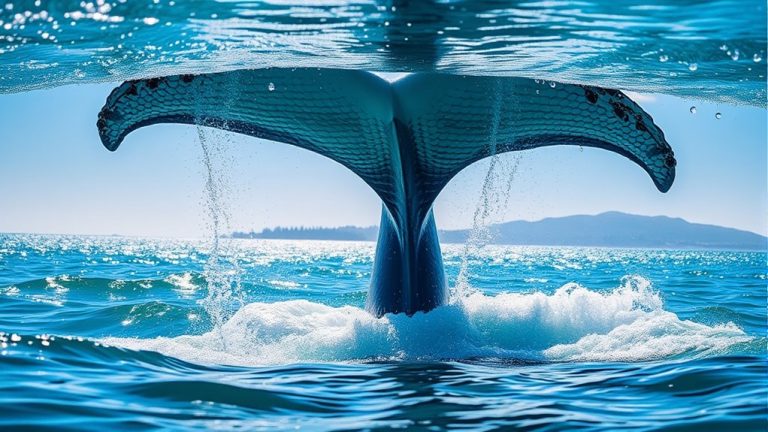
- Humpback whales often breach and slap tails, especially mid-season. Whale movement fluctuates every 2-3 days, influenced by environmental factors. Male humpbacks travel between breeding and calving areas, affecting sightings.
- Periods of intense activity alternate with calmer days throughout the season. Multiple tours over several days increase chances of witnessing dynamic whale behaviors.
Best Times of Day for Whale Watching in Cabo
If you want a smooth ride with calm seas, early morning tours are your best bet, especially if you’re prone to seasickness or traveling with kids.
But if you’re after more whale activity, afternoon trips often bring exciting sightings, especially around high tide. Choosing the right time depends on whether you prefer comfort or action during your whale watching adventure.
Morning Calm Advantages
When you choose a morning whale watching tour in Cabo, you’ll benefit from the calmest seas and minimal wind, which create ideal viewing conditions. The morning calm offers a peaceful setting that enhances your experience and increases your chances of spotting active whales.
Here’s why early morning trips stand out: Quiet seas reduce boat vibration, making the ride smoother and more comfortable. Sea tranquility improves photo opportunities with clear, steady shots. Active whales are more commonly seen during these hours, displaying behaviors like breaching.
Morning calm helps guests prone to motion sickness enjoy the tour without discomfort. Early morning whale watching lets you experience nature undisturbed, in a serene environment. Choosing morning calm ensures you make the most of your whale watching adventure in Cabo.
Afternoon Activity Peaks
Although the afternoon brings windier conditions and choppier seas, you’ll find that whale activity in Cabo often peaks during this time, offering more frequent and dramatic sightings. Afternoon tours coincide with high tide, which seems to stimulate active whales, resulting in exciting whale behaviors like breaches and tail slaps.
These dynamic whale encounters make afternoon trips especially rewarding for spotting lively, playful whales. While windier conditions can challenge visibility, they also add energy to the experience, with waves enhancing the thrill of each sighting. Many guides recommend booking afternoon tours to maximize your chances of witnessing these spectacular whale behaviors.
If you want to see whales at their most active, afternoon whale sightings during high tide provide an unforgettable, action-packed adventure.
Choosing Whale Watching Tours to Match Your Goals
Because whale watching tours in Cabo vary widely, choosing the right one depends on what you hope to experience. The best time to see whales often aligns with the whale-watching season’s active whale behaviors, so timing matters. Some tours keep you close to shore, while others take you farther out.
Early morning trips usually offer calmer seas and better chances to spot whales. Guided tours led by expert naturalists deepen your understanding and improve sighting success.
Consider these factors when selecting tours:
- Type of boat: Zodiac for close encounters or luxury cruise for comfort
- Timing: early morning or late afternoon for optimal whale activity
- Target species: humpback, gray, or blue whales
- Number of tours booked: multiple tours increase sighting chances
- Presence of expert naturalists for enhanced learning
Packing Tips and Preparation for Whale Watching
Since weather on the water can change quickly, you’ll want to pack layers including a waterproof jacket and shoes to stay comfortable throughout your whale watching tour. Wear comfortable clothing that adapts to varying sea conditions.
Don’t forget sunscreen, sunglasses, and a hat to protect yourself from the sun’s rays. Bring binoculars and a waterproof camera to capture close-up views of the whales without worrying about sea spray damaging your gear.
Use waterproof baggies or cases to keep your electronics and valuables safe from splashes. If you’re prone to motion sickness, pack motion sickness medication to ensure you enjoy the trip without discomfort.
Preparing thoughtfully helps you focus on the incredible whale watching experience Cabo offers.
Frequently Asked Questions
What Is the Best Month to See Whales in Cabo San Lucas?
The best months to see whales in Cabo San Lucas are January and February. You’ll catch the peak whale activity, including breaching and calf sightings, maximizing your chances for an unforgettable whale-watching experience during these vibrant months.
Is Whale-Watching Worth It in Cabo?
Yes, whale-watching in Cabo is definitely worth it. You’ll see impressive species, enjoy expert-guided tours, and witness amazing whale behaviors, especially during peak season.
It’s an unforgettable experience you won’t want to miss.
What Are the Best and Worst Months to Go to Cabo?
You’ll love visiting Cabo in January for peak whale activity—imagine spotting playful calves breaching nearby!
Avoid early December and late March, as whales are scarce then, making your experience less exciting and sightings rare.
How Much Does It Cost to Go Whale-Watching in Cabo San Lucas?
You’ll pay around $80 to $130 for standard whale-watching tours in Cabo. For luxury or private tours, expect $150 to over $200. Group discounts and add-ons like snorkeling can affect the total cost.
Conclusion
Now that you know whale watching season in Cabo runs from December to April, you might wonder if whales really follow precise schedules. While their migration isn’t exact, the consistent timing each year proves nature’s rhythm is reliable.
So, if you’re planning a trip, trust the season’s window and get ready to witness these majestic creatures up close.
With the right timing and preparation, your whale watching experience in Cabo will be unforgettable. Remember, Cabo whale watching season offers a unique opportunity to see these magnificent animals in their natural habitat.