
How Big Are Pilot Whales on Average?
You’ll find pilot whales usually range from 12 to 24 feet long, with males often nearly twice as large as females. Males can weigh up to 6,600 pounds, while females typically weigh around 2,200 pounds.
The two species, long-finned and short-finned pilot whales, differ slightly in size.
You’ll also notice that age and sex play a big role in their growth. Keep exploring to uncover more about what shapes their impressive size.
Average Size and Weight of Pilot Whales
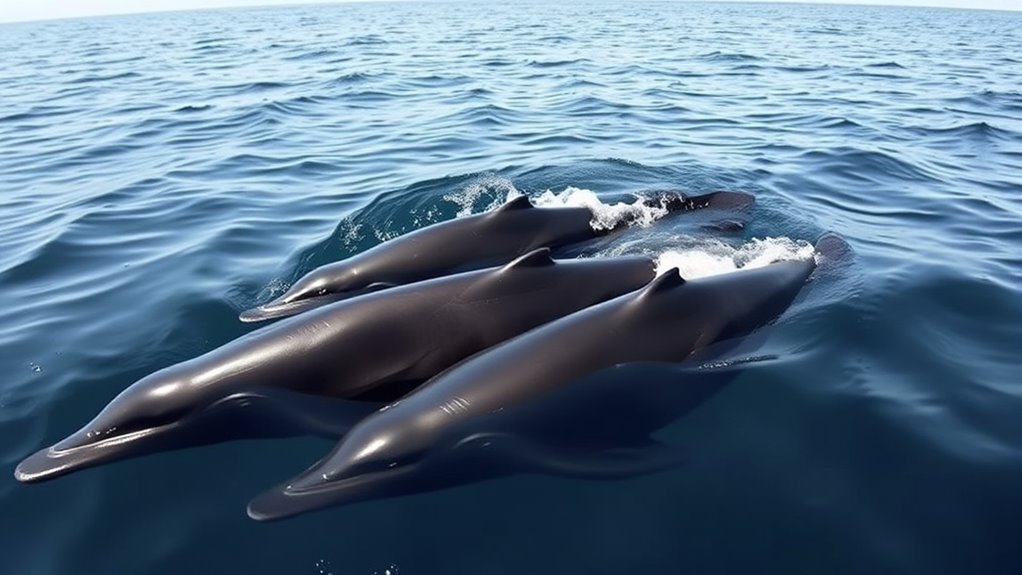
Pilot whales typically measure between 12 and 24 feet in length, with males growing larger than females. When you consider the body length of pilot whales, adult males can reach up to 24 feet, showcasing clear sexual dimorphism in size.
In terms of weight, adult males can weigh as much as 6,600 pounds, while adult females are considerably lighter, averaging around 2,200 pounds. This difference in weight and size between males and females highlights the sexual dimorphism present in pilot whales.
On average, pilot whales fall somewhere in the middle of this range, with most individuals measuring between 12 and 20 feet. Understanding the average size and weight of pilot whales gives you a clearer picture of their impressive physical stature.
Size Differences Between Long-Finned and Short-Finned Pilot Whales

Although both species share a name, long-finned and short-finned pilot whales differ noticeably in size. Long-finned pilot whales tend to be larger, with adults reaching a maximum length of about 7.3 meters for males, whereas short-finned pilot whales rarely grow beyond 6 meters. Size differences are clear not only in length but also in average weight.
Adult long-finned pilot whales weigh between 2.5 to 3 tons, while short-finned pilot whales are smaller, averaging 1.8 to 2.2 tons. In both species, males are generally larger than females, but the gap is more pronounced among long-finned pilot whales. Knowing these size differences helps you better understand the physical characteristics that set these two closely related pilot whale species apart.
How Pilot Whale Sizes Vary by Age and Sex

Understanding the size differences between long-finned and short-finned pilot whales sets the stage for examining how their sizes change with age and vary between males and females.
You’ll notice significant sex differences in growth rates, with males growing larger and reaching maturity later than females. Calves start small but steadily increase in length and weight as they approach juvenile and adult stages.
| Age Stage | Female Size (Length/Weight) | Male Size (Length/Weight) |
|---|---|---|
| Calves | 3 to 6 ft / small weight | 3 to 6 ft / small weight |
| Juvenile | Growing towards 12 ft | Growing towards 24 ft |
| Adult | 12 ft / lighter weight | 24 ft / 2,200–6,600 lbs |
These differences highlight how sex influences adult size and growth patterns.
How Do Pilot Whales Compare to Other Big Dolphins and Whales?
When comparing size, you’ll find that pilot whales fall in the medium range among large dolphins and whales. Their whale length ranges from 12 to 24 feet, with adult males reaching up to 24 feet and adult females generally smaller, around 12 to 16 feet. In a size comparison with big dolphins, pilot whales are smaller than killer whales, which can reach 30 feet, but they remain one of the larger delphinids.
Compared to most marine mammals, pilot whales are larger than common dolphins, which rarely exceed 10 feet. While they don’t match the size of some larger whale species, pilot whales hold a distinct position within the size range of big dolphins and marine mammals, making them impressive yet moderate in size among their relatives.
Factors Influencing Pilot Whale Growth and Maximum Size
Pilot whale size varies considerably depending on several key factors. Growth and maximum size in adult pilot whales are influenced by age, sex, and genetic variation. Males typically grow larger than females, with adult males reaching up to 7.3 meters (24 feet), while females remain slightly smaller.
Environmental conditions play a pivotal role in determining size, as favorable habitats with abundant food availability support better growth rates. If food is scarce, pilot whales may not reach their full potential size. Genetic variation within populations also affects how large individual whales grow, leading to size differences even among the same species.
Frequently Asked Questions
Which Is Bigger, an Orca or a Pilot Whale?
Orcas are bigger than pilot whales. You’ll find orcas grow up to 9 meters, while pilot whales usually max out around 6 meters.
Are Pilot Whales Aggressive?
Pilot whales aren’t usually aggressive toward humans. You’ll find they’re social and gentle, but they can be protective around their group.
Just respect their space, and you won’t have any trouble encountering them safely.
Why Do Orca Avoid Pilot Whales?
Think of pilot whales as a fortress in the ocean; orcas avoid them because their strength, teamwork, and vigilance make attacks risky.
You’ll see pilot whales mob or chase orcas, defending their pod fiercely and effectively.
What Is the Lifespan of a Pilot Whale?
You can expect pilot whales to live between 35 and 60 years. Females usually outlive males, often reaching around 60 years, while males typically live about 45.
Their lifespan varies with species and environment.
Conclusion
You might be surprised to learn that pilot whales can grow up to 20 feet long—that’s about the size of a large SUV! Whether long-finned or short-finned, these impressive creatures have distinct sizes influenced by age and sex.
As you’ve seen, pilot whales stand out among dolphins and whales, showing how nature shapes their growth. Next time you hear about pilot whales, remember just how big and fascinating they truly are!
Understanding how big pilot whales are on average helps us appreciate these incredible marine mammals even more. Their size reflects their unique adaptations and role in the ocean ecosystem.