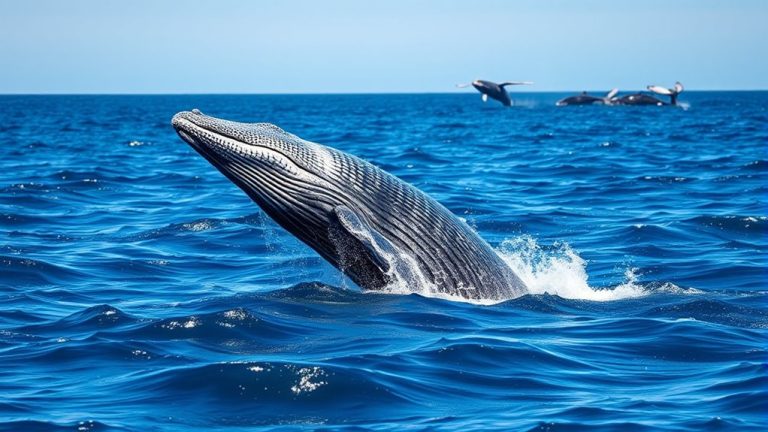
What Are Whale Flukes and Why Do They Matter?
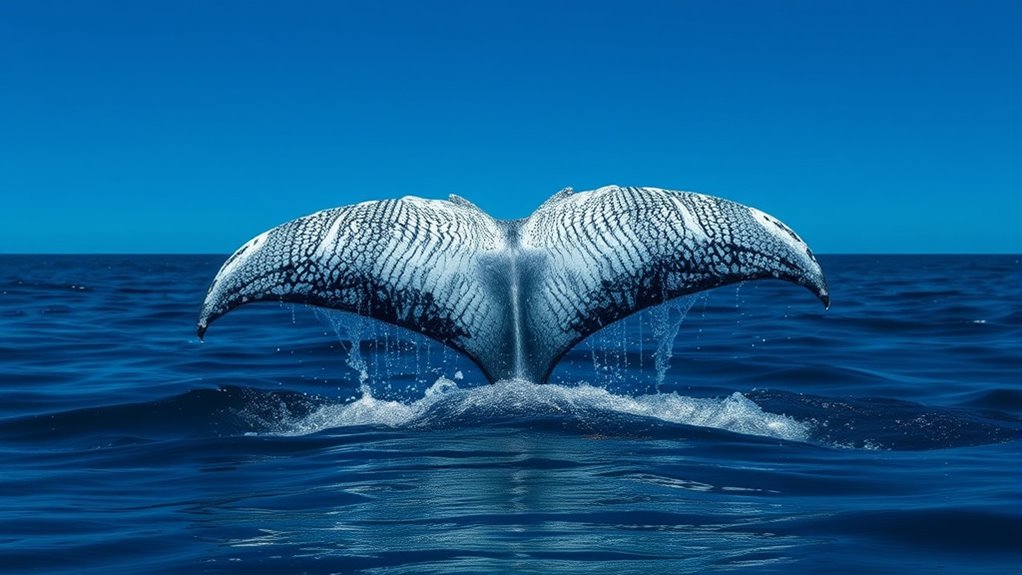
Whale flukes are the large, powerful tail fins you see when whales dive, featuring unique black, gray, and white patterns that resemble fingerprints. These distinct markings—including scars, notches, and pigmentation—allow researchers to identify individual whales over time.
By using these patterns, you can track the movements, behaviors, and health of whales, which is essential for protecting their populations.
Keep exploring, and you’ll discover how fluke patterns tell amazing stories about whales and their lives.
What Are Whale Flukes and How Do They Look?
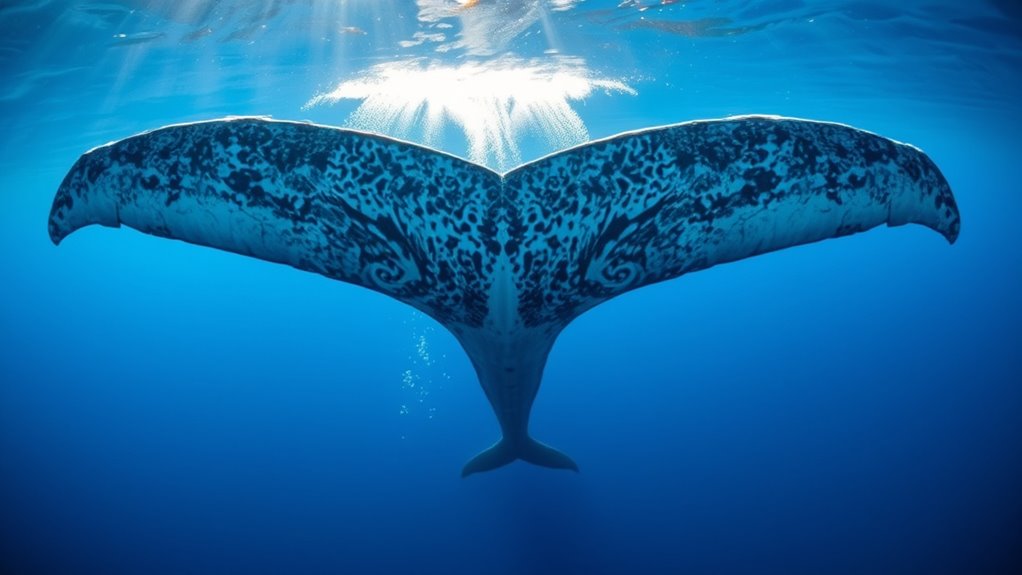
A whale’s flukes are its powerful tail fins that it lifts out of the water when diving. These whale flukes can span up to 18 feet wide, especially in humpback whales, and consist of two lobes with serrated trailing edges. From a dorsal view, you’ll notice their broad, muscular shape, vital for propulsion underwater.
What really stands out are the distinctive markings on the underside—patterns of black, dark gray, and white create a unique design. Scars, notches, and barnacle embedments add to each fluke’s individuality. These features make whale flukes essential for individual identification, as no two are exactly alike.
Observing these details helps researchers track and study whales in their natural habitat with precision.
Why Is Each Whale’s Fluke Unique and Important for Identification?
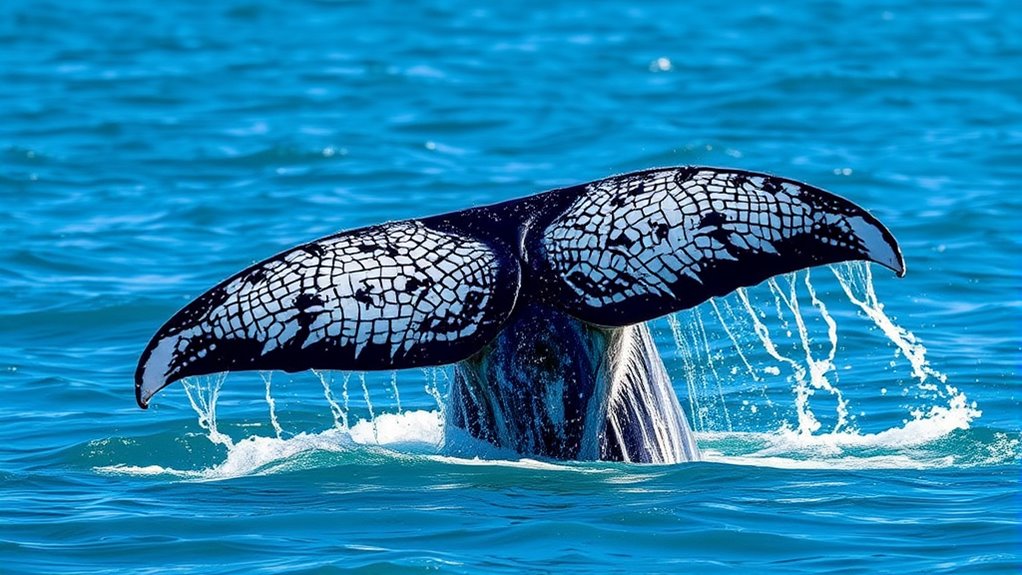
You can tell one whale from another by looking closely at its fluke. Each whale’s fluke has distinctive markings and fluke patterns that are as unique as a fingerprint. These include pigmentation variations in black, gray, and white, plus scars, notches, and deformities along the trailing edge.
These unique features make individual identification possible without disturbing the whale. By photographing and comparing these fluke patterns over time, researchers can track the same whale across different locations and years. This approach plays a vital role in marine mammal tracking, helping scientists monitor population health and migration routes.
How Researchers Identify Whales Using Flukes
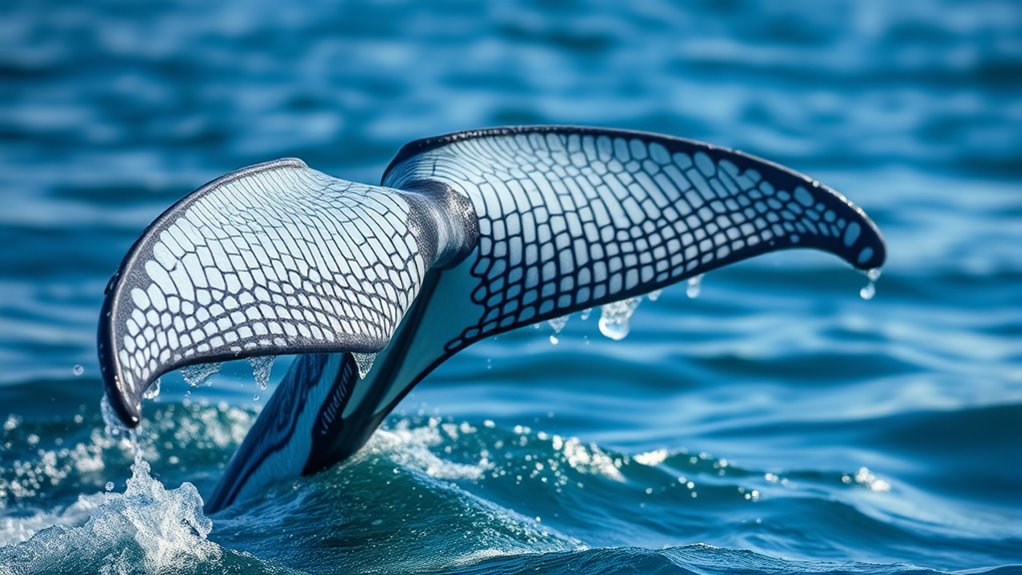
When researchers want to identify individual whales, they photograph the unique patterns on the underside of their flukes. These flukes display distinctive characteristics like pigmentation variations, scars, and notches along the trailing edge. By capturing these details, scientists can identify individual whales with precision.
They compile these images into photo-identification catalogs, assigning each whale an alpha-numeric code based on its fluke’s unique features. This system allows you to track whales over time, monitoring their movements and population changes. Scars from predators or fishing gear and natural deformities further help differentiate one whale from another.
Using flukes as natural ID cards, photo-identification has become an invaluable tool for researchers studying and conserving whale populations worldwide.
What Do Fluke Patterns Reveal About Whale Behavior?
Although fluke patterns primarily help identify individual whales, they also reveal valuable insights into whale behavior. By examining these unique markings—pigmentation, notches, and scars—you can track how whales heal from injuries or acquire new ones, shedding light on their interactions with predators or human threats.
Changes in fluke patterns help researchers understand migration routes and site fidelity, showing where whales feed or breed. You’ll notice how the frequency and position of fluke displays signal social behaviors or readiness to dive. Even variations in fluke visibility offer clues about a whale’s health and recent experiences.
How Whale Fluke Identification Protects Whales and Their Habitat
Because each whale’s fluke pattern is unique and permanent, scientists can track individuals over time to gather essential data on their movements, behavior, and health. Whale identification relies on unique characteristics like pigmentation, scars, and notches, allowing researchers to monitor individual whales accurately. This detailed tracking supports conservation efforts by revealing migration routes, residency, and threats such as ship strikes or entanglements.
By maintaining long-term photo catalogs, scientists detect shifts in population and habitat use, which informs protective regulations and marine spatial planning. When you recognize individual whales, it becomes easier to prioritize critical habitats and implement targeted measures that reduce human impacts.
Ultimately, whale fluke identification plays a pivotal role in protecting whales and preserving their environment for future generations.
Frequently Asked Questions
Should Humans Remove Barnacles From Whales?
You shouldn’t remove barnacles from whales because it can stress them and harm their skin. Letting barnacles stay supports natural behaviors and helps preserve the whale’s health and social signals within their ecosystem.
Why Don’t We Eat Whale Meat?
You might think whale steaks would be a delicacy, but you don’t eat whale meat because it’s banned, full of toxins, and whales are protected.
Plus, society prefers admiring them, not slicing them on your plate.
What Do Flukes Mean on a Whale?
Flukes on a whale show you where it’s diving or communicating.
You can identify individual whales by their unique fluke patterns, scars, and shapes. This helps researchers track and study whale behavior and populations effectively.
Why Do Whales Slap Their Flukes?
You see, whales slap their flukes to communicate, warn predators or rivals, and attract attention. They use the sound to signal dominance, coordinate with their group, or even during social and mating interactions.
Conclusion
You might think whale flukes are just giant tails waving underwater, but they’re actually nature’s fingerprint for these massive creatures. It’s ironic how such huge animals rely on tiny unique patterns to reveal their secrets.
By paying attention to these flukes, you help protect whales and their homes—proving that sometimes, the smallest details make the biggest difference. So next time you spot a fluke, remember, it’s more than just a tail splash! Whale flukes are essential for identification, research, and conservation efforts.