Are Whale Sharks Fish or Mammals?
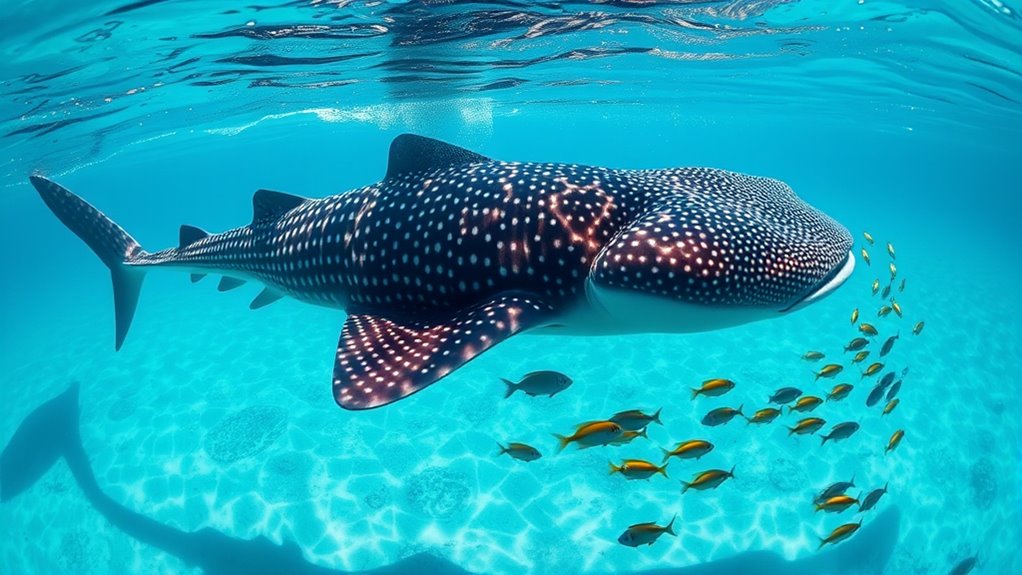
You might think whale sharks are mammals because of their size and name, but they’re actually fish. Whale sharks breathe using gills, have a cartilage skeleton, and reproduce by carrying eggs inside their bodies until they hatch.
Unlike mammals, they don’t nurse their young or regulate their body temperature. Their filter-feeding behavior also differs from marine mammals.
If you want to understand why this classification matters for conservation, keep exploring their unique traits and role in the ocean.
What Makes a Fish Different From a Mammal?
Although both fish and mammals live in water, you can easily tell them apart by how they breathe and regulate their body temperature. Fish use gills to extract oxygen directly from water, while mammals rely on lungs and must surface regularly to breathe air.
When it comes to body temperature, fish are cold-blooded, so their temperature changes with the surrounding environment. Mammals, however, maintain a constant, warm body temperature regardless of where they are. Another clear difference lies in reproduction: fish may lay eggs or give birth to live young, but mammals always give birth to live young and nurse them with milk.
These differences in breathing, body temperature regulation, and reproduction help you clearly distinguish fish from mammals.
Why Are Whale Sharks Actually Fish?
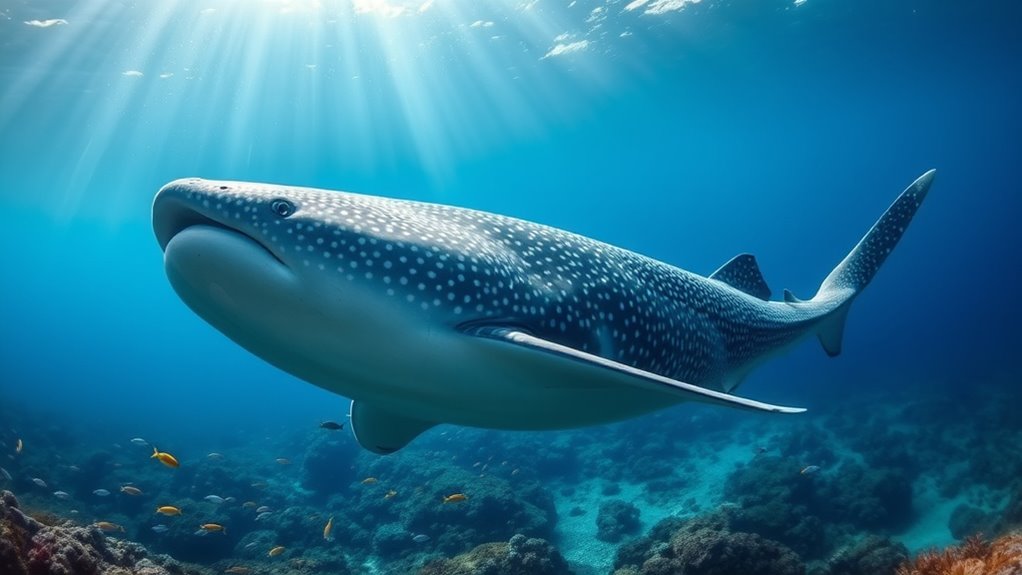
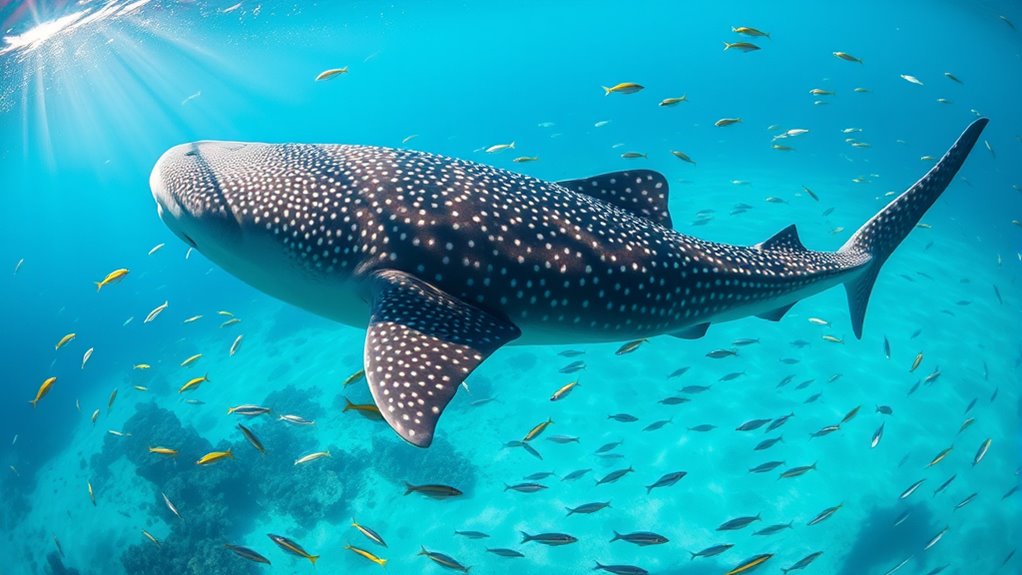
Even though whale sharks are enormous and gentle, they’re still fish because of key features like gills and cartilage skeletons. You can tell they’re cartilaginous fish since their skeletons are made of cartilage, not bone like mammals. They breathe by passing water over their gills, so they don’t need lungs or air like mammals do.
When whale sharks reproduce, they do so through ovoviviparity, meaning their eggs hatch inside the mother’s body before the young are born—quite different from how mammals give birth. They lack mammalian traits such as hair, mammary glands, and warm-bloodedness.
All these characteristics clearly show that whale sharks belong to the fish family, specifically the class Chondrichthyes, which includes all sharks and rays.
Physical Features That Prove Whale Sharks Are Fish
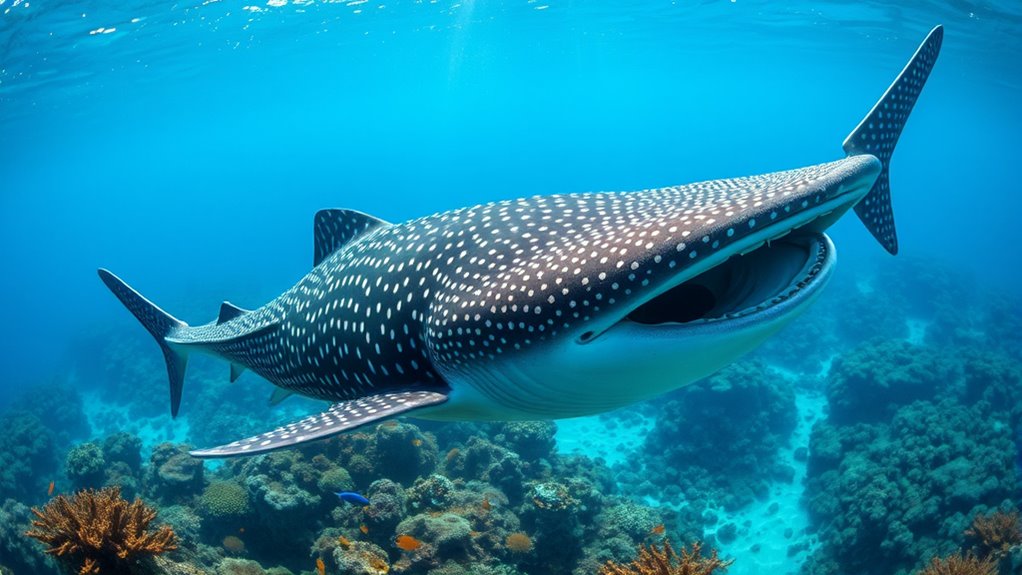
Because whale sharks have gill slits and breathe by passing water over them, you can immediately tell they’re fish, not mammals. These gill slits are essential for extracting oxygen from water, a trait unique to fish. Additionally, whale sharks possess a cartilaginous skeleton, meaning their bones are made of flexible cartilage rather than solid bone like mammals.
This lightweight skeleton helps them glide effortlessly through the ocean. Their skin is covered with dermal denticles, tiny tooth-like scales that reduce drag and protect their bodies. These physical features clearly separate whale sharks from mammals, confirming their classification as fish.
How Whale Sharks Breathe
When you watch a whale shark, you’ll notice it keeps its mouth wide open as it swims, allowing water to flow through its gills where oxygen is absorbed. Unlike mammals, whale sharks don’t surface to breathe; their respiratory system is built to extract oxygen continuously from the water.
As water enters their massive mouths, it passes over multiple gill slits on the sides of their heads. These gills efficiently filter oxygen from the water flow, supplying the shark’s body with the air it needs to stay active underwater.
This specialized respiratory system lets whale sharks remain pelagic, cruising deep and open waters without needing to come up for air like mammals do.
How Whale Sharks Reproduce
Although much about their reproduction remains a mystery, whale sharks give birth to live pups after eggs hatch inside the female’s body. When you explore how whale sharks reproduce, you’ll find these fascinating facts:
- Females can carry over 300 developing embryos at once, showcasing their prolific nature.
- Neonate whale sharks are tiny, about 40-60 centimeters long, and leave the mother’s body soon after birth.
- Whale sharks are ovoviviparous, meaning the eggs hatch internally before pups are born live.
Scientists haven’t observed whale sharks giving birth in the wild, so many details about their reproductive behavior are still unknown. You’ll also find evidence suggesting females can retain sperm and produce multiple litters over time, which helps sustain their populations despite limited insights into their breeding habits.
How Whale Sharks Feed Compared to Marine Mammals
While both whale sharks and marine mammals feed on ocean life, their methods differ markedly. As filter feeders, whale sharks swim with their mouths wide open, allowing water to flow through their gill filters. These gill filters trap plankton, krill, and small fish, which they then consume passively.
You’ll notice their feeding habits involve processing over 6,000 liters of water per hour, using tiny teeth and filter pads to catch microscopic prey. In contrast, marine mammals like whales actively gulp or lunge-feed on larger prey, using baleen plates to strain food from water.
Unlike marine mammals, whale sharks don’t breathe air but extract oxygen through their gills, making their feeding habits and respiratory systems clearly different despite their shared ocean habitat.
Common Myths About Whale Sharks
Many people get confused about whale sharks because of their enormous size and gentle behavior, but these creatures are fish, not mammals.
Let’s clear up some common myths you might have heard:
- Myth 1: Whale sharks are related to whales because of their name. In reality, they’re fish with gills, not mammals with lungs.
- Myth 2: Whale sharks are warm-blooded like mammals. Actually, they’re ectothermic, relying on water temperature just like other fish.
- Myth 3: Whale sharks give live birth like mammals. While some do, many lay eggs, which is typical fish behavior.
Understanding these myths helps you see why whale sharks belong to the fish category, despite their mammal-like size and demeanor.
Why Whale Shark Classification Matters for Conservation
You need to know that classifying whale sharks as fish shapes how conservationists protect them and their habitats. This clear classification guides efforts to address threats like fishing and pollution that specifically affect fish species.
When you understand their true classification, you’re more likely to support the right conservation actions.
Biological Classification Importance
Because whale sharks are classified as cartilaginous fishes with gills and cartilage skeletons, not mammals, this classification directly shapes how conservation efforts protect them. Understanding their biological classification helps you grasp why specific conservation actions are necessary. If you misclassify them, you risk applying strategies that don’t fit their unique biology.
By recognizing whale sharks as cartilaginous fishes, you ensure conservation focuses on:
- Protecting their marine habitats and migration routes
- Enforcing fishing regulations tailored for shark species
- Supporting research on their cartilage-based physiology and gill respiration
This clear biological classification guides legal protections and habitat management, making your conservation efforts effective and relevant to the whale shark’s needs. Without it, you might unintentionally undermine the species’ survival.
Impact On Conservation Strategies
When you classify whale sharks as fish rather than mammals, you directly influence how conservation strategies develop and apply. This classification highlights their vulnerability to fishing and bycatch, making habitat protection vital. It also guides legal measures like fishing bans and trade restrictions.
Understanding whale sharks as fish helps prioritize conservation efforts on breeding grounds, nursery areas, and migratory routes, ensuring their survival.
| Conservation Aspect | Impact of Fish Classification |
|---|---|
| Habitat Protection | Targets marine environments, reduces bycatch risk |
| Migratory Routes | Safeguards corridors critical for movement |
| Legal Framework | Enables fishing bans and trade controls |
| Conservation Focus | Emphasizes breeding and juvenile habitats |
Recognizing whale sharks as fish steers conservation strategies toward protecting their ecological needs efficiently.
Public Awareness And Support
Although many people mistakenly think whale sharks are mammals, knowing they’re actually fish helps you understand why tailored conservation efforts matter. This clarity boosts public awareness and strengthens conservation strategies specifically designed for fish species.
When you recognize whale sharks as filter-feeding fish, you appreciate their unique vulnerabilities and the need for targeted protection.
Here’s why it’s important for you to know this:
- It corrects misconceptions and builds stronger public support for marine conservation.
- It highlights the threat from fishing practices aimed at fish, pushing for stricter regulations.
- It mobilizes global efforts against illegal fishing and trade targeting fish species like whale sharks.
Understanding their true classification empowers you to advocate effectively for their survival.
Frequently Asked Questions
Are Whale Sharks Technically Fish?
Yes, you can consider whale sharks technically fish because they breathe through gills, have fins, and a cartilage skeleton.
They don’t breathe air or nurse young like mammals do, so they fit firmly in the fish category.
Why Are Whale Sharks Not Sharks?
Imagine spotting a whale shark’s massive, gentle form—it’s actually the biggest shark species! You’ll realize whale sharks are true sharks, just slow-moving filter feeders, unlike aggressive predators, but they’re definitely part of the shark family.
Is a Dolphin a Mammal or a Fish?
You’re right to ask—dolphins are mammals, not fish. They breathe air with lungs, give live birth, nurse their young, and stay warm-blooded.
You’ll notice they surface to breathe through their blowhole.
Why Is a Shark a Fish but a Whale Is a Mammal?
You call a shark a fish because it breathes through gills and has a cartilage skeleton.
A whale’s a mammal since it breathes air with lungs, is warm-blooded, and nurses its young with milk.
Conclusion
You might be surprised to learn that whale sharks, despite their name, are true fish—not mammals. They can grow over 40 feet long and weigh as much as 20 tons, making them the largest fish in the ocean. Unlike mammals, they breathe through gills and lay eggs.
Knowing this helps you appreciate their unique place in marine life and highlights why protecting these gentle giants matters more than ever for ocean conservation. Understanding that whale sharks are fish emphasizes the importance of marine biodiversity and the need to safeguard their habitats.