

How Do Whales Sleep Step by Step
You’ll notice whales sleep by resting one brain half at a time, called unihemispheric sleep. This unique sleeping method allows them to stay partially awake while getting the rest they need.
They float near the surface, gently surfacing every few minutes to breathe through their blowhole with slow, controlled breaths.
One side of their brain stays alert, keeping an eye open to watch for danger. This helps them stay safe from predators and navigate their environment.
They often rest in calm waters, sometimes in groups, supporting each other’s safety.
Keep going, and you’ll find out how their sleep patterns and environment keep them secure and healthy. Understanding these steps reveals the fascinating ways whales balance rest and vigilance in the ocean.
What Is Unihemispheric Sleep in Whales?
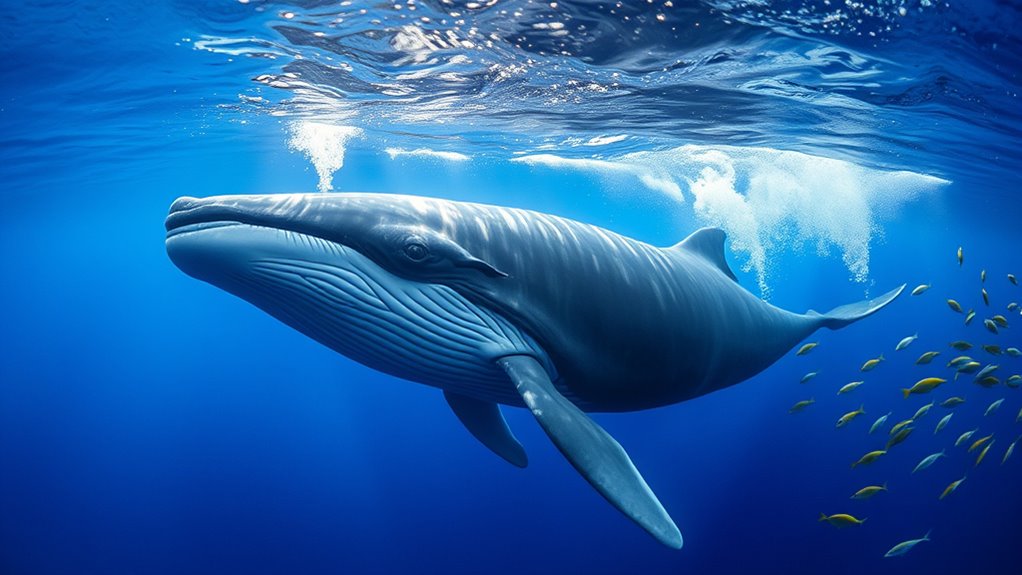
Although you might assume whales sleep like land mammals, they actually use unihemispheric sleep, where only one half of their brain rests at a time. This unique adaptation lets one hemisphere shut down to rest while the other stays awake and alert. The awake half of the brain manages vital functions like breathing, body position, and awareness of the environment.
You’ll find that the sleeping and waking hemispheres switch periodically, allowing the whale to get rest without losing control. This method prevents drowning and helps whales stay vigilant against predators. Scientists have confirmed unihemispheric sleep through brain activity monitoring and observing whale behavior, showing how this split-brain rest keeps them safe and breathing even while half-asleep.
How Whales Breathe While Sleeping
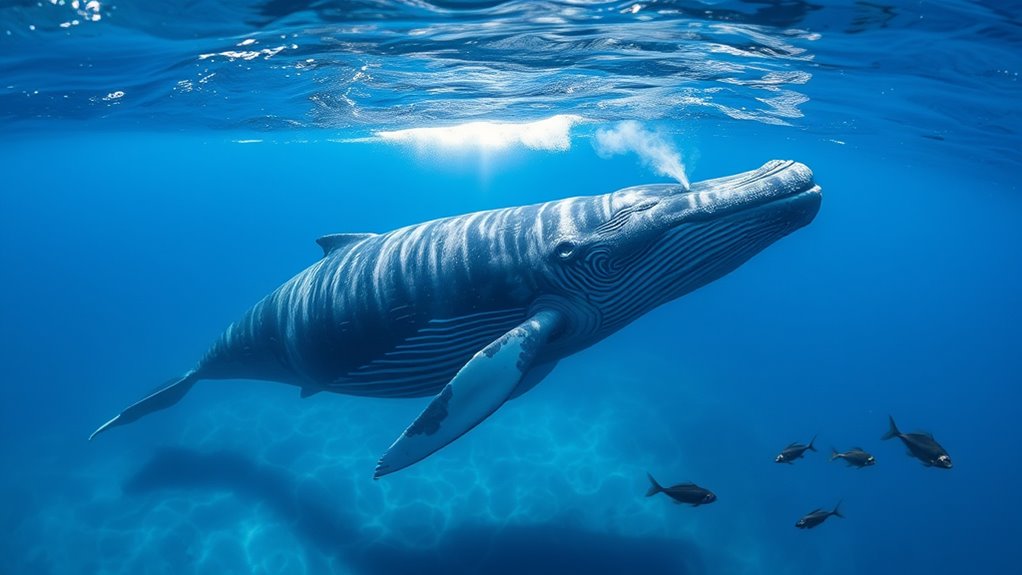
When whales sleep, they still have to control their breathing consciously through their blowholes. You’ll find that they rest one half of their brain at a time, keeping the other half alert to manage surfacing for air.
This unique unihemispheric sleep lets them breathe regularly without fully waking up.
Voluntary Breathing Control
Because whales control their breathing voluntarily, they have to stay partly awake even while sleeping. This voluntary breathing means they consciously decide when to surface and take a breath, unlike humans who breathe automatically. To manage this, one hemisphere of the brain remains active to maintain conscious control over their breathing muscles.
This active brain half sends signals to the muscles that operate the blowhole, making sure the whale surfaces regularly to exhale and inhale. Without this conscious control, whales risk drowning since they can’t breathe underwater. So, even in rest, you’d notice a whale’s partial alertness as it balances the need for sleep with the necessity to breathe periodically.
This unique adaptation lets whales survive and sleep safely in their aquatic world.
Unihemispheric Brain Sleep
You might wonder how whales manage to sleep without losing control of their breathing. They use unihemispheric sleep, where one half of their brain remains awake while the other rests. This hemispheric brain activity lets the active hemisphere control conscious breathing, so whales surface regularly for air.
Meanwhile, the resting hemisphere’s eye stays closed, but the open eye on the active side keeps watch for predators and obstacles. The two hemispheres switch roles periodically, allowing the whale to rest while staying alert and breathing consciously.
| Hemisphere State | Function |
|---|---|
| Active | Controls breathing, monitors environment |
| Resting | Sleeps, eye closed |
| Switch Roles | Alternates hemispheric activity |
Where and How Do Whales Sleep and Rest?

Although whales must surface to breathe, they manage to rest by sleeping at or near the water’s surface, often floating like logs either horizontally or vertically.
When whales sleep, they use unihemispheric sleep, resting one half of their brain while the other half stays alert. This lets them surface to breathe and remain aware of predators.
You’ll often find whales resting in calm, protected waters like lagoons or near shorelines, especially during migration or breeding.
Their resting behavior includes slow, minimal movement at the surface, with some species, such as sperm whales, sleeping vertically in the water.
These short sleep bouts, sometimes called “logging,” help whales balance rest with the need to surface to breathe and stay safe in their environment.
How Long Do Whales Sleep and How Often Do They Nap?
You might be surprised to learn that whales don’t sleep for long stretches like humans do. Instead, they take short naps, usually lasting 10 to 30 minutes, several times throughout the day and night.
How often and how long they rest can vary widely depending on the species.
Sleep Duration Variability
How long do whales actually sleep, and how often do they take naps? Whale sleep duration varies widely among species, with some, like sperm whales, sleeping just 7% of the day—about 1.7 hours—broken into short naps lasting 10-15 minutes.
Others, such as belugas and gray whales, rest much longer, up to 32% and 41% of the day, respectively. They achieve this through hemispheric sleep, where one half of the brain rests while the other stays alert, allowing them to surface for air and stay aware of their surroundings.
This unique sleep pattern means whales don’t experience long continuous sleep like humans but instead rely on multiple brief episodes of rest spread throughout day and night.
Nap Frequency Patterns
Since whales need to breathe consciously, they can’t afford long, uninterrupted sleep. Instead, they catch short naps lasting about 10 to 15 minutes each. You’ll notice these naps happen multiple times during their 24-hour sleep cycle—usually 4 to 8 times a day.
This pattern lets them rest without risking their need to surface for air. Some species, like sperm whales, sleep only about 7% of the day, roughly 1.5 hours total. Their naps often occur near the surface during calm, safe moments.
How often and how long whales nap depends on their species, environment, and activity level. By breaking sleep into frequent, brief naps, whales stay alert and maintain their essential breathing rhythm.
How Whales Alternate Sleeping Brain Hemispheres
Although whales need to rest, they can’t afford to fully lose consciousness. They achieve this through unihemispheric sleep, where only one hemisphere of their brain shuts down at a time. While one side sleeps, the other stays active, controlling breathing and staying alert to potential threats.
After a period, a hemisphere switch occurs, allowing the resting side to wake up and the other to rest. This alternating pattern forms a continuous sleep cycle, enabling whales to rest effectively without compromising their survival needs.
How Whale Species Differ in Sleep Patterns
When you compare whale species, their sleep patterns reveal striking differences that reflect their unique lifestyles. Whale sleep patterns vary widely, especially in sleep duration. For example, sperm whales sleep only about 7% of the day, using unihemispheric sleep to keep one brain half alert while resting the other.
In contrast, gray whales sleep up to 41% of the day, often resting horizontally near the surface. Humpbacks take short rests of around 30 minutes, while dolphins prefer multiple brief sleep episodes throughout day and night. Belugas and gray whales tend to sleep more frequently and longer compared to profound divers like sperm whales.
These variations in unihemispheric sleep and sleep duration highlight how each species adapts its rest to suit its environment and survival needs.
How Whales Stay Safe From Predators While Sleeping
Because whales can’t fully shut down their brains while sleeping, they stay alert to danger by resting one half of their brain at a time. This unihemispheric sleep lets you experience rest without losing vigilance, essential for predator avoidance.
Whales often float near the surface or stay in groups in calm waters, enhancing their ability to detect threats like sharks quickly. Their partial sleep positions allow them to awaken instantly if danger approaches.
| Safety Strategy | Description | Benefit |
|---|---|---|
| Unihemispheric Sleep | One brain half rests, one alert | Maintains vigilance |
| Group Resting | Sleep near others | Quick threat detection |
| Surface Floating | Rest near water surface | Fast reaction time |
| Protected Waters | Sleep in calm lagoons | Reduced predator exposure |
What Behaviors Show When Whales Are Resting or Sleeping
When you spot a whale motionless at the surface, it’s likely logging—a clear sign it’s resting. You’ll notice their slow, deep breaths, sometimes spaced minutes apart, marking their sleep phases.
If you see several whales floating side by side, that’s group resting, showing their social bonds and shared safety.
Logging Behavior Explained
How can you tell if a whale is resting or sleeping? One common sign is logging behavior, where whales float motionless at the water’s surface, resembling logs. During this time, they stay mostly still, resting with slow, shallow breathing through exposed blowholes.
Logging often happens in calm, protected areas and can last from a few minutes to over half an hour.
Here are three key behaviors to spot when whales are logging:
- Floating horizontally or vertically, almost motionless
- Minimal movement to maintain breathing through blowholes
- Slow, shallow breathing that keeps them alert yet resting
Breathing Patterns Observed
Noticing a whale’s breathing can tell you a lot about its resting state. When whales rest, they exhibit slow breathing, surfacing for air at irregular intervals. This slow, shallow breathing is part of their logging behavior, where they float motionless, gently exhaling and inhaling through their blowholes.
Some whales even keep one eye open, showing hemispheric brain activity that allows conscious breathing while resting.
| Behavior | Description |
|---|---|
| Slow Breathing | Fewer breaths per minute |
| Irregular Surfacing | Breathing once every few minutes |
| Logging | Floating motionless at the surface |
| Eye Open | Hemispheric brain activity present |
These breathing patterns provide clues to when whales are truly resting.
Group Resting Dynamics
Although whales can rest alone, they often choose to rest in groups, aligning side-by-side in a behavior called logging that helps them stay safe. During group resting, whales engage in unihemispheric sleep, keeping one hemisphere of their brain alert to watch for predators.
You’ll notice they float motionless or drift slowly near the surface, signaling deep rest. Here’s what group resting looks like:
- Adults synchronize their rest, taking turns staying vigilant while others sleep.
- Calves stay close to their mothers, ensuring safety and easy nursing.
- Minimal movement during logging indicates a state of rest or sleep.
How Group Resting Helps Whales Sleep More Safely
When whales rest in groups, they take turns staying alert, which lets others sleep more safely. This group resting strategy creates a safety-in-numbers effect, reducing each whale’s risk of surprise attacks by predators. You’ll notice whales often rest side by side, a form of collective rest that helps them stay connected and aware of their surroundings.
By sharing the responsibility of vigilance, whales can extend their sleep periods without sacrificing safety. This cooperative behavior means individual whales don’t have to stay on guard all the time, allowing them to rest more effectively.
Why Protecting Whale Habitats Matters for Whale Sleep
Because whale sleep relies on calm, safe environments, protecting their habitats is essential for their well-being. When you help preserve whale habitats, you guarantee they have quiet resting sites free from disturbances like noise pollution. This protection supports their natural unihemispheric sleep cycles, preventing fatigue and health problems.
Protecting whale habitats ensures peaceful environments vital for their unique sleep and overall health.
Here’s why protecting whale habitats matters for whale sleep:
- Quiet resting sites like lagoons provide safe spaces for mothers and calves to rest without threat.
- Reducing noise pollution from boats prevents interruptions that disrupt whales’ sleep patterns.
- Conserving habitats lowers stress, helping whales maintain long-term health and effective rest.
Frequently Asked Questions
How Long Do Whales Sleep a Day?
You’ll find whales sleep only about 2 to 4 hours daily, spread in short naps. Some species rest even less, ensuring they stay alert for breathing and safety while fulfilling their sleep needs efficiently.
Can a Whale Live for 200 Years?
Yes, you can believe whales like bowheads live over 200 years. Their unique genetics, slow metabolism, and thick blubber help protect them from aging and disease, making them some of Earth’s longest-living mammals.
Why Don’t Whales Sink When They Sleep?
You don’t sink when you sleep because your lungs hold just enough air, your blubber keeps you buoyant, and your brain stays half-awake, letting you gently adjust fins and tail to stay balanced near the surface.
How Does a Whale Sleep?
You’ll find whales sleep by resting one brain hemisphere at a time, letting the other stay awake to control breathing and stay alert.
They float near the surface in short, safe naps called logging.
Conclusion
Imagine your brain is like a lighthouse, keeping one side lit while the other rests—this is exactly how whales sleep. They master unihemispheric sleep, letting one hemisphere nap while the other stays alert to breathe and watch for danger.
Just like sailors relying on the lighthouse’s steady beam, whales depend on this unique sleep to survive in the vast ocean. Protecting their habitats means keeping that essential light shining strong for generations to come. Understanding how whales sleep helps us appreciate the complexity of marine life and the importance of conservation efforts.