How to Determine if a Whale Is a Producer Consumer or Decomposer
To determine if a whale is a producer, consumer, or decomposer, you’ll want to look at how it gets energy. Whales don’t make their own food like producers do—they don’t perform photosynthesis.
They’re not decomposers either, since they don’t break down dead material.
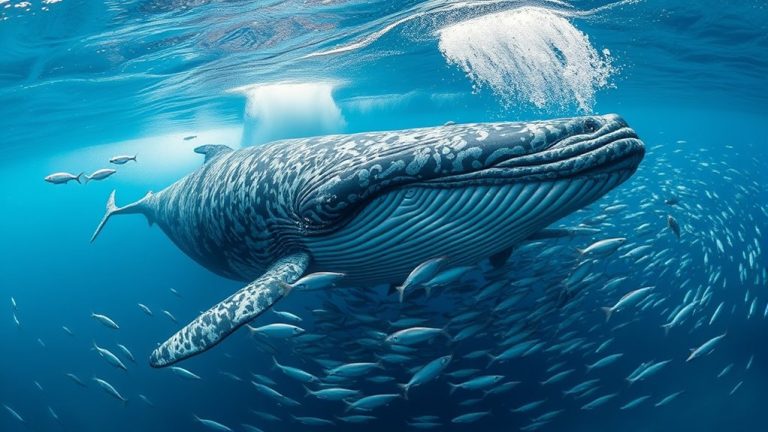
Instead, whales are consumers because they eat other marine animals like fish and krill. Understanding this role is key to grasping their impact on ocean ecosystems and energy flow, which you’ll find quite fascinating.
Are Whales Producers, Consumers, or Decomposers?
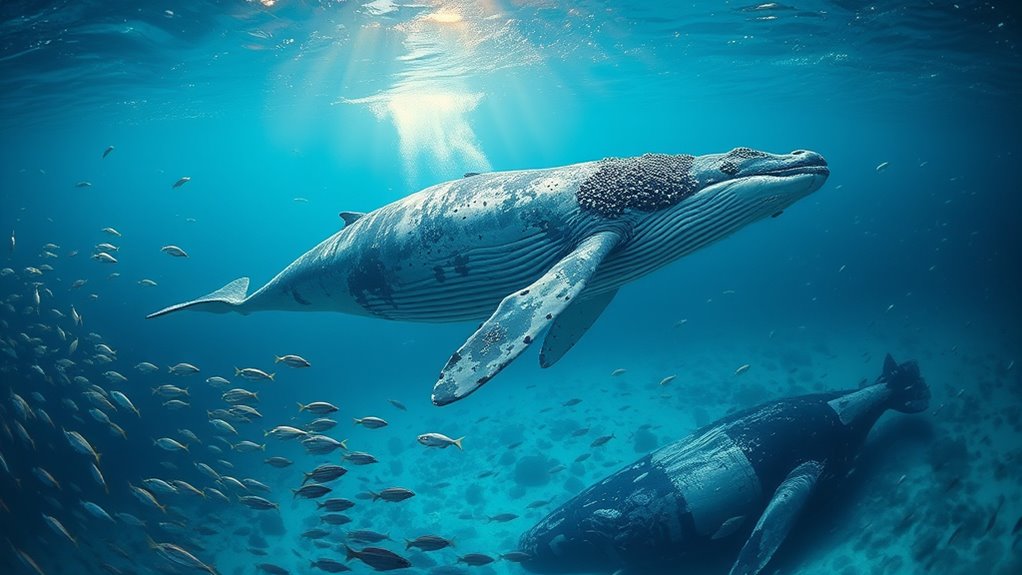
How do whales fit into the marine food chain? You’ll find that whales are consumers because they depend on other marine life for their food. Unlike producers, whales don’t create their own food through photosynthesis. Instead, they eat fish, krill, and even smaller whales.
Since they don’t break down dead material, they’re not decomposers either. Whales act as secondary or tertiary consumers, sitting at higher levels in the food chain. By feeding on prey, they help control populations and keep marine ecosystems balanced.
What Producers, Consumers, and Decomposers Are
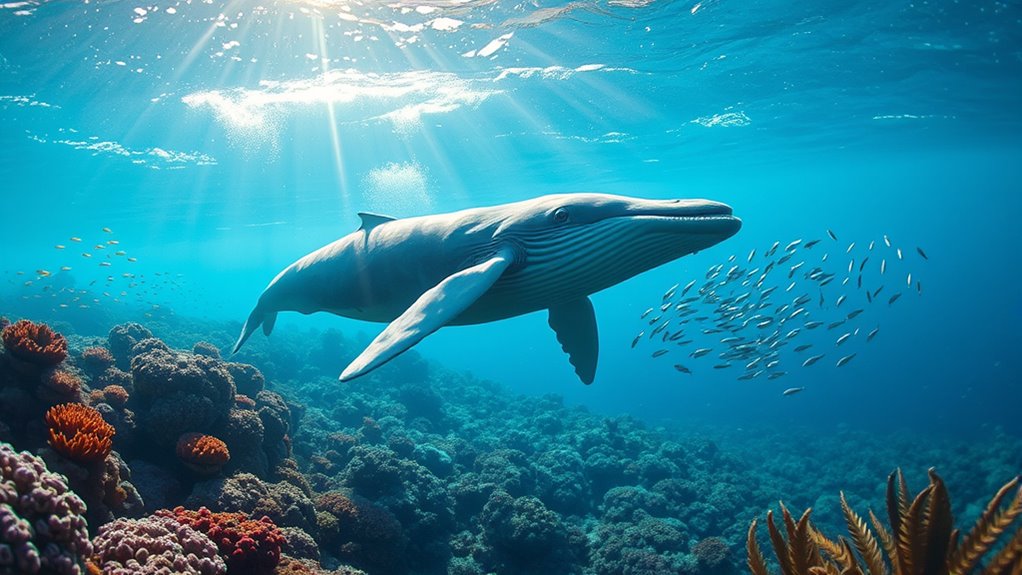
You’ll find that producers like algae create their own food through photosynthesis, while consumers such as whales rely on eating other organisms to get energy.
Decomposers, including bacteria and fungi, play a key role by breaking down dead material and recycling nutrients. Understanding these roles helps clarify where whales fit in the food chain.
Defining Producers
A producer is an organism that creates its own food through processes like photosynthesis, with examples including algae and phytoplankton. These producers are essential because they form the energy base for all other life forms in an ecosystem. When you understand producers, you realize:
- Producers use photosynthesis to convert sunlight into energy.
- They create organic material that serves as food for consumers.
- They maintain the balance of oxygen and carbon dioxide in the environment.
Unlike producers, whales don’t produce their own food. Instead, they rely on consuming other organisms. So, when you think about producers, remember they’re the foundation of the food chain, generating energy that supports consumers like whales.
Understanding Consumers
Now that you know producers create their own food and support other life forms, it’s important to understand consumers—organisms that obtain energy by eating others. Whales are consumers because they don’t produce food through photosynthesis. Instead, they feed on fish, krill, or smaller whales.
In the marine food chain, whales usually act as secondary or tertiary consumers, while primary consumers eat producers like plankton or plants. By feeding on these organisms, whales help regulate prey populations and maintain ecosystem balance.
Understanding consumers like whales shows how energy flows through the food chain, linking producers to higher-level consumers. So, when you think about a whale’s role, remember it depends on other organisms for energy, distinguishing it clearly from producers and decomposers.
Role Of Decomposers
How do ecosystems stay healthy and balanced over time? Decomposers play a crucial role by breaking down dead organic material and recycling nutrients back into the environment. Without decomposers, dead plants and animals would pile up, disrupting the nutrient cycle.
Here’s what decomposers do for you:
- Break down dead organisms like fallen leaves and wood into simpler substances.
- Return essential nutrients to the soil, supporting plant growth and maintaining ecosystem health.
- Ensure a continuous flow of nutrients, keeping the food web balanced.
Decomposers, including fungi, bacteria, and earthworms, don’t eat live organisms. Instead, they feed on dead or decaying matter, making them indispensable for nutrient recycling and ecosystem stability.
Whale Diet: What They Eat as Marine Carnivores
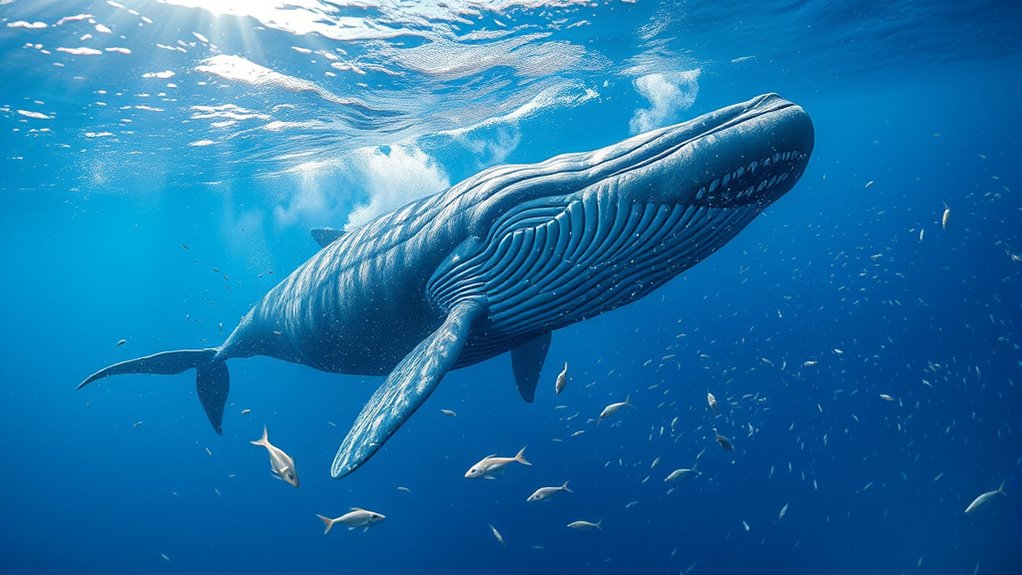
You’ll find that whales are marine carnivores, feeding mainly on fish, krill, and small squid. Some species filter-feed large amounts of tiny prey, while others actively hunt larger marine animals.
Understanding their diet helps you see how whales fit into the ocean’s food web as consumers.
Whale Feeding Habits
Although whales don’t produce their own food, they play a vital role as consumers by feeding on various marine animals. Unlike organisms that consume plants, whales rely on other creatures for sustenance, positioning them firmly within the consumer category.
When you observe whale feeding habits, consider these points:
- Baleen whales filter vast amounts of small prey like krill and planktonic organisms using baleen plates.
- Toothed whales, such as orcas, actively hunt larger prey, including seals and fish.
- Depending on their diet, whales serve as secondary or tertiary consumers in marine ecosystems.
Understanding these habits helps you see how whales fit into the food web, consuming animals rather than producing energy like plants or decomposing organic matter.
Marine Carnivore Diet
What exactly do whales eat as marine carnivores? As a marine carnivore, a whale’s diet mainly includes fish, krill, and other small marine animals. Different whale species have unique feeding strategies: baleen whales filter-feed on plankton and small fish, while orcas actively hunt larger prey like seals and even other whales.
Since whales don’t produce their own food, they depend on consuming other organisms, making them consumers within marine food webs. Their role varies between secondary and tertiary consumers, depending on the prey they target. Understanding their diet helps clarify their position in food webs—they actively hunt live prey rather than breaking down dead organic matter, so they’re definitely not decomposers but key players in marine ecosystems.
Prey Types Consumed
How do whales choose their meals in the vast ocean? As marine carnivores, whales target different types of prey, all of which are consumers in the marine food web. Your understanding of their diet helps clarify their role as consumers, not producers or decomposers.
Here’s a quick breakdown:
- Baleen whales filter tiny prey like krill and copepods from seawater using baleen plates.
- Toothed whales, such as orcas, hunt larger prey, including fish, seals, and even other whales.
- No whales eat plants or algae, so they never act as producers.
Whales in the Marine Food Chain
Where do whales fit in the marine food chain? Whales are consumers, not producers or decomposers. They feed on marine organisms such as krill and small fish, placing them as secondary or tertiary consumers.
Often, they sit near the top of the food chain, helping regulate prey populations.
Here’s a simple overview:
| Level | Example Organisms | Role |
|---|---|---|
| Producers | Phytoplankton | Create energy via photosynthesis |
| Secondary Consumers | Small fish, krill | Consume producers |
| Tertiary Consumers | Whales | Pinnacle of the food chain |
You see, whales don’t produce food or decompose matter. Instead, they play a vital role as top predators, keeping marine ecosystems balanced.
Ecological Impact of Whales as Top Predators
Ever wondered why whales matter so much to ocean health? As top predators, whales play a crucial role regulating populations of primary and secondary consumers like krill and fish. Their presence keeps the marine food web balanced and stable.
Here’s how their ecological impact unfolds:
Discover the vital ways whales influence marine ecosystems and maintain ocean balance.
- Whales control prey species numbers, preventing overpopulation of primary consumers that could damage ecosystems.
- By feeding on secondary consumers, they influence multiple food chain levels, maintaining biodiversity.
- Their behaviors, like the “whale pump,” redistribute nutrients, enriching surface waters and supporting primary producers.
You can see whales aren’t producers or decomposers but vital secondary or tertiary consumers shaping ocean health and signaling ecosystem stability through their role as apex predators.
Whales and Decomposer Functions: What They Don’t Do
Although whales contribute considerably to ocean ecosystems, they don’t perform decomposer functions. Unlike decomposers such as bacteria and fungi, whales don’t break down dead organic matter or recycle nutrients. They also don’t produce their own food through photosynthesis, so they’re not producers.
Instead, whales act as consumers, feeding on other marine life.
| Function | Whales | Decomposers |
|---|---|---|
| Produce Own Food | No | No |
| Break Down Dead Matter | No | Yes |
| Recycle Nutrients | No | Yes |
| Role in Ecosystem | Consumers (Predators) | Nutrient Recyclers |
Why Whale Classification Matters for Ecosystem Balance
Because whales are consumers, understanding their classification helps you see how they control prey populations and keep marine ecosystems in balance. Knowing their role clarifies how they rely on various food sources like fish and krill, which directly affects marine food webs. This insight is essential for maintaining ecosystem balance.
Here’s why classification matters:
- It helps you understand the impact whales have on regulating prey populations, preventing overpopulation.
- It guides accurate modeling of marine food webs, reflecting true energy flow and relationships.
- It highlights whales’ importance in ecological stability, ensuring conservation efforts focus on preserving their role.
Frequently Asked Questions
Are Whales Producers, Consumers, or Decomposers?
Whales are consumers because they eat other marine animals. They don’t make their own food like producers and don’t break down dead matter like decomposers.
You can see them as active predators in ocean food chains.
How Do You Identify Consumers, Producers, and Decomposers?
You identify producers by their ability to make food through photosynthesis, consumers by eating other organisms for energy, and decomposers by breaking down dead matter to recycle nutrients back into the environment.
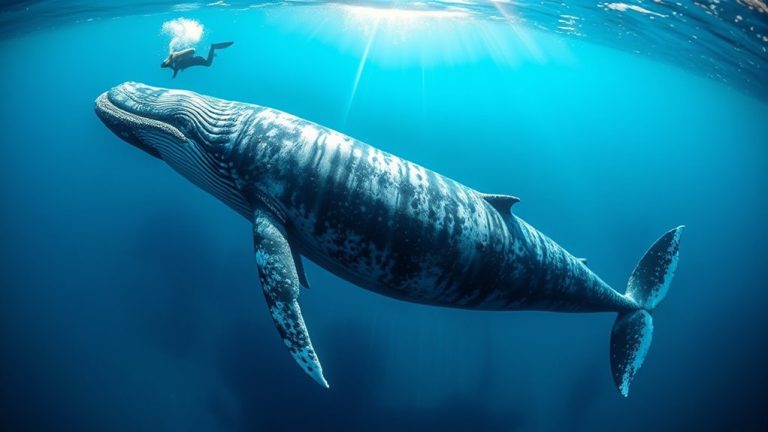
Is a Blue Whale a Producer Consumer or Decomposer?
A blue whale is a consumer, not a producer or decomposer; it consumes krill and fish, doesn’t make its own food, and doesn’t break down dead matter.
You’ll see it plays a crucial role in the marine food chain.
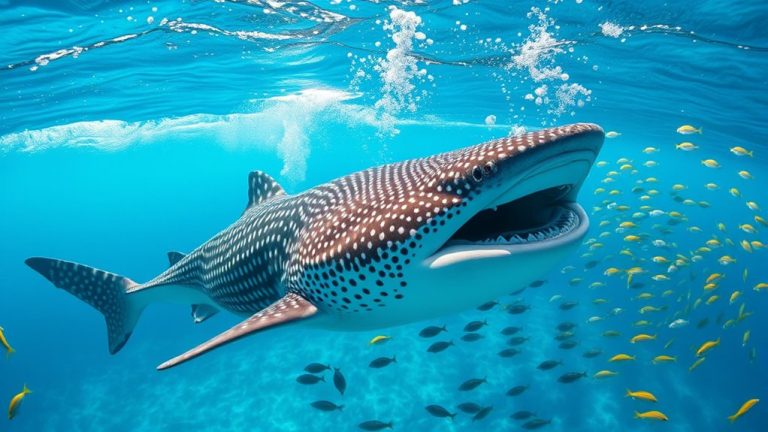
Is a Whale Shark a Producer, Consumer, or Decomposer?
A whale shark is a consumer because it feeds on plankton and small fish.
It doesn’t produce its own food or break down dead matter, so you can’t classify it as a producer or decomposer.
Conclusion
Think of whales as the ocean’s mighty lions—powerful consumers ruling the marine kingdom. They don’t create energy like producers or break down matter like decomposers; instead, they keep the ocean’s balance by controlling prey populations.
Understanding their role helps you see the ocean as a living puzzle, where every piece matters. So, when you picture a whale, remember it’s not just a giant creature but a crucial guardian of life’s delicate dance beneath the waves.
In conclusion, whales are consumers in the marine ecosystem, playing a vital role in maintaining ecological balance. Recognizing whether a whale is a producer, consumer, or decomposer clarifies its importance in the ocean’s food web.