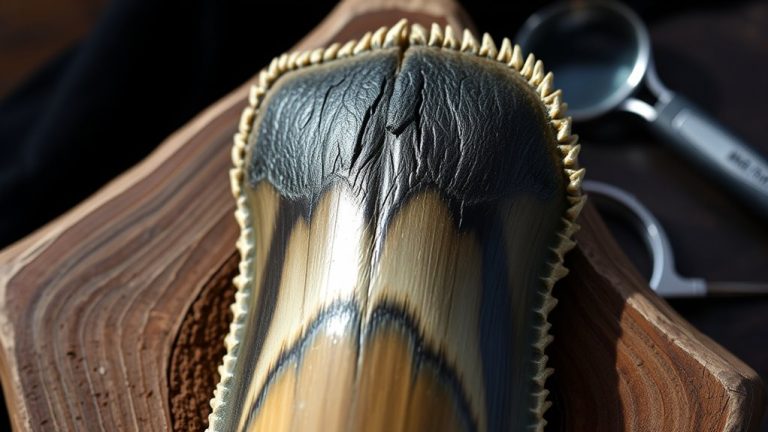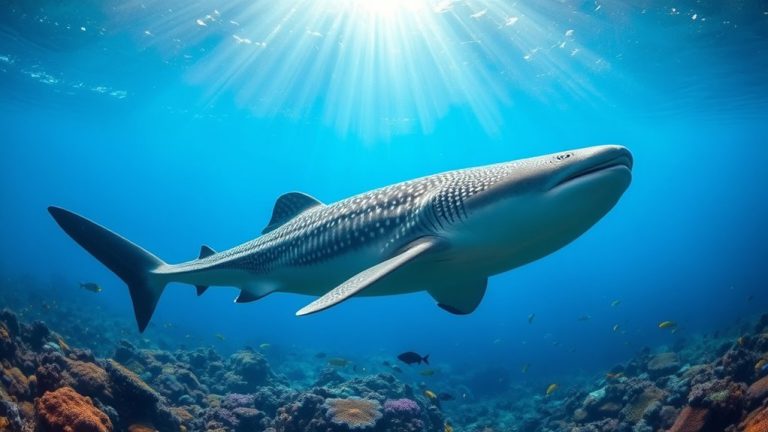
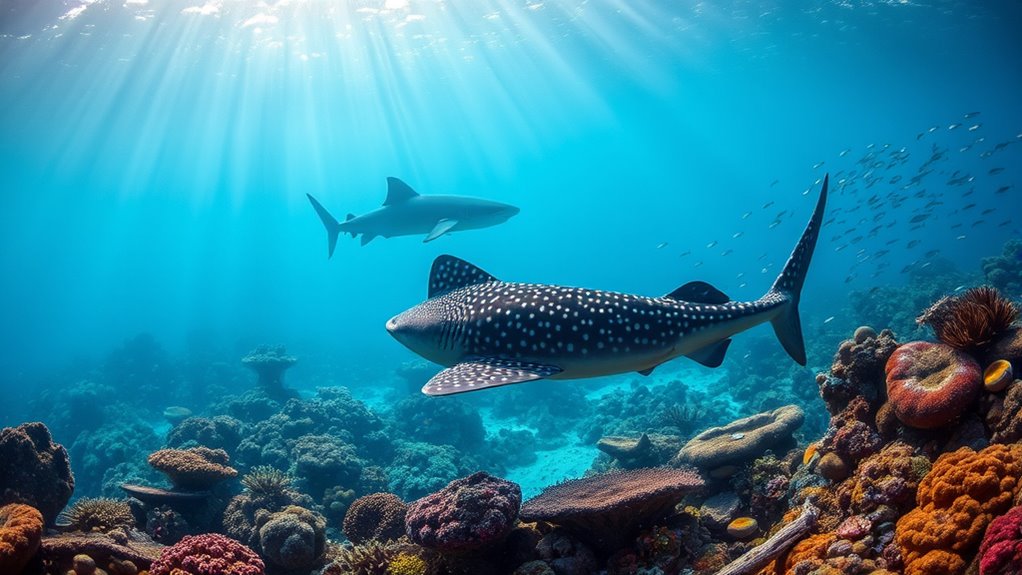
What Predators Do Whale Sharks Have?
You might think whale sharks have no predators, but both juveniles and adults face threats from large sharks like great whites and tiger sharks, as well as orcas.
Juveniles are more vulnerable due to their smaller size, while adults rely on their massive size and thick skin for protection.
Orcas use teamwork to hunt them, and sharks often target weaker individuals.
If you want to understand these encounters and their defenses better, there’s a lot more to uncover.
Why Adult Whale Sharks Have Few Natural Predators
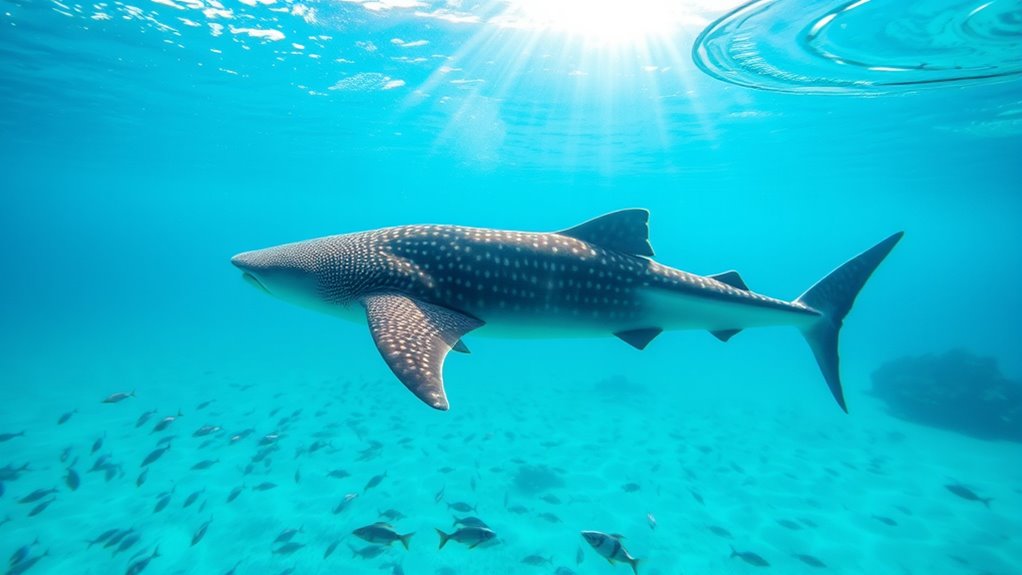
Although adult whale sharks can grow over 40 feet long, you won’t often see them targeted by predators. Their massive size acts as the primary defense, making it difficult for most animals to contemplate them prey. On top of that, adult whale sharks have thick skin, up to four inches deep, which offers a strong physical barrier against attacks.
You’ll find that only a few predators, like large sharks and killer whales, have the strength and ability to pose any real threat. Even then, attacks on healthy adults are rare. Because of their enormous size and protective skin, adult whale sharks enjoy a kind of natural immunity from most predators in the ocean, allowing them to swim largely undisturbed.
Predators That Target Juvenile Whale Sharks
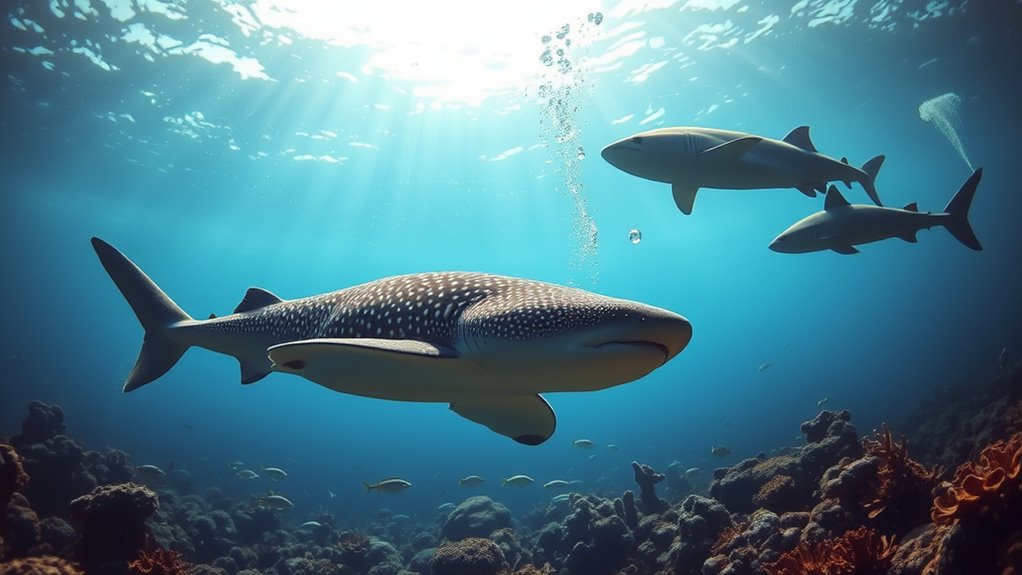
You’ll notice juvenile whale sharks face more threats because they’re smaller and less protected. Large predators like great white sharks, tiger sharks, and orcas often target these young sharks.
You can spot evidence of attacks through distinctive bite marks on their fins or bodies.
Juvenile Whale Shark Vulnerability
When juvenile whale sharks swim near the surface or in shallow waters, they face greater danger from predators like large sharks and killer whales. Because juvenile whale sharks are smaller, they’re more vulnerable to attacks. You can often spot evidence of these encounters by the distinctive bite marks on their bodies.
Predators target them especially when they’re weak or sick, taking advantage of their vulnerability in shallow waters. As a juvenile, you don’t have the same protection that adult whale sharks enjoy, since adults’ enormous size deters most threats. Understanding this vulnerability helps explain why juvenile whale sharks must be cautious in certain environments, where predators are actively hunting and bite marks serve as grim reminders of past dangers.
Common Juvenile Predators
Because juvenile whale sharks haven’t reached their massive adult size, they face threats from several formidable predators. These young whale sharks are vulnerable due to their smaller size and less developed defenses. If you study their interactions, you’ll notice bite marks, a clear sign of predator attacks.
Common predators targeting juvenile whale sharks include:
- Great white sharks, which can overpower smaller individuals.
- Tiger sharks, known for their aggressive hunting style.
- Killer whales (orcas), especially when juveniles are weak or isolated.
- Other large predatory sharks that seize opportunities to attack.
These predators focus on young whale sharks because adults grow too large to be easily targeted. Understanding these risks helps you appreciate the challenges juvenile whale sharks face in the wild.
Evidence of Predation
Although adult whale sharks rarely face threats from predators, juvenile whale sharks often bear the marks of attacks from large sharks like great whites and tiger sharks. You can spot evidence of predation through distinctive bite marks found on their bodies, showing that these young giants aren’t invincible.
Predators such as killer whales have also been observed targeting juvenile whale sharks, especially when they’re smaller and more vulnerable. These bite marks and attack scars provide clear proof that predation plays a role in the early life stages of whale sharks.
As you learn more, you’ll see how these signs of predation highlight the challenges juvenile whale sharks face before reaching the safety their enormous size provides as adults.
How Orcas Team Up to Hunt Whale Sharks
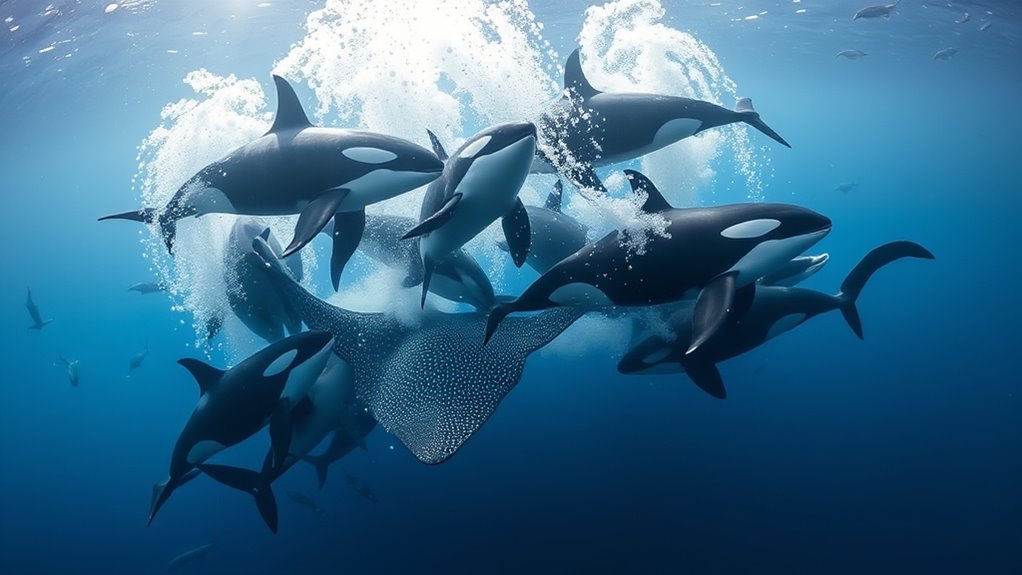
You’ll see orcas working together with impressive coordination when hunting whale sharks. They use clever tactics like ramming and flipping their prey to gain the upper hand.
These strategies show just how smart and skilled orcas are at taking down such massive creatures.
Coordinated Orca Hunting
When orcas hunt whale sharks, they rely on strategic teamwork to increase their chances of success. Coordinated orca hunting showcases how these predators use intelligence and teamwork to overcome massive prey like whale sharks. You’ll see orcas working together to:
- Ram whale sharks to stun them and stop profound dives.
- Flip whale sharks onto their backs to induce tonic immobility.
- Bite the soft underbelly to cause bleeding and access nutrients.
- Share knowledge across generations, enhancing hunting skills.
This teamwork is essential because whale sharks are enormous and tough to catch alone. Understanding coordinated orca hunting helps you appreciate the complex social behavior behind these predators’ success.
Together, orcas turn a difficult hunt into a well-orchestrated effort based on precision and cooperation.
Tactics Against Whale Sharks
Orcas don’t just rely on strength; they use clever tactics to hunt whale sharks effectively. You’ll see orca pods engage in organized hunting, circling their massive prey to prevent escape. Their attack tactics include ramming whale sharks to stun them and stop rapid dives, increasing prey vulnerability.
Once stunned, orcas flip whale sharks onto their backs, inducing tonic immobility—a trance-like state that leaves them helpless. You’ll notice orcas biting the soft underbelly, causing bleeding and easy access to nutrients. This strategic teamwork highlights the intelligence of orcas, allowing them to take down such enormous creatures efficiently.
When you observe these tactics, it’s clear how orca cooperation turns the tide against the whale shark’s size and strength.
How Large Sharks Hunt Whale Sharks
How do large sharks manage to hunt whale sharks despite their massive size? Great white sharks and other large sharks usually target juvenile or weakened individuals, as attacking a fully healthy whale shark is risky. Orcas, on the other hand, use clever tactics to overcome their prey. Here’s how these predators operate:
- Large sharks like great whites look for signs of injury or fatigue in whale sharks.
- They launch opportunistic attacks, focusing on the vulnerable young.
- Orcas work in groups, ramming and flipping whale sharks to induce tonic immobility.
- This temporary paralysis allows orcas to feed safely.
These strategies highlight how even massive whale sharks can fall prey when conditions favor the predators, but such attacks remain relatively rare.
Blue Sharks and Marlins as Whale Shark Predators
Why do blue sharks and marlins sometimes target juvenile whale sharks? These fast predators seize opportunities when young whale sharks are vulnerable. Blue sharks, reaching up to 15 feet and weighing over 1,600 pounds, occasionally prey on juvenile whale sharks.
Similarly, marlins, including black marlins of comparable size, pose threats to smaller whale sharks. While predation by blue sharks and marlins is rare, it mainly focuses on juveniles rather than fully grown adults. Both species rely on their speed and agility to attack, taking advantage of moments when juvenile whale sharks share their habitat.
You’ll find that these encounters are opportunistic rather than consistent, emphasizing the challenges juvenile whale sharks face from such swift, predatory fish in the ocean.
How to Spot Whale Shark Bite Marks
Wondering how to recognize if a whale shark has faced a predator? You look for bite marks and scars that reveal predator attacks. These marks usually appear on vulnerable spots like the underside or fins.
Shark bites from large predators leave distinctive puncture wounds and tearing patterns. Here’s how you can spot them:
- Look for V-shaped or crescent-shaped scars on the skin.
- Check the underside and fins, common targets for attacks.
- Identify puncture wounds or tearing patterns from shark bites.
- Notice any missing tissue or multiple scars indicating repeated attacks.
Physical Defenses of Whale Sharks Against Predators
Bite marks and scars tell stories of past predator encounters, but whale sharks aren’t just passive targets. Their enormous size, reaching up to 40 feet, intimidates many would-be attackers. You’ll also notice their thick skin—up to 4 inches—that acts like natural armor, shielding them from bites and scratches.
When danger looms, whale sharks don’t just stand still; they perform rapid plunges, slipping away into the ocean’s depths where predators struggle to follow. Plus, their unique spotted pattern provides excellent camouflage, blending seamlessly into sunlight-filtered waters and helping them avoid detection.
These physical defenses work together, making whale sharks formidable and elusive, ensuring your close encounter is more likely a rare privilege than a risky confrontation.
How Human Activities Threaten Whale Sharks
Although whale sharks have impressive natural defenses, human activities pose serious threats that they can’t easily escape. You should know that these gentle giants face dangers primarily from human activity, including:
- Bycatch — they often get caught unintentionally in fishing gear, causing injury or death.
- Boat strikes — collisions with vessels near feeding or migration areas lead to severe harm.
- Illegal hunting — the demand for their fins, meat, and oil fuels illegal hunting and trade.
- Habitat destruction — pollution, coastal development, and climate change degrade their feeding and breeding grounds.
You can see how these human-induced factors create significant risks that natural defenses alone can’t counter. Protecting whale sharks means addressing these threats directly and reducing harmful human impacts in their habitats.
Frequently Asked Questions
What Is a Whale Shark’s Biggest Predator?
Orcas are a whale shark’s biggest predator. They use teamwork, ramming, and flipping tactics to immobilize whale sharks.
While attacks are rare, orcas’ intelligence and strength make them the most formidable threat to whale sharks.
What Is the #1 Apex Predator in the Ocean?
The #1 apex predator in the ocean is the killer whale, or orca. You’ll find them hunting large sharks, marine mammals, and even whale sharks using smart, coordinated attacks.
They’re truly top of the marine food chain.
What’s the Biggest Threat to Whale Sharks?
You face a storm not of nature but of human hands—fishing nets and boats.
These silent hunters threaten whale sharks more than any predator, turning their gentle giants into victims of careless, relentless human activity.
What Is Shark’s Worst Enemy?
You’ll find that a shark’s worst enemy isn’t always another animal—it’s often humans. Fishing, habitat destruction, and pollution pose serious threats.
You should focus on protecting their environments to help sharks survive and thrive.
Conclusion
You might think whale sharks have no predators, but even these gentle giants aren’t completely safe. While adults face few threats, juveniles can fall prey to orcas, large sharks, blue sharks, and marlins. You’ll notice bite marks sometimes, but their thick skin and size help protect them.
Remember, “every cloud has a silver lining”—understanding their predators helps us better protect whale sharks from bigger dangers, especially human activities. Knowing what predators do whale sharks have is crucial for their conservation and survival.