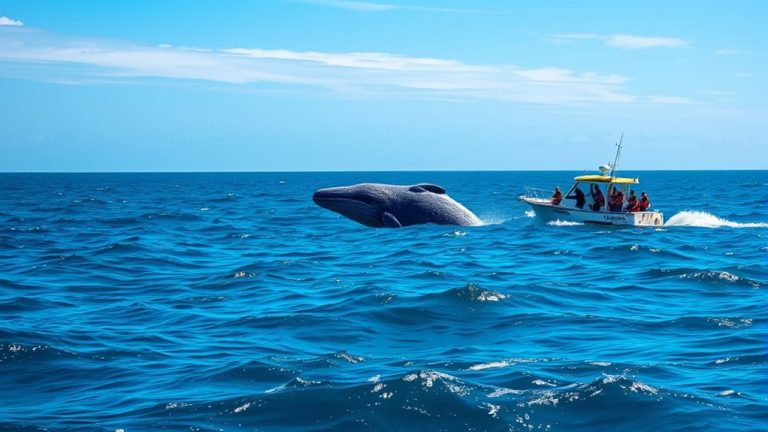
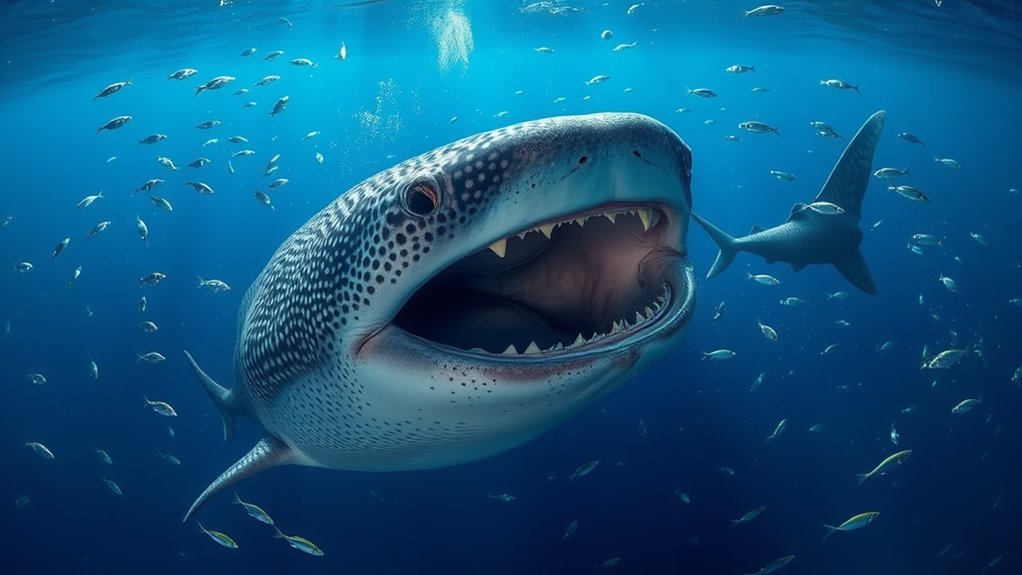
What Makes Whale Sharks Aggressive?
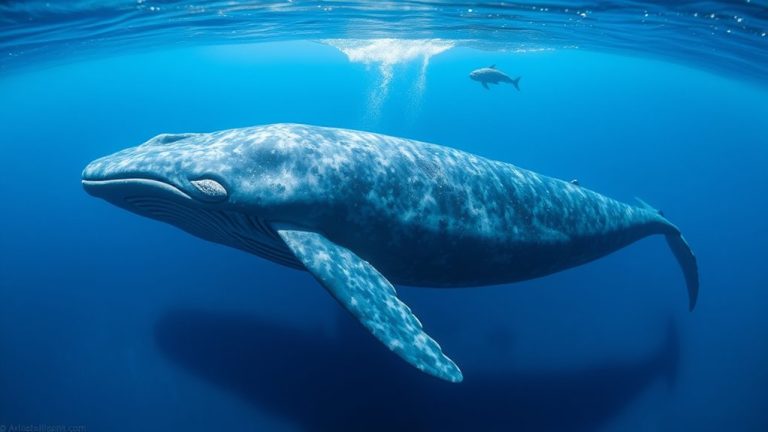
You usually won’t see whale sharks acting aggressively because they’re known to be gentle giants. Whale sharks are the largest fish in the ocean, and their calm nature is a big part of what makes them so fascinating.
However, if you ever witness aggression, it’s often due to them feeling threatened or stressed—like when humans get too close, touch them, or disturb their environment.
Their feeding habits don’t make them aggressive since they filter-feed calmly. Whale sharks mostly feed on plankton and small fish by filtering water through their gills, which is a peaceful process.
They mostly use size and quick movements to protect themselves.
Keep exploring and you’ll discover more about what really influences their behavior. Understanding these gentle giants helps us appreciate why they usually stay calm and how we can avoid causing them stress.
Do Whale Sharks Ever Show Aggressive Behavior?
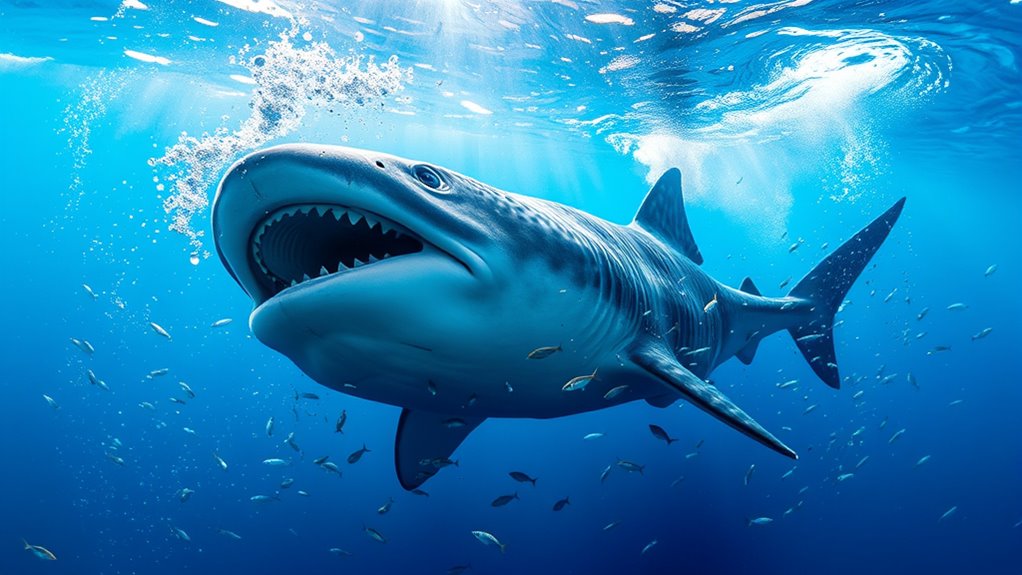
Although you might wonder if such massive creatures could be aggressive, whale sharks rarely show any hostile behavior. Despite being the largest fish in the sea, this shark has a unique gentle nature, making shark attacks by whale sharks virtually nonexistent. You won’t find reports of anyone trying to attack whale sharks or encountering aggressive behavior from them.
Their slow swimming and filter-feeding habits mean they don’t use their shark fins or bodies to intimidate or harm. Even juvenile whale sharks, which may sometimes protect their feeding areas, don’t display true aggression. So, if you’re near a whale shark, rest assured it won’t attack or threaten you.
This gentle giant is a peaceful presence in the ocean, quite unlike the typical image of shark attacks.
What Triggers Aggression in Whale Sharks?
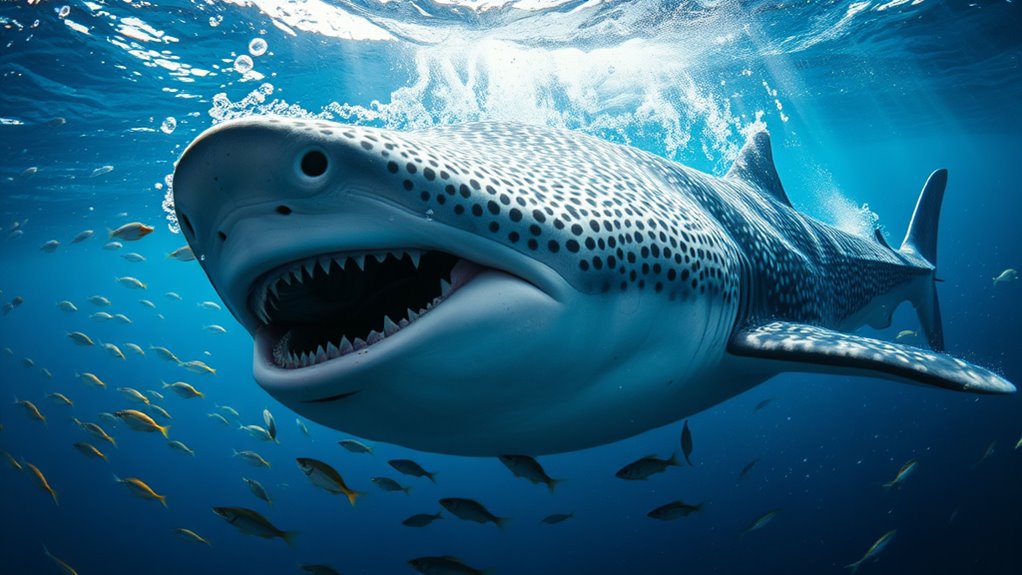
You’ll notice whale sharks usually stay calm, but they can react aggressively when they feel threatened or stressed by their environment.
If you get too close or disturb them, they might display defensive behavior. Understanding what agitates them helps you avoid triggering these rare aggressive responses.
Defensive Responses To Threats
When whale sharks feel threatened or stressed, they can quickly switch from their usual gentle nature to defensive behaviors. You might notice abrupt movements or rapid dives as clear signs of defensive behavior triggered by perceived threats.
If you get too close, touch, or even ride them, these actions count as harassment, provoking aggressive reactions. The mucous layer on their skin plays a vital role here—damage to it from human contact can heighten their irritability and prompt stronger defensive responses.
Agitation From Environmental Stress
Because environmental stress directly impacts whale sharks, you might notice them becoming agitated or aggressive in polluted waters or damaged habitats. Pollution and habitat degradation disrupt their natural environment, triggering stress responses. Sudden changes in water temperature or oxygen levels can push them toward increased territoriality or defensive behaviors.
When overcrowding occurs—often due to tourism or fishing—you’ll see heightened competition, leading to further agitation. These stressors combine to make whale sharks more prone to aggressive displays, especially when food is scarce or predators are nearby. Understanding how environmental factors provoke these reactions helps you appreciate the delicate balance whale sharks need to maintain calm and avoid aggression.
Protecting their habitat reduces these triggers and supports their well-being.
How Do Feeding Habits Influence Whale Shark Aggression?
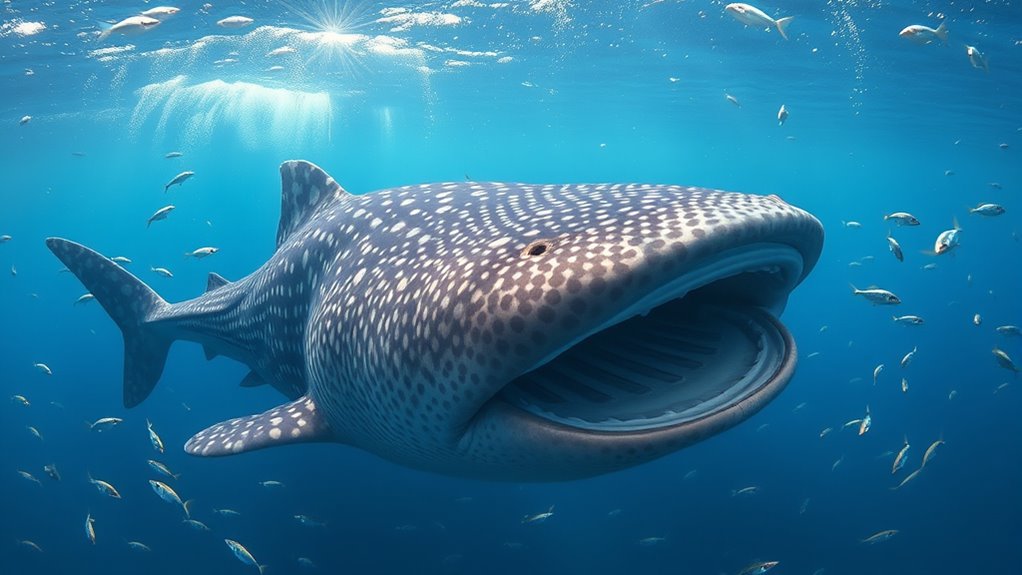
You’ll notice that whale sharks’ feeding behavior keeps their aggression low since they rely on passive filter feeding rather than chasing prey. When they feed, they swim calmly near the surface, showing little to no signs of aggression.
Because their food sources are abundant and small, they rarely compete aggressively during feeding.
Feeding Behavior Impact
Although whale sharks feed on abundant plankton and small marine creatures, their feeding habits don’t trigger aggression. You’ll notice they rely on passive filter feeding, calmly swimming near the surface without chasing or hunting prey aggressively. Their feeding habits center on suction and filtering, which doesn’t provoke aggressive behavior.
When prey availability is high, whale sharks may gather in surface aggregation, but this increased activity is driven by food, not territorial disputes or hostility. Because their feeding method is non-violent and energy-efficient, you won’t see aggression linked to their feeding behavior. Understanding this helps clarify that feeding behavior impact on whale sharks’ aggression is minimal to nonexistent, emphasizing their gentle nature despite the crowded feeding grounds.
Aggression During Feeding
While whale sharks increase their activity during feeding to capture dense prey, they don’t show true aggression. Their feeding behavior relies on filter feeding and suction, making their feeding activity largely passive and non-aggressive. You’ll notice that their active movement is aimed at efficiently gathering prey aggregation rather than competing aggressively.
Even when they move rapidly to catch prey, it’s about maximizing intake, not attacking rivals or threats.
Consider these points to understand their feeding-related behavior:
- Whale sharks swim with wide mouths open, filtering plankton without hostile intent.
- They rarely compete aggressively, despite feeding in areas with dense prey.
- Their size and calm nature keep interactions peaceful during feeding.
You can see that their feeding habits influence activity levels but not aggressive behavior.
How Do Whale Sharks React to Threats and Disturbances?
When whale sharks feel threatened or disturbed, they usually respond with defensive actions like rapid immersion or sudden movements rather than aggression. You’ll rarely see aggressive behavior unless a whale shark feels cornered or stressed. These gentle giants lack strong predatory instincts and prefer to avoid conflict.
Most threats come from human disturbances, not natural aggression.
| Defensive Behavior | Description |
|---|---|
| Rapid Immersion | Swift dive to deeper waters to escape threats |
| Sudden Movements | Quick changes in direction to evade disturbance |
| Rare Aggression | Occurs only under extreme stress or cornered |
Understanding these defensive behaviors helps you appreciate whale sharks’ peaceful nature and their response to stress without unnecessary aggression.
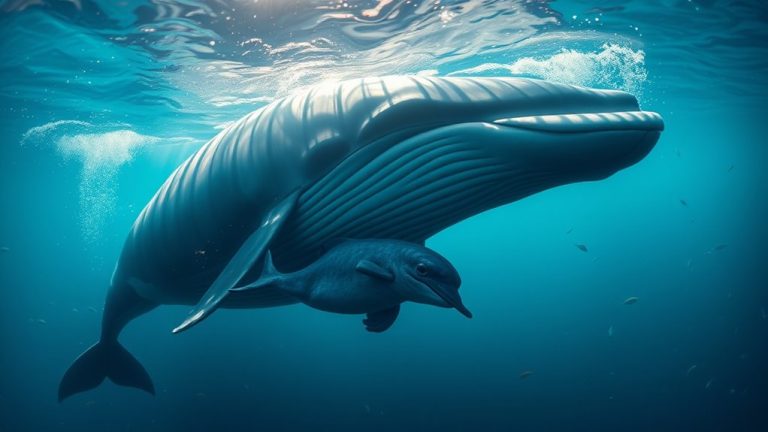
What Defense Mechanisms Do Whale Sharks Use to Protect Themselves and Their Young?
You might have noticed that whale sharks prefer to avoid conflict, but they don’t leave their safety to chance. Their defense relies on a combination of natural features and behavior. Their massive size alone deters many predators, while their thick skin—up to 4 inches—provides a tough barrier against attacks.
The distinctive spotted pattern acts as camouflage, blending them into the ocean environment to avoid detection. When threatened, whale sharks use swift immersive exploration to escape danger quickly. Even their large, tiny teeth play a role, deterring threats and protecting their young.
These defense mechanisms work together, ensuring their survival in the wild:
- Thick, protective skin shields from physical harm
- Camouflage helps them stay hidden from predators
- Size and teeth discourage attacks and defend offspring
How Does Human Interaction Affect Whale Shark Behavior?
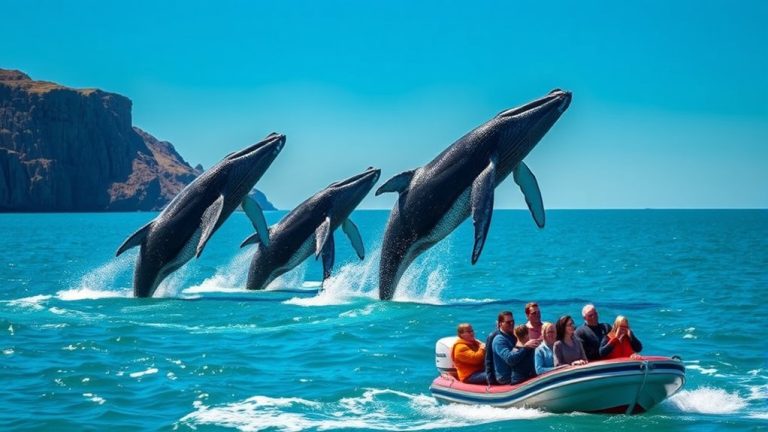
Because human interaction can cause stress and disrupt whale sharks’ natural behavior, it’s important to understand how our actions affect these gentle giants. Close approaches and harassment from swimmers or boats create disturbance, leading to behavioral changes like avoiding feeding areas or migrating away.
When you touch or ride whale sharks, you risk damaging their protective mucous layer, increasing vulnerability to infections. Aggressive or disruptive activities may provoke defensive reactions, such as sudden movements or rapid dives, which can be mistaken for aggression.
To minimize stress and prevent negative behavioral changes, you should practice responsible observation—maintaining distance, avoiding physical contact, and limiting disturbances. By respecting these guidelines, you help protect whale sharks’ well-being and preserve their natural behavior for future generations to appreciate.
Frequently Asked Questions
Will a Whale Shark Attack a Human?
You won’t be attacked by a whale shark because they’re gentle filter feeders. They don’t see humans as threats or prey, so they swim peacefully around you without showing any aggressive behavior.
Can Whale Sharks Be Aggressive?
You won’t see whale sharks being aggressive since they’re gentle giants. They mainly filter-feed and don’t hunt.
Even if disturbed, their behavior remains calm, so you don’t have to worry about aggression from them.
How Did Lulu Gribbin Get Attacked by a Shark?
You got attacked because you swam near a shark’s feeding area, possibly mistaken for prey.
Disturbing their habitat or being close to bait can trigger aggression from predatory sharks like great whites or tiger sharks.
Why Shouldn’t You Touch Whale Sharks?
You wouldn’t steal a knight’s armor, so don’t touch whale sharks—you’d strip their protective shield, leaving them vulnerable to harm.
Respect their space to keep these gentle giants safe and thriving in their ocean domain.
Conclusion
You might think whale sharks are just gentle giants, but they can show sudden signs of stress and sporadic aggression, especially when stirred by threats or human disturbances. Their feeding frenzy or feeling of fear often fuels this fierce flare-up.
So, stay safe and show respect—remember, reckless reactions can rattle these remarkable, resilient creatures. By being mindful and maintaining distance, you help preserve peaceful, patient whale sharks in their pristine, protected places.
Understanding what makes whale sharks aggressive is key to ensuring both your safety and theirs. Respecting their space and natural behavior contributes to the conservation of these gentle giants in their natural habitats.