3 Essential Tips on What to Wear on a Whale Watch
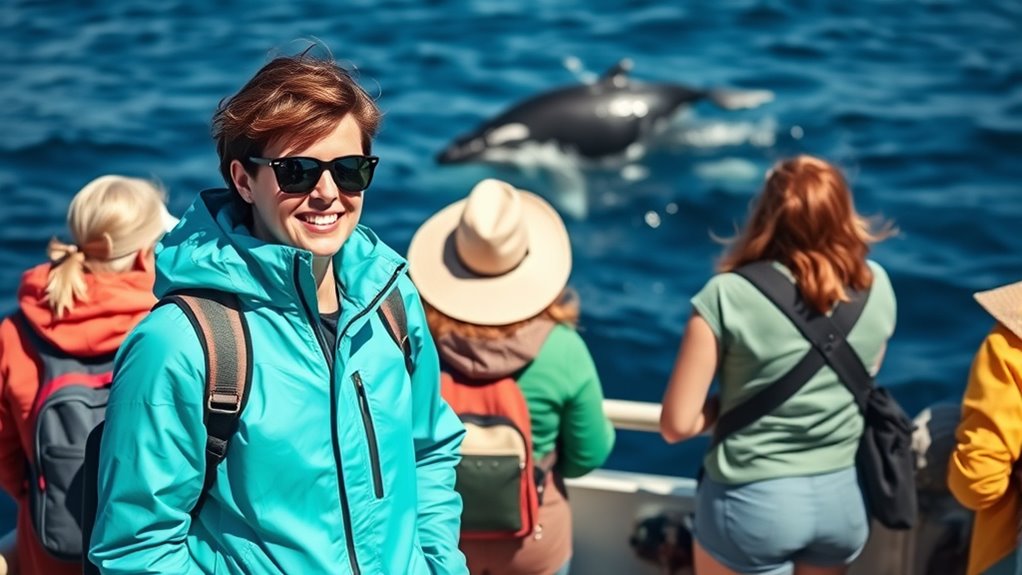
For a whale watch, dressing appropriately is key to comfort and safety. Start by layering your clothing to stay warm and dry. Begin with moisture-wicking base layers and add waterproof, windproof outerwear to protect against the elements.
Choose waterproof shoes with non-slip soles to keep your feet safe and dry on the boat. Don’t forget a wide-brimmed hat and UV-protection sunglasses to shield your skin and eyes from the sun’s glare.
Follow these tips to stay comfortable and focused during your whale watch. Keep reading to discover how to prepare for changing weather and maximize your experience.
Layer Up for Whale Watching: Stay Warm and Dry
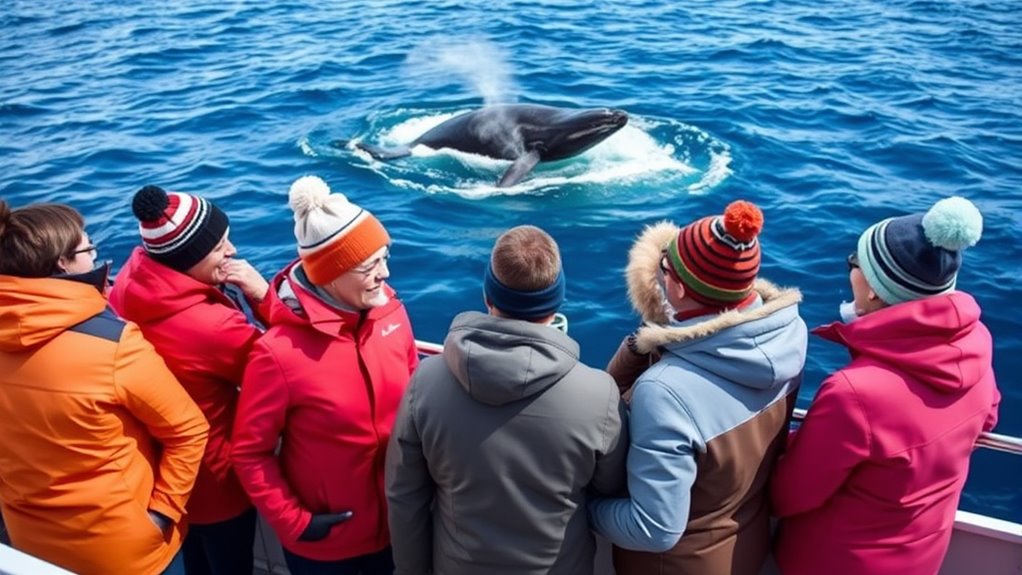
Although the weather on a whale-watching trip can change quickly, you can stay comfortable by layering your clothing. Start with a moisture-wicking base layer to keep sweat off your skin and prevent chills. Add an insulating mid-layer like a fleece or hoodie for warmth as temperatures drop offshore.
Top it off with a waterproof outer layer and windproof jacket to shield yourself from sea spray and sudden rain. Wearing layered clothing lets you adjust easily to shifting weather conditions, so you stay warm and dry throughout your adventure.
Don’t forget to bring extra layers, along with a hat and sunglasses, for added protection and comfort. Dressing appropriately with these essentials ensures you enjoy the experience without the distraction of discomfort.
Pick Waterproof, Non-Slip Shoes for Boat Safety
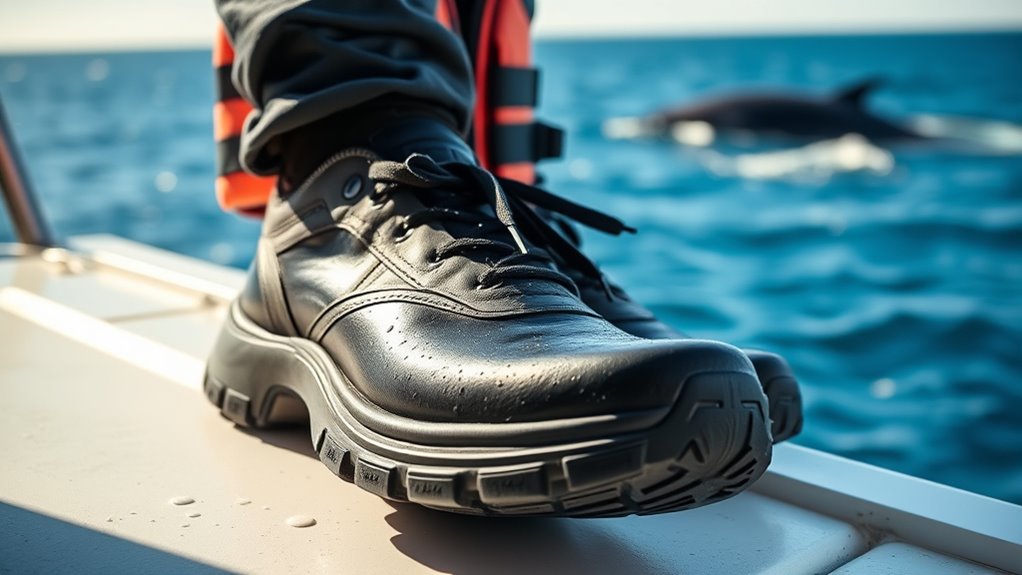
When you step onto a boat for whale watching, wearing waterproof shoes with non-slip soles keeps you safe and steady on wet decks. These shoes provide vital traction on slippery surfaces caused by sea spray or rain, reducing the risk of slips and falls. Opt for closed-toe footwear like rubber boots or water-resistant sneakers to protect your feet while maintaining grip on wet or slippery surfaces.
Avoid sandals or open shoes, as they lack the necessary traction and expose your feet to hazards. Waterproof shoes also keep your feet dry and warm, essential for comfort during cooler offshore conditions. Prioritizing proper water-resistant footwear ensures boat safety and lets you focus on the incredible whale-watching experience without worrying about footing.
Protect Your Skin and Eyes: Sun Hats and UV Glasses
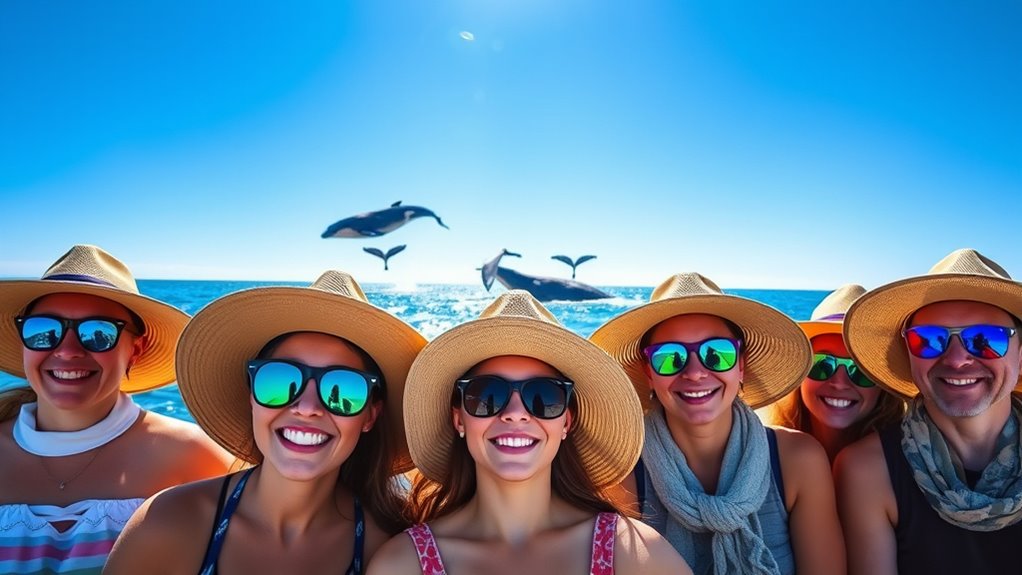
To protect your skin and eyes during whale watching, you should wear a wide-brimmed hat and UV-protection sunglasses. Sun hats provide essential shade for your face, neck, and ears, reducing the risk of sunburn and enhancing sun protection. Make certain your hat fits securely or has a chin strap to prevent it from blowing away in windy conditions at sea.
UV glasses with polarized lenses offer excellent eye protection by blocking harmful solar radiation and cutting glare from the water’s surface, improving your visibility. This combination of sun hats and UV-protection sunglasses ensures thorough sunburn prevention and outdoor safety. Wearing both keeps you comfortable and safeguards your skin and eyes throughout your whale watch adventure.
Frequently Asked Questions
What Should I Wear When Whale Watching?
You should wear layered, moisture-wicking clothing with a waterproof jacket, sturdy non-slip shoes, a wide-brimmed hat, and UV sunglasses.
Don’t forget sunscreen and consider gloves or a warm hat for colder, windy days on the water.
How Much Do You Tip on a Whale Watching Tour?
You should tip around 15% to 20% of the tour cost, usually $10 to $20 per person.
If the crew goes above and beyond, feel free to tip more to show your appreciation.
What Shoes Should I Wear When Whale Watching?
You should wear waterproof, non-slip shoes like sneakers or hiking boots with good traction. Avoid sandals or flip-flops since they’re unsafe on wet decks. Choose comfortable, closed-toe shoes to protect your feet during the tour.
How to Prepare for Whale Watching?
You should dress in layers, wear waterproof clothes, and choose non-slip shoes. Don’t forget sun protection like a hat and sunscreen.
Bring a life vest, binoculars, and waterproof bags to stay safe and comfortable.
Conclusion
When you’re out on the water, staying comfortable isn’t just about luck—it’s about smart choices. Forget the myth that bulky clothes mean you’ll overheat; layering actually helps you adjust to changing weather. Waterproof, non-slip shoes aren’t just a suggestion—they’re essential for your safety on a rocking boat.
And don’t underestimate sun protection; UV rays reflect off the water more than you think. So, dress thoughtfully and enjoy your whale watch worry-free! Remember, what to wear on a whale watch plays a crucial role in making your experience safe and enjoyable.