How to Identify If Orcas Are Whales or Dolphins
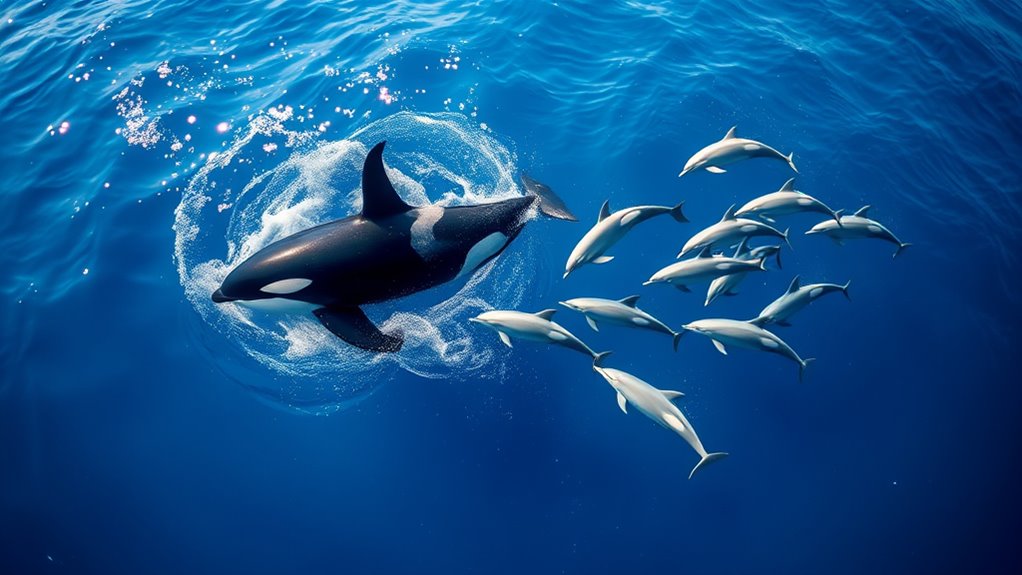
To identify if orcas are whales or dolphins, it’s important to know that orcas are actually the largest members of the dolphin family, not true whales. Their classification can be confusing due to their common name, “killer whales,” but scientifically, they belong to the dolphin group.
You can tell by their streamlined bodies, tall dorsal fins, and use of echolocation, all typical dolphin traits.
Their social behavior and complex vocalizations also align closely with those of dolphins. These features distinguish orcas from true whales despite their size.
Though called “killer whales,” their classification and characteristics clearly place them as dolphins.
Keep exploring, and you’ll uncover even more fascinating details about these incredible marine mammals.
How Scientists Classify Whales, Dolphins, and Orcas

Although many people think of orcas simply as whales, scientists classify them as part of the dolphin family within the order Cetacea. This order groups whales, dolphins, and porpoises based on shared genetic and anatomical traits.
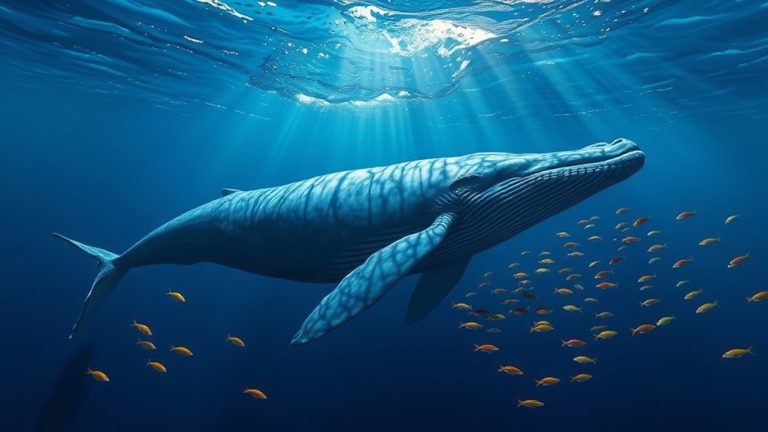
Cetacea divides into two main suborders: baleen whales and toothed whales. Orcas fall under toothed whales, which includes all dolphins. In taxonomy, orcas belong to the family Delphinidae, making them the largest dolphins despite their whale-like size.
When you look at features like dorsal fin shape, body structure, and vocalization, you’ll see how scientists distinguish between cetacean species. This classification reflects evolutionary relationships, showing that orcas are both dolphins and toothed whales within the broader cetacea order, clarifying their place in marine mammal taxonomy.
Why Orcas Are Actually Dolphins, Not Just Whales
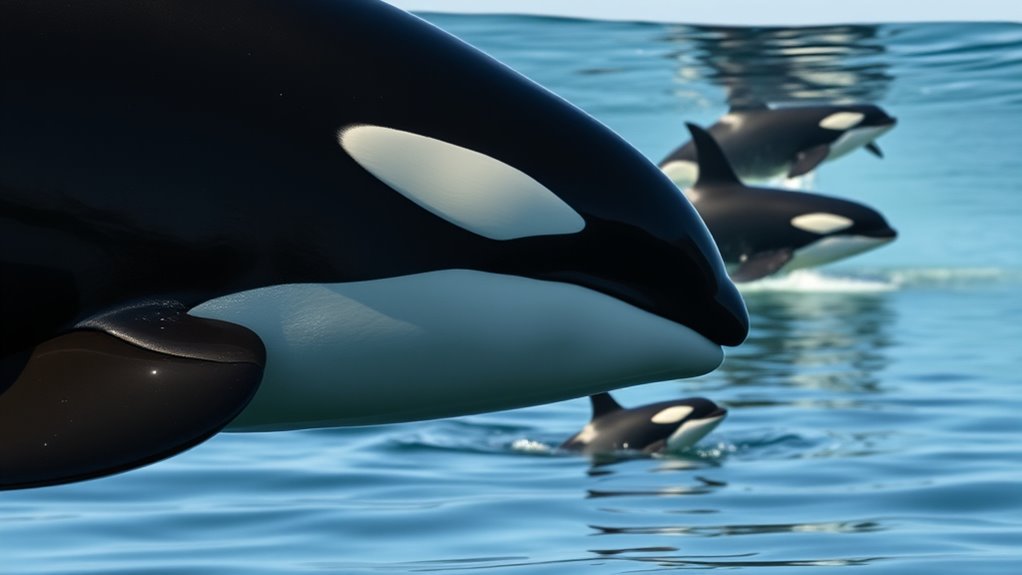
While many people call orcas “killer whales,” you should know they’re actually the largest members of the dolphin family, Delphinidae. Orcinus orca belongs to this family, making it a toothed dolphin rather than a true whale. Here’s why:
- They’re classified as delphinids, not whales.
- Their conical teeth match those of other toothed dolphins.
- Orcas share social behaviors and communication styles typical of dolphins.
- They belong to the genus Orcinus, unique within the dolphin family.
- Despite their size, their intelligence and hunting techniques align with dolphin traits.
Physical Traits That Reveal Orcas’ Dolphin Heritage

Understanding why orcas are dolphins rather than whales becomes clearer when you look at their physical traits. Orcas have a streamlined body shape, similar to other dolphins, which helps them swim swiftly. Their tall, curved dorsal fins can reach up to 6 feet in males, a distinctive dolphin feature.
Orcas also have prominent melons on their foreheads, essential for echolocation. Their vocalizations are complex, aligning with dolphin communication styles. Here’s a quick comparison:
| Trait | Orcas | Typical Whales |
|---|---|---|
| Body Shape | Streamlined, torpedo | Bulkier, less streamlined |
| Dorsal Fins | Tall, curved | Smaller or absent |
| Melons & Calls | Prominent melons, complex vocalizations | Less developed melons, simpler calls |
These traits affirm orcas’ dolphin heritage clearly.
How Orcas’ Behavior Matches That of Dolphins
How do orcas behave in ways that clearly link them to dolphins? Their behavior aligns closely with that of dolphins, showing you just how connected they are. When you observe orcas, you’ll notice:
- Living in complex social groups called pods, just like dolphins
- Communicating with clicks, whistles, and calls, mirroring dolphin vocalizations
- Using echolocation for hunting and navigation, a key dolphin trait
- Displaying intelligence and playful actions such as breaching and surfacing
- Cooperating in hunting, demonstrating strong social bonds typical of dolphins
These behaviors reveal that orcas aren’t just big whales; they share the same sophisticated social and hunting patterns as dolphins. Understanding this helps you see orcas as part of the dolphin family, especially through their unique echolocation and social group dynamics.
How the “Killer Whale” Name Shapes Our View of Orcas
Why do we still call orcas “killer whales” when they’re actually the largest dolphins? The nickname “killer whales” came from sailors who watched orcas hunting big whales, giving them a fearsome reputation. This name stuck, shaping how you and many others see these marine mammals—as dangerous predators.
But orcas belong to the dolphin family, part of the same family tree as smaller dolphins, which changes the story. Knowing this helps you see orcas as intelligent, social creatures rather than just fearsome killers.
The term “killer whale” often skews public perception, especially in media and conservation, making it harder to appreciate orcas for what they truly are: remarkable members of the dolphin family, not just feared marine mammals.
Frequently Asked Questions
Are Orcas Considered Whales or Dolphins?
Orcas are considered dolphins, not whales. Even though they’re called “killer whales,” they belong to the dolphin family because of their physical traits and behavior.
What Animal Has the Closest DNA to a Whale?
You might think dolphins are far from whales, but the closest DNA match to whales is actually the bottlenose dolphin. Their shared genetic history shows just how closely connected these marine mammals truly are.
How Do You Identify an Orca Species?
You identify an orca species by its distinctive black-and-white coloring, tall dorsal fin, eye patch, and unique scars or markings.
Size and dorsal fin shape also help distinguish individuals and their specific orca type.
Can Orcas Crossbreed With Dolphins?
You can’t expect orcas to crossbreed with dolphins naturally because reproductive barriers and size differences prevent it.
Even in captivity, successful hybridization is rare and controversial, so crossbreeding isn’t something you’ll typically see.
Conclusion
So, you’ve learned orcas aren’t whales but dolphins in disguise—big, black-and-white dolphins with a killer reputation. Isn’t it ironic that these “killer whales” are actually the largest members of the dolphin family?
Next time you see one, don’t be fooled by the name or size; their playful behavior and physical traits give them away. Sometimes, the biggest “whale” you know is just a dolphin wearing a whale’s costume.
In conclusion, identifying orcas as dolphins rather than whales helps clarify their place in the marine world. Understanding these differences is key to recognizing orcas as unique members of the dolphin family.