How Are Whale Sharks Spotted There in Hawaii?
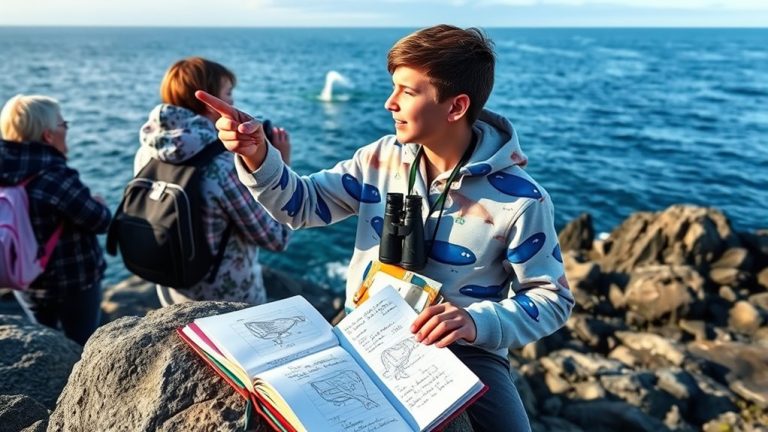
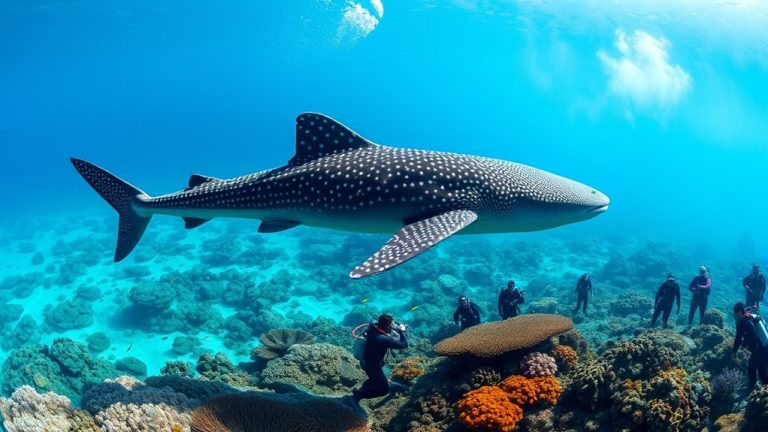
You spot whale sharks in Hawaii by scanning deep offshore waters with binoculars, especially near Maui and the Big Island. These gentle giants are most commonly seen during calm, warm months from April to November.
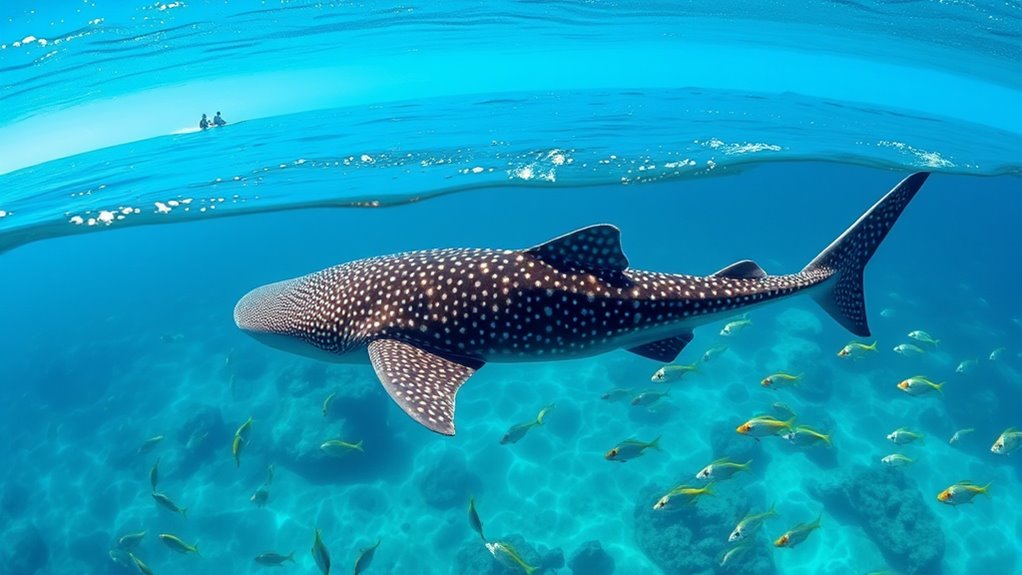
Watching for slow-moving shadows, dorsal fins, or changes in water color can help identify plankton-rich areas where they feed.
Using snorkeling gear allows you to observe whale sharks safely while respecting distance rules. As you explore these waters, you’ll discover which locations, conditions, and practices increase your chances of encountering these magnificent creatures.
Patience and careful observation are key to a successful whale shark spotting experience in Hawaii.
How Likely Are Whale Shark Sightings in Hawaiian Waters?
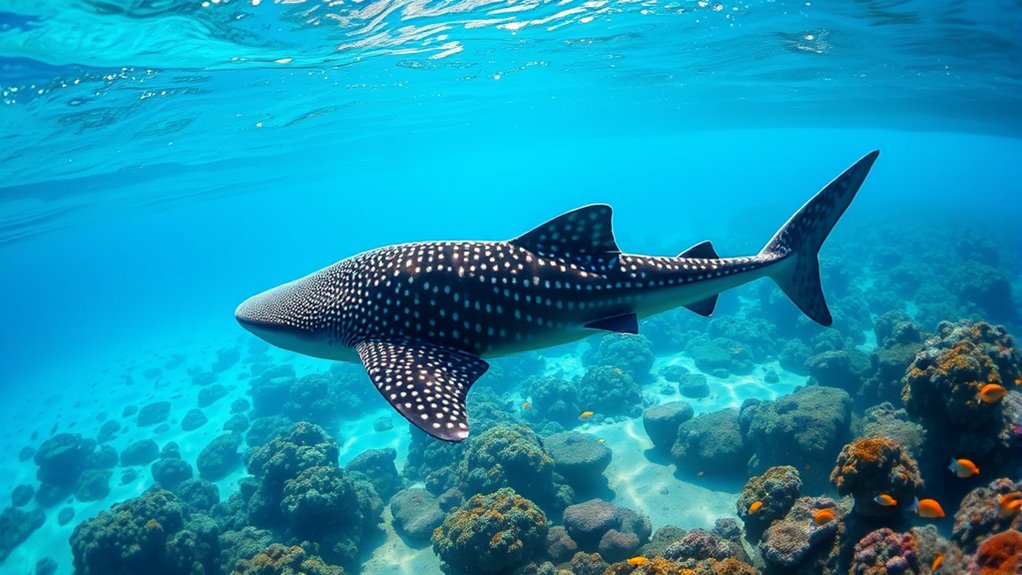
How often can you expect to see a whale shark in Hawaiian waters? Sightings are quite rare, occurring roughly once every three years. Whale sharks don’t have a resident population in Hawaii, so your chances depend largely on luck.
These gentle giants prefer open ocean and deeper offshore waters, which means they usually show up far from shore, especially near the Big Island, Maui, and Oahu. Most encounters happen unexpectedly and are often reported by snorkelers or boat crews exploring these deeper areas.
There’s no specific season when whale sharks are guaranteed to appear, making sightings unpredictable. If you’re hoping to spot one, prepare for a rare but unforgettable experience since whale sharks remain infrequent visitors in Hawaiian waters.
Which Hawaiian Locations Offer the Best Whale Shark Sightings?
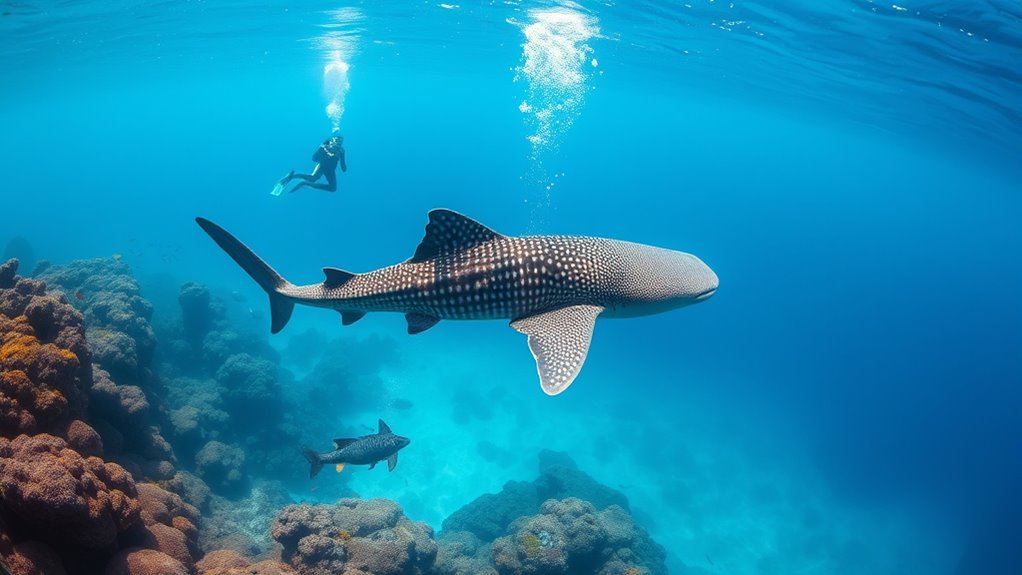
Although whale shark sightings in Hawaii are rare, you have the best chances of spotting these gentle giants off the deep waters near Maui, the Big Island, and Oahu. Maui’s west coast, especially near Lahaina and Kaanapali, is a hotspot due to its deep offshore channels.
The Big Island also offers promising spots, thanks to its nutrient-rich waters that attract whale sharks. Around Oahu, the west coast near Makaha has seen notable whale shark encounters, often reported by local tour operators.
Whale sharks prefer open, warm, and nutrient-dense waters, so focusing your search on Hawaii’s waters away from the shoreline increases your odds. While sightings remain unpredictable, these locations give you the best opportunity to witness whale sharks in their natural habitat.
When Is the Best Time to Spot Whale Sharks in Hawaii?
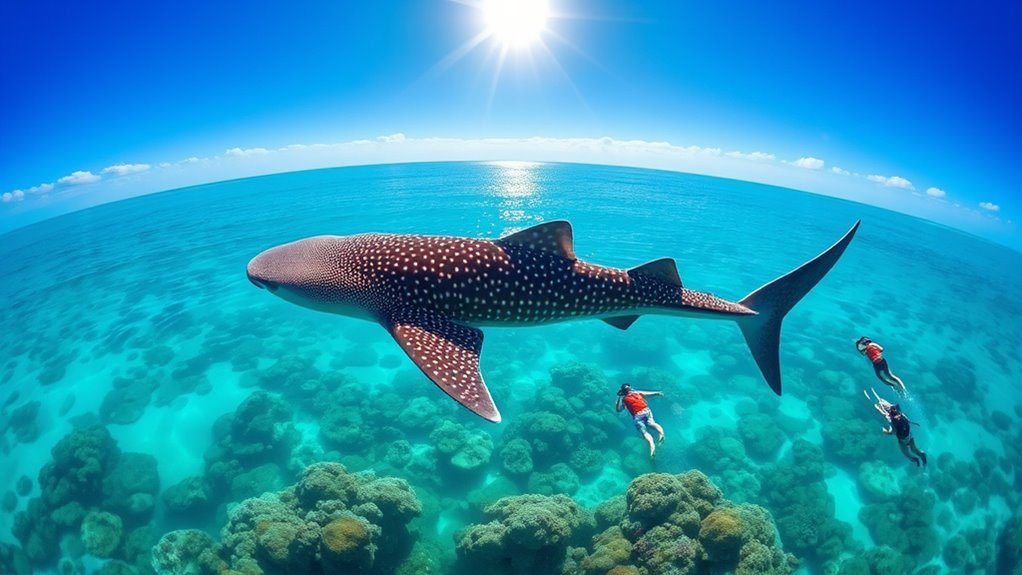
If you want the best chance to spot whale sharks in Hawaii, plan your visit between April and November when ocean conditions are calmer. These months align with warmer waters and plankton blooms that attract the sharks offshore.
Keep in mind, sightings can still be unpredictable, but summer offers the most favorable conditions.
Peak Months For Sightings
When you want to spot whale sharks in Hawaii, plan your trip between April and November, as these months offer the best chances. This period marks the prime whale shark season, with peak months for sightings from June through September. During these warmer months, nutrient-rich waters attract plankton, drawing whale sharks closer to the Big Island and Maui.
While whale sharks can appear year-round, your odds improve considerably in this window because of increased marine activity. By focusing your visit within this timeframe, you’ll maximize your opportunity to see these gentle giants cruising near the surface.
Seasonal Ocean Conditions
Since ocean conditions play a crucial role in whale shark activity, you’ll find the best chances to spot them in Hawaii during the summer months from April to November. During this period, seasonal ocean conditions bring calmer waters and abundant plankton, attracting whale sharks closer to shore. Warm, nutrient-rich currents around the Big Island, Maui, and Oahu create ideal feeding grounds, boosting whale shark sightings.
Clearer waters and perfect weather also improve visibility, making it easier for you to see these gentle giants. Keep in mind, whale sharks migrate unpredictably, so sightings can still be sporadic. In contrast, winter months usually have fewer whale shark sightings, as they move elsewhere and conditions favor humpback whales.
Understanding these seasonal ocean conditions helps you plan the best time to encounter whale sharks in Hawaii.
Which Ocean Conditions Increase Whale Shark Sightings?
You’ll find more whale sharks when warm water currents flow near Hawaii, especially in late summer.
Calm seas during this time make it easier to spot them from boats or while snorkeling. These gentle conditions bring the sharks closer to the surface, increasing your chances of an unforgettable encounter.
Warm Water Currents
Although whale sharks roam vast ocean areas, warm water currents play a crucial role in guiding them to nutrient-rich feeding grounds. These currents concentrate plankton and small fish, the whale sharks’ main food sources, making certain Hawaiian waters prime spots for sightings. When upwelling zones bring nutrient-rich waters to the surface, they create abundant feeding opportunities.
You’ll notice that areas with strong, steady warm water currents support higher plankton levels, increasing the chance of encountering these gentle giants. Seasonal shifts in ocean temperatures also push whale sharks to migrate into warmer, nutrient-dense areas around Hawaii. During events like El Niño, warmer waters temporarily expand their habitat, boosting sighting opportunities.
Understanding these currents helps you predict where whale sharks are most likely to appear.
Calm Summer Seas
Warm water currents bring whale sharks to nutrient-rich Hawaiian waters, but calm summer seas make spotting them much easier. When the seas are calm, with minimal wind and waves, the water becomes clearer, letting you see whale sharks from the surface more easily.
During summer, plankton blooms attract these gentle giants closer to shore and near the surface, increasing your chances of encountering them. Calm seas reduce ocean turbulence, improving visibility during snorkeling and boat trips. Stable sea conditions also allow longer, safer excursions offshore, where whale sharks often roam.
With clear, calm waters, guides and snorkelers can spot whale sharks from a distance and observe their behavior safely, making your whale shark experience in Hawaii unforgettable.
Why Are Whale Shark Sightings in Hawaii So Rare?
Because whale sharks are migratory ocean travelers rather than residents, you won’t often spot them in Hawaii’s waters. Their sightings are extremely rare—about once every three years or less. Here’s why whale shark sightings in Hawaii are so scarce:
- They prefer consistent, warm, offshore habitats, which Hawaii doesn’t reliably offer.
- Most whale sharks pass through Hawaii unpredictably during migration with no set season.
- They travel vast distances, making their visits brief and uncommon near the islands.
- Whale sharks favor deeper, offshore waters, limiting your chances nearshore.
How Do Guides Spot Whale Sharks on Hawaiian Tours?
When you’re on a Hawaiian whale shark tour, guides focus their attention on deep, offshore waters where these giants are most likely to appear, especially near nutrient-rich areas that attract their prey. Guides use binoculars and spotting scopes from elevated boat vantage points to quickly spot the whale sharks’ distinctive shapes and spotted patterns. They watch for surface signs like slow-moving shadows or dorsal fins that hint at a whale shark below.
Changes in water color and plankton blooms also catch their eye since these attract whale sharks to feed. Experienced guides rely on knowledge of migration patterns and past sightings, increasing the chances you’ll see these elusive creatures during your tour. Their skill and vigilance make spotting whale sharks in Hawaii possible and exciting.
What’s the Best Gear for Spotting Whale Sharks in Hawaii?
To spot whale sharks in Hawaii, you’ll want high-quality snorkeling gear like masks with polarized lenses and comfortable fins. Don’t forget a good underwater camera to capture your encounters and reef-safe sunscreen to protect the environment.
Wearing bright rash guards also helps you stay visible to guides and fellow snorkelers for a safer experience.
Essential Snorkeling Equipment
Although spotting whale sharks in Hawaii is an incredible experience, having the right snorkeling gear makes all the difference in your success and comfort. To make the most of your Whale Shark Encounters, you’ll want essential snorkeling equipment designed for visibility, mobility, and safety.
Here are four must-haves:
- A high-quality snorkeling mask with a wide field of view to enhance spotting whale sharks from the surface.
- Fins with strong propulsion to help you maneuver easily and stay steady in open water.
- Reef-safe sunscreen to protect yourself while preserving the marine environment during close encounters.
- Optional wetsuits or snorkeling floats to improve buoyancy and comfort, letting you observe longer without fatigue.
This gear ensures your experience is both enjoyable and respectful to these gentle giants.
Camera and Safety Gear
Capturing the majestic presence of whale sharks in Hawaii requires more than just a good eye—you’ll need the right camera and safety gear to do it effectively. A high-quality underwater camera with zoom lets you snap detailed images from a safe distance, minimizing disturbance to these gentle giants.
Your safety gear should include a snorkeling mask with a wide field of view for better visibility and fins that provide stability for smooth movement. Don’t forget reef-safe sunscreen and protective clothing like rash guards to shield your skin and protect the environment.
Wearing brightly colored or reflective safety gear helps your guides and fellow snorkelers keep track of you and spot whale sharks more easily. Together, this gear ensures a safe, clear, and memorable whale shark experience.
How Can Citizen Science Help Find Whale Sharks in Hawaii?
Citizen science programs like Hawaiʻi Uncharted Research Collective (HURC) have become key players in tracking whale sharks in Hawaii. By involving you and other ocean enthusiasts, these programs gather vital data to monitor these gentle giants.
Here’s how citizen science helps find whale sharks:
- You can report sightings and upload photos, especially focusing on unique spot patterns behind the gills.
- Your contributions help researchers identify individual whale sharks and track their movements.
- Increased reports from divers and snorkelers have boosted sighting records since 2017.
- Your observations fill knowledge gaps about whale shark timing, location, and behavior.
How Should You Respectfully Observe Whale Sharks in Hawaii?
Your role in spotting whale sharks is invaluable, but knowing how to observe them respectfully makes your experience even better. For respectful observation, maintain at least 15 feet (5 meters) from the whale sharks to avoid disturbing their natural behavior. Don’t touch, chase, or block their path—these actions can stress the animals.
Move slowly and calmly to prevent startling them, allowing you to enjoy a safe and peaceful encounter. Protect the marine environment by using reef-safe sunscreen, minimizing chemical impact on these gentle giants and their habitat. Observe quietly and passively, giving the whale sharks the space they need.
What Should You Know About Whale Shark Safety and Etiquette?
When observing whale sharks in Hawaii, you need to prioritize safety and etiquette to protect both yourself and these gentle giants. To ensure a respectful and safe encounter, follow these key guidelines:
- Maintain a minimum distance of 15 feet (5 meters) from whale sharks to avoid disturbing them.
- Never touch, chase, or block a whale shark’s path, as this can stress or injure them.
- Use passive observation—float calmly and avoid sudden movements to keep the interaction safe.
- Wear reef-safe sunscreen and follow local guidelines and tour guide instructions to support marine conservation.
Frequently Asked Questions
How to See Whale Sharks in Hawaii?
You can see whale sharks in Hawaii by joining guided tours near Maui, the Big Island, or Oahu.
Stay respectful by keeping distance, avoid touching, and photograph their left side to help with research and conservation efforts.
How Rare Is Seeing a Whale Shark?
You know what they say, “Good things come to those who wait.”
Seeing a whale shark in Hawaii is incredibly rare—about once every three years. You’ll need patience and a bit of luck to spot one.
How Common Are Whale Sharks in Hawaii?
You won’t find whale sharks common in Hawaii; they’re rare visitors. You’re more likely to spot them offshore near deeper waters, but sightings happen only about once every three years, depending on conditions like plankton blooms.
How to Spot a Whale Shark?
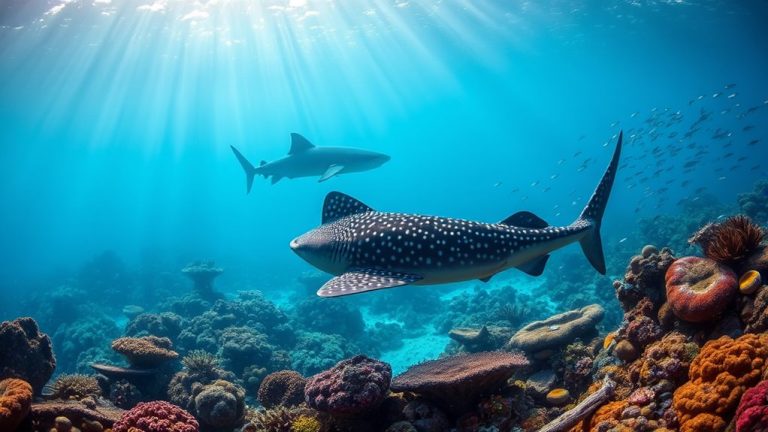
Spot a whale shark by scanning for a massive, spotted silhouette gliding just below the surface, especially near plankton blooms.
Join guided tours in warm, nutrient-rich waters, keeping your eyes peeled during snorkeling or diving adventures.
Conclusion
Spotting a whale shark in Hawaii is like glimpsing a gentle giant weaving through an ocean tapestry—rare, magical, and worth every patient moment. When you venture out with keen eyes and respect, you become part of a living story, honoring these majestic creatures and their vast, mysterious world.
So gear up, stay observant, and let the sea’s quiet giants remind you of nature’s profound beauty and the delicate balance we all share. Whale shark sightings in Hawaii offer a unique opportunity to connect with marine life and appreciate the incredible biodiversity of the Pacific Ocean.