Can a Whale Drown If It Can’t Surface to Breathe?
Yes, a whale can drown if it can’t surface to breathe since they must consciously come up for air through their blowholes. Their unique adaptations like blowhole seals and lung collapse help prevent drowning during dives.
However, obstacles like entanglement or injury can trap them underwater, stopping them from breathing and causing suffocation.
Whales also sleep with one brain side awake to control surfacing. Understanding these factors reveals why drowning, though rare, still poses a real threat to whales.
How Whales Breathe and Why Surfacing Prevents Drowning
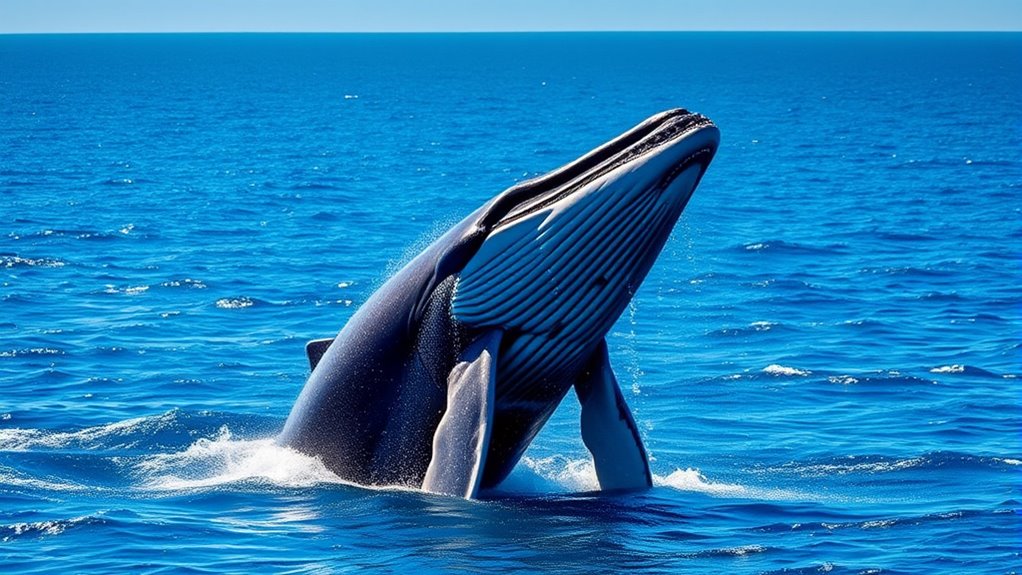
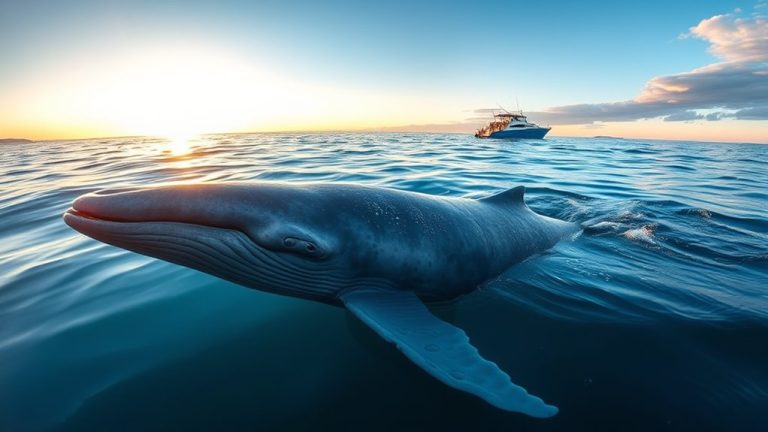
Because whales rely on lungs to breathe, they must surface regularly to inhale air through their blowholes. You’ll notice their blowhole sits on top of their heads, allowing quick access to the air when they break the water’s surface. Their respiratory system is finely tuned to exchange large amounts of oxygen efficiently during each breath, helping them maximize the time they can stay underwater.
When you think about it, surfacing is vital—it’s the only way whales get the oxygen they need to survive. If they can’t surface and open their blowhole, they won’t get air, which puts them at risk of suffocation. Surfacing isn’t just a habit; it’s an essential behavior that helps prevent drowning by ensuring they breathe regularly.
What Adaptations Prevent Whales From Drowning?
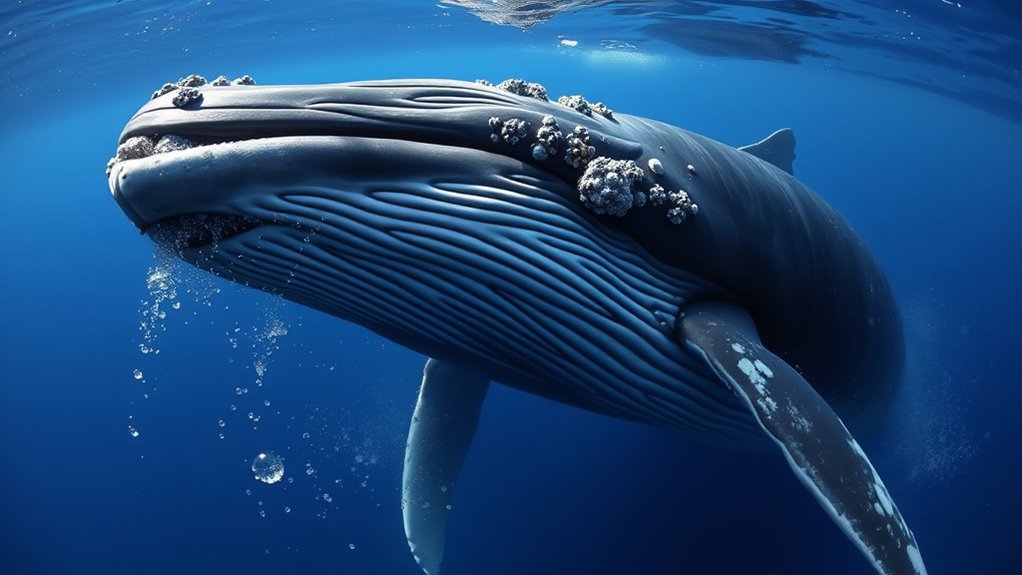
You might wonder how whales manage to stay underwater without water flooding their lungs. They use a muscular flap called a blowhole that seals tightly to keep water out, and their bodies store oxygen efficiently to last long periods beneath the surface.
These adaptations work together to prevent drowning and keep whales safe in their aquatic world.
Blowhole Sealing Mechanism
Although whales spend most of their lives underwater, they don’t drown thanks to a specialized blowhole sealing mechanism. This adaptation controls their respiratory system during diving by tightly sealing the blowhole to keep water out. Here’s how it works:
- A fibrous oral plug seals the blowhole during dives, preventing water from entering the lungs.
- Muscles surrounding the blowhole contract or relax, allowing the whale to voluntarily open or close it.
- The blowhole flap stays tightly closed underwater and only opens when the whale surfaces to breathe.
- Upon surfacing, whales forcefully exhale to clear water from the blowhole before taking a breath.
This precise seal and control let whales dive deeply without risking drowning, ensuring efficient respiratory function.
Oxygen Storage Efficiency
When whales descend to great depths, they rely on remarkable oxygen storage adaptations that keep them from drowning. Unlike humans, whales can exchange up to 90% of the air in their respiratory tract with each breath, maximizing oxygen intake before they hold their breath underwater. Their blood and muscles contain high concentrations of hemoglobin and myoglobin, which store large amounts of oxygen efficiently.
During profound dives, their lungs collapse to prevent damage and conserve oxygen. Additionally, whales selectively restrict blood flow to essential organs, ensuring oxygen reaches where it’s needed most. These adaptations enable them to stay submerged for up to 90 minutes without surfacing.
How Long Can Whales Hold Their Breath Underwater?
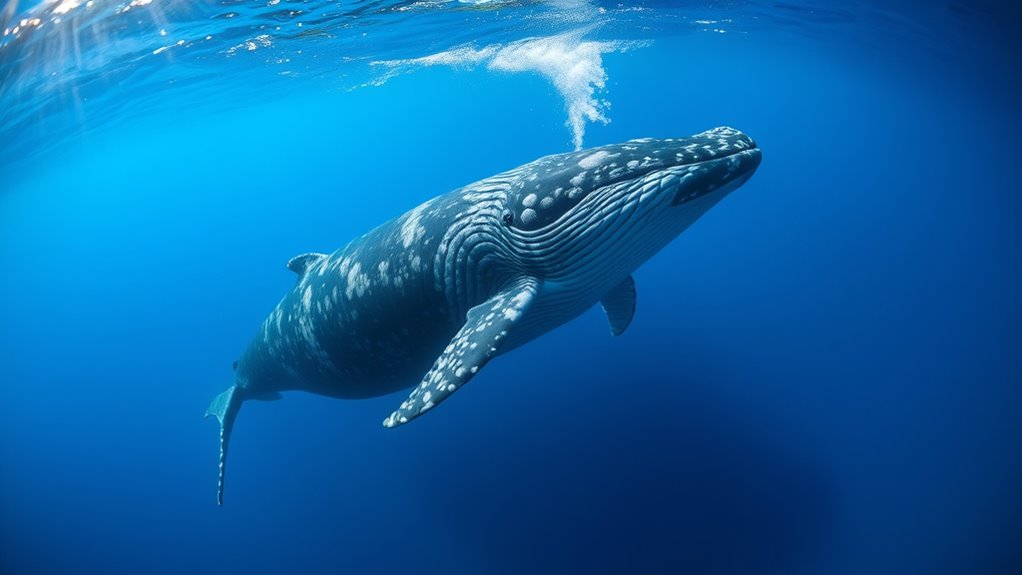
How long can whales hold their breath underwater? It depends on the species and their oxygen storage capabilities. You’ll find:
- Most whales can hold their breath for up to 45 minutes during deep dives.
- Sperm whales push this further, staying submerged for over 90 minutes while foraging.
- Their blood and muscles store oxygen efficiently thanks to high levels of hemoglobin and myoglobin.
- Some species surface every 5 to 15 minutes, while others dive longer based on their oxygen needs.
Understanding how whales manage oxygen storage helps you appreciate their ability to perform incredible deep dives without surfacing frequently.
How Do Whales Sleep Without Drowning?
You might wonder how whales manage to rest without risking drowning. They actually sleep with one half of their brain awake, so they stay alert to surface and breathe.
This unique method lets them control their breathing consciously even while catching some shut-eye.
Unihemispheric Sleep Explained
Although whales spend much of their time underwater, they don’t lose control of their breathing while sleeping. They use unihemispheric sleep, where only one half of their brain rests at a time. This unique method helps whales avoid drowning by letting them govern when to surface for air.
Here’s how unihemispheric sleep works:
- One brain hemisphere rests while the other stays alert.
- The active side controls breathing by opening and closing the blowhole.
- The resting hemisphere monitors the environment for danger.
- This pattern ensures the whale surfaces regularly to breathe.
Thanks to unihemispheric sleep, whales can rest safely underwater without losing control of breathing or risking drowning.
Conscious Breathing Control
A whale must stay consciously aware to breathe since it controls its breathing voluntarily. Unlike humans, whales don’t breathe automatically; they rely on conscious breathing control to open their blowhole and take in air. When you think about sleeping, you’d expect breathing to be automatic, but whales handle this differently.
While sleeping, they use unihemispheric sleep, allowing one half of their brain to rest while the other keeps watch, ensuring they open their blowhole regularly. This voluntary muscle-controlled flap stays closed to prevent water from entering but opens precisely when the whale needs air.
This unique system lets whales rest without risking drowning, as they consciously surface to breathe even while half-asleep, maintaining a steady supply of air.
Can Whales Drown From Entanglement or Injury?
When whales get entangled in fishing gear, they can’t reach the surface to breathe and can drown as a result. Entanglement and injury severely limit their ability to surface for air, posing a deadly threat. Here’s what you need to understand:
- Entanglement restricts movement, preventing whales from surfacing to breathe.
- Injuries may weaken whales, making it difficult to reach the surface for air.
- Drowning due to entanglement or injury is a major cause of whale mortality linked to human activity.
- Unlike natural causes, these drownings are largely preventable with better fishing practices.
You see, when whales can’t overcome these obstacles, they risk drowning, highlighting the importance of protecting them from entanglement and injury.
Why Do Whales Rarely Drown : and When Can It Happen?
Because whales have specialized blowholes and strong exhalations, they rarely drown while breathing at the surface. Their blowholes seal tightly during dives, preventing water entry, and their powerful exhalations clear any water that might enter.
However, whales can drown if they can’t surface to breathe, especially if entangled or injured.
| Condition | Adaptation | Risk Factor |
|---|---|---|
| Surface to breathe | Strong exhalation | Water entry minimal |
| Deep dives | Blowhole seals | Water entry blocked |
| Entanglement/Injury | Vulnerable | Unable to surface |
You see, young, sick, or trapped whales are most at risk of drowning due to their inability to reach the surface to breathe.
How Does Drowning Affect Whale Mortality?
Although whales possess remarkable adaptations for breathing, drowning remains a significant cause of mortality, especially due to human-related hazards like fishing gear entanglement and ship strikes. When a whale gets entangled, it can’t surface to exchange oxygen, leading to suffocation.
Drowning kills whales by disrupting their ability to breathe and causing them to lose buoyancy after death.
Here’s how drowning affects whale mortality:
- Entanglement traps whales underwater, preventing them from surfacing for oxygen.
- Lack of oxygen causes suffocation, leading to death.
- After drowning, whales lose buoyancy due to gas buildup and decomposition.
- Dead whales sink to the ocean floor, making recovery difficult.
Understanding these points highlights the impact of drowning on whale populations, emphasizing the need to reduce human-related risks.
Frequently Asked Questions
How Long Can Whales Go Without Surfacing for Air?
You can expect whales to hold their breath anywhere from 5 to 90 minutes, depending on the species and activity. Some, like sperm whales, dive over 90 minutes, but most surface every 5 to 15 minutes during normal behavior.
Do Whales Die From Suffocation?
You might think whales can’t suffocate, but yes, they can—usually when trapped or injured. Their bodies fight hard against it, but if you imagine being trapped underwater without air, you’d understand their struggle.
Should You Push a Beached Whale Back Into Water?
You shouldn’t push a beached whale back into water yourself. Without proper training, you could cause more harm or stress.
Instead, contact professional wildlife rescuers who know how to safely help the whale return to the sea.
Why Do Whales Die on Land if They Can Breathe Air?
You might think whales can breathe air, but on land, their bodies can’t keep their lungs open.
Their weight crushes their chest, making breathing impossible—it’s a case of being caught between a rock and a hard place.
Conclusion
You might think whales, with their incredible adaptations, are invincible in the water, but even these magnificent creatures can drown if they can’t surface to breathe. Their ability to hold their breath and sleep safely is a marvel, yet entanglement or injury can trap them, turning the ocean into a watery prison.
It’s like watching a knight from the Middle Ages trapped in a glass cage—powerful yet vulnerable. Remember, every breath counts. Whales can drown if they can’t surface to breathe, highlighting the delicate balance these giants maintain in their aquatic world.