Have Whale Sharks Ever Attacked Humans and How to Stay Safe?
Whale sharks have never intentionally attacked humans—they’re gentle giants that feed on plankton, not prey. These massive creatures are known for their docile nature and slow movements, making them popular among divers and snorkelers.
Understanding how to stay safe around whale sharks is essential for both your protection and their well-being.
When near them, keep a safe distance of 4-5 meters from their head and tail, approach slowly from the side, and never touch or chase them. Touching can stress these animals or damage their protective mucus layer.
Watch for signs they might be stressed, like erratic swimming, and back away calmly if needed.
Following these tips keeps you safe and the whale shark at ease. You can discover more ways to have a smooth encounter with these amazing creatures by learning proper behavior and respecting their space.
Have Whale Sharks Ever Attacked Humans?
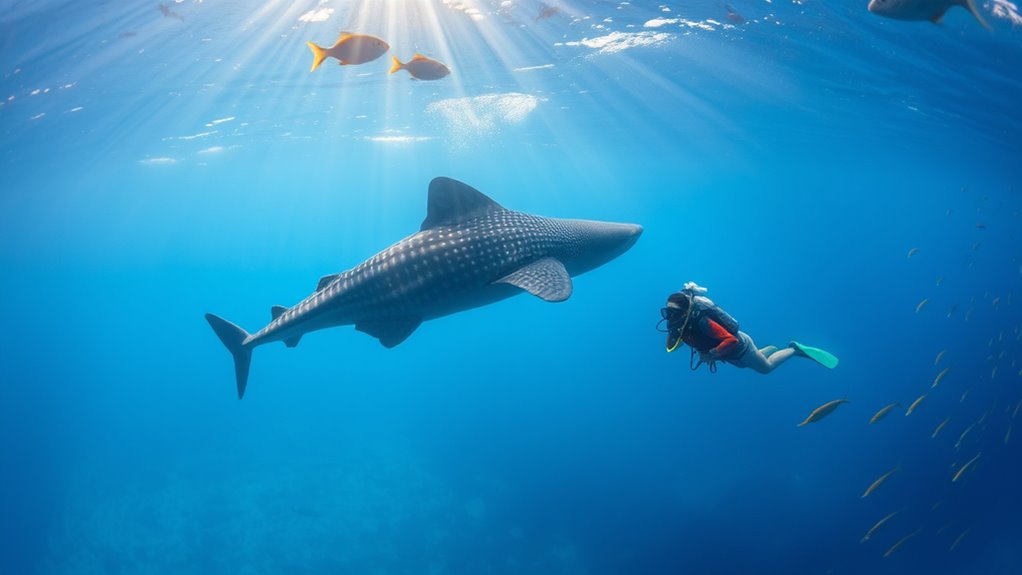
Have whale sharks ever attacked humans? The short answer is no. Whale sharks are gentle giants that feed by filtering plankton and small fish, showing no aggression toward people.
You won’t find any documented cases of whale sharks intentionally attacking or seriously injuring humans. Most encounters happen because of their massive size, which can lead to accidental bumps or contact, but these incidents are rare and unintentional.
If you swim near a whale shark, you might experience a gentle nudge, not an attack. Overall, whale sharks pose minimal threat, making them safe to observe in the wild.
How Whale Sharks Differ From Predatory Sharks
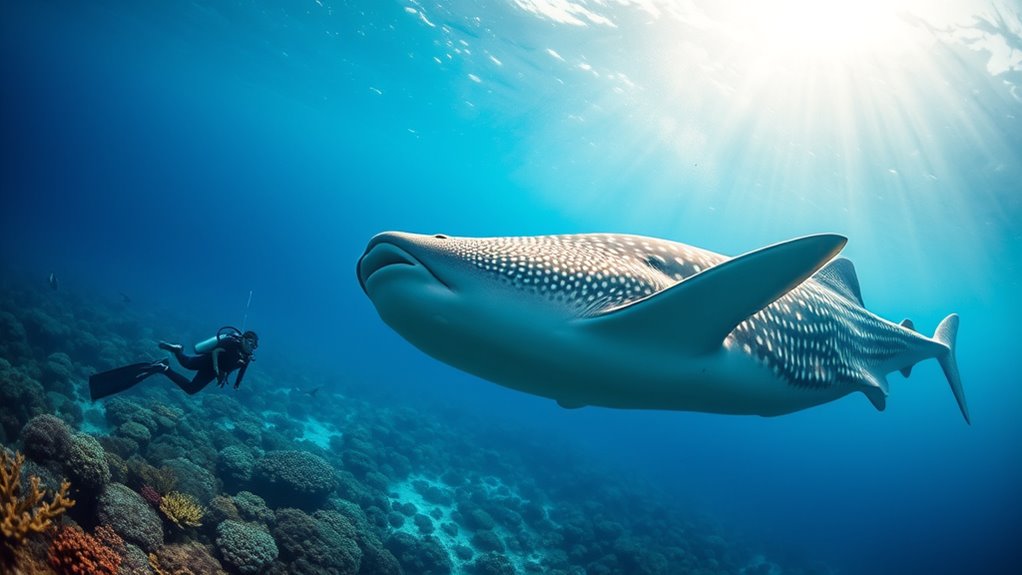
You might be surprised to learn that whale sharks are gentle giants who feed by filtering plankton, not hunting like predatory sharks. Their slow movements and tiny teeth make them far less risky than the sharks you usually hear about.
Understanding these key differences helps you see why whale sharks pose little to no threat to humans.
Gentle Giants Explained
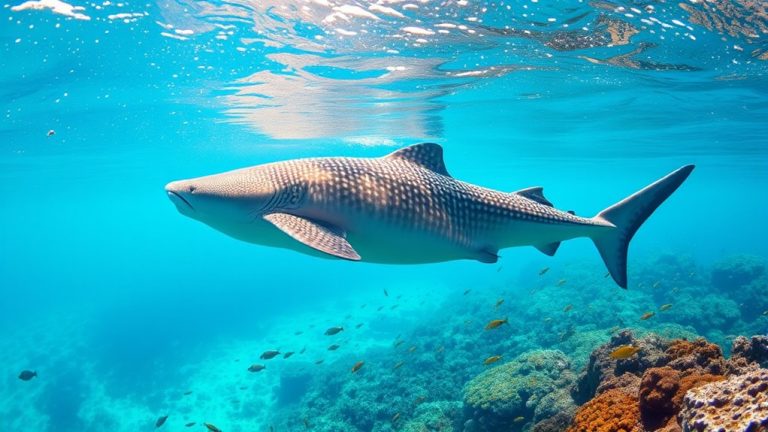
Although whale sharks share the name “shark,” they differ considerably from the predatory species you might imagine. Unlike the great white or other aggressive shark species, the whale shark is a gentle giant of the marine world. You’ll notice it has a broad, flat head and a huge mouth built for filter feeding, not hunting.
Instead of sharp teeth, it uses its wide mouth to filter plankton, small fish, and krill. Despite reaching lengths up to 18 meters, whale sharks pose virtually no threat to humans. They’re docile and often tolerate divers nearby.
Filter Feeding Behavior
Whale sharks stand apart from their predatory relatives through their unique feeding habits. Unlike sharks that hunt, whale sharks are filter feeders, consuming plankton and small marine life by swimming with their mouths open and filtering water through their gill rakers. When you enter the water near these gentle giants, make sure to stay calm and avoid sudden movements, as their feeding behavior is non-aggressive.
Whale sharks feed mostly near the surface, especially large individuals, but they don’t chase or bite. Observing them calmly lets you appreciate their peaceful role in the ocean ecosystem. Remember, these marine animals pose little risk since they focus on tiny organisms, so respecting their space and behavior guarantees a safe encounter for both you and the whale shark.
Risk Compared To Predators
While many sharks pose a genuine threat to humans due to their predatory nature, whale sharks stand apart as gentle giants that don’t hunt or attack. As the world’s largest fish, they feed by filtering plankton, not biting prey. Unlike predatory sharks such as great whites or tiger sharks, whale sharks lack sharp teeth and aggressive behavior.
Most encounters with whale sharks are safe, with any contact being accidental due to their massive size.
| Feature | Whale Shark | Predatory Sharks |
|---|---|---|
| Feeding Style | Filter feeder | Hunting with sharp teeth |
| Behavior | Gentle, non-aggressive | Aggressive and territorial |
| Risk to Humans | Minimal (accidental only) | Potentially dangerous |
You can safely admire whale sharks without fear of attack.
Whale Shark Behavior Around Divers
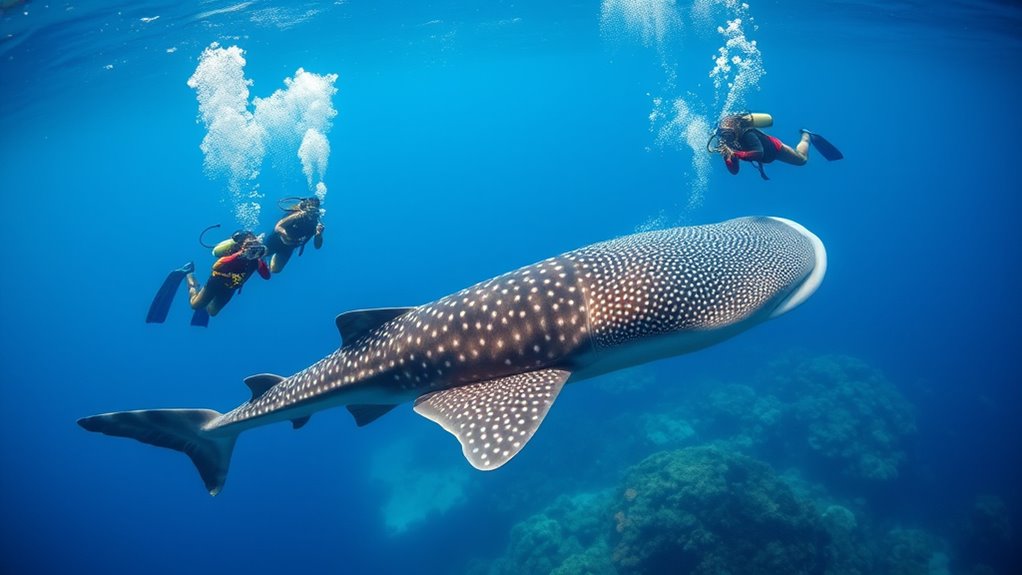
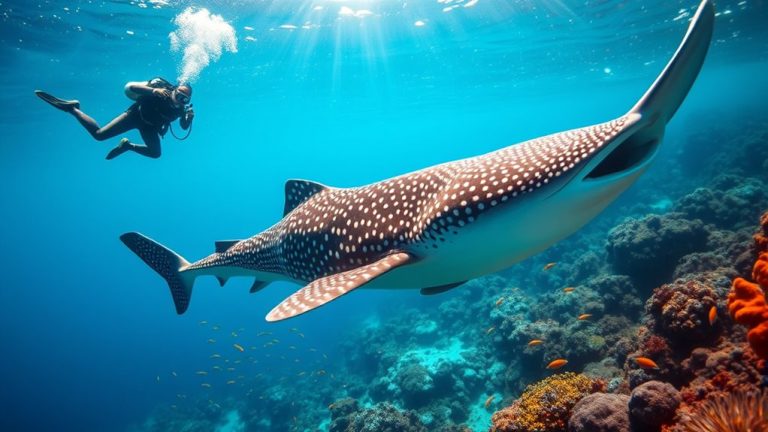
If you encounter one of these gentle giants underwater, you’ll notice they often swim close with their mouths open out of curiosity, not aggression. Whale sharks are filter feeders, so despite their size and open mouths, they pose minimal threat to you. They don’t intentionally attack humans; most incidents happen due to mistaken identity or stress.
Whale sharks swim close with open mouths out of curiosity, not aggression, posing minimal threat to humans.
To stay safe and enjoy your encounter, keep these in mind:
- Stay calm and move slowly to avoid startling the whale shark.
- Maintain a respectful distance to prevent accidental contact.
- Avoid touching or chasing them, as this can cause stress.
- Observe their behavior and give them space if they seem agitated.
Following these tips helps ensure a safe and memorable experience.
Risks When Swimming Near Whale Sharks
When you swim near whale sharks, you need to watch out for potential hazards like accidental contact or their powerful tail. Recognizing behavioral warning signs, such as sudden movements or changes in swimming patterns, helps you stay safe.
Potential Hazards Encountered
Although whale sharks pose no intentional threat to humans, you should be aware of potential hazards when swimming near them. Despite their gentle nature, close encounters can lead to accidental injuries or panic. Here are key risks to keep in mind:
- Being struck or pushed by their massive bodies or tails, especially if they get startled.
- Sudden defensive movements that may cause minor injuries.
- Accidental contact that can result in cuts or bruises.
- Panic reactions from either you or the shark increasing risks.
To stay safe, always maintain a respectful distance and observe whale sharks calmly. This reduces the chance of provoking sudden movements and helps ensure a safe, memorable experience with these gentle giants.
Behavioral Warning Signs
Because whale sharks rarely show aggression, you might feel safe swimming near them; however, recognizing their behavioral warning signs is crucial to avoid unintentional stress or risk. Watch for rapid swimming, unusually wide mouth openings, or erratic movements—these indicate distress. If a whale shark raises its head or approaches you closely, it’s signaling agitation.
When you spot these signs, increase your distance immediately to prevent startling the animal. Always approach whale sharks from the side, behind their pectoral fins, to avoid provoking sudden movements. Maintaining a respectful distance and observing their natural behavior ensures a safer encounter for both you and the whale shark.
Staying alert to these cues helps you enjoy the experience without causing harm or risking injury.
Preparing Safely for Whale Shark Encounters
Before entering the water for a whale shark encounter, make sure your snorkeling or diving gear fits well and is in good condition to prevent discomfort or accidents. Getting ready properly helps you focus on enjoying the experience safely. Here’s how to prepare:
- Wear a life vest and listen carefully to your guide’s instructions for safety.
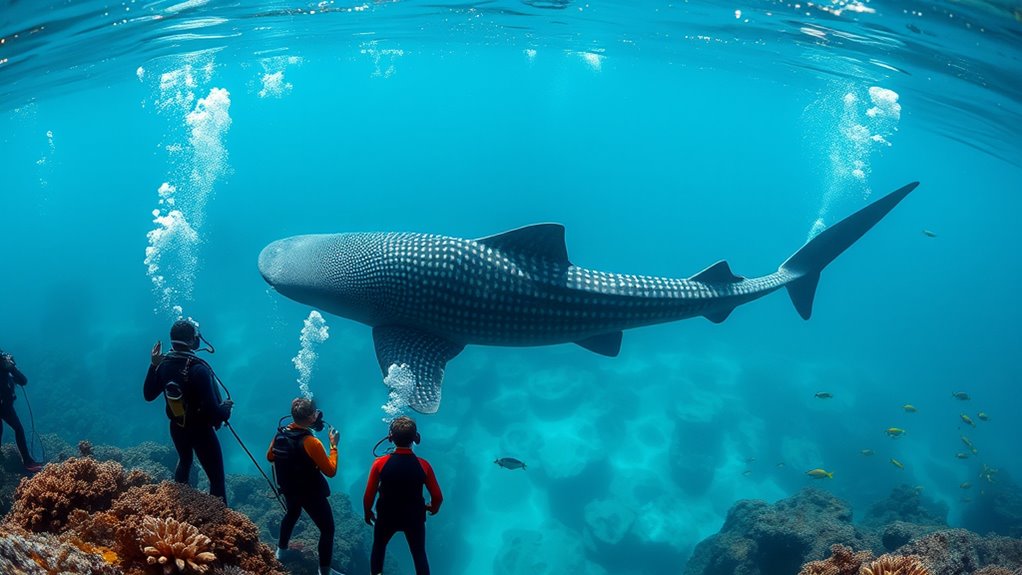
- Approach whale sharks slowly from the side, keeping at least 4-5 meters away from their head and body.
- Watch for signs of distress like erratic swimming or eye-rolling; if you see these, increase your distance immediately.
- Never touch, ride, or grab a whale shark to avoid causing stress or injury.
Following these steps helps protect both you and these gentle giants during your encounter.
Best Ways to Enter Water Near Whale Sharks
When you enter the water near whale sharks, do so gently using a backward roll or step-in method to avoid startling them. Keep a safe distance of at least 4-5 meters from their head and body to prevent any disturbance.
Always stay calm and follow your guide’s instructions to guarantee a safe encounter.
Gentle Water Entry
If you want to enter the water near whale sharks safely, start by moving slowly and calmly, using a gentle backward roll or slide to avoid startling these gentle giants. Quick or loud movements can disturb them, so keep your actions smooth and deliberate.
Follow these steps for a gentle water entry:
- Remove any flash from your camera before entering to prevent sudden flashes that might scare the shark.
- Wear a properly fitted life vest to maintain buoyancy and control your movements.
- Approach the whale shark from the side, ideally behind the pectoral fin, keeping at least 4-5 meters distance.
- Ensure your equipment is secure and ready, and listen to your guide’s instructions to minimize noise and sudden moves.
This approach helps keep both you and the whale shark safe.
Maintain Safe Distance
Although whale sharks are gentle creatures, you should always maintain a safe distance to protect both yourself and the animal. Approach them from the side, ideally behind the pectoral fin, to avoid disturbing their natural behavior. Keep at least 4-5 meters away from their head and body to prevent accidental contact or injury.
Move slowly and calmly, steering clear of sudden movements or splashing that might startle them. Always use a guide or safety boat to monitor your distance and help you enter and exit the water safely. If the whale sharks show signs of distress or agitation, avoid entering the water altogether.
Following these safety protocols ensures a respectful and secure encounter with these magnificent creatures.
Maintaining a Safe Distance From Whale Sharks
Because whale sharks are gentle filter feeders with no history of attacking humans intentionally, you can safely observe them by keeping a respectful distance. Maintaining this distance not only protects you but also ensures the well-being of these majestic creatures.
To do this effectively, remember these guidelines:
- Stay at least 4-5 meters away from their head and body to prevent accidental contact.
- Approach from the side or behind, near the pectoral fin, to avoid startling them.
- Keep a minimum of 5 meters from the tail to reduce the risk of injury from sudden tail movements.
- Always observe respectfully, never attempt to touch or chase the whale shark.
Recognizing Distress Signs in Whale Sharks
When you observe whale sharks, watch closely for signs like rapid, erratic swimming or unusual head movements, as these can indicate distress. Other distress indicators include persistent open mouth positioning and sudden changes in swimming speed or direction.
If you notice these behaviors, keep your distance to avoid increasing the shark’s stress or risking accidental injury.
| Distress Sign | What It Means | Your Action |
|---|---|---|
| Rapid, erratic swimming | Agitation or fear | Maintain distance |
| Close circling/head-rolling | Discomfort or stress | Avoid approaching or touching |
| Unusual open mouth | Possible irritation | Observe without interference |
| Sudden speed changes | Startled or threatened | Give space immediately |
Responding to Unexpected Whale Shark Behavior
Noticing distress signs in whale sharks helps you prepare for any sudden changes in their behavior. If you encounter unexpected actions like aggressive swimming or an open mouth aimed at you, staying calm and reacting promptly is essential. Here’s how you should respond:
- Slowly increase your distance to give the shark space and reduce its stress.
- Avoid any rapid movements or attempts to touch the shark, which might provoke defensive behavior.
- Keep observing the shark’s behavior to recognize if it calms down or continues showing distress.
- If the shark approaches directly with an open mouth, retreat carefully and steadily to a safer distance.
Why Respecting Whale Sharks Keeps Everyone Safe
Although whale sharks are gentle giants that rarely pose any threat to humans, respecting their space is crucial for everyone’s safety. You should always approach them calmly from the side and keep a safe distance to avoid startling or provoking them. By observing their behavior closely, you can spot signs of distress or agitation early and back away to prevent any negative interactions.
Frequently Asked Questions
Has a Whale Shark Ever Attacked a Human?
No, a whale shark hasn’t attacked you or anyone else intentionally. They’re gentle giants, and any contact is accidental.
If you stay calm and respectful around them, you’ll stay safe during your encounter.
How to Stay Alive During a Shark Attack?
If you find yourself in an unexpected close encounter, stay calm, protect your essential areas, maintain eye contact, and gently but firmly create distance.
Move smoothly and confidently to encourage the shark to lose interest and swim away.
Are Whale Sharks Aggressive to Humans?
Whale sharks aren’t aggressive to you. They’re gentle giants that feed on plankton, not people.
If you stay calm and keep a respectful distance, you’ll enjoy safe, peaceful encounters with these amazing creatures.
Which Shark Has Killed the Most Humans?
The great white shark has killed the most humans, with over 300 attacks worldwide. You should stay cautious near their habitats, avoid swimming at dawn or dusk, and never provoke or corner any shark species.
Conclusion
While whale sharks aren’t known for “misunderstandings” with humans, it’s wise to approach these gentle giants with care and respect. By keeping a safe distance, watching for their subtle cues, and preparing properly, you’ll guarantee your encounter remains a peaceful and unforgettable experience.
Remember, treating whale sharks like the majestic, shy creatures they are helps everyone stay safe—and lets you enjoy their beauty without any unexpected surprises. Staying safe around whale sharks involves understanding their behavior and respecting their space. This approach ensures that both humans and whale sharks can coexist harmoniously during close encounters.