How to See a Blue Whale Step by Step
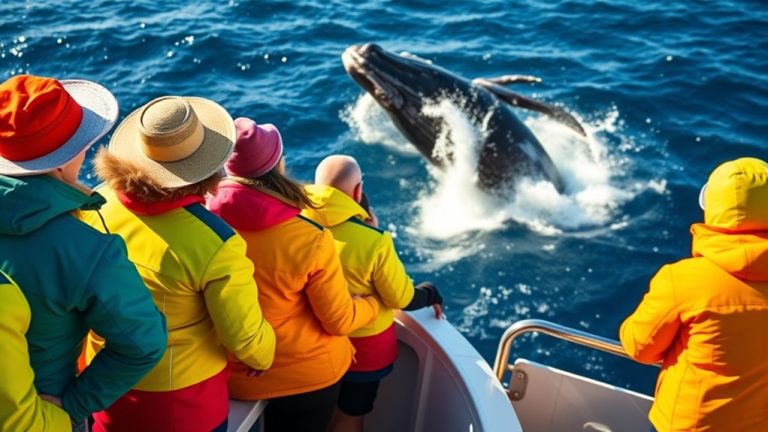
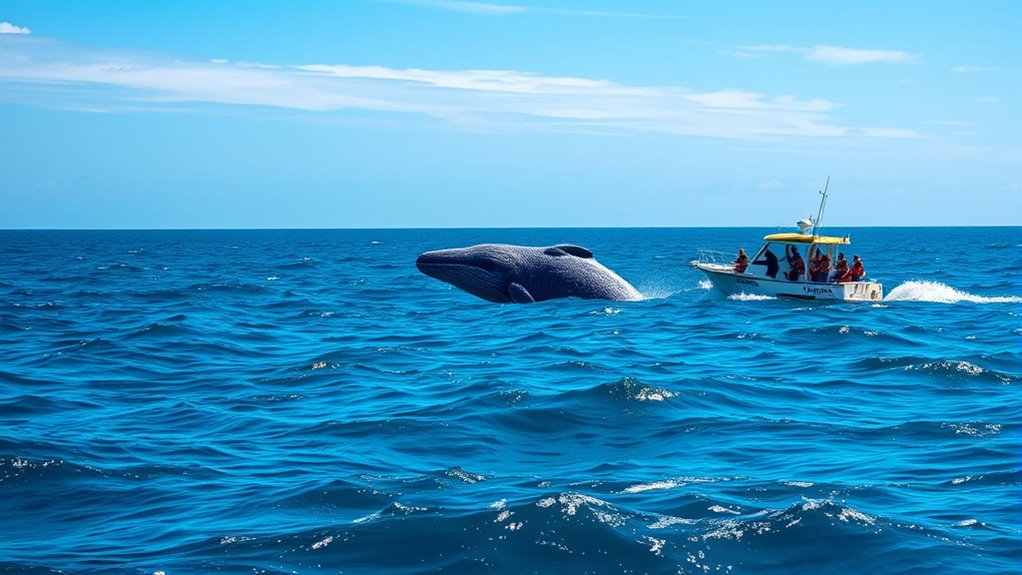
To see a blue whale, plan your trip during the summer months in California’s prime spots like Monterey Bay. Blue whale watching is a popular activity here, offering incredible opportunities to witness these majestic creatures in their natural habitat.
Book a guided tour with experienced spotters who use real-time tracking for better chances.
Dress warmly, bring binoculars, and watch for tall spouts and slow movements. Patience is key, so keep scanning the horizon carefully.
If you want to learn how to spot their unique features, behave responsibly and maintain a respectful distance.
Capturing the moment flawlessly requires some practice, so have your camera ready.
There’s plenty more to discover about blue whales, from their behaviors to conservation efforts.
Enjoy the experience and respect the ocean environment.
Choose the Best Time and Place to See Blue Whales
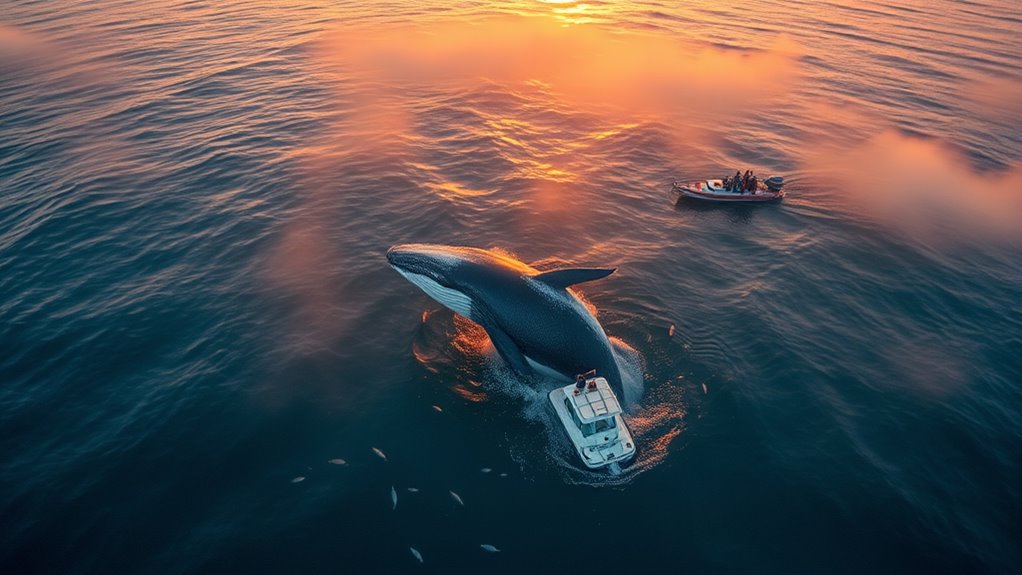
When you want to see blue whales, choosing the right time and place is key. The best time to see blue whales depends on where you go, but if you’re aiming for California, plan your visit between May and September. This period marks the peak season, with the highest sightings from mid-June to mid-September during their migration to feeding grounds.
California’s coastal waters become a hotspot, offering you a better chance to see blue whales up close. Other regions have different peak times, but focusing on California’s summer months maximizes your chances. By scheduling your trip during these months and picking a location known for consistent sightings, you’ll increase the likelihood of witnessing these majestic creatures in their natural habitat.
Pick the Right Blue Whale Watching Tour for You
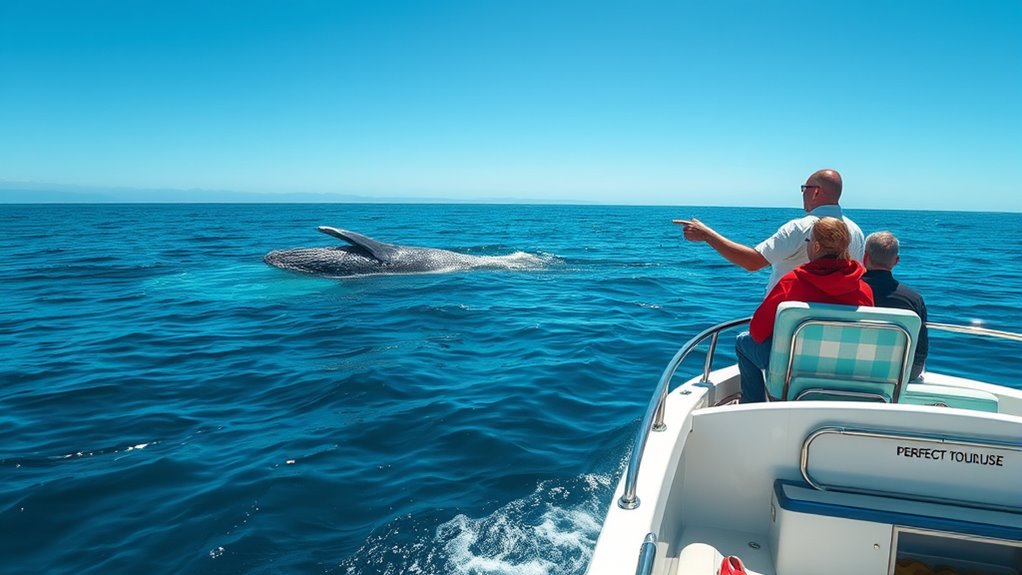
Once you’ve pinpointed the best time and place to spot blue whales, the next step is choosing the right tour to make the most of your experience. Pick a reputable tour operator known for high success rates, especially in hotspots like Monterey Bay or Sri Lanka.
Opt for tours during the peak season—June to August in California or November to April near Sri Lanka—to boost your chances. Look for boats designed for wildlife viewing, such as rigid hull inflatables or catamarans with clear platforms.
Guided tours offering expert knowledge and real-time whale tracking add great value. Always book early and check cancellation policies to stay flexible.
| Tour Operator | Peak Season | Boat Type |
|---|---|---|
| Monterey Bay | June – August | Rigid Hull Inflatable |
| Sri Lanka | November – April | Catamaran |
| Local Experts | Peak Season Varies | Viewing Platforms |
| High Success Rate | Peak Season | Wildlife Focused |
| Flexible Booking | Peak Season | Guided Tours |
What to Pack for Your Blue Whale Trip
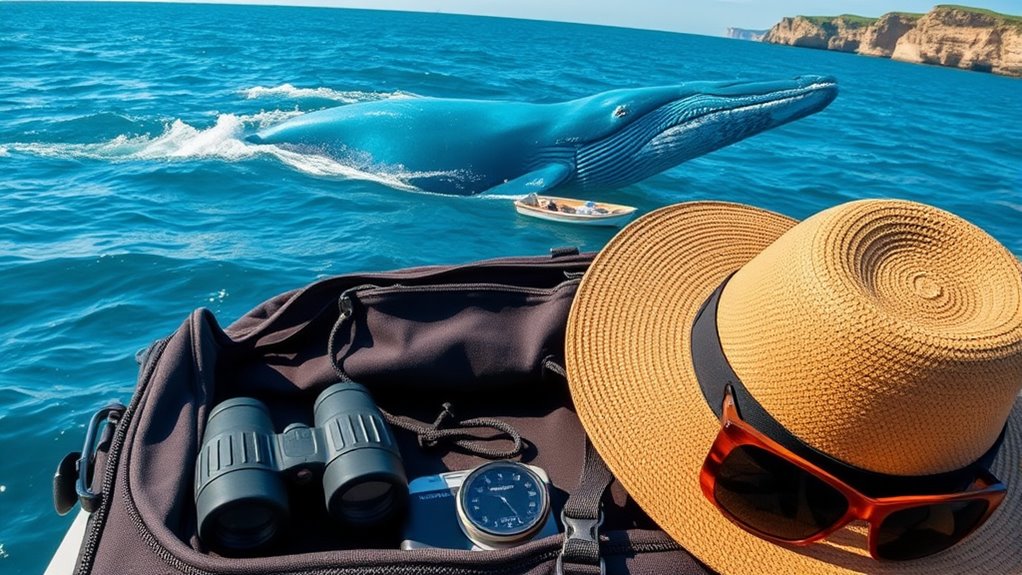
Because ocean conditions can change quickly, you’ll want to pack warm, layered clothing and a waterproof jacket to stay comfortable during your blue whale trip. When preparing for whale tours, these packing essentials are vital for enjoying your marine wildlife experience.
Don’t forget polarized sunglasses and sunscreen to protect your eyes and skin from glare and UV rays. A hat and lip balm will offer extra sun protection during long hours on deck.
Bring a camera or smartphone with a waterproof case so you can capture stunning photos of blue whales. Since seasickness can strike, pack remedies like ginger tablets or motion sickness bands to keep nausea at bay.
Being well-prepared ensures you focus on spotting these magnificent creatures, not on discomfort.
Blue Whale Behavior That Helps You Spot Them
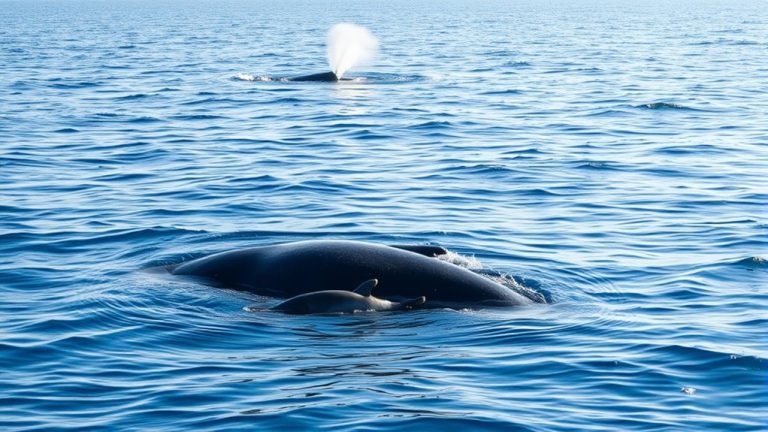
Although blue whales spend much of the time underwater, you can spot them by watching for their towering spouts, which shoot up to 20 feet high when they surface to breathe through their blowhole. Keep an eye on their behavior to increase your chances of seeing one. Notice these key signs:
- Slow swimming speeds around 12 mph, allowing you to track them.
- Quick bursts up to 30 mph when startled, causing sudden surfacing.
- Feeding near the surface showing their baleen plates and throat grooves.
- Surfacing alone or with a mother and calf in close proximity.
- Seasonal migration patterns guiding their presence in feeding grounds.
Identify Blue Whales at Sea: Key Features to Know
You’ll want to spot the blue whale’s unique color patterns, like its bluish-grey top and yellow-green belly. Notice its small dorsal fin set far back and the massive spout that can shoot nearly 20 feet high.
Recognizing these physical traits and blowing behaviors will help you identify this giant at sea.
Distinctive Color Patterns
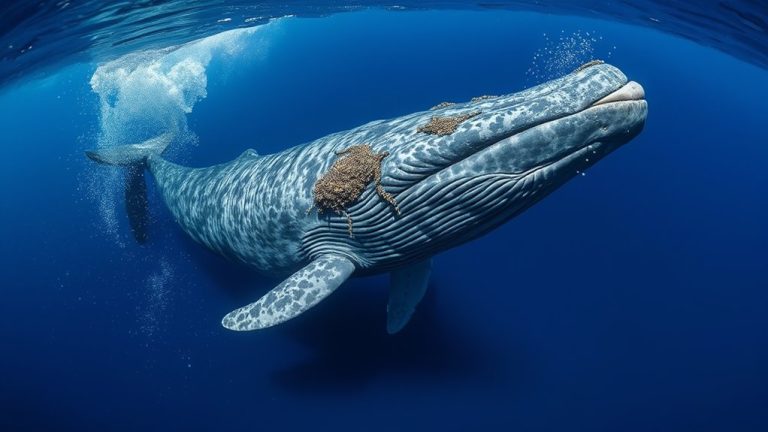
When you spot a blue whale at sea, its distinctive color patterns make it easier to identify. The blue whale’s coloration ranges from silver to light blue-gray, with unique mottling that glows brilliantly underwater.
You’ll notice:
- Aqua blue surface glistening under sunlight
- Bluish-gray dorsal side contrasting with a yellow-green belly
- Subtle patterns formed by diatom growth on their skin
- A large spout shooting up to 20 feet, outlined against the sky
- Sleek body shape enhancing the color’s visibility
This combination of hues and the dramatic spout help you distinguish a blue whale from other ocean giants. Watching for these color cues lets you appreciate the majestic beauty of the blue whale in its natural habitat.
Unique Physical Characteristics
Spotting a blue whale becomes easier once you recognize its unique physical features. This magnificent creature boasts a long, slender body up to 110 feet, with smooth, silver-blue skin that gleams brilliantly underwater. You’ll notice a small dorsal fin set far back on its body.
One key detail to watch for is the 60 to 90 throat grooves along its underside—they expand dramatically when the blue whale feeds. Above its head, the blowholes stand out; when the whale surfaces, these large blowholes release a powerful spout that can reach nearly 20 feet high.
Unlike other whales, blue whales lack barnacles, keeping their skin smooth. By focusing on these traits, you’ll confidently identify a blue whale during your next sea watch.
Recognizable Blowing Behavior
Recognizing a blue whale’s blowing behavior can help you confirm its identity at sea. Their blow is unmistakable—rising nearly 20 feet with a distinct V-shaped or heart-shaped spout. When you spot this powerful, misty spray, you’re likely witnessing a blue whale.
Watch for these surface behaviors:
- A tall, sharp spout emerging from two blowholes
- Slow, deliberate movements that reveal their massive size
- A small dorsal fin positioned far back on their body
- Expanding throat grooves that balloon during feeding
- The blow’s visibility from great distances due to its height and shape
How to Watch Blue Whales Responsibly
When watching blue whales, keep a safe distance of at least 100 yards to avoid disturbing them. Try to minimize noise by speaking softly and moving slowly so you don’t startle the whales.
Maintain Safe Distance
How close should you get to a blue whale? Always maintain a safe distance of at least 100 yards to ensure respectful viewing and protect these gentle giants. When you keep your distance, you support responsible whale observation that prioritizes the whales’ well-being.
To do this effectively:
- Use binoculars or a telephoto lens to see details up close.
- Follow instructions from experienced guides familiar with local regulations.
- Avoid sudden movements or loud noises that might startle the whale.
- Give whales space to feed, breathe, and migrate naturally.
- Stay patient and observe quietly, honoring their environment.
Minimize Noise Pollution
Because blue whales rely heavily on sound for communication and navigation, you should keep noise levels low when watching them. Speak softly, avoid loud equipment, and steer clear of high-speed motorboats to reduce noise pollution.
Choose eco-friendly tour operators committed to marine conservation who follow strict noise guidelines. Using underwater or snorkel gear with noise-reducing features also helps minimize disturbance.
| Action | Reason |
|---|---|
| Speak softly | Prevents disrupting whale communication |
| Use noise-reducing gear | Limits underwater sound pollution |
| Select eco-friendly tours | Supports conservation efforts |
Tips to Maximize Your Blue Whale Sightings
To maximize your chances of spotting a blue whale, plan your trip during peak seasons like May to September in California or November to April in Sri Lanka. Choosing the right whale-watching tour is vital. Look for boats with expert guides and high success rates for whale sightings.
Plan your blue whale trip during peak seasons and choose tours with expert guides for the best sightings.
Arrive early and prepare for changing weather to improve visibility. Use binoculars or zoom lenses to catch subtle signs of blue whales offshore. Keep these tips in mind:
- Book tours with flexible, extended schedules and no strict time limits
- Opt for tours using real-time tracking and habitat data
- Watch for spouts, tail flukes, and large body surfaces
- Dress warmly and be patient during calm seas
- Stay alert and scan the horizon regularly
These strategies will boost your whale watching success and make your experience unforgettable.
Capture and Share Your Blue Whale Experience
When you spot a blue whale, capturing the moment with a high-quality camera or smartphone can help you preserve and share this incredible experience. Use zoom to get detailed shots from a safe distance, and take multiple photos from different angles to highlight unique features like the whale’s massive tail or spout. Be patient and ready to snap when the whale surfaces or breaches.
Afterward, share your best shots on social media with hashtags like #BlueWhaleSightings or #WhaleWatching to connect with others. Adding personal stories or facts in captions raises awareness and inspires conservation.
| Tip | Benefit |
|---|---|
| Use zoom | Capture fine details |
| Take multiple angles | Showcase unique features |
| Be patient | Get well-timed photos |
| Share on social media | Raise awareness |
Frequently Asked Questions
What Is the Best Way to See a Blue Whale?
The best way to see a blue whale is by joining a guided tour during peak seasons, choosing reputable operators near known habitats, and opting for specialized boats to get close.
Ensuring calm weather is also crucial for the best chance at sightings.
Is It Possible to See a Blue Whale in Person?
Yes, you can see a blue whale in person! These giants grow up to 100 feet long.
Join a guided tour during peak seasons in places like California or Sri Lanka to increase your chances of spotting one.
How to Visualize the Size of a Blue Whale?
You can visualize a blue whale’s size by imagining a creature longer than a commercial airplane, with a heart as big as a car, a tongue weighing like an elephant, and tail flukes lifting 12-15 feet high.
Where Am I Most Likely to See a Blue Whale?
You’re most likely to see a blue whale off California’s Monterey Bay or Southern California from May to September, or near Sri Lanka’s Mirissa between November and April when they migrate and feed on abundant krill.
These locations offer some of the best opportunities to witness these majestic creatures in their natural habitat. During these months, blue whales are actively feeding and are more visible near the surface. Planning a trip during these times increases your chances of a memorable whale-watching experience.
Conclusion
Seeing a blue whale is a rare and awe-inspiring experience, and by choosing the right time, place, and tour, you’re setting yourself up for success. Remember, “patience is a virtue”—these gentle giants don’t always show up on schedule.
Pack wisely, know what to look for, and respect their space to enjoy the moment fully. With these tips, you’ll make memories that’ll last a lifetime and maybe even capture that perfect shot to share.
By following this step-by-step guide on how to see a blue whale, you increase your chances of a spectacular encounter. Enjoy the adventure and treasure every sighting of these magnificent creatures in their natural habitat.