How Fast Can a Blue Whale Swim?
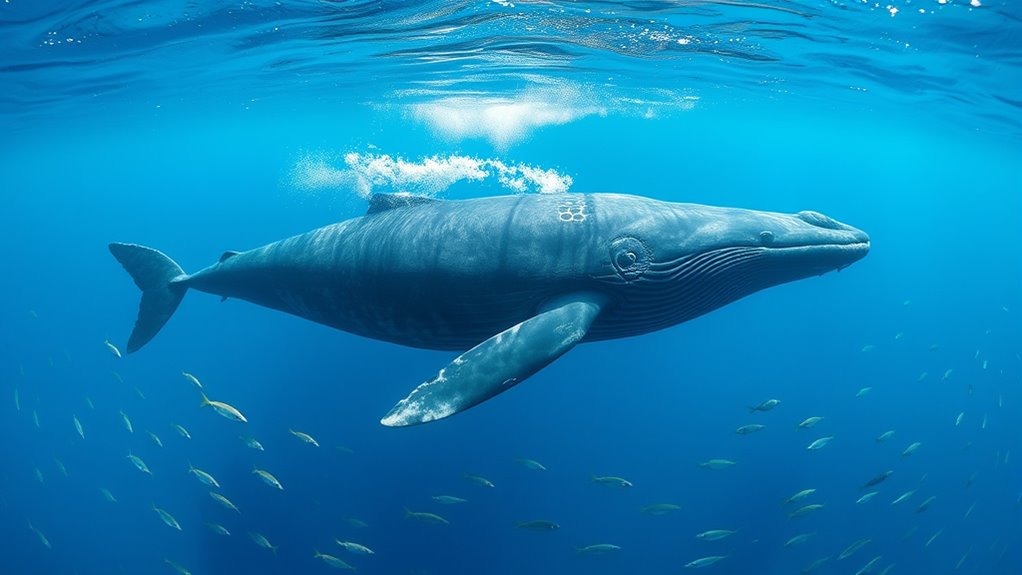
You can expect a blue whale to swim up to 36 km/h (22 mph) in short bursts, though it usually cruises much slower at 2-8 km/h during migration.
These giants use powerful tail flukes and streamlined bodies to reach these speeds when feeding, escaping threats, or covering distance.
While not the fastest marine mammal, their size and speed are impressive. Keep exploring to discover why and how they move so efficiently in the ocean.
How Fast Do Blue Whales Swim?
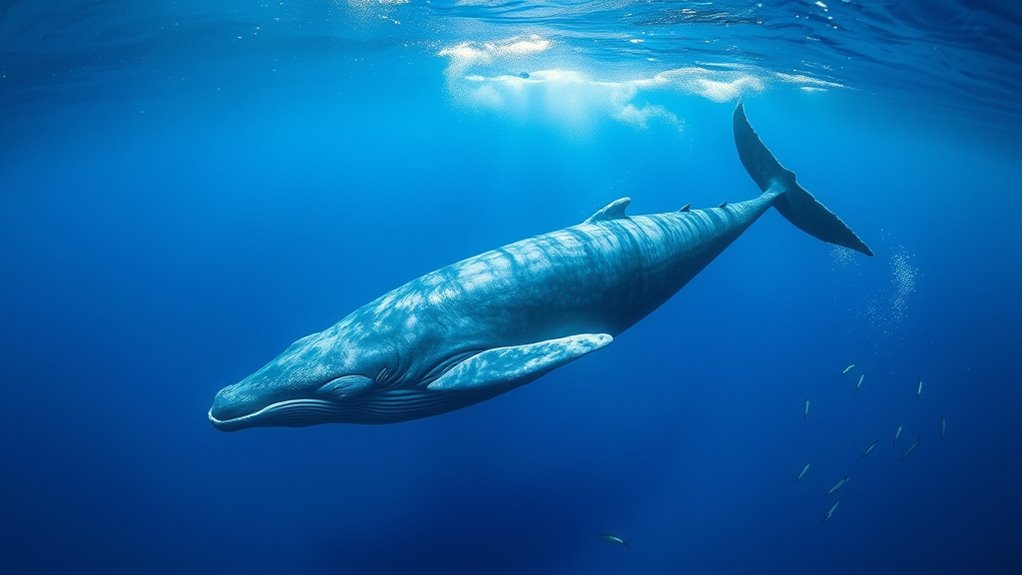
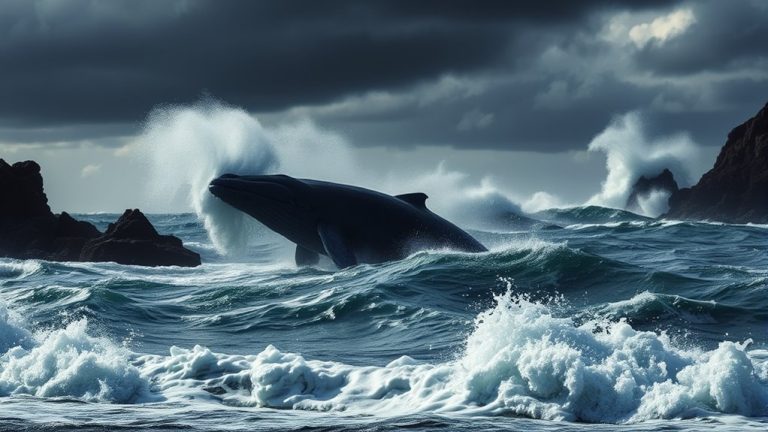
How fast can a blue whale really swim? Blue whales can reach speeds up to 36 km/h (about 22 mph) in short bursts, which is impressive considering their massive size.
Blue whales can sprint up to 36 km/h (22 mph) despite their enormous size.
Typically, when you observe blue whales during migration, they cruise at a slower speed of 2-8 km/h (1-5 mph). This variation in speed depends on what they’re doing—whether feeding, migrating, or escaping threats.
You’ll notice their streamlined bodies and powerful tail flukes help them swim efficiently, allowing for quick acceleration when needed. So, while blue whales don’t maintain high speeds constantly, they can certainly move fast enough to respond to their environment.
Their speed showcases how these gigantic creatures combine strength with agility in the open ocean.
Blue Whale Speed Compared to Other Whales and Dolphins
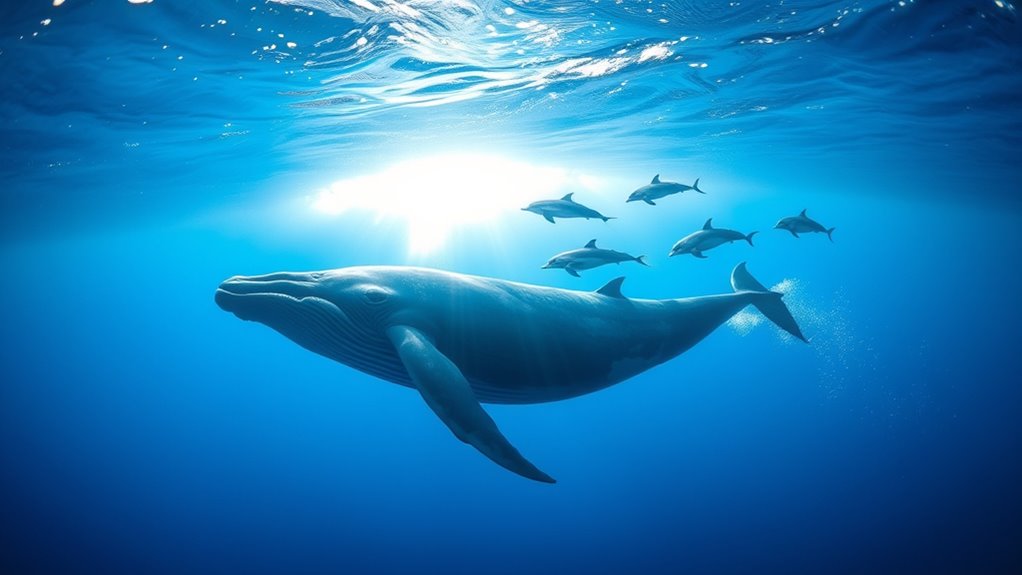
When you compare blue whale speeds to other whales and dolphins, you’ll see they’re not the fastest swimmers in the ocean. Blue whales typically cruise between 2-8 km/h but can reach bursts of up to 36 km/h. However, other marine mammals outpace them.
Minke whales hit speeds around 39 km/h, while fin whales, nicknamed “the greyhound of the sea,” reach 40 km/h. Sei whales are even faster, swimming over 55 km/h, far exceeding blue whales.
Among marine mammals, dolphins top the charts; common dolphins can sprint at up to 60 km/h. So, while blue whales are the largest creatures, their whale speeds are moderate compared to the swifter whales and dolphins sharing their ocean home.
What Makes Blue Whales So Fast
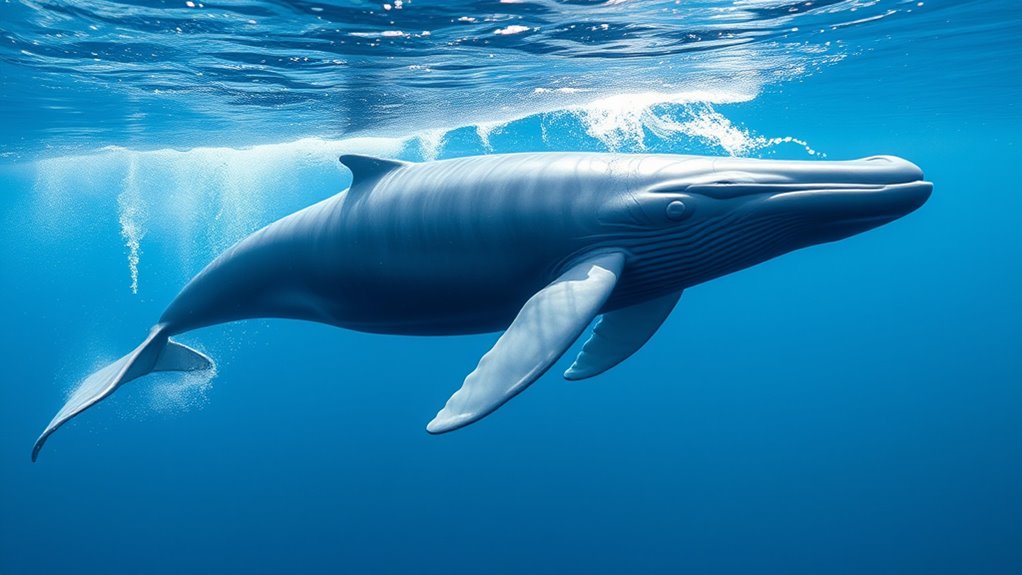
Although blue whales are massive, they can swim surprisingly fast, reaching speeds up to 36 km/h. What makes blue whales so fast is their streamlined, muscular bodies that cut through water efficiently. You’ll notice their powerful tail flukes play a key role—they provide the strong thrust needed to swim at speeds that rival smaller marine mammals.
Their large, flexible baleen plates and massive lungs enhance their ability to move smoothly and breathe efficiently during rapid swimming. Despite their size, blue whales can accelerate quickly in short bursts, thanks to these adaptations.
When you see a blue whale glide effortlessly, remember it’s their unique body design and powerful tail flukes that let them achieve such impressive speed in the ocean.
Why and When Blue Whales Swim at Top Speeds
Because blue whales need to cover vast distances during migration and catch fast-moving prey, they can sprint up to 36 km/h in short bursts. You’ll notice they hit top speeds when escaping threats, accelerating to communicate or evade danger, and lunging to feed on krill. Their streamlined bodies and massive tail flukes let them power through water efficiently.
Here’s when blue whales use their bursts of speed:
| Situation | Purpose |
|---|---|
| Migration | Cover long distances quickly |
| Feeding | Catch fast-moving prey |
| Escaping threats | Avoid predators or danger |
| Social interaction | Communicate or assert dominance |
Understanding these moments helps you appreciate why blue whales rely on their top speeds during migration and daily survival.
Human and Environmental Challenges Affecting Blue Whale Speed
While blue whales rely on their speed to survive, human activities and environmental changes often slow them down or put them at risk. Ship strikes and heavy vessel traffic can cause serious injuries, limiting their ability to swim freely. Ocean noise pollution from ships, military exercises, and seismic surveys disrupts their communication and navigation, affecting how quickly and safely they move.
Climate change shifts the availability and location of their prey, forcing blue whales to adjust migration routes and swim longer distances, which can reduce their overall speed and efficiency. Additionally, entanglement in fishing gear and marine debris further restricts their movement.
You can help by supporting conservation efforts like ship speed restrictions and marine protected areas that aim to minimize these challenges and safeguard blue whales’ natural swimming abilities.
Frequently Asked Questions
Can Blue Whales Live 100 Years?
Yes, blue whales can live around 100 years. You’ll find their age by examining earwax layers, which grow annually.
Despite threats, their slow growth and massive size help them reach such impressive lifespans.
What Is the Fastest Whale in the World?
You’ll find the sei whale holds the speed record, swimming over 55 km/h (34 mph).
While blue whales are fast, they can’t match the sei whale’s rapid pace in the ocean’s race.
Has a Blue Whale Ever Attacked a Human?
No, blue whales haven’t attacked humans. You can approach them safely because they’re gentle filter feeders, not aggressive predators. Their calm nature means they pose no threat, and any harm is usually accidental from boat collisions.
What Whale Lives 300 Years?
Imagine outliving centuries—it’s the Greenland shark, not a whale, that lives over 300 years.
If you thought whales held longevity records, you’d be surprised; these slow-growing sharks are Earth’s true time travelers beneath icy seas.
Conclusion
Now that you know how fast blue whales can swim, isn’t it amazing how these gentle giants move with such power and grace? You’ve seen how their speed compares to other whales and what drives them to swim so swiftly.
But with human impacts and environmental changes, can they keep up their incredible pace? It’s up to us to protect these magnificent creatures, ensuring they continue to glide through our oceans for generations to come.
By understanding how fast blue whales can swim and the challenges they face, we can better appreciate the importance of conservation efforts. Protecting their habitat is essential to preserving the natural wonder of the blue whale’s speed and strength.