How Many Teeth Does a Whale Shark Have?
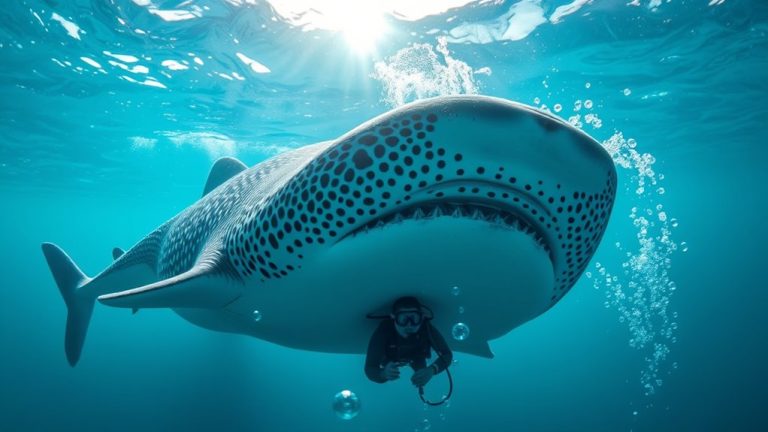
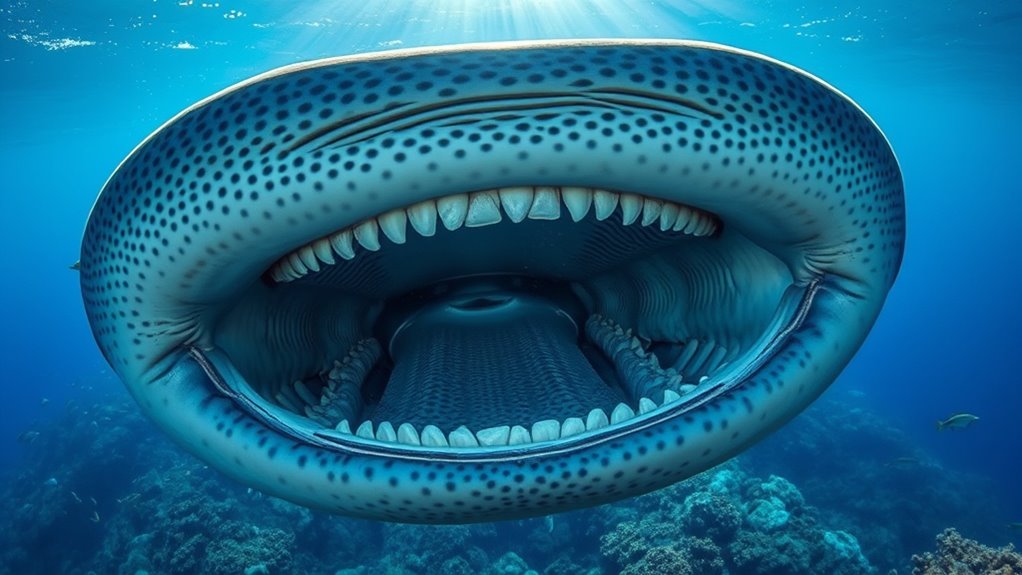
You’ll be surprised to learn that a whale shark has nearly 3,000 tiny teeth arranged in multiple rows along both its upper and lower jaws. These teeth are very small and peg-like, not sharp like other sharks’, and aren’t used for biting but to aid filter feeding.
They continually regenerate throughout the shark’s life.
If you keep exploring, you’ll discover how these unique teeth support feeding and what challenges they face in the wild.
How Many Teeth Does a Whale Shark Actually Have?

Although whale sharks are the largest fish in the ocean, you might be surprised to learn they have thousands of tiny teeth—usually around 3,000 in total. These teeth are arranged in rows along their jaws, covering both the upper and lower parts. Each tooth is small, measuring just a few millimeters, and they’re not sharp like those of predatory sharks.
Instead, they’re more like tiny, peg-like structures. You’ll find that the teeth are evenly distributed, with hundreds in each row, and multiple rows stacked behind one another. Even though they have so many teeth, whale sharks don’t rely on them for biting or chewing.
Instead, their teeth serve other purposes, which you’ll explore later. For now, just know how astonishingly numerous their teeth really are.
Why Do Whale Sharks Have So Many Tiny Teeth?
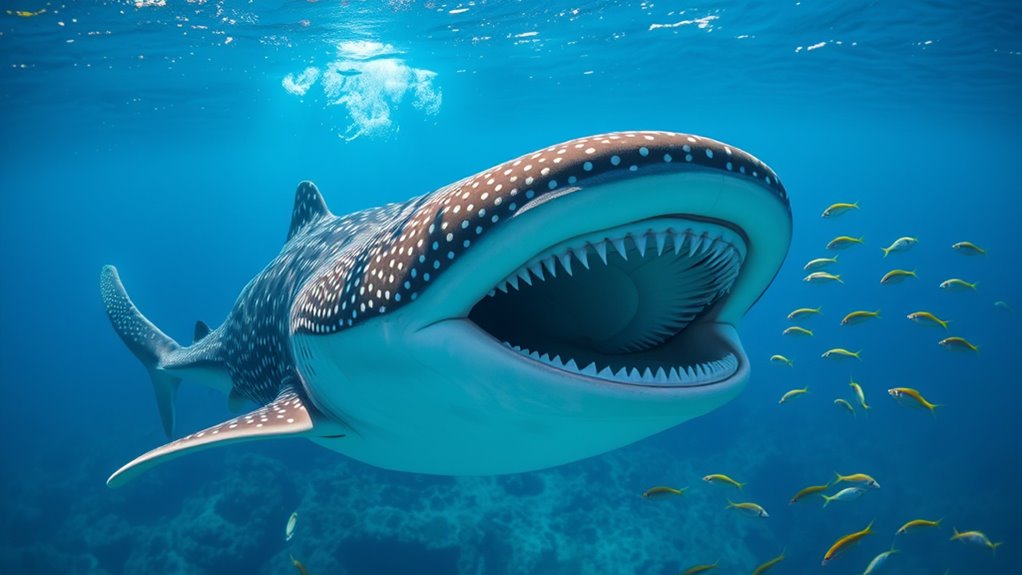
You might wonder why whale sharks carry thousands of tiny teeth if they don’t use them for biting or chewing. While these teeth aren’t useful for feeding like other sharks, they serve important purposes. For one, they help anchor the skin and provide structural support.
Their mouths contain rows of these small teeth, but whale sharks mainly feed by filtering plankton and small fish through their gill rakers, not by biting. The tiny teeth may also play a role during mating, helping males grasp females securely.
How Do Whale Shark Teeth Differ From Other Sharks?

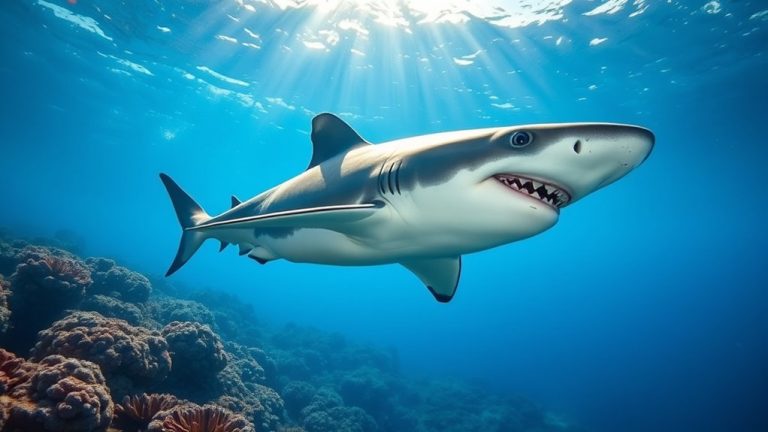
While most sharks rely on their sharp, large teeth to catch and tear prey, whale sharks have thousands of tiny teeth that serve very different purposes. Unlike the pointed, serrated teeth you see in predatory sharks, whale shark teeth are small, blunt, and not used for biting. You won’t find them tearing flesh because whale sharks are filter feeders, swallowing plankton and small fish instead.
Their teeth don’t play a major role in feeding but may help in other ways, like sensing or filtering. So, if you compare them to other sharks, you’ll notice whale shark teeth are less about hunting and more about adapting to a gentle, plankton-based diet. This difference highlights how diverse shark species can be in their feeding strategies.
Where Are Whale Shark Teeth Located on Their Jaws?
Because whale sharks have thousands of tiny teeth, you might wonder exactly where they’re located on their jaws. Their teeth are arranged in rows on both the upper and lower jaws, but they don’t use them for chewing. Instead, these teeth cover the entire jaw surface, helping protect the mouth.
You’ll find the teeth densely packed along the front edges and sides of the jaws, while the inner areas have fewer teeth.
Here’s a simple overview:
| Jaw Section | Teeth Density | Location Detail |
|---|---|---|
| Upper Jaw Front | High | Edge and sides |
| Upper Jaw Inside | Low | Inner surface |
| Lower Jaw Front | High | Edge and sides |
Knowing this helps you see how whale sharks’ jaws are built for their unique feeding style.
What Role Do Whale Shark Teeth Play in Feeding?
Although whale shark teeth are tiny and numerous, they don’t chew their food like other animals do. Instead, these teeth help in a subtle but important way. When you watch a whale shark feeding, you’ll notice it filters huge amounts of water to catch plankton and small fish.
The teeth play a minor role in this process by helping to keep the prey inside the mouth once it’s captured. They act more like a barrier than tools for biting. So, while the teeth aren’t used for chewing or tearing, they contribute by preventing food from escaping as the whale shark swallows.
Understanding this helps you appreciate how their feeding strategy is perfectly adapted to their gentle, filter-feeding lifestyle.
How Do Whale Sharks Use Teeth Without Biting or Chewing?
Even though whale sharks don’t use their teeth for biting or chewing, these tiny structures serve a unique purpose. When you observe a whale shark feeding, you’ll notice it filters vast amounts of water to capture plankton and small fish. The teeth, though small and numerous, don’t help in breaking down food.
Instead, they act as a barrier, preventing larger prey from escaping while water flows out. You can think of the teeth as a sieve lining the whale shark’s mouth, assisting in holding onto the captured food. This adaptation allows the whale shark to efficiently filter-feed without needing to bite or chew, relying on water flow and its filtering mechanism to gather nourishment effectively.
How Do Whale Shark Teeth Develop and Regenerate Over Time?
You’ll find that whale shark teeth develop continuously through a unique formation process beneath their skin. As they lose old teeth, new ones regenerate quickly to replace them.
Over time, these teeth can change in size and number depending on the shark’s age.
Tooth Formation Process
While whale sharks might look gentle, their teeth develop through a fascinating process that guarantees they’re always ready for feeding. You should know that their teeth form in rows inside the jaws, starting as tiny buds. These buds gradually harden, developing into functional teeth.
As they grow, older teeth move forward, making room for new ones behind them.
Here’s a quick look at the tooth formation stages:
| Stage | Description | Duration |
|---|---|---|
| Budding | Tooth begins as a small bump | Few weeks |
| Mineralizing | Hardening with calcium deposits | Several weeks |
| Maturation | Fully formed tooth | Few months |
| Movement | Shifts forward in the jaw | Continuous |
| Functional | Ready for feeding | Lifespan of tooth |
Regeneration Mechanism
Because whale sharks constantly lose teeth during feeding, their regeneration mechanism guarantees they always have a fresh set ready. You might be surprised to learn this process is highly efficient and continuous. Here’s how it works:
- Tooth Bud Development: New teeth form in the dental lamina beneath the skin, ensuring a steady supply.
- Sequential Replacement: As old teeth fall out, new ones move forward in a conveyor-belt fashion to take their place.
- Rapid Growth Rate: These teeth grow quickly to minimize the time any gap exists, maintaining feeding efficiency.
Age-Related Changes
As whale sharks grow older, their teeth undergo notable changes in development and regeneration that reflect their shifting needs. When you observe younger whale sharks, you’ll notice their teeth are small and more numerous, suited for early feeding habits.
As they mature, the teeth don’t play a major role in feeding since whale sharks primarily filter plankton. Instead, their teeth become less prominent and regenerative activity slows down.
If you ever see an adult whale shark, you’ll find their teeth are often worn or missing, but this doesn’t affect their survival. So, you can understand that tooth development and regeneration in whale sharks adapt over time, aligning with their dietary changes and ensuring energy is focused on more critical functions than tooth maintenance.
Can Whale Shark Teeth Help Identify Individual Sharks?
You might wonder if whale shark teeth could help identify individual sharks since each has unique tooth patterns. However, the small size and replacement of teeth pose challenges for using them as reliable markers.
Scientists are exploring various research methods to overcome these difficulties and improve identification techniques.
Unique Tooth Patterns
While whale sharks have thousands of tiny teeth, their unique patterns might surprise you—they can actually help researchers identify individual sharks. Each tooth has slight variations in size, shape, and arrangement, creating a distinct “fingerprint” for every whale shark. This uniqueness allows scientists to track and study these gentle giants over time.
Here’s how unique tooth patterns assist identification:
- Shape Variation: Teeth differ subtly, giving each shark a distinctive dental pattern.
- Tooth Arrangement: The number and placement of teeth vary along the jawline.
- Wear and Damage: Individual wear or broken teeth add to the uniqueness.
Identification Challenges
Although whale shark teeth have unique patterns, they don’t always provide reliable identification due to their small size and the sharks’ constant tooth replacement. When you try to identify an individual whale shark by its teeth, you quickly realize how tricky it is. These teeth are tiny—often less than a millimeter—and new ones continuously grow in as old ones fall out.
This constant turnover means the tooth pattern changes frequently, making it hard to track a shark over time using dental features alone. Instead, you might find it more effective to rely on other methods like spot patterns or fin shapes.
Scientific Research Methods
Since whale shark teeth constantly renew and are incredibly small, researchers don’t rely on them to identify individual sharks. Instead, they use other scientific methods that are much more effective.
You’ll find these approaches help track and study these gentle giants better:
- Spot Pattern Analysis – You can identify each whale shark by its unique spot patterns, much like a fingerprint.
- Photo Identification – Researchers take photos of the shark’s spots and use software to match individuals over time.
- Tagging and Tracking – Scientists attach satellite or acoustic tags to monitor their movements and behavior across oceans.
What Threats Affect Whale Shark Teeth and Their Impact?
Because whale shark teeth play a crucial role in their feeding, understanding the threats that affect these teeth helps you appreciate the challenges these gentle giants face. Pollution, especially plastic debris and chemical contaminants, can harm their teeth by causing infections or impairing growth. When you consider boat strikes and fishing gear entanglements, you realize these physical injuries can damage or break their teeth, affecting their ability to filter feed effectively.
Additionally, climate change alters ocean conditions, which may impact the health of their teeth indirectly by affecting their food sources. When their teeth are compromised, whale sharks struggle to feed properly, which can lead to malnutrition and weakened immune systems. Recognizing these threats encourages you to support conservation efforts that protect whale sharks and their fragile teeth.
How Do Scientists Study Whale Shark Teeth?
When you study whale shark teeth, you’ll see scientists use imaging techniques to get detailed views without harming the animal. They often collect tooth samples carefully, balancing research needs with the sharks’ well-being.
Fieldwork presents challenges like locating these gentle giants and working in open water conditions.
Imaging Techniques Used
Although whale shark teeth are tiny and numerous, scientists use advanced imaging techniques to study them in remarkable detail. You’ll find these tools essential for understanding the structure and function of each tooth without harming the animal.
Here are three key imaging methods researchers rely on:
- Scanning Electron Microscopy (SEM): This technique lets you see the surface texture of teeth at a microscopic level, revealing tiny details invisible to the naked eye.
- Micro-CT Scanning: With this, you can create 3D images of teeth, helping you explore their internal structure non-invasively.
- Digital Photography with Macro Lenses: This straightforward method captures high-resolution close-ups, allowing you to document tooth arrangement and size accurately.
These techniques together give you an extensive view of whale shark teeth for further study.
Tooth Sampling Methods
To study whale shark teeth effectively, scientists carefully collect samples using specialized methods that minimize harm to these gentle giants. You’ll find that researchers often use non-invasive techniques, like photographing the teeth or taking small swabs to gather tissue for DNA analysis. When direct sampling is necessary, they gently extract tiny tooth fragments or shed teeth without disturbing the shark’s natural behavior.
These samples help you understand tooth structure, growth patterns, and genetic information. Scientists also work closely with marine conservationists to ensure ethical practices during sampling. By combining these careful methods, you gain valuable insights into whale shark biology without putting the animals at risk, helping protect and preserve these magnificent creatures for future generations.
Challenges In Fieldwork
Collecting whale shark teeth samples isn’t as straightforward as it sounds. Since these gentle giants are massive and constantly moving, you’ll face several challenges when studying their teeth. Here’s what you’ll likely encounter:
- Locating the sharks – Whale sharks roam vast ocean areas, so finding them requires patience and tracking technology.
- Getting close safely – Approaching a whale shark without disturbing it or putting yourself at risk demands skill and care.
- Extracting samples without harm – Their tiny teeth are hard to access, and you must avoid hurting the shark or yourself during sampling.
Despite these hurdles, careful planning and specialized equipment help scientists gather valuable data about whale shark teeth. You’ll need persistence and respect for these creatures to succeed.
Frequently Asked Questions
How Long Do Whale Sharks Live in the Wild?
Whale sharks live around 70 to 100 years in the wild. You’ll find them roaming tropical oceans, growing slowly and thriving in their environment for decades.
If you spot one during your ocean adventures, you’re witnessing a creature that has likely lived a long and fascinating life. These gentle giants are truly remarkable inhabitants of the sea.
What Is the Typical Size of a Whale Shark?
You’ll find whale sharks typically reach around 40 feet long, though some grow up to 60 feet. They’re the largest fish in the ocean, making them truly impressive creatures to encounter in the wild.
Where Are Whale Sharks Commonly Found?
You’ll commonly find whale sharks in warm, tropical oceans worldwide, especially near coastal regions like the Philippines, Mexico, and Australia.
They tend to gather where plankton and small fish are abundant for feeding.
Are Whale Sharks Dangerous to Humans?
You don’t need to fear a gentle giant like the whale shark; they’re not dangerous to you. Despite their massive size, they feed on plankton, peacefully swimming by without posing any threat to humans.
What Do Whale Sharks Primarily Eat?
You primarily eat plankton, small fish, and squid when feeding as a whale shark. You use your huge mouth to filter these tiny creatures from the water while swimming slowly near the surface or along reefs.
This slow, gentle feeding method allows you to consume large quantities of food without much effort. Despite your size, your diet consists mainly of some of the smallest marine life. This unique feeding strategy makes you an important part of the ocean ecosystem.
Conclusion
You see how whale sharks have thousands of tiny teeth, how those teeth line their massive jaws, and how they play a subtle role in feeding. You watch their teeth develop, regenerate, and even help scientists identify individual sharks.
You understand the threats these teeth face and the importance of studying them. Just as the whale shark glides silently through the ocean, its countless teeth work quietly, patiently, persistently—an unseen force beneath the waves.
The number of teeth in a whale shark can reach into the thousands, though these teeth are small and not used for biting prey. Instead, they assist in filter feeding, helping this gentle giant thrive in its vast marine environment.