How Old Is a Whale?
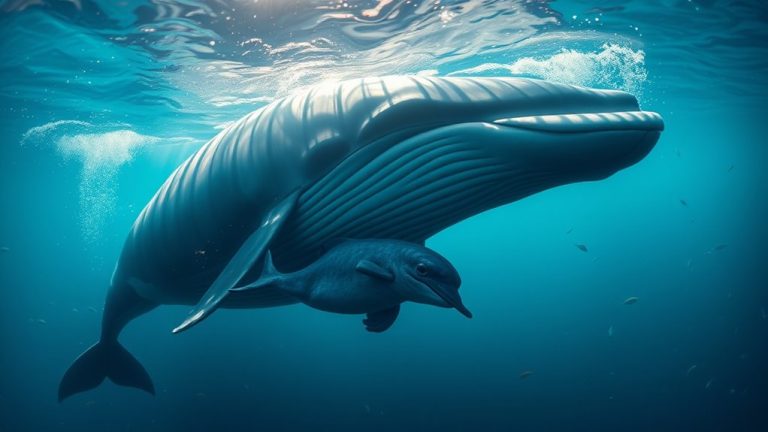
You’ll find whale lifespans vary a lot depending on the species. Whale age and longevity are fascinating topics in marine biology.
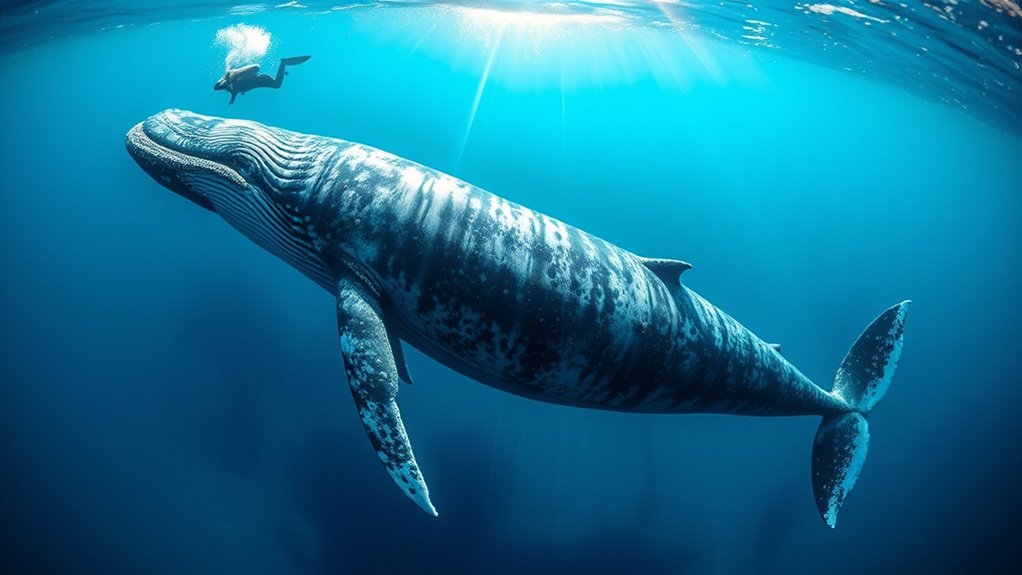
While some whales like humpbacks live around 45 to 50 years, others such as bowhead whales can surpass 200 years!
Their age depends on genetics, environment, and human impact. Scientists use earplug rings and chemical markers to estimate how old they are.
Curious why bowheads live so long or how this info helps conservation?
Keep exploring to uncover more fascinating details. Understanding whale lifespans helps protect these magnificent creatures for future generations.
How Long Do Different Whale Species Live?
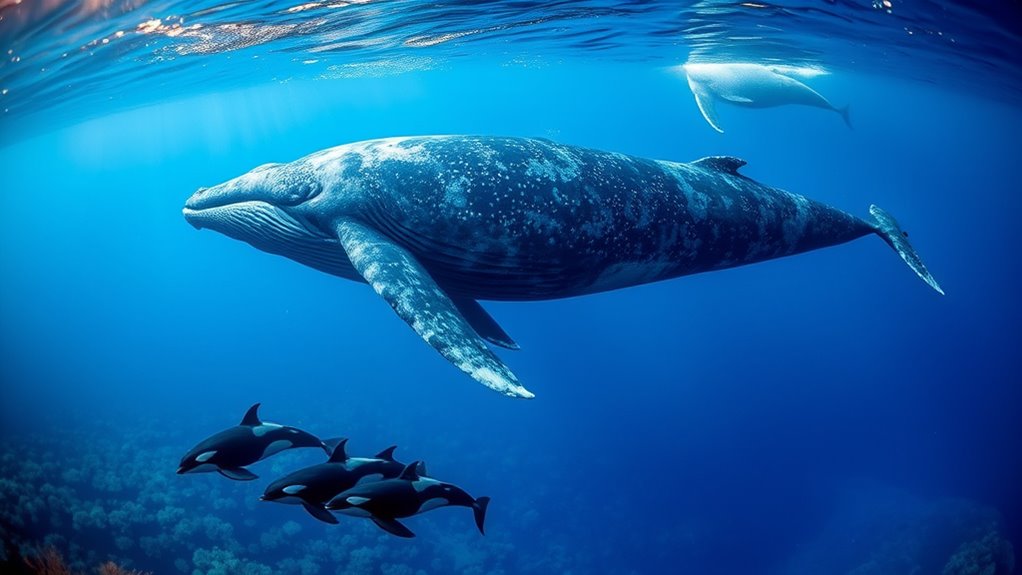
While you might think all whales live long lives, their lifespans actually vary quite a bit by species. For example, the Bowhead whale boasts an impressive animal longevity, often surpassing 200 years, making it one of the longest-lived marine creatures. In contrast, the blue whale has a whale lifespan ranging from 70 to 90 years.
Humpback whales typically live around 45 to 50 years, though some reach over 60 years. Sperm whales usually have a lifespan of 60 to 70 years, while North Atlantic right whales live about 70 years under ideal conditions. However, many right whales today average around 22 years due to external threats.
Understanding the diverse animal life span among whale species helps you appreciate their unique biology and the challenges they face.
What Biological and Environmental Factors Affect Whale Lifespan?
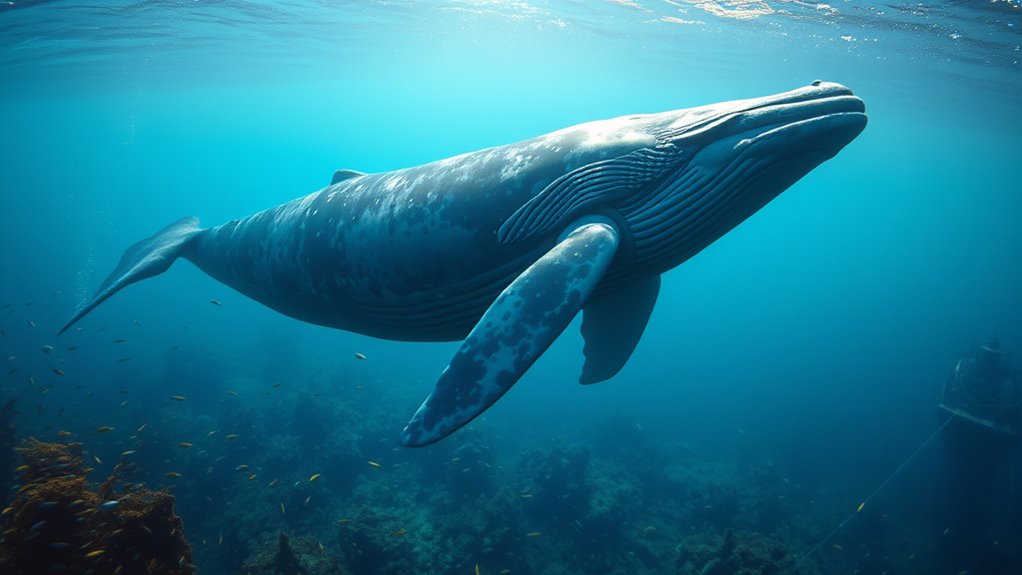
You’ve seen how whale lifespans vary widely among species, but understanding what shapes these differences takes us deeper. Biological factors like unique genetic traits play a key role in whale lifespan, with some species, such as bowheads, living over 200 years.
Environmental factors also influence longevity—cold Arctic habitats reduce predation and disease, helping whales live longer. However, harmful human impacts like pollution, hunting, and ship strikes cut lifespans short.
Ocean conditions and food availability affect whale health and reproduction, directly shaping their lifespan. Climate change disrupts habitats and food sources, adding stress that can lower longevity.
How Do Scientists Determine a Whale’s Age?
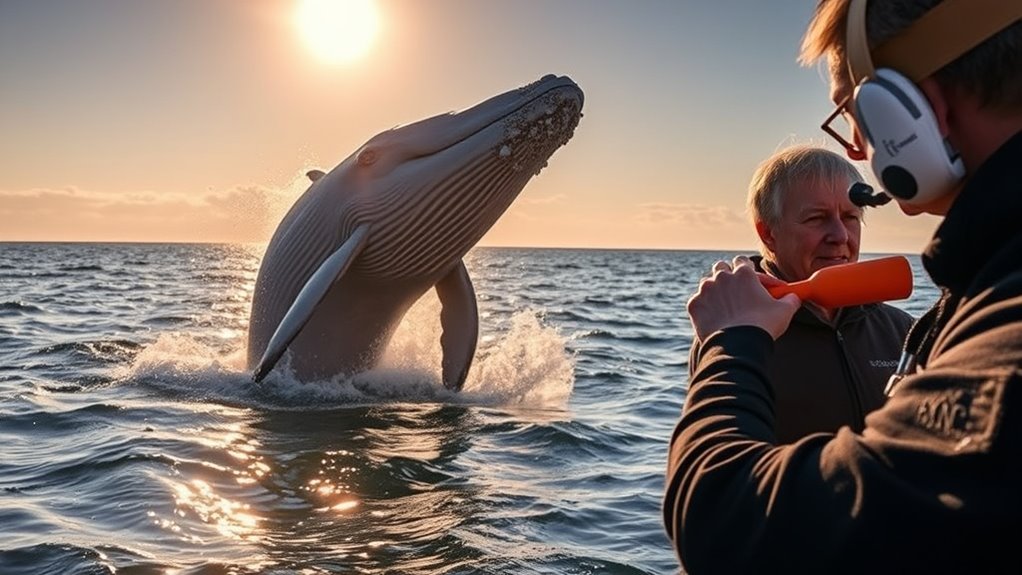
Because whales live in vast and often remote oceans, scientists rely on specialized methods to determine their age accurately. To estimate whale age, they analyze growth rings in earplugs, much like counting tree rings. Chemical markers in skin and baleen provide clues, while telomeres in DNA offer insights into longevity.
Radiocarbon dating of eye lens proteins helps gauge the age of older whales. Mark-recapture studies track individuals over time, refining aging methods.
| Method | Emotion Evoked | Significance |
|---|---|---|
| Growth Rings | Wonder at nature’s detail | Precise age counting |
| Chemical Markers | Curiosity for hidden clues | Biochemical insights |
| Mark-Recapture | Hope for conservation | Lifespan and survival data |
Why Do Bowhead Whales Live Over 200 Years?
Understanding how scientists determine a whale’s age sets the stage for exploring why bowhead whales can live over 200 years. Bowhead whales boast remarkable longevity due to several key factors. Their Arctic habitat provides environmental stability, reducing stressors that typically shorten lifespan in other species.
You’ll find that their slow growth and low metabolic rate, influenced by unique genetic factors, slow down their aging process. This combination allows bowhead whales to conserve energy and maintain long-term survival in harsh conditions. Additionally, their thick blubber and specialized feeding habits support them through the cold, enabling a lifespan that can exceed two centuries.
When you consider these adaptations, it’s clear why bowhead whales exhibit such extraordinary longevity compared to other marine mammals.
How Whale Lifespan Research Supports Ocean Conservation
How can studying the lifespan of whales deepen our efforts to protect ocean ecosystems? Understanding whale lifespan reveals essential clues about ecosystem health and the environmental impact on marine life. By examining whale age structure, marine research uncovers how long-lived species like bowhead whales rely on stable habitats for survival.
This knowledge drives ocean conservation strategies focused on species protection and sustaining keystone species essential for balanced whale populations.
When you consider the importance of whale lifespan, you realize it helps you:
- Gauge long-term ecosystem health through age data
- Identify critical habitats needing protection
- Highlight the vulnerability of slow-growing, long-lived species
- Assess human impact on marine environments
This insight empowers you to support stronger conservation efforts that protect our oceans.
Frequently Asked Questions
How Old Is the Oldest Whale?
The oldest whale you’ll find is a Bowhead whale, living over 200 years—some even reaching 211. Their slow metabolism and icy Arctic home help them live that long, much longer than most whales.
Can Whales Live up to 200 Years?
You can think of a whale as an ancient library, its pages weathered yet full of stories; yes, some whales, like bowheads, can live over 200 years, carrying the ocean’s secrets through centuries with you as witness.
What Whale Lives for 400 Years?
The bowhead whale lives for about 400 years, making it the longest-living whale species. You can find them in Arctic waters, and their incredible lifespan helps scientists study aging in marine mammals.
Can Whales Live for 500 Years?
No, whales can’t live for 500 years. The oldest confirmed whales, like bowheads, live around 200 years.
Conclusion
Now that you know whales can live anywhere from decades to over 200 years, you see how remarkable these creatures truly are. Scientists use clever methods to crack the code of their age, revealing secrets about their biology and environment. Understanding whale lifespans isn’t just trivia—it’s the key to protecting our oceans.
So, don’t let this knowledge gather dust; it’s time to plunge in and help keep these majestic giants safe for generations to come! Protecting whales means preserving ocean health, biodiversity, and the delicate balance of marine ecosystems. By learning about how old a whale can be, we take a vital step toward conservation and safeguarding our planet’s future.