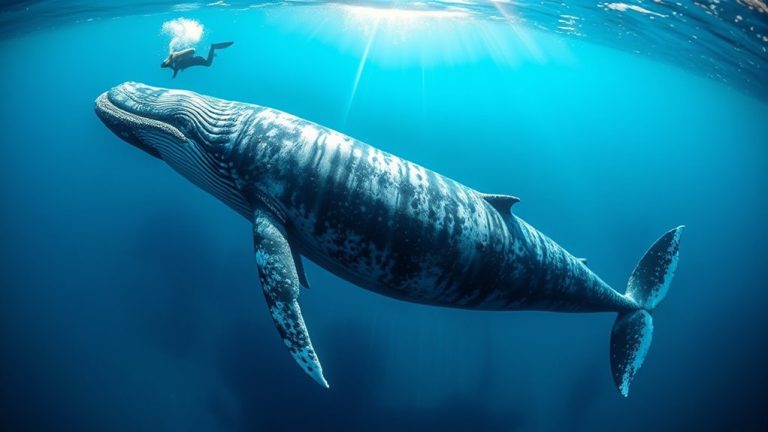

Is a Pilot Whale a Dolphin?
You might think pilot whales are true whales, but they’re actually dolphins. Despite their large size, pilot whales belong to the dolphin family, sharing traits like conical teeth, echolocation, and social behavior.
They live in strong family pods and communicate with clicks and whistles, just like other dolphins. Their physical and genetic makeup confirms this relationship, distinguishing them from baleen whales.
Keep exploring, and you’ll discover even more about their fascinating dolphin connections.
What Defines a Dolphin? Where Do Pilot Whales Fit In?
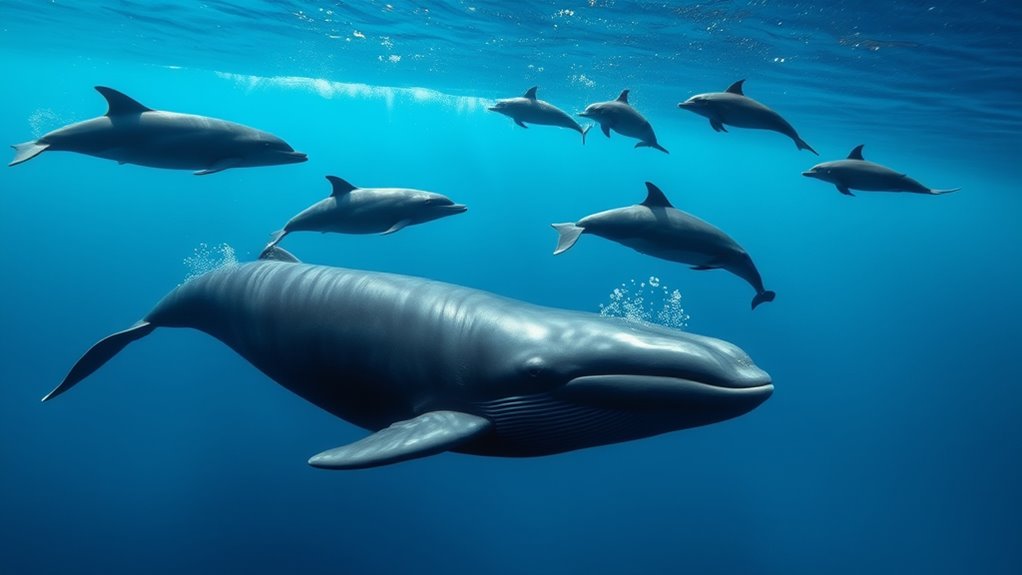
Although you might not realize it at first, pilot whales are actually dolphins. Both belong to the family Delphinidae, a group of marine mammals within the cetaceans known for their intelligence and social behavior. In biological classification, dolphins—including pilot whales—fall under the toothed whales, or odontoceti, characterized by echolocation abilities.
Morphology and skull structure also link pilot whales closely to dolphins; they have a robust body and a curved dorsal fin similar to larger dolphins. Taxonomically, pilot whales are part of the genus Globicephala, confirming their place within the dolphin family.
The Two Species of Pilot Whales and Their Dolphin Traits
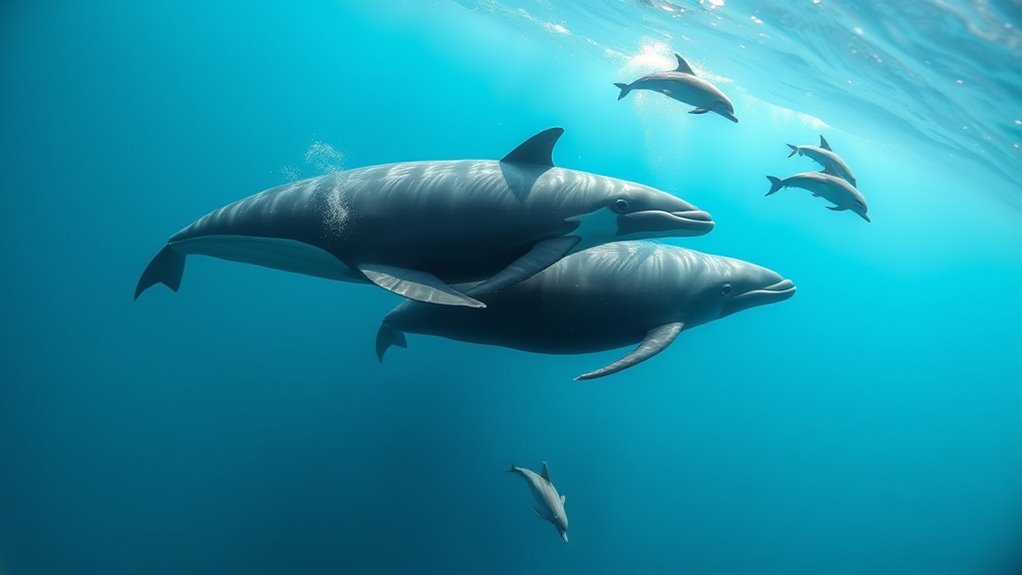
When you look closely at pilot whales, you’ll find two distinct species: the long-finned (*Globicephala melas*) and the short-finned (*Globicephala macrorhynchus*). Both belong to the family Delphinidae, placing them firmly within the dolphin group.
As odontocetes, these pilot whales share key dental features with other dolphins, showing their close genetic and anatomical ties. You’ll notice their dolphin traits in their use of echolocation for hunting and complex social structures that mirror those of smaller dolphins.
Taxonomy confirms their classification as dolphins, despite their larger size and whale-like name. Whether it’s the long-finned pilot whale or the short-finned pilot whale, their behavior, communication, and physical characteristics clearly align with dolphin species, making pilot whales dolphins in every scientific sense.
Clearing Up Common Myths About Pilot Whales
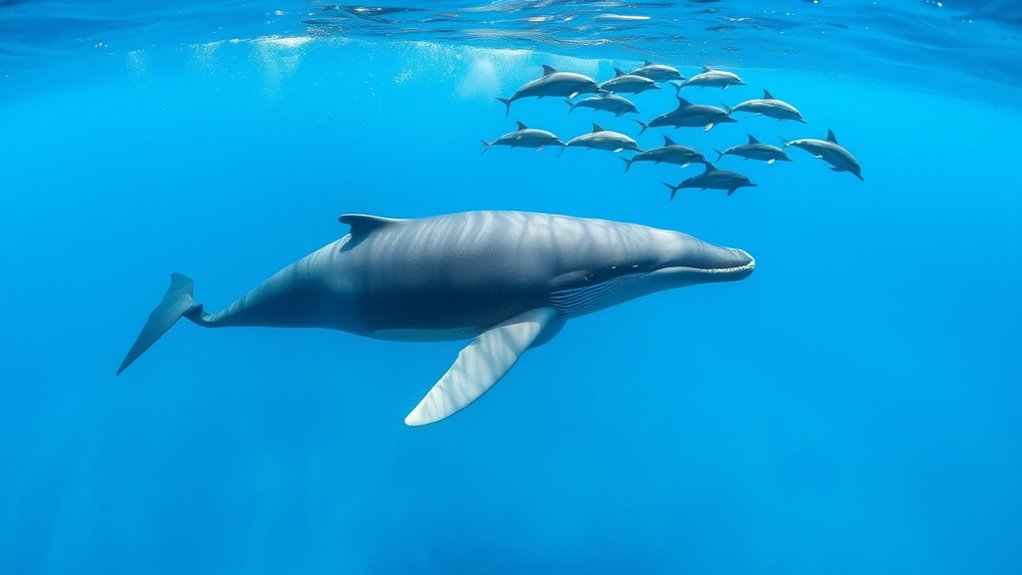
You might think pilot whales are true whales because of their name and size, but they’re actually part of the dolphin family. They share key traits with dolphins, like social behavior and echolocation.
Let’s clear up these common myths and see why pilot whales are classified as large dolphins.
Pilot Whale Classification
Since pilot whales share the same family, Delphinidae, with dolphins, you might wonder if they are actually dolphins. The answer is yes: pilot whales belong to the dolphin family, specifically the genus Globicephala. Their morphology is dolphin-like, featuring streamlined bodies and conical teeth, but they’re classified as large dolphins within cetaceans.
This classification clears up the myth that pilot whales aren’t dolphins—they’re simply a specialized group of marine mammals under the dolphin family umbrella.
| Aspect | Pilot Whales | Dolphins (General) |
|---|---|---|
| Family | Delphinidae | Delphinidae |
| Genus | Globicephala | Various |
| Size | Large dolphins | Varies (generally smaller) |
Dolphin Family Traits
How can pilot whales be dolphins when they look so different? Despite their size, pilot whales belong to the dolphin family, Delphinidae, making them toothed whales (Odontoceti) just like other dolphins. Their classification is based on clear genetic similarities and shared morphological traits.
When you look closely, you’ll notice pilot whales share distinct dolphin family features:
- Streamlined body shape typical of dolphins
- Prominent dorsal fin on their backs
- Complex vocalizations used for communication
- Teeth structure resembling other toothed whales
- Large brain size relative to body, common in delphinids
These traits prove pilot whales are true dolphins, dispelling myths based solely on appearance. Understanding these details helps you appreciate their place within the Odontoceti and dolphin family.
What Makes Pilot Whales Different From True Whales and Other Dolphins?
You might think pilot whales are just big whales, but their classification tells a different story—they’re actually large dolphins. Their physical traits and behaviors set them apart from both true whales and other dolphins.
Let’s explore how their taxonomy, social habits, and communication make them unique.
Taxonomy And Classification
What sets pilot whales apart from true whales and other dolphins? Their taxonomy and classification reveal key differences. Pilot whales belong to the Delphinidae family, making them dolphins rather than true whales.
As odontocetes, they possess teeth and a single blowhole, unlike baleen whales. Genetic analysis confirms their close relation to oceanic dolphins. Their body morphology shows traits typical of dolphins, not larger true whales.
Consider these features:
- Family Delphinidae includes pilot whales and most dolphins
- Classified as odontocetes (toothed whales)
- Streamlined body shape and conical teeth
- Single blowhole, unlike baleen true whales
- Genetic analysis links them firmly to dolphins
Physical And Behavioral Traits
Understanding pilot whales’ taxonomy sets the stage for exploring their unique physical and behavioral traits. As members of the genus Delphinidae, pilot whales share many features with dolphins but stand out due to their large dolphin-like body size and distinctive skull shape. You’ll notice their rounded head and bulbous melon differ from many true whales.
Their dorsal fin is prominent and slightly curved, adding to their robust appearance. Unlike smaller dolphins with numerous teeth, pilot whales have a lower teeth count, about 40-48, suited for grasping squid. When it comes to behavior, their social behavior and vocalizations are complex, reflecting intelligence and communication abilities similar to other odontocetes.
These physical traits and behaviors highlight how pilot whales bridge characteristics between dolphins and true whales.
Social Structure And Communication
Although pilot whales are often mistaken for true whales, their social structure and communication reveal a closer kinship with dolphins. You’ll find pilot whales live in tight, matrilineal pods, where strong social bonds define their social structure. Their communication is rich and complex, featuring a range of vocalizations that guide social interactions within the pod.
When you observe them, notice these traits:
- Matrilineal pods fostering lifelong social bonds
- Complex vocalizations including whistles, clicks, and burst pulses
- Advanced echolocation abilities for hunting and navigation
- Dynamic communication adapting to different social interactions
- Social behaviors mirroring those of dolphins rather than true whales
These elements highlight how pilot whales’ social bonds and communication set them apart from true whales and even many other dolphins.
How Pilot Whales’ Social Behavior and Intelligence Link Them to Dolphins
Since pilot whales belong to the Delphinidae family, just like true dolphins, you can expect their social behavior and intelligence to show many similarities. These mammals display complex vocalizations and sophisticated communication, reflecting dolphin-like intelligence. Their highly social nature includes strong social bonds and cooperative hunting, relying on echolocation to coordinate and capture prey.
This table highlights key aspects linking pilot whales and dolphins:
| Aspect | Pilot Whales | Dolphins |
|---|---|---|
| Social Behaviors | Lifelong matrilineal pods | Complex pods, alliances |
| Intelligence | Cooperative hunting | Problem-solving abilities |
| Communication | Complex vocalizations | Echolocation, mimicry |
You’ll notice that pilot whales’ social and cognitive traits firmly connect them to the dolphin family through shared evolutionary adaptations.
Pilot Whales’ Family Ties Within the Dolphin Group
While their name might suggest otherwise, pilot whales are actually true dolphins, belonging to the Delphinidae family that includes all oceanic dolphins. You can see their close family ties through several key traits:
Pilot whales may sound like whales, but they are true dolphins in the Delphinidae family.
- As odontocetes, they are toothed whales with echolocation abilities.
- Their morphological traits, like rounded heads and conical teeth, match other dolphins.
- Genetic traits confirm their place firmly within the dolphin family.
- Their social behaviors and pod structures resemble those of other dolphins.
- They engage in cooperative hunting, demonstrating complex group dynamics.
Understanding these connections helps you appreciate how pilot whales fit within the Delphinidae family, sharing both physical and behavioral characteristics with dolphins. This clarifies why they’re classified as dolphins, not separate whales.
Frequently Asked Questions
Are Pilot Whales a Whale or a Dolphin?
Pilot whales are dolphins, not true whales. You might be surprised since they look like whales, but their anatomy and genetics place them in the dolphin family.
What Whale Is Technically a Dolphin?
You’ll find that a pilot whale is technically a dolphin. It belongs to the dolphin family Delphinidae, sharing traits like echolocation and social behavior, even though its name suggests it’s a whale.
Why Are Pilot Whales Not Called Dolphins?
You might think pilot whales are dolphins, but they’re not called dolphins because their size and shape set them apart.
It’s like a big ship in a fleet of small boats, making their name and genus unique.
What Species Is a Pilot Whale?
You’re looking at the species *Globicephala melas* for the long-finned pilot whale or *Globicephala macrorhynchus* for the short-finned.
Both belong to the dolphin family, Delphinidae, despite their whale-like name.
Conclusion
So, yes, pilot whales are dolphins, not true whales, sharing key traits like intelligence and social behavior. Remember, “don’t judge a book by its cover”—their name might mislead you, but pilot whales belong firmly in the dolphin family.
By understanding their unique place within this group, you’ll appreciate how diverse and fascinating dolphins really are, beyond just the common image of the sleek, small species you usually think of. Pilot whales exemplify the incredible variety found within dolphins, highlighting their complexity and adaptability in marine life.